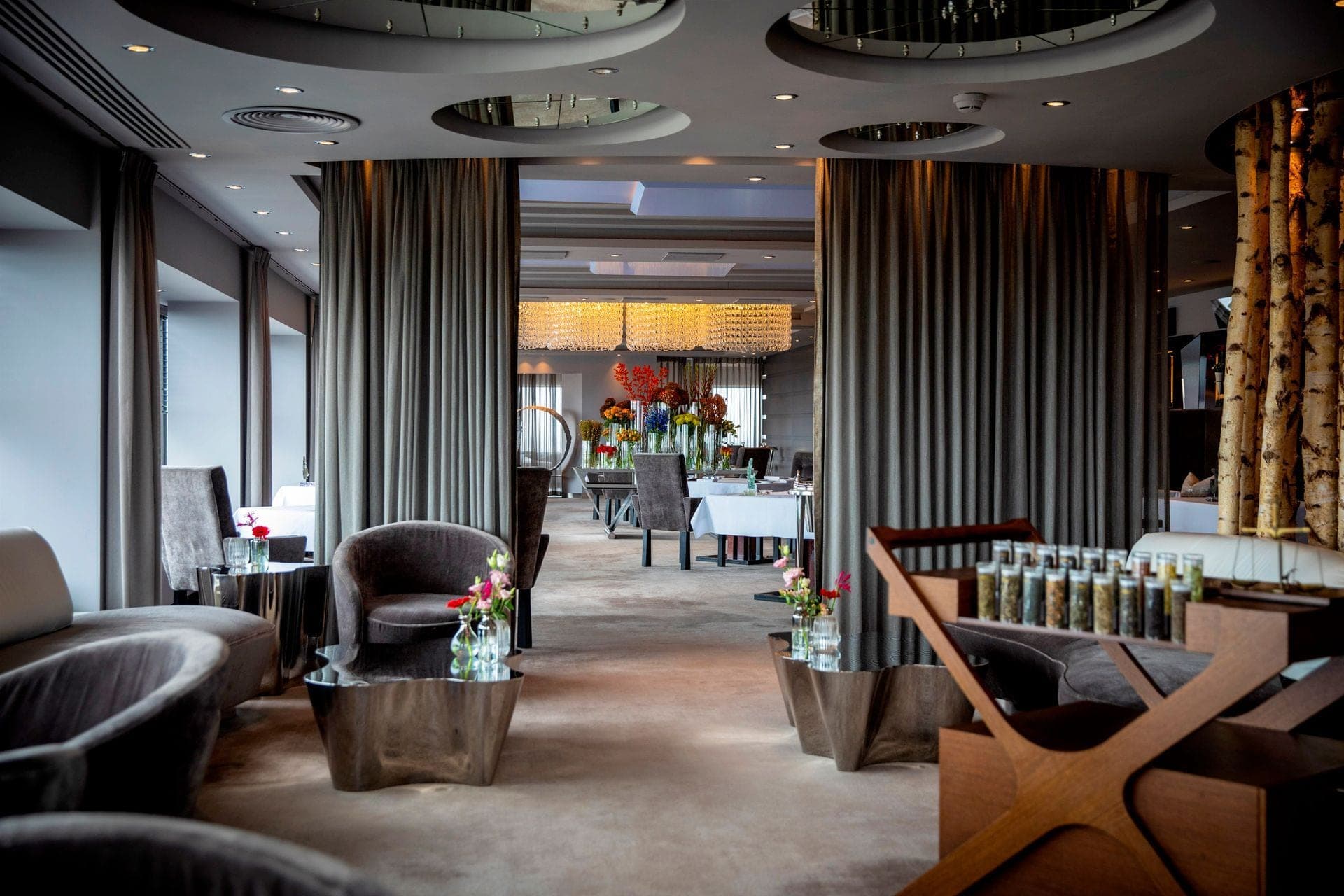
Foto: Ciel Bleu / Hotel Okura Amsterdam
№ 01Ferdinand Bolstraat · French · €€€€9.3
Twee Michelinsterren, drieëntwintig hoog, heel Amsterdam onder je.
Op de 23e verdieping van Hotel Okura houdt De Pijp op marktbuurt te zijn en begint het hoofdstuk gelegenheden met een grote G. Chef Arjan Speelman behield in de gids van 2026 zijn twee Michelinsterren, en de keuken verdient ze: precieze, technisch verbluffende Franse borden, een voorjaarsduif met echte branie, langoustines die als vorsten worden behandeld, sauzen die aan tafel geruisloos worden bijgeschonken. Binnen is het zacht leer en glas van vloer tot plafond, dus je kijkt hoe trams krimpen tot speelgoed terwijl de sommelier je door een kelder met werkelijke diepgang loodst. Ja, het kost wat een weekend buitenland kost. Maar als enige tweesterrentafel van de buurt, fraai genoeg zwevend boven de straat waar je die ochtend nog een stroopwafel kocht, is dit de onbetwiste uitspatting van dit hoofdstuk.
Bestel · Reserveer een tafel aan het raam rond zonsondergang; staat de duif op het menu, neem hem.
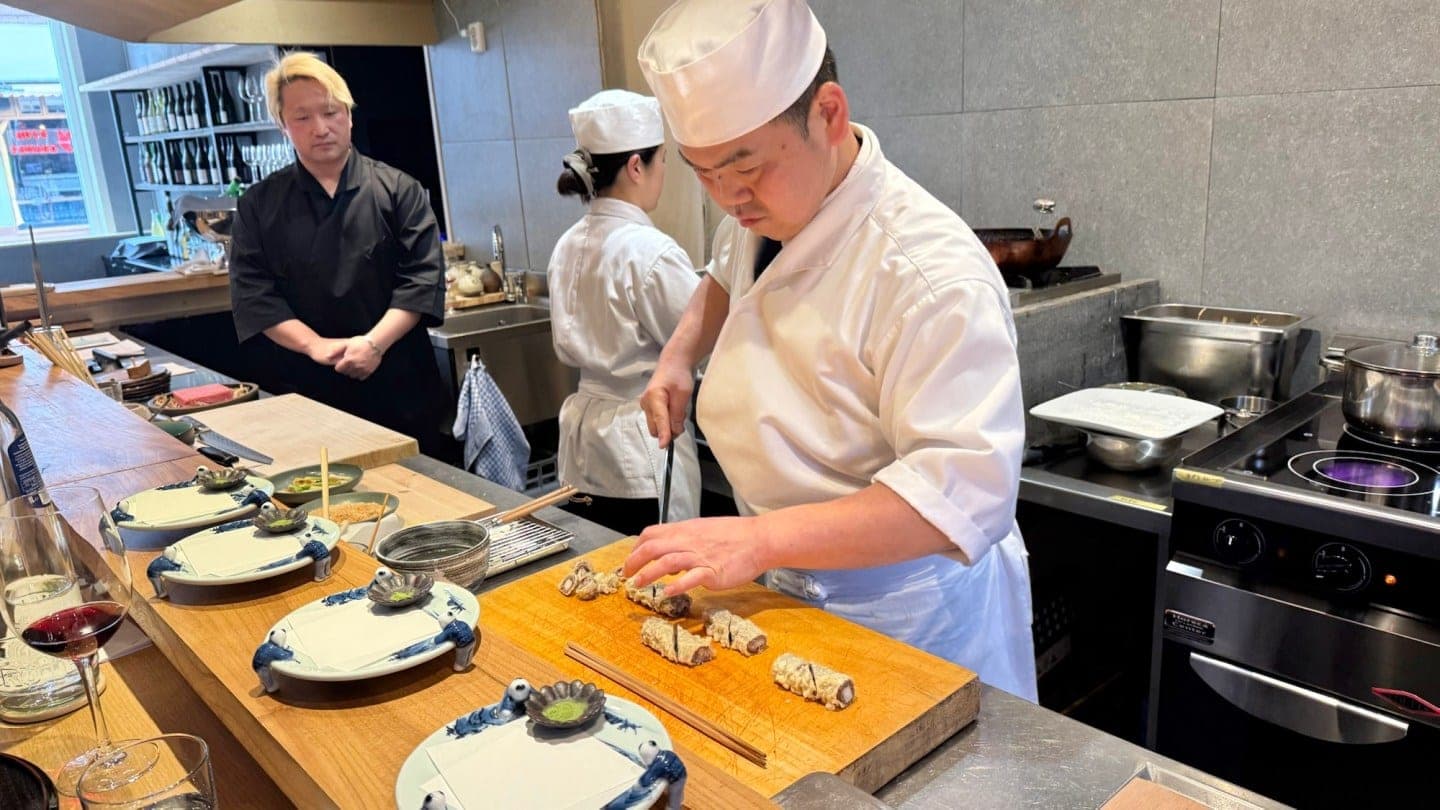
Foto: Stefan's Gourmet Blog / Tsunarié (chefs at the kappo counter)
№ 02Van Woustraat · Japanese kappo · €€€€8.4
Het kappovervolg van Tewatashi, tien stoelen, waar A5-wagyu vier toegiften krijgt en elke meshaal op armlengte gebeurt.
Tewatashi had rustig kunnen teren op zijn omakasereputatie; in plaats daarvan liep het team een paar deuren verderop de Van Woustraat in en opende Tsunarié, een kappobalie met tien stoelen die op slag de moeilijkste reservering van Japans Amsterdam werd. Kappo betekent koken waar je bij zit, en dat is hier de hele voorstelling: elke meshaal, elke oplaaiende bundel hooi, bekeken vanaf een barkruk die dichtbij genoeg staat om de hitte te voelen. Het maandelijks wisselende menu (drie versies, de middelste voor €125) opent met nigiri, toro, gevlamde hamachi, unagi, en geeft daarna het podium aan A5-wagyu in vier bedrijven: tartaar van de shintama op krokante toast met kaviaar, shabu-shabu van sirloin in ponzu, taro gewikkeld in flinterdun gesneden wagyu en gefrituurd als tempura met matchazout, en een boven brandend hooi gegrilde rib-eye met eiersaus en zwarte truffel die de eerste recensenten steeds weer de gang van het jaar noemen. Binnen enkele weken na de opening in februari 2026 schaarde de pers de zaak al onder de beste Japanse tafels van de stad, en de sakebegeleiding wordt even serieus genomen als het rundvlees. Tien stoelen, twee zittingen, maandag en dinsdag dicht; plan het als een concertkaartje, want zo verkoopt het ook.
Bestel · Het menu gaat elke maand op de schop; boek zodra de nieuwe maand opengaat, en neem de sakebegeleiding, die is gebouwd op de wagyugangen.
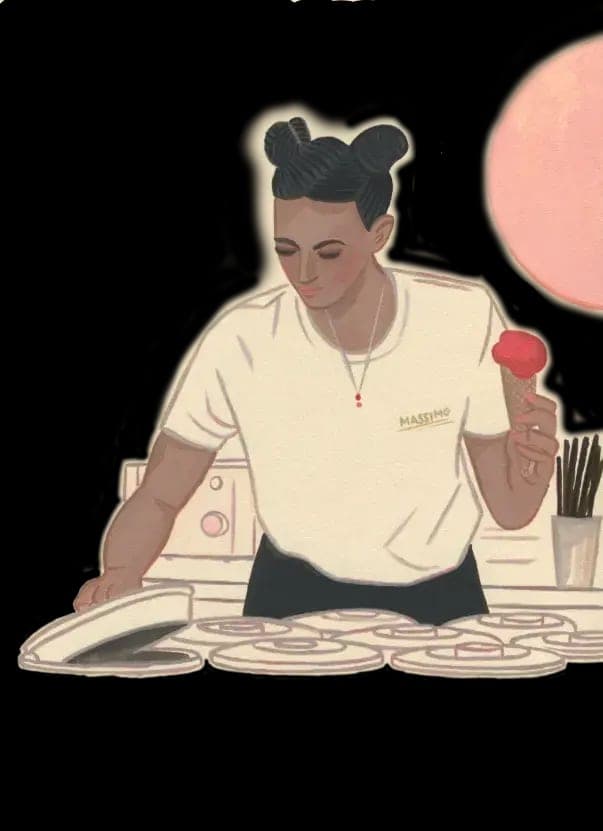
Foto: Massimo Gelato
№ 03Nieuwe Pijp · Gelato · €8.4
De eerste van vijf Massimo Gelato's, sinds 2017 in De Pijp, met ijs uit gesloten rvs-bakken en pistache als favoriet van gasten.
Massimo Bertonasco, geboren in Rome en opgegroeid in Ligurië, werkte twaalf jaar bij ING voor hij op zijn 51ste ijs ging maken. In 2017 opende hij op de hoek van de Van Ostadestraat en de Tweede Van der Helststraat de eerste Massimo Gelato. Omdat mensen klaagden over de rijen, volgden in 2020 vestigingen in West en Oost; inmiddels zijn het er vijf. Het ijs staat in gesloten, gekoelde rvs-bakken, de pozzetti. Je kiest uit veertien smaken gelato, van fior di latte tot ricotta met vijgen, en negen sorbetto's, plus gebak met ricotta, hazelnoot of pistache. Eveline Kuyten van Het Parool schrijft dat het ijs 'barst van de smaak en verveelt nooit'. Mokum Magazine gaf in 2024 de vestiging in West, die zelf ijs maakt, een 8- en vond de citroen 'net te zuur'. Bij gasten is de pistache de uitschieter.
Bestel · Bij mooi weer staat de rij steevast voor de deur; gasten zeggen dat hij snel doorloopt. Je mag proeven voor je kiest.

Foto: Graham's Kitchen
№ 04Nieuwe Pijp / Van Woustraat · Modern European · €€€8.3
Precisie van sterrenniveau in een zijstraat van de Van Woustraat, zonder de bijbehorende stijfheid.
Net achter de Van Woustraat, in een straat die de meeste mensen alleen kennen als sluiproute naar de Amstel, runt de Britse chef Graham Mee de meest ingetogen ambitieuze keuken van dit stuk De Pijp. Zijn cv slingert langs sterrenkeukens en dat zie je terug op het bord: precies, seizoensgebonden, af en toe een tikje uitpakkerig. Alleen het bijbehorende kostuumdrama blijft achterwege: geen tafellinnentheater, geen gedempte stemmen, gewoon heel goed koken, geserveerd door mensen die oprecht blij lijken dat je er bent. De menu's lopen van drie gangen tot een compleet proefdefilé, opgebouwd rond wat het seizoen doet, met groenten als hoofdact in plaats van garnituur. Dit is waar je iemand mee naartoe neemt die je wilt imponeren zonder je anders voor te doen dan je bent. Dinsdag tot en met zaterdag, alleen 's avonds; dat zegt alles over hoe serieus deze keuken haar voorbereidingsdagen neemt.
Bestel · Kies het langere proefmenu met wijnarrangement; in de groentegangen halverwege laat Mee zien wat hij kan.
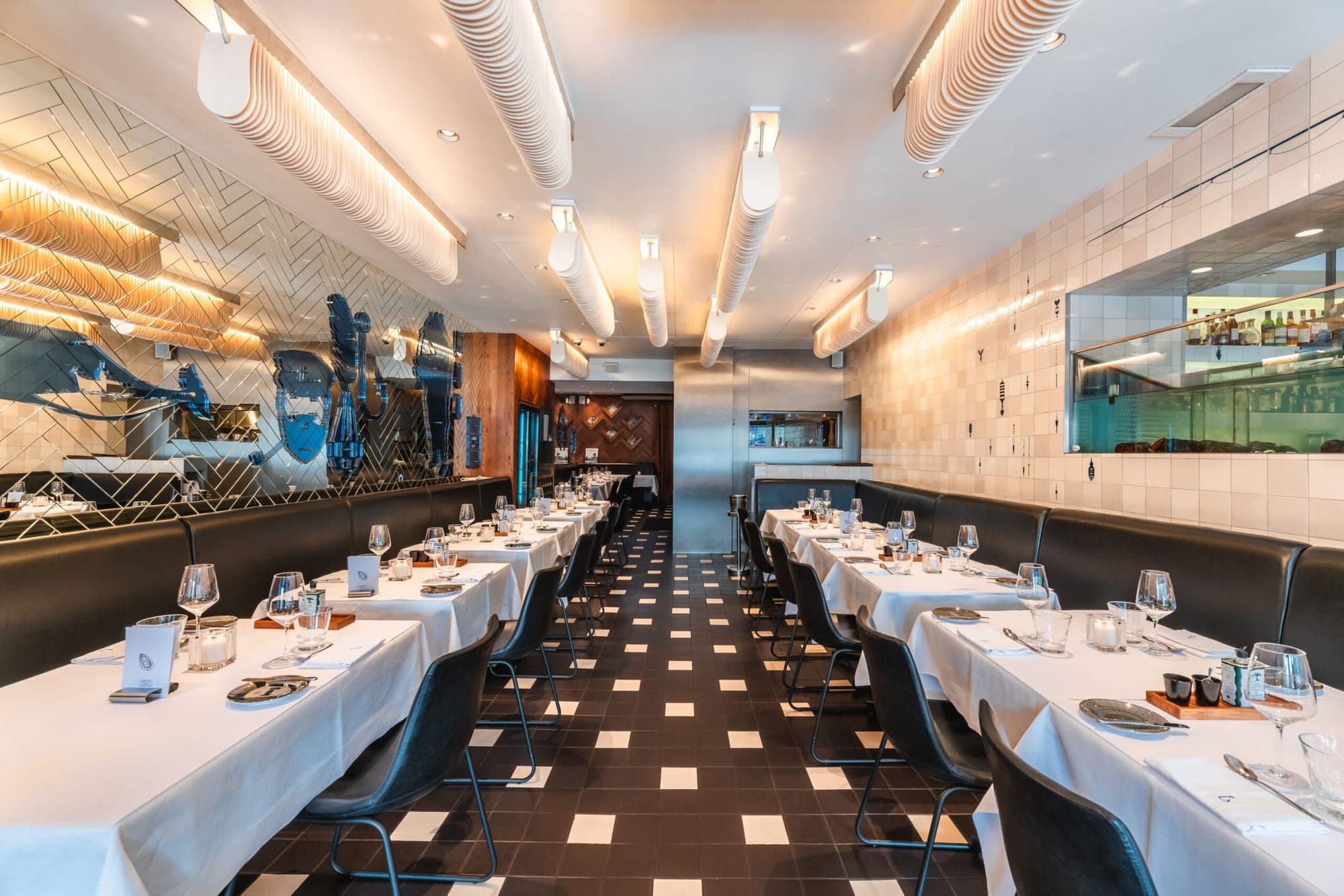
Foto: Visaandeschelde
№ 05Scheldeplein · Seafood · €€€8.3
Het grote vishuis van de Rivierenbuurt: plateaus, tarbot, en sinds 1999 geen enkele trend achterna.
Tegenover de oude RAI-kant van de Scheldebuurt doet Visaandeschelde sinds 1999 één ding: serieuze vis, serieus goed, voor mensen die een plateau fruits de mer een redelijke invulling van de dinsdag vinden. Het is er strak en volwassen, witlinnen-energie zonder de stijfheid, en de keuken beweegt van Zeeuwse oesters en kaviaar naar hele tarbot, kreeft en tong, behandeld met ouderwets respect, plus net genoeg invloeden van elders om de kaart niet gebalsemd te laten aanvoelen. Hier sluit de Rivierenbuurt doordeweeks tijdens de lunch haar deals en viert ze 's avonds haar jubilea, en de Michelin-gids houdt het adres niet voor niets op de lijst. In de zomer golft het terras het Scheldeplein op en gaat de boord een knoopje losser. Neem ouders mee die geïmponeerd moeten worden, of wie dan ook die terecht vindt dat een toren schaal- en schelpdieren op ijs het beste theater van de gastronomie is.
Bestel · Het plateau fruits de mer voor twee, met een fles chablis die het zware werk doet.
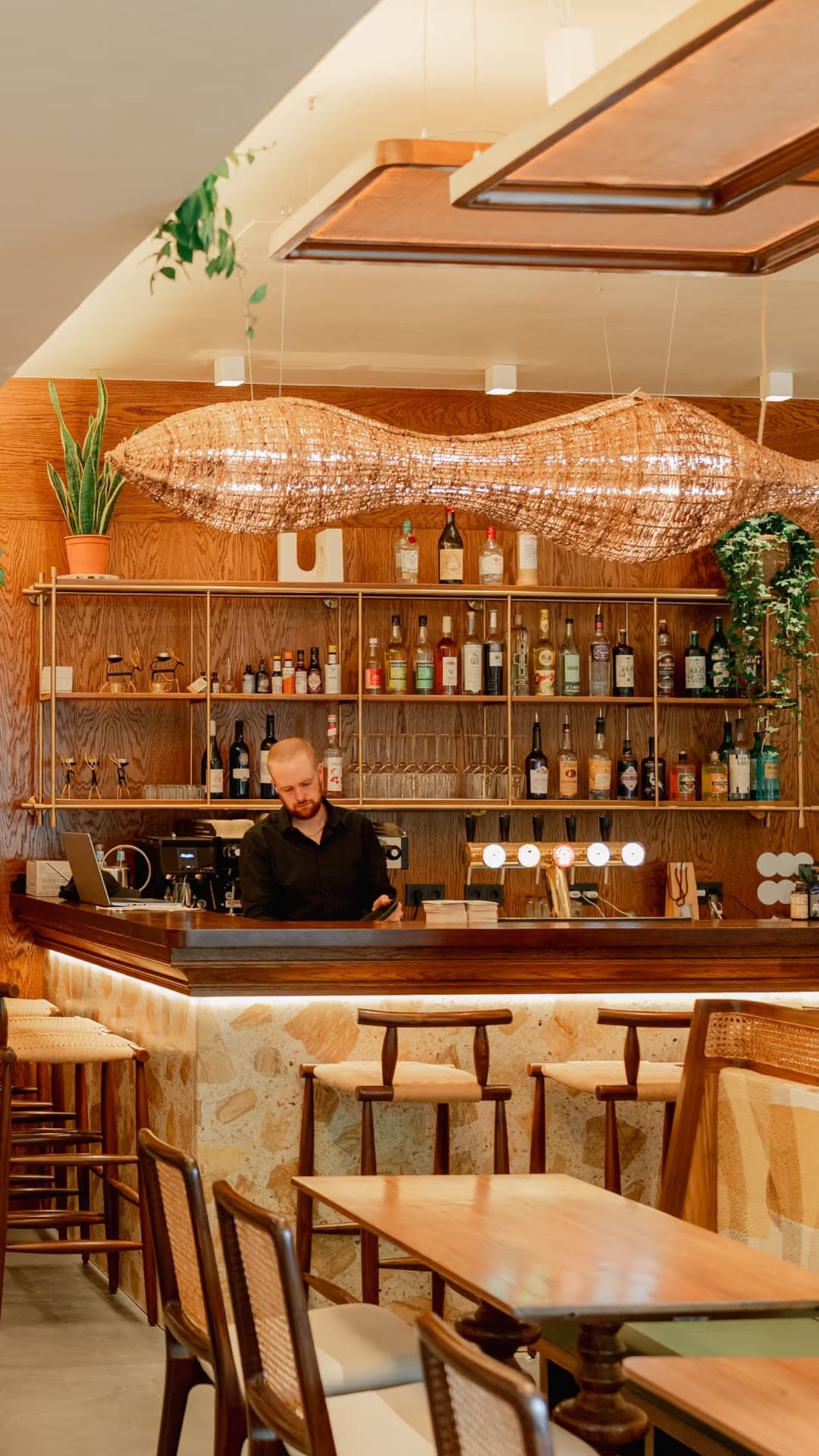
Foto: Miri Mary
№ 06Van der Helstplein · Weekend brunch, regional Indian · €€8.2
Butter Chicken Benny en een Goa-omelet die in kokossaus drijft, op een brunchkaart die alleen van vrijdag tot en met zondag bestaat.
Foram, voormalig strafrechtadvocaat in New Delhi, en Anand, die handelt voor de kost, openden Miri Mary in juni 2022 aan het Van der Helstplein met één simpele regel: de koks komen uit verschillende delen van India en koken wat ze daar echt hebben gegeten. De Mumbaise chef Nirvaan, opgeleid aan het Culinary Institute of America, bouwde de oorspronkelijke keuken op en komt nog steeds één keer per jaar over om de kaart te herschrijven, en daardoor leest het eten als een standpunt in plaats van als een rondleiding. De weekendbrunch is echt een aparte kaart, niet de dinerkaart bij daglicht: de Butter Chicken Benny legt kip tikka en gepocheerde eieren onder makhani op brioche voor 20 euro, de Goan Ros Omelette laat een kaasomelet drijven in kokossaus met poee-brood voor 18 euro, en Idli en Sambar staat op 12 euro. Smoked Eggplant Shakshuka en lassipannenkoeken dekken de twee uitersten waar iedereen een tafel voor meeneemt. Het interieur is warm multiplex en walnoot met een terrazzofront aan de bar, een rieten golflamp boven de drankenplank en rotan stoelen, en het terras neemt het plein over zodra de zon staat. De zaak houdt een 4,7 over ruim vijfduizend Google-reviews en Het Parool zette hem in september 2025 in zijn Indiase overzicht, wat voor een zijplein in De Pijp een serieuze score is. Het probleem is puur rekenwerk: drie ochtenden per week, één kleine zaak.
Bestel · Brunch is er alleen op vrijdag, zaterdag en zondag van 10:30 tot 15:00, en buiten die uren bestaat de brunchkaart niet. Reserveren: het is er klein en het terras aan het plein gaat als eerste. Bestel de Butter Chicken Benny van 20 euro met de Idli en Sambar van 12 euro om te delen.
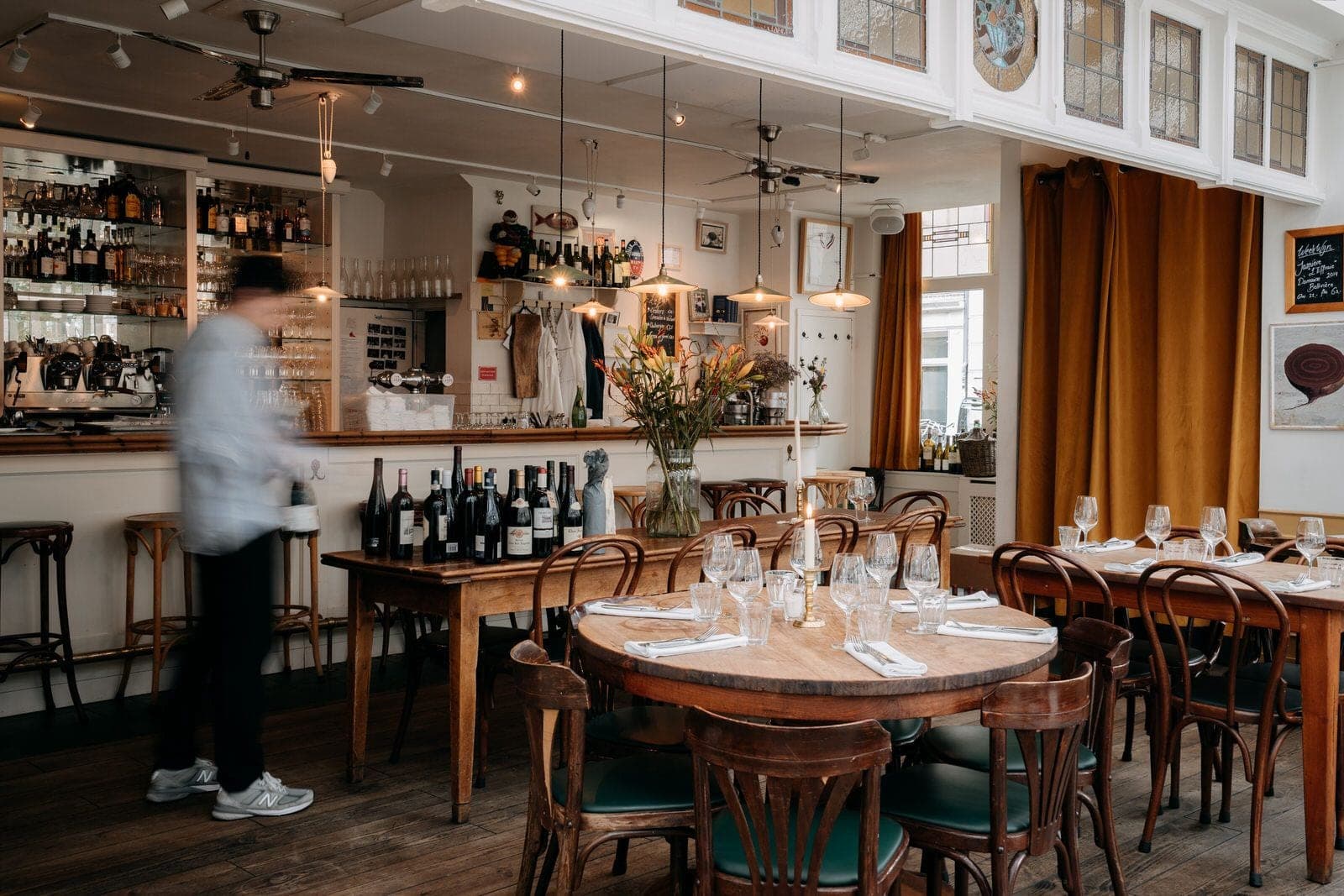
Foto: Café Caron
№ 07Oude Pijp / Frans Halsbuurt · French bistro · €€€8.1
Sinds 2016 runnen de zonen van Alain Caron in De Pijp een Frans restaurant met een kleine seizoenskaart; Gault&Millau geeft 14 van de 20.
Tom en David Caron openden hun café in het najaar van 2016 op de hoek van de Frans Halsstraat en de Eerste Jacob van Campenstraat, in het pand van eetcafé Van Hoeck. Hun vader Alain Caron, geboren in Parijs en bekend van MasterChef Holland, is culinair adviseur; de chef is Elmer Polman. De seizoenskaart telt vijf voorgerechten, vier hoofdgerechten en vier desserts, à la carte of als driegangenmenu voor 57 euro. Aan de bar bestel je oesters vanaf 4 euro per stuk. Gasten noemen de wijnkaart vaak. Gault&Millau geeft 14 van de 20 punten en schrijft dat de gerechten een 'uitgesproken Frans karakter' hebben. Lekker noemde het gestoofde konijn in 2026 'hemels'; nu staat konijn met polenta, salsa verde en palingsaus op de kaart, voor 33 euro. Over de bediening zijn gasten verdeeld: ruim de helft vindt die gehaast of slordig, bijna evenveel gasten vinden haar juist hartelijk en goed thuis in wijn. Meerdere gasten merken ook dat hun tafel na een vaste tijd weer vrij moet.
Bestel · Je betaalt alleen met pin. Lunch is er op zaterdag (twee gangen voor 42 euro) en op zondag, dan met grote schalen om te delen, zoals côte de boeuf of een hele poussin.
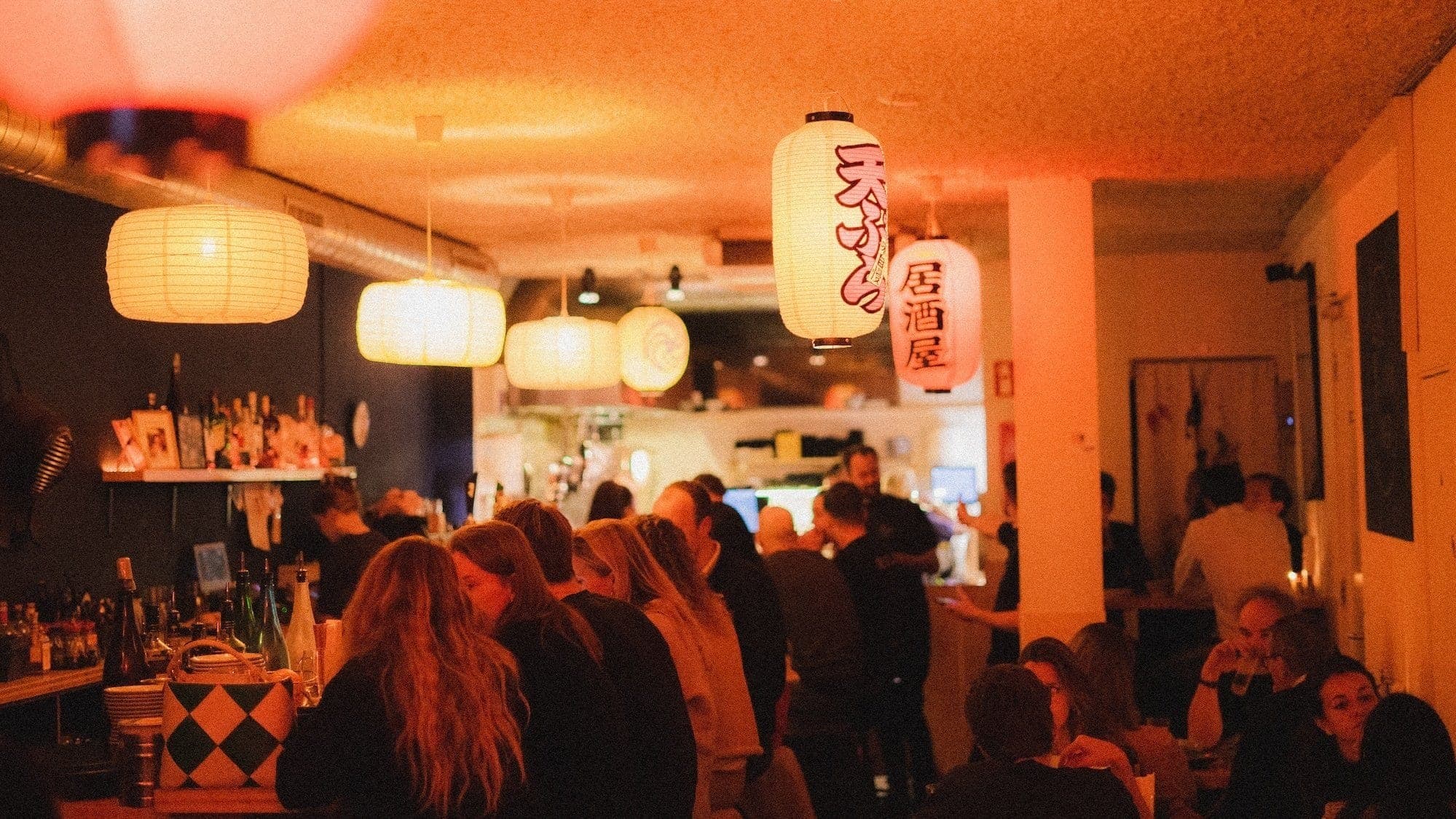
Foto: De Japanner
№ 08Oude Pijp / Albert Cuyp · Japanese · €€8.0
De eerste izakaya van Amsterdam: sake, spiesjes en kabaal aan de Albert Cuyp.
Ruim tien jaar oud en nog altijd de luidste, vrolijkste tent van de Albert Cuyp zodra de marktkarren zijn weggereden. De Japanner was de eerste echte izakaya van Amsterdam, drinklokaal eerst, keuken een goede tweede, en aan die formule viel niets te repareren: kleine borden sushi, geblakerde aubergine met miso, knoflokerig frituurwerk, alles bedoeld om rond een plakkerige houten tafel door te geven terwijl de sake blijft komen. Er kwamen inmiddels broertjes in West, Zuid en zelfs op Strandeiland, maar het origineel in De Pijp bewaart de onmisbare rafeligheid. De keuken draait doordeweeks tot 23:30 en in het weekend tot na middernacht, en daarmee is dit het juiste antwoord op de vraag waar je om elf uur 's avonds nog kunt eten zonder dat het een schuldbekentenis wordt. De bediening is snel, onverstoorbaar en kent de kaart uit het hoofd. Kom met z'n vieren, bestel het dubbele van wat verstandig lijkt en maak ruzie om de laatste gyoza.
Bestel · De aubergine met geblakerde miso plus iets uit de knoflook-en-frituurhoek van de kaart, met koude sake erbij.
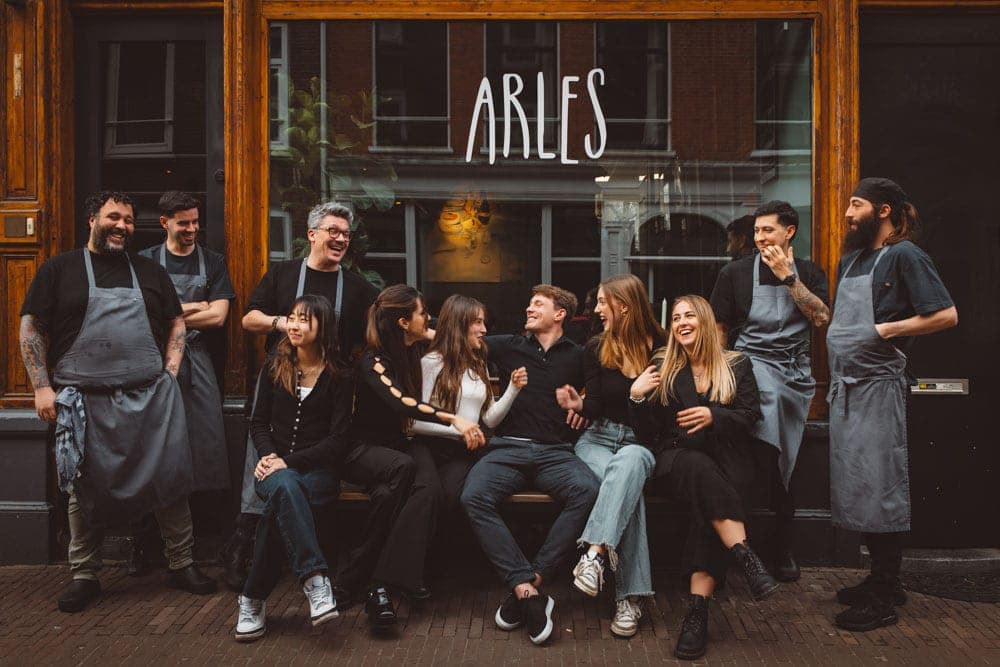
Foto: Restaurant Arles
№ 09Sarphatipark · French bistro · €€€8.0
Franse bistro van chef Numa Muller uit Arles, sinds 2016 in De Pijp; Michelin prijst de prijs-kwaliteit van het maandelijks wisselende menu.
Chef is Numa Muller, geboren in Arles. Ronald Huiskamp en Bob Hamersma openden de zaak in september 2016 in het pand van het gestopte À la Ferme. Je kiest het chef's menu van drie, vier of vijf gangen voor 52, 62 of 72 euro, met wijnarrangement voor 35, 44 of 53 euro. À la carte kosten voorgerechten 17 tot 20 euro, zoals coquille met prei, beurre blanc en viskuit, en hoofdgerechten 26 tot 31 euro, zoals varkensfilet met knolselderij en pruim. De wijnkaart is volledig Frans, met veel natuurwijn. Michelin gaf Arles jarenlang een Bib Gourmand, liet die vervallen in de gids van 2024 en noemt de prijs-kwaliteit van het maandelijks wisselende menu nu onverslaanbaar. Gault&Millau geeft 13,5 op 20 en prijst de 'zeer vriendelijke en kundige jonge mensen in de bediening'. Gasten prijzen vooral de bediening. Een deel vindt een rekening van 200 tot 250 euro voor twee fors en de porties klein, en sinds augustus 2026 vinden meer gasten het eten gewoon of teleurstellend.
Bestel · Open maandag tot en met zaterdag vanaf 18:00, zondag dicht. Zoek je rust, vraag dan om de voorste ruimte; dat raadt Michelin aan.
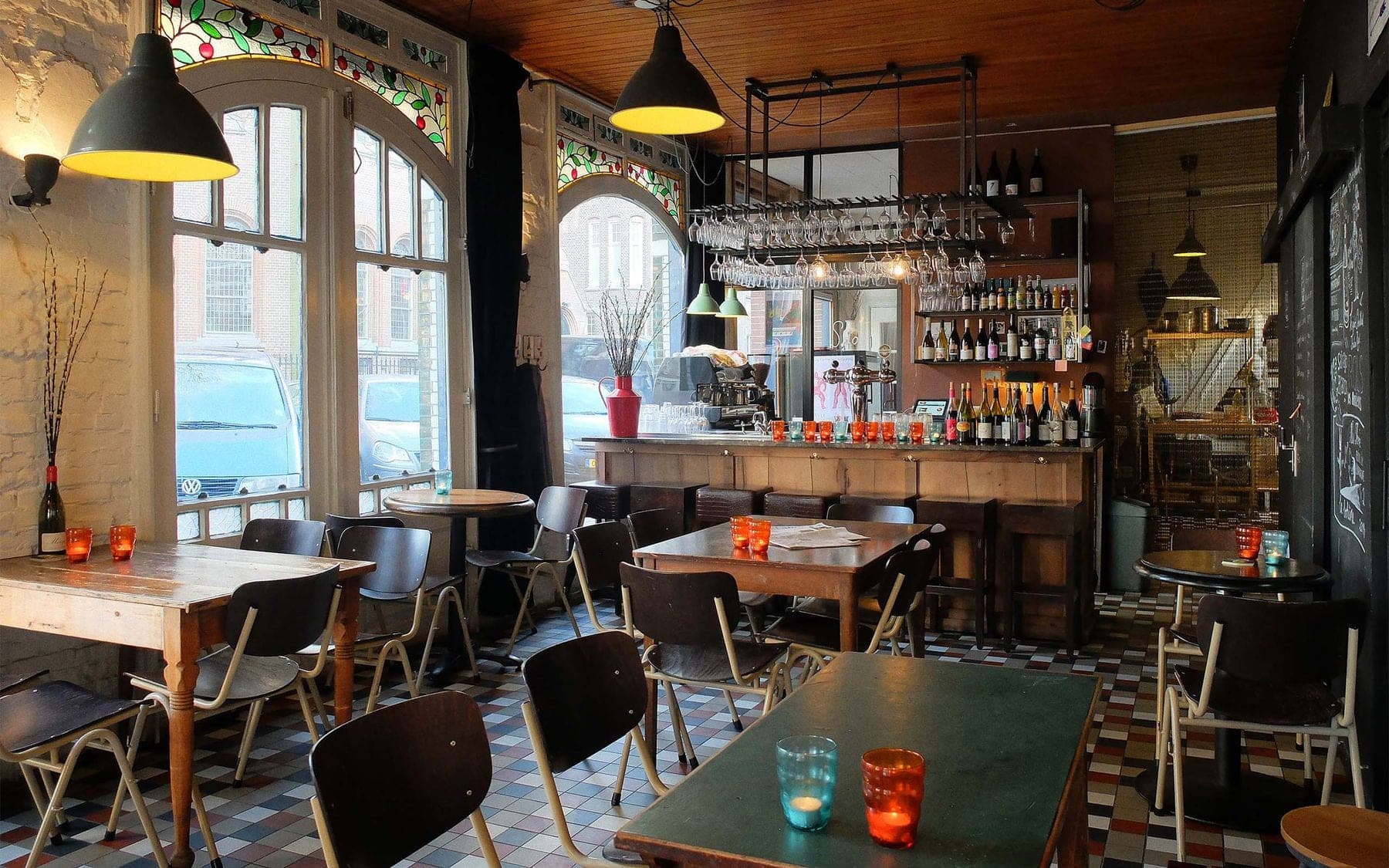
Foto: NwA architecten (interior design of Bar Glouglou)
№ 10Sarphatipark · Wine bar · €€8.0
De hoekbar waar in 2015 de Amsterdamse natuurwijnobsessie begon.
Voordat elke derde barkaart in Amsterdam las als een fanzine over sulfiet, was er Glou Glou, dat sinds april 2015 op een hoek bij het Sarphatipark troebele, levende, af en toe ronduit wilde Franse wijn schenkt. De naam is Frans voor wijn die gevaarlijk makkelijk wegdrinkt, en dat is nog altijd het huisbeleid: een krijtbord vol pét-nats, gamays en zero-zero-curiosa per glas, personeel dat je eerst een slok laat proeven voor je ergens aan begint, en prijzen waarmee je door kunt proeven tot voorbij het verstandige. Het eten houdt zich bescheiden op de achtergrond, goede Franse kaas, saucisson, dingen die van zuren houden, want de wijn is hier de voorstelling. Reserveren kan niet, nooit; je schuift aan een bekrast tafeltje of hangt op de stoepbankjes tussen de andere bekeerlingen. Elke natuurwijnbar in deze stad is dit adres huur verschuldigd.
Bestel · Vraag wat er raars open staat per glas, en leg er de plank kaas en saucisson onder als anker.
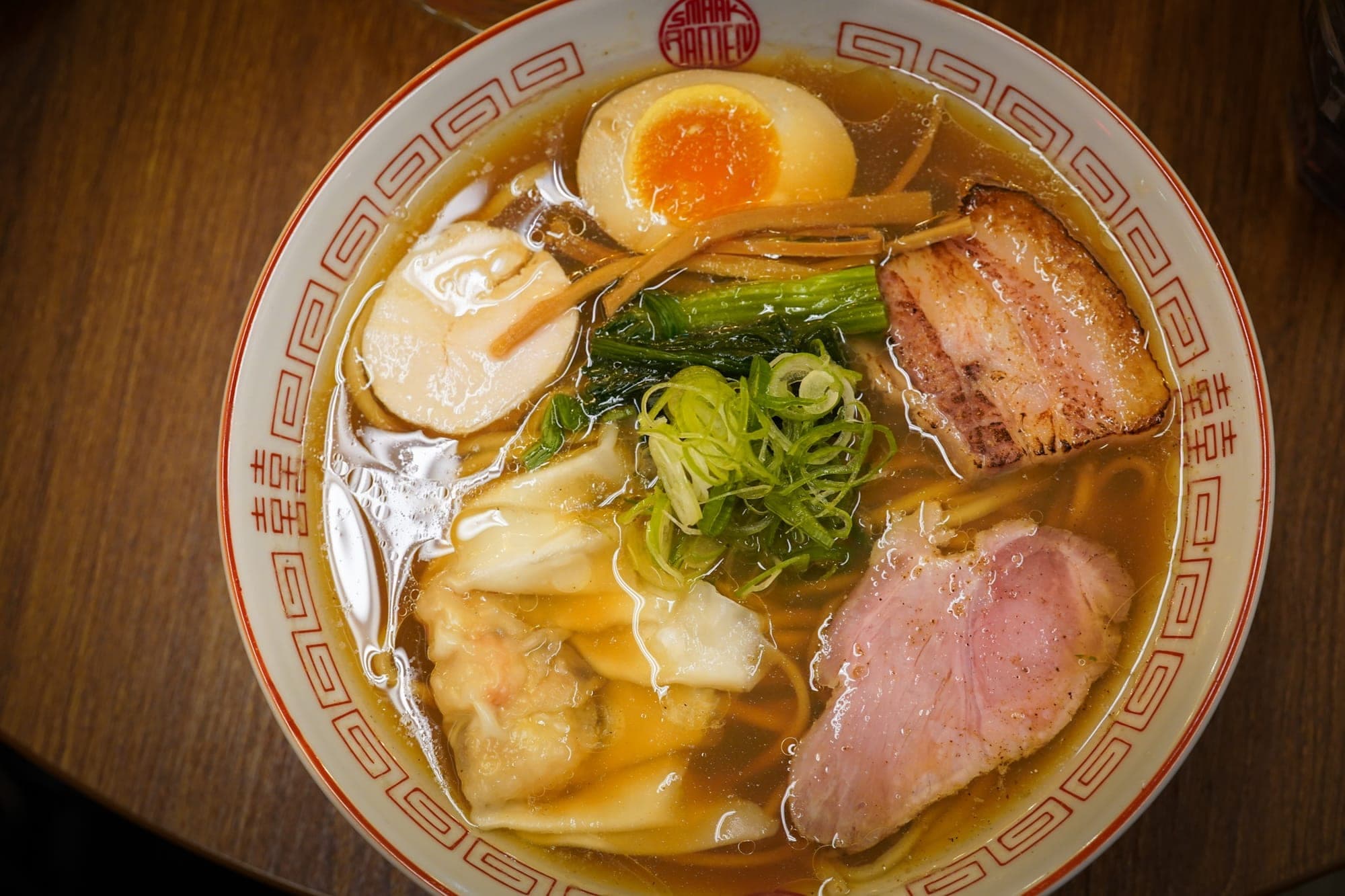
Foto: Komareats
№ 11Oude Pijp / Ruysdaelkade · Ramen, dashi-forward · €€8.0
De pop-up van chef Shige werd vast op de Ruysdaelkade, en het is de enige ramen van de stad waar dashi het woord voert.
Chef Shigeyuki Awazu, voor iedereen aan de counter gewoon Shige, kookte bij Utage Sake Bar, Bar Theo en KU Kitchen Bar en draaide op zijn vrije dagen ramen-pop-ups. In augustus 2025 werd die pop-up een vaste zaak aan de Ruysdaelkade, en daarmee heeft Amsterdam voor het eerst sinds het verdwijnen van Fujitora weer ramen waar dashi echt de leiding heeft. De bouillon is het hele verhaal: venusschelpen, niboshi, sababushi en kombu, gelaagd tot iets helders, lichts en stilletjes intens, afgemaakt met een tare van shoyu, shio of miso en een lik gember-prei-olie. De noedels komen uit eigen keuken, middeldik voor shoyu en miso, dun voor shio, en de toppings lopen van aburi buikspek-chashu tot een serieuze garnalenwonton. Ramenko, de Japanse blogger die elke kom in de stad rangschikt, at er in de openingsweek drie dagen achter elkaar. Een vegan shoyu op basis van kombu, shiitake en eekhoorntjesbrood houdt gemengde tafels tevreden, en de yuzu-pannacotta is dat zeldzame ramenzaak-toetje dat je echt wilt bestellen. Het is er klein en kalm, het soort plek waar slurpen het hardste geluid is.
Bestel · Wo-ma 17:00-22:00, dinsdag gesloten. Geen website, geen reserveringen, dus kom gewoon aan de vroege kant; de saba tatsuta van 8 euro, gefrituurde makreel met kerriezout en citroen, is het bijgerecht dat stiekem de kaart wint.
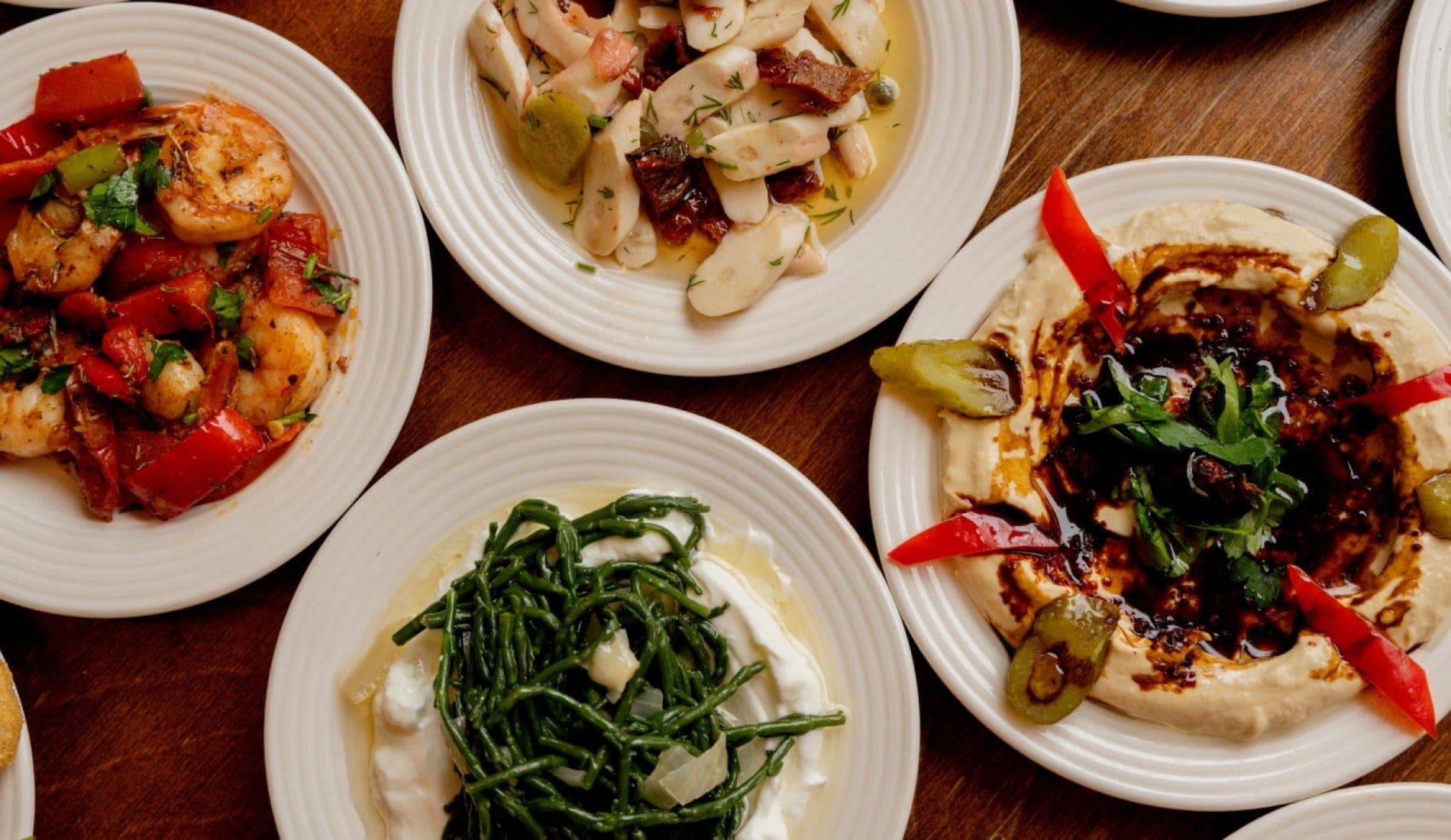
Foto: Restaurant Orontes
№ 12Oude Pijp / Albert Cuyp · Levantine · €€7.9
Al twintig jaar houtskoolvuur uit Antakya, een paar passen van de marktkramen.
Zodra de kramen van de Albert Cuyp worden ingeklapt, begint het serieuze eten van deze straat pas echt, en wel hier. Orontes kookt al ruim twintig jaar de keuken van Hatay, de grensstreek waar Turks en Syrisch in elkaar overlopen tot één heerlijke Levantijnse woordenwisseling, en dat proef je in de details: granaatappelmelasse en sumak door de mezze, gedroogde peper in Aleppo-stijl over zo'n beetje alles, lamsspiesen die echt open houtskoolvuur hebben gezien. Begin met een tafel vol koude mezze (de rokerige aubergine, daar moet je zijn) en ga daarna vol voor de mixed grill; elk hoofdgerecht komt met bulgur, cacık en salade, dus niemand hoeft hier honger weg te onderhandelen. Het is er warm en zonder poespas, het personeel doet dit zichtbaar al een eeuwigheid. Neem vier vrienden mee en bestel alsof je het meent: dit is groepseten, gemaakt voor het midden van de tafel.
Bestel · Neem de lamsspiesen van de houtskool met de auberginemezze; de granaatappelmelasse doet de rest.
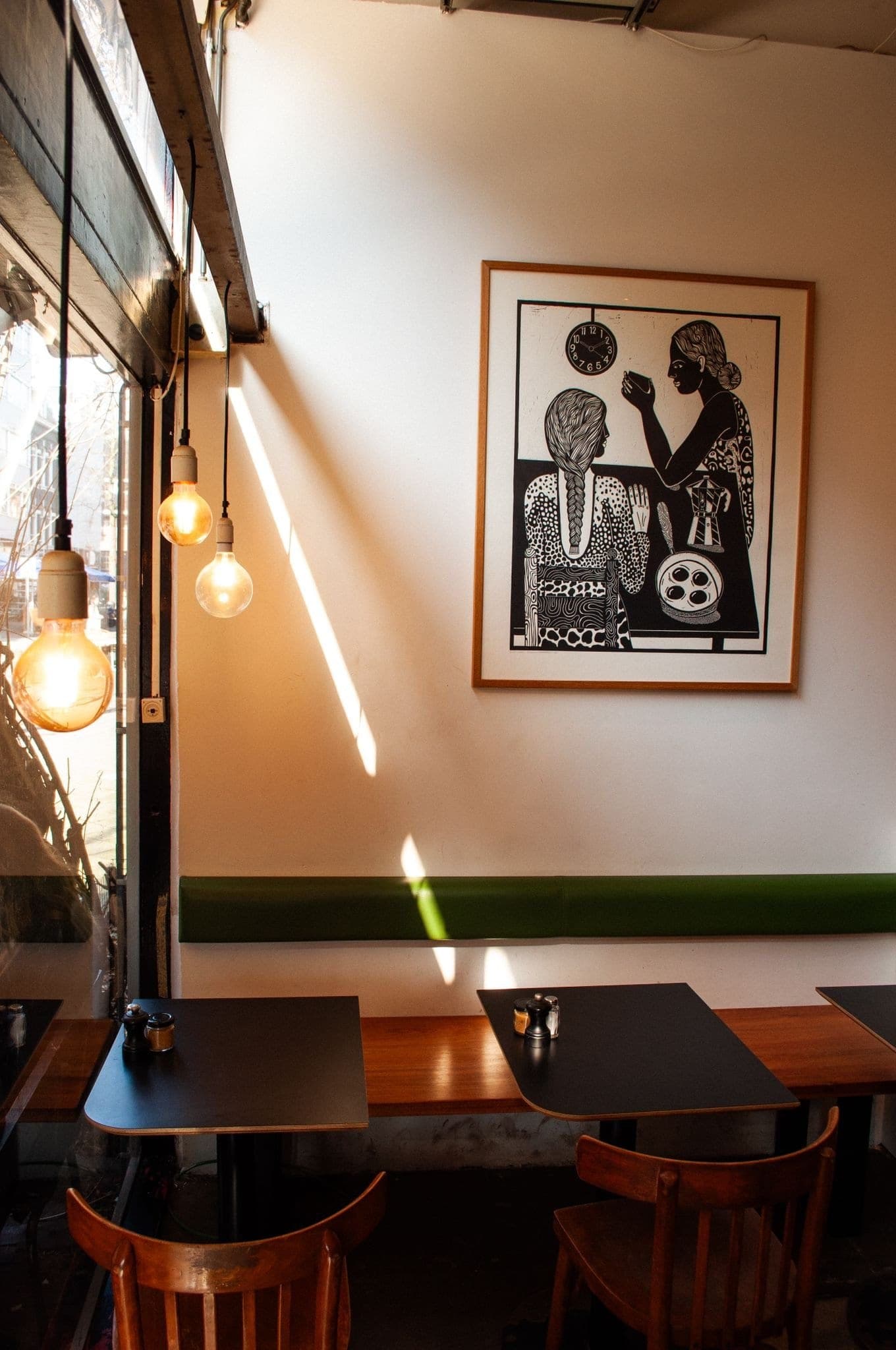
Foto: Little Collins
№ 13Sarphatipark · Australian · €€7.9
Brunch op Melbourne-niveau en drank bij daglicht, in een rustige zijstraat van De Pijp.
Vernoemd naar een steegje in Melbourne en gerund met echte Australische brunchdiscipline; al ruim tien jaar de reden dat mensen in De Pijp in het weekend een wekker zetten. De keuken behandelt ontbijt als koken en niet als toast beleggen: smashed avocado met precies de juiste stoot chili en limoen, een bacon-egg-and-cheese die zijn deli-voorouders overtreft, wentelteefjes van kaneelbrioche die ontworpen lijken om tafelgenoten jaloers te maken, en specials die vrijelijk lenen van Azië en het Midden-Oosten. De flat whites zijn zoals het hoort en de bloody mary's komen vóór twaalven zonder opgetrokken wenkbrauw. De smalle ruimte gonst als een goed etentje dat vroeg begonnen is. Reserveren kan niet, dus de zaterdagse rij hoort bij de liturgie: ga doordeweeks, of sta er bij opening en zie de straat wakker worden boven een lange, ongehaaste late ochtend met drank erbij.
Bestel · De wentelteefjes van kaneelbrioche, met een bloody mary ernaast als de dag het toelaat.
№ 14Sarphatipark · Nordic breakfast, specialty coffee · €€7.9
Een Scandinavische zaak in licht hout aan het Sarphatipark, doordeweeks open om 8:00 en met koffie van de beste Noord-Europese branders in plaats van de eigen.
Scandinavian Embassy is een multi-roaster bar, wat in de praktijk betekent dat ze inkopen bij de kleine Scandinavische branderijen die ze goed vinden in plaats van een huisblend te verdedigen, en dat de brewbar per seizoen verandert. Precies die keuze maakt dat de serieuze koffiemensen van deze stad de zaak als ijkpunt behandelen. Het eten is de andere helft: gezonde Scandinavische ontbijten en lunches, met meer zorg opgemaakt dan de prijs doet vermoeden, gebouwd op zalm, skyr, eigen brood en kleine gespecialiseerde leveranciers, en bewust op de koffie afgestemd. De zaak is klein en rustig, licht hout en weinig herrie, wat om kwart over acht met één ander persoon en iets uit te praten precies is wat je wilt. Voor een tafel van zes is het niks, en in het weekend zit het vol met het Sarphatipark-publiek. In 2022 kwam er een tweede adres bij, een bakkerij met winkel aan het Europaplein 87 met een breder assortiment broodjes en een koffiestation, maar het café aan het Sarphatipark is het origineel en de plek om naartoe te gaan. Let op dat de gepubliceerde openingstijden per bron verschillen: hun eigen site houdt maandag tot en met vrijdag 8:00 tot 17:00 aan.
Bestel · Doordeweeks 8:00 tot 17:00, in het weekend vanaf 9:00. Reserveren kan niet en er is plek voor nog geen dertig man, dus zorg dat je voor negenen binnen bent als je een tafel wilt in plaats van een kruk. Met z'n tweeën is de juiste maat voor deze zaak.
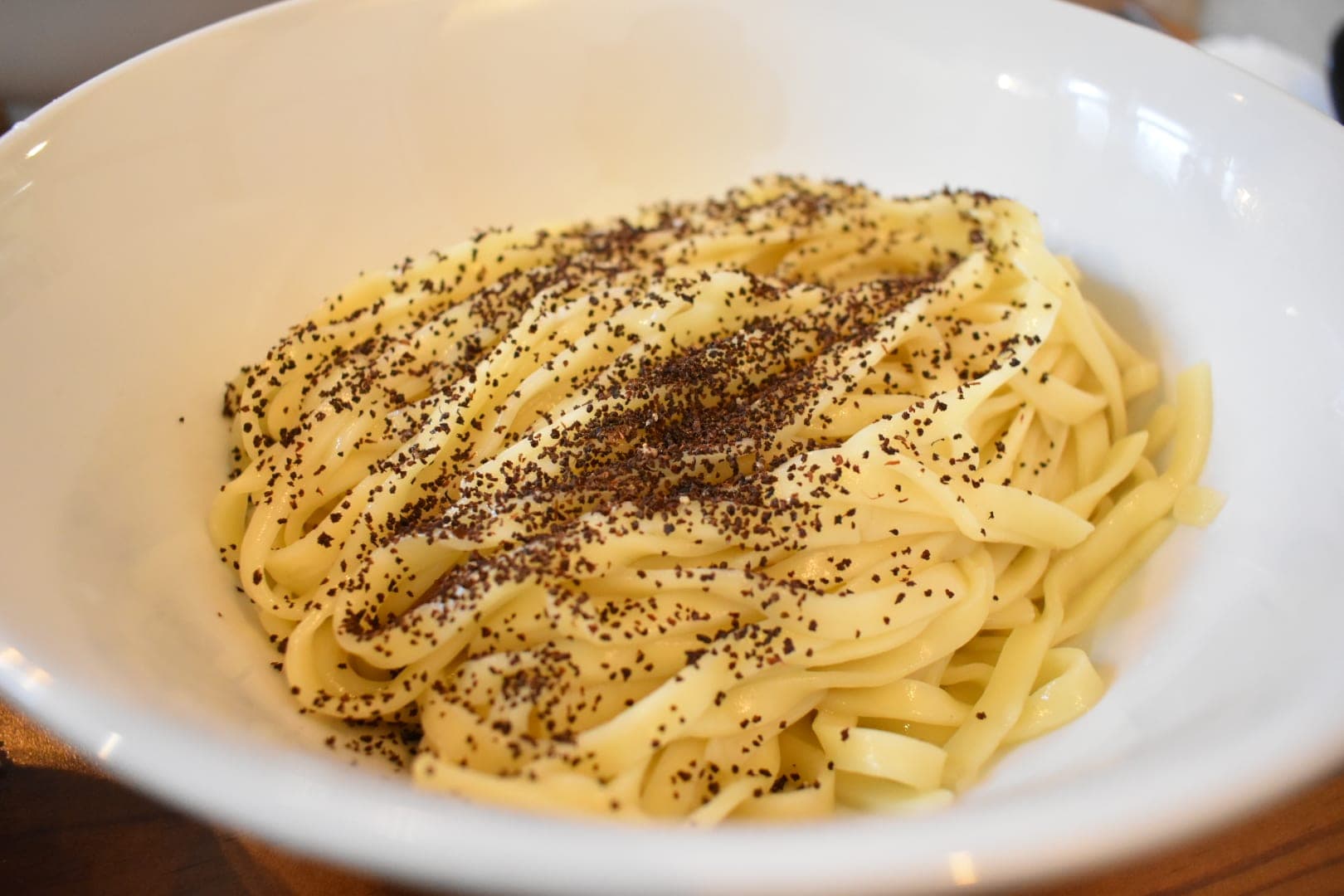
Foto: Ramenko
№ 15Nieuwe Pijp / Van der Helstplein · Vegan ramen · €€7.9
De volledig vegan zus van Men Impossible op een rustig Pijp-plein, thuisbasis van wat Ramenko de beste tsukemen van Amsterdam noemt.
Atsushi Ishida ruilde een kantoorcarrière in voor plantaardige ramen waar niemand in geloofde, en zijn Men Impossible op de Hazenstraat staat al in deze gids. Kitchen Impossible, in september 2023 geopend aan het groene Van der Helstplein, is de losse zus: zelfde eigenaar, ander adres, ander idee. Waar het origineel in de Jordaan een proeverij aan een gedeelde tafel is, is dit een hoekzaak waar je binnenloopt, aan de counter bestelt en het plein voorbij ziet kabbelen. Alles is volledig vegan en niks speelt het imitatiespel: de Tan Tan Men mengt sesam, sojabonen en aromatische groenten onder huisgemaakte chiliolie, in de misokom ligt krokant gefrituurde seitan, en de noedels worden in huis gerold van speltmeel. De Tsuke Men is de bestelling waar het om draait; Ramenko, de Japanse blogger die elke kom in de stad rangschikt, noemt hem de beste tsukemen van Amsterdam, en de yuzu soup wari die ze aan het eind bijschenken om het laatste restje dipsaus los te maken, maakt die claim af. Google houdt het op 4.8, HappyCow op een strakke 5.0, en de lunch is het stille koopje.
Bestel · Open wo-ma, lunch 12:00-14:00 (in het weekend tot 15:00) en diner 17:00-21:30, dinsdag gesloten. Alleen walk-ins, en de lunchset van 10 euro met onigiri, misosoep, bloemkooltempura en kimchi is een van de beste goedkope Japanse lunches van De Pijp.
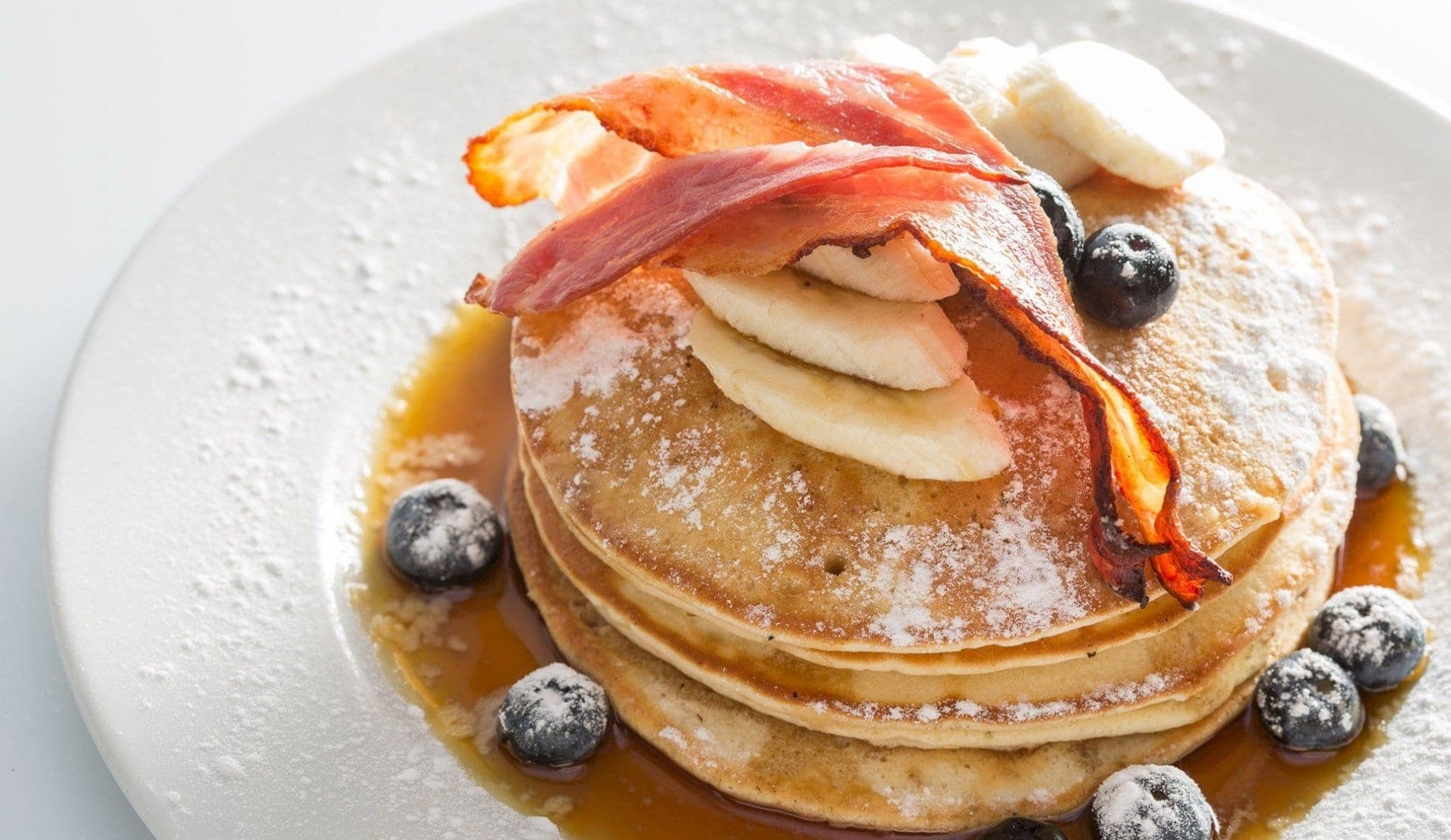
Foto: Bakers & Roasters
№ 16Eerste Jacob van Campenstraat · Weekend brunch, New Zealand and Brazilian · €€7.8
Een zaak met een bordje laptop free zone die twee euro rekent om een gerecht aan te passen, en op zondag om tien uur alsnog een rij tot ver de straat in heeft.
Julian Kirwan uit Nieuw-Zeeland en Sergio Seibert uit Brazilië ontmoetten elkaar op een avond uit in West Hollywood en bouwden de keuken die daaruit volgde: een Kiwi-café met een zwaar Braziliaans accent, gerund vanuit een open doorgeefkeuken op een rustige hoek van De Pijp. De kaart is zonder excuus een brunchkaart, de hele dag, elke dag. De Kiwi Brekkie is de volledige inzet voor 25,50 euro, twee scharreleieren met bacon, worst, ontbijtaardappels, knoflookspinazie, romige champignons, tomatenrelish en geboterde toast; Navajo Eggs zetten pulled BBQ-varkensvlees, mangosalsa en chipotlecrème onder gepocheerde eieren voor 22 euro; de Kinda Classic Eggs Benny blijft op 17,50 euro staan en een korte stapel Amerikaanse pannenkoeken op 13,50 euro. Er zijn twee vestigingen van Bakers & Roasters en dit is de originele, wat uitmaakt omdat de vestiging aan het Kadijksplein wel reserveringen aanneemt en deze pertinent niet. Het is er klein, er hangt een bordje laptop free zone, en de tafels draaien snel, met twee euro extra als je iets aan een gerecht verandert, wat afhankelijk van je ochtend verfrissend of bot overkomt. In het weekend blijven ze open tot 16:00 in plaats van 15:00, en de rij gedraagt zich daarnaar: lezers melden meestal 20 tot 50 minuten, langer op de piek, met het advies om op zondag om 10:00 present te zijn. De rij is organisch en niet gefabriceerd, maar hij is er wel, en de prijzen zijn harder gestegen dan de porties.
Bestel · Dagelijks open van 08:30 tot 15:00, zaterdag en zondag 08:30 tot 16:00. In De Pijp geen reserveringen: ga vanaf je telefoon in de virtuele WalkUp-rij staan of wees op zondag om 10:00 aanwezig. Bestel de Kiwi Brekkie van 25,50 euro, en houd rekening met die twee euro als je iets aan het bord verandert.
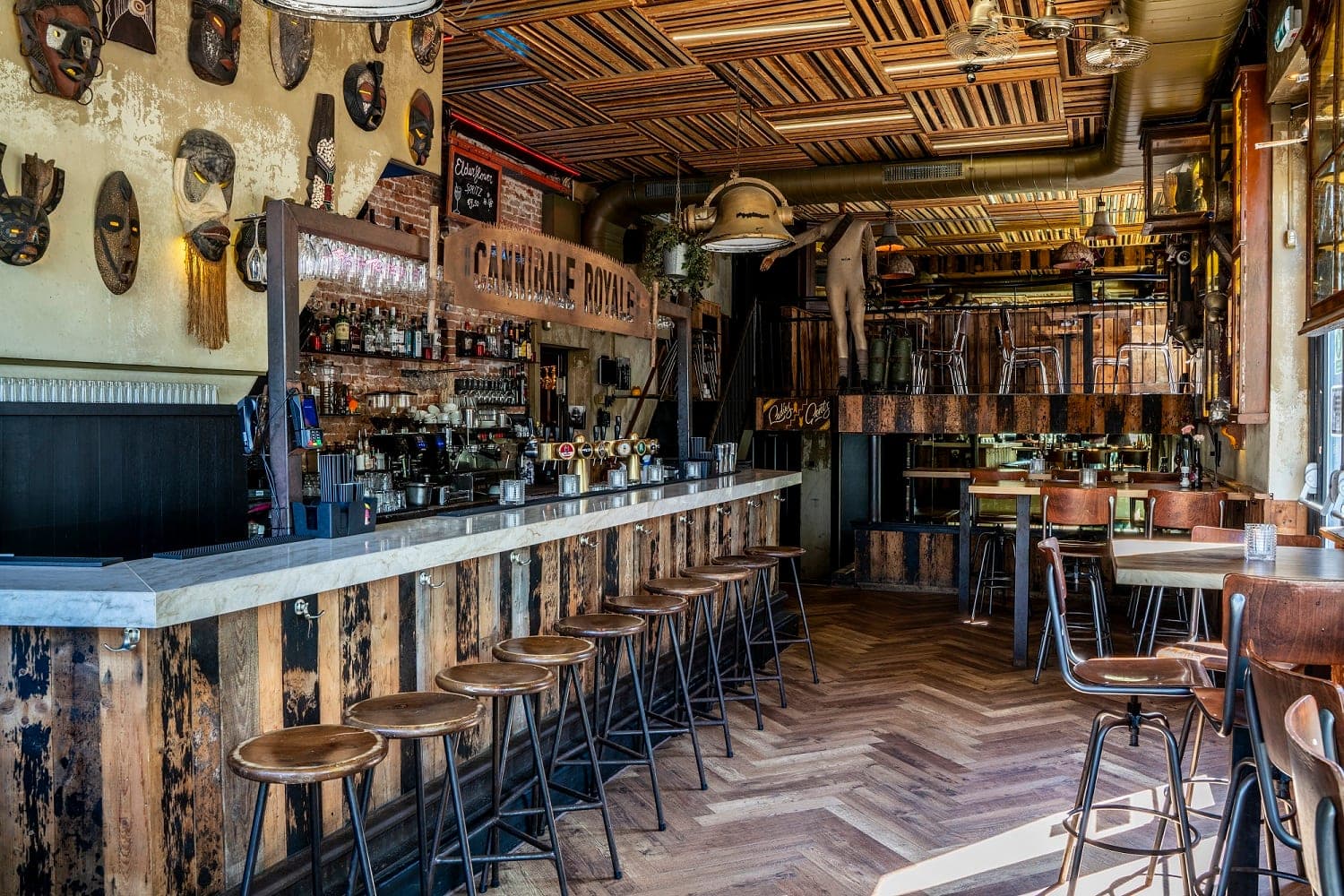
Foto: Cannibale Royale
№ 17Ruysdaelkade · Charcoal-grilled burgers & steaks · €€€7.8
Op houtskool gegrilde burgers met een dikke patty en een terras aan de gracht, de vaste De Pijp-brasserie waar vleesliefhebbers blijven terugkomen.
Cannibale Royale staat al jaren aan de houtskoolgrill, begonnen aan de Handboogstraat in het centrum voordat de zaak uitgroeide tot zes vestigingen in de stad plus Rotterdam. Het format hoefde nooit bijgesteld te worden: een uitbundige brasserie gebouwd rond burgers, ribs en steaks, met een van de langere craftbierkaarten van de stad. De huisburger, Le Cannibale Royale, stapelt pulled pork, zuurkool, cheddar en bbq-saus op een grasgevoerde patty van 170 gram, de versie die een recente recensent de beste burger noemde die hij ooit at. Het personeel geeft zelf stiekem de voorkeur aan Le Magnifique, met feta en harissamayo die door de rook heen snijden. Ruysdaelkade is niet de originele vestiging, maar wel de vestiging waar de buurt zelf steeds naar terugkeert, geprezen in duizenden reviews op TheFork en Google, met nauwelijks een klacht behalve het geluidsniveau op een volle vrijdag. Zes vestigingen betekenen dat het format bewezen is in plaats van precieus, en dit is de vestiging om te kiezen: grachtlicht door de ramen, een terras dat snel vol zit, en een keuken die de meeste avonden tot middernacht doorloopt. Reserveer, of waag een gokje aan de bar.
Bestel · Keuken draait van 17:00-23:00 op maandag tot en met donderdag, later op vrijdag en zaterdag, en alleen op zaterdag en zondag is er ook een lunchsessie van 12:00-17:00.
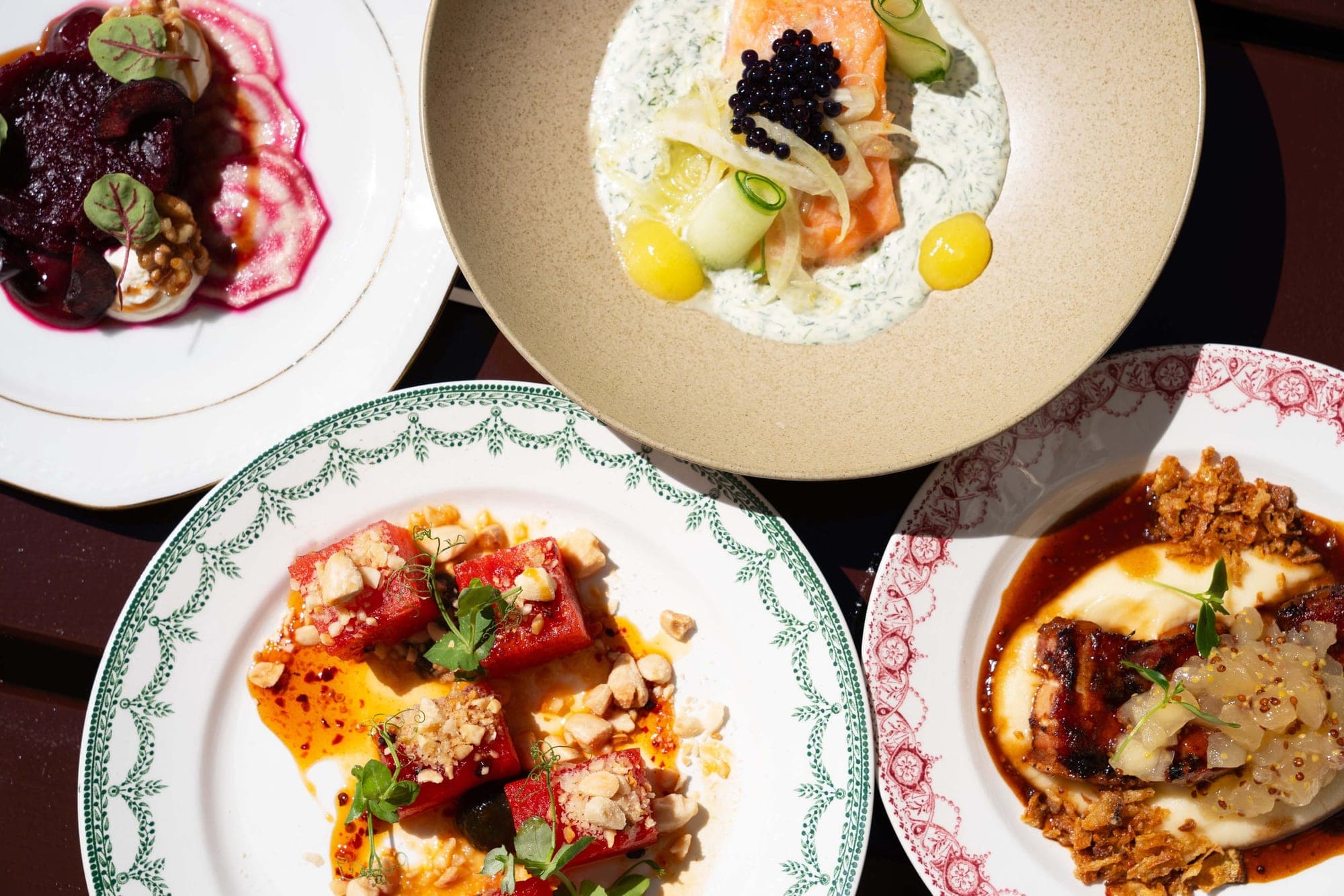
Foto: Wijmpje Beukers
№ 18Diamantbuurt · Eetcafé, modern Dutch · €€7.8
Een Gault&Millau-toque in een eetcafé in De Pijp dat zijn vijf-plus-vijf-kaart elke zes weken omgooit.
Maarten en Jordy vernoemden dit hoekeetcafé naar de moeder van Maarten toen ze het in 2016 bij het Van der Helstplein openden, en het is stilletjes het best kokende eetcafé van De Pijp geworden. Het format is strak: vijf voorgerechten, vijf hoofdgerechten, waarvan er altijd twee vegetarisch of vegan zijn, en de hele kaart gaat elke zes weken op de schop met wat het seizoen brengt. Op dit moment betekent dat buikspek met knolselderij en mosterd voor 15,50 euro, lamsnek met doperwten en tuinbonen voor 26,50, dorade met beurre blanc voor 27,50 en een biefstuk met hollandaise en jus de veau voor 28,50, plus een eigen Dame Blanche die een kleine cultstatus heeft opgebouwd. Gault&Millau geeft 12 van de 20 en een toque, opmerkelijk voor een tent met zwarte draadstoelen en kunst die tegen karton leunt. Your Little Black Book zette het in 2025 bovenaan zijn lijst van eetcafés in De Pijp en noemde het zomerterras een van de gezelligste van de stad. Barts Boekje vond bij de eerste recensie een paar gerechten te zout, en de keuken kruidt nog altijd met overtuiging. Ze reserveren bewust maar een deel van de tafels binnen en op het terras, zodat inlopers een kans houden, en op een vrijdag maakt dat uit.
Bestel · Alleen woensdag tot en met zaterdag open, 17:00 tot 23:00; zondag tot en met dinsdag gesloten. Reserveer online tot zeven personen of loop vroeg binnen. Bestel wat er die ronde vegetarisch is plus de biefstuk, en sluit af met de Wijmpje Dame Blanche.
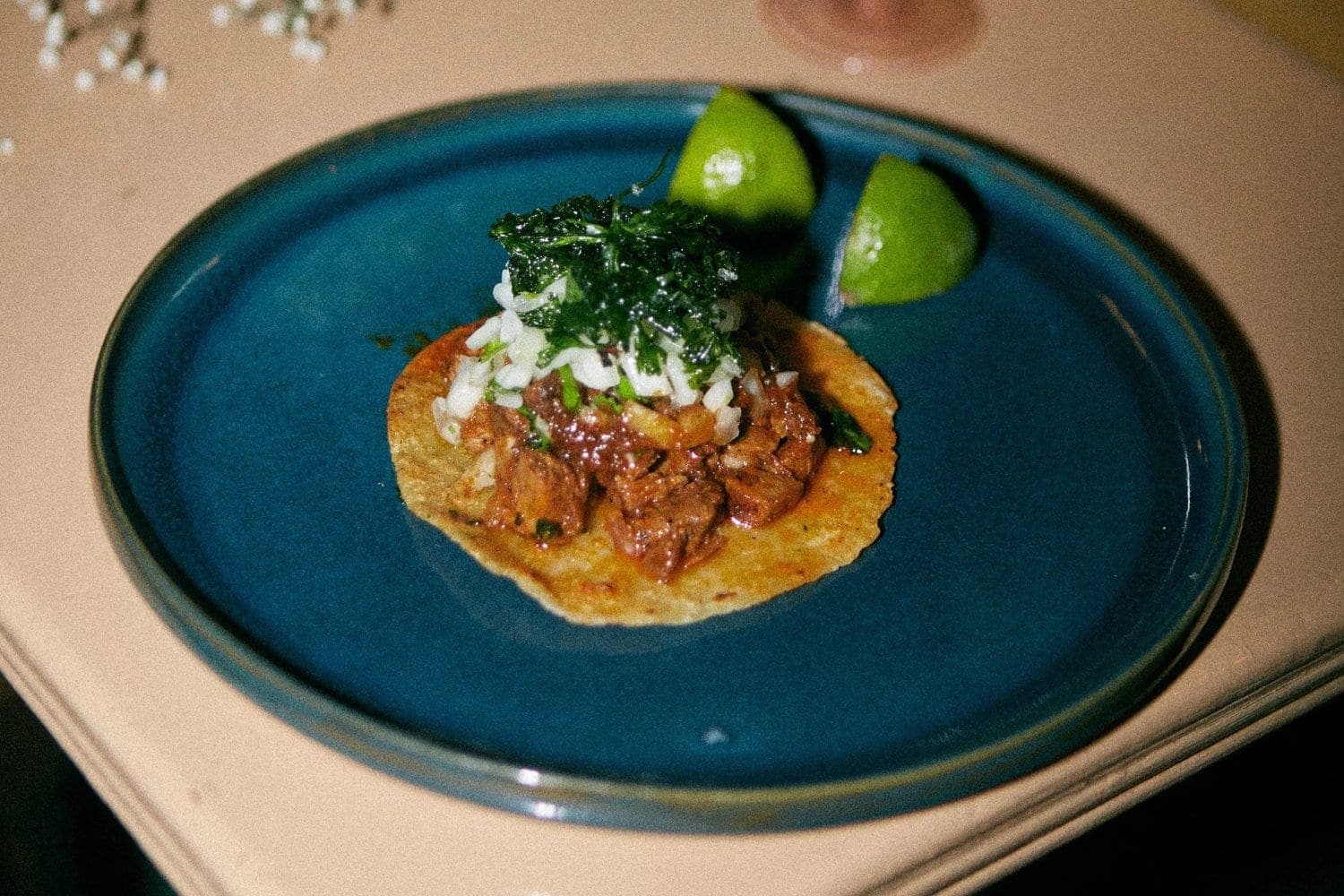
Foto: Cabron
№ 19Oude Pijp / Albert Cuyp · Mexican · €€7.8
Sinds 2019 op de Albert Cuyp-markt, met een eigen tacokraam op marktdagen en maandelijks een technofeest dat Radio Cabron heet.
Cabron opende in 2019 op de Albert Cuyp-markt en is sindsdien stilletjes een van de meest betrouwbare Mexicaanse keukens van de stad gebleven, het soort zaak dat geen relaunch of nieuwe chef om de achttien maanden nodig heeft om goed te blijven. De ruimte is cantina-stijl, met vintage bordjes aan de muur, een grote ronde tafel voor groepen en een volwaardige bar voor mezcal en cocktails. De taco's zijn de reden om te komen: carnitas met zoeteaardappelpuree en queso fresco, softshell crab met mangosalsa, een gefrituurde bloemkoolversie die ook vleeseters overtuigt, allemaal op een blauwe maistortilla en geprijsd om er drie of vier per persoon te bestellen. Op drukke marktdagen staat er buiten de deur een eigen tacokraam die rechtstreeks aan de straat verkoopt. Op bepaalde avonden loopt er een proeverij van vijf gangen voor wie liever laat beslissen aan de keuken. Eén keer per maand verandert Radio Cabron de hele zaak in een technofeest zonder dat het eten eronder lijdt. Consistentie, geen heruitvinding, is de hele insteek, en het werkt.
Bestel · Open dinsdag t/m vrijdag 18:00-23:00 en in het weekend 18:00-23:30, maandag dicht. De proeverij van vijf gangen (€21,50) loopt alleen op dinsdag, woensdag en zondag.
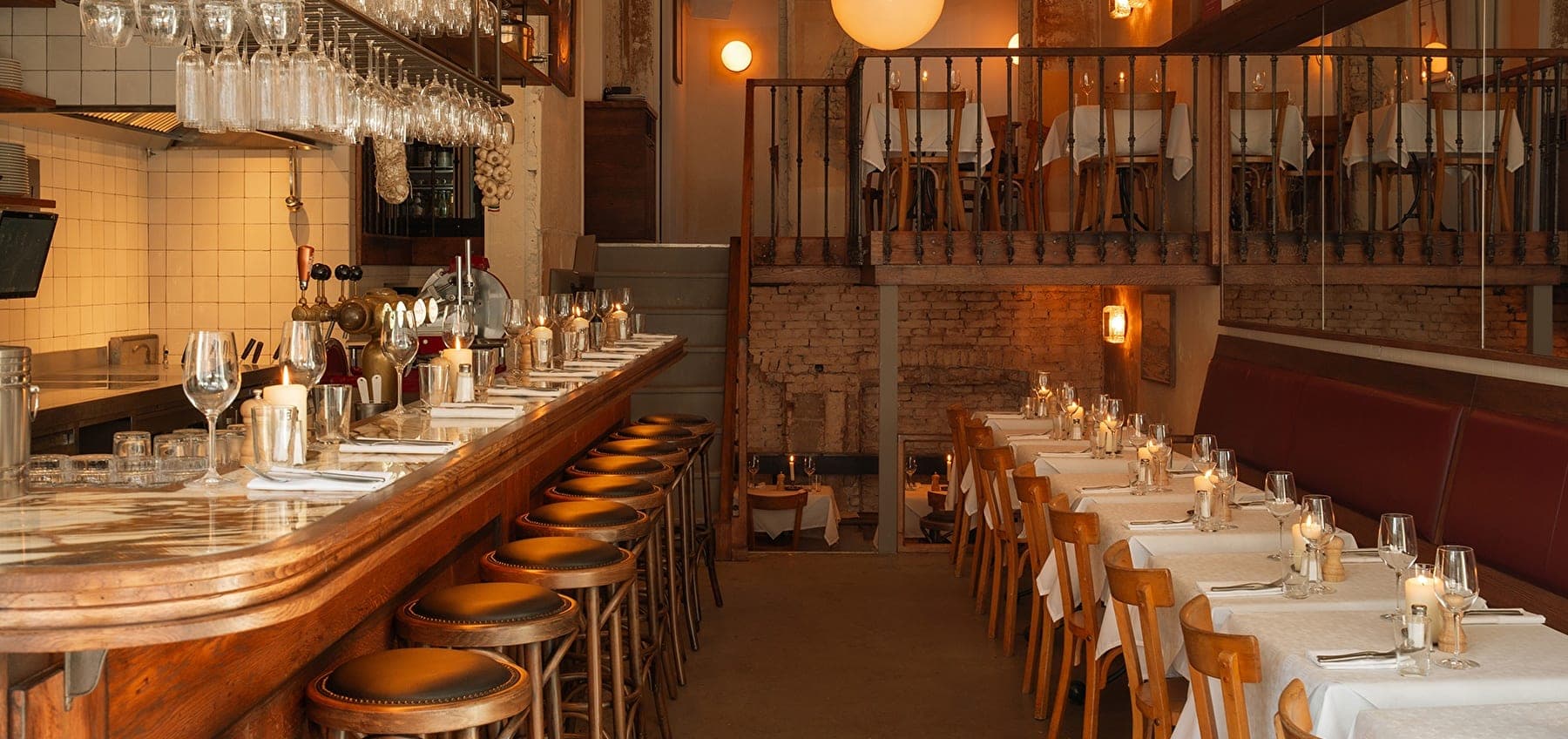
Foto: Leonardo's Ravioli Bar
№ 20Oude Pijp · Italian · €€7.8
De chef van Toscanini die losging met een marmeren counter, vijf ravioli en een gastchef-special om naar te vragen.
Leonardo Pacenti maakte jarenlang van Toscanini hét Italiaanse instituut van de Jordaan, en besloot toen dat Amsterdam eigenlijk een bar nodig had die vrijwel niets anders serveert dan ravioli. Hij had gelijk. Achter de blauwe pui aan de Eerste van der Helststraat vind je een marmeren counter, een open keuken en een korte kaart gevulde pasta, zo dun uitgerold dat het nauwelijks nog een verpakking mag heten. De spinazie-ricotta met ragù is de klassieker, de brasato in boter en salie de comfortbestelling, en de baccalà in kreeftenbisque de bestelling om mee te pronken. Het slimme zit in de Specialità: een wisselende ravioli die samen met een andere Amsterdamse chef wordt ontwikkeld, zodat de serieuze keukens van de stad om de beurt komen bijklussen als pastavuller in De Pijp. Begin met cicchetti en een spritz, eindig met de koude zabaglione, en je hebt een complete avond voor minder dan het eerste bedrijf van een proeverij.
Bestel · Vraag eerst wat de Specialità is voor je iets anders bestelt; dat is de gastchef-samenwerking en die wisselt zonder veel aankondiging. De counterkrukken hebben de open keuken als voorstelling erbij.
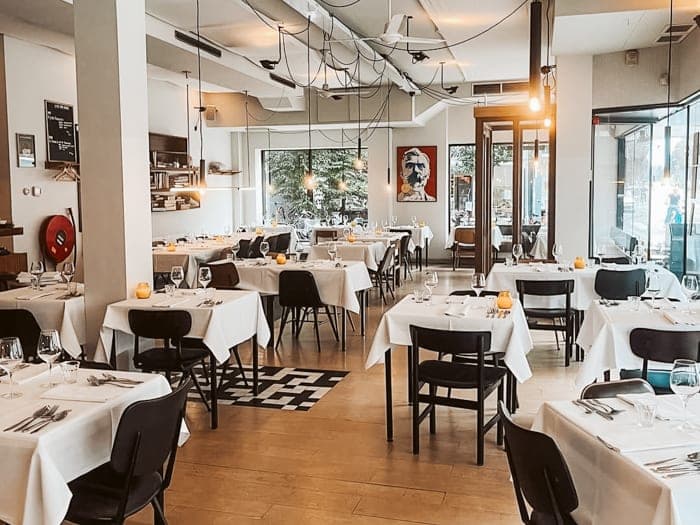
Foto: Your Little Black Book / Fa. Pekelhaaring
№ 21Van Woustraat · Italian · €€7.7
Een Italiaanse kaart met Spaanse worst en gefrituurde spiering ertussen, waar je de pasta ook als halve portie bestelt.
Fa. Pekelhaaring aan de Van Woustraat is van de broers Matthias en Lennard van der Nagel; Matthias staat in de keuken. Er is één kaart voor lunch en diner, in de basis Italiaans, met daartussen Spaanse snacks als cecina en morcilla. Pasta bestel je half (17,50) of heel (24,50): pappardelle met ragu bianco van konijn, gnocchi met scheermessen en bottarga. Als hoofdgerecht kies je kwartel gevuld met morilles (28) of een hele schol met pil pil en gefrituurde artisjok (25). De arancini stonden er in 2010 al op en staan er nog, met pimentmayonaise, voor 8,50. De wijnen komen vooral uit Italië en Frankrijk, natuurwijnen zijn gemarkeerd en een fles kost 27 tot 138 euro. Michelin geeft sinds 2021 een Bib Gourmand en noemt de zaak de stadskantine van veel Amsterdammers. Gault&Millau geeft 13 van de 20 punten. Gasten prijzen de vriendelijke bediening en noemen het er druk en luid.
Bestel · Reserveren is een must, zegt Gault&Millau. Open dinsdag tot en met zondag van 12.00 tot 22.00, maandag dicht.
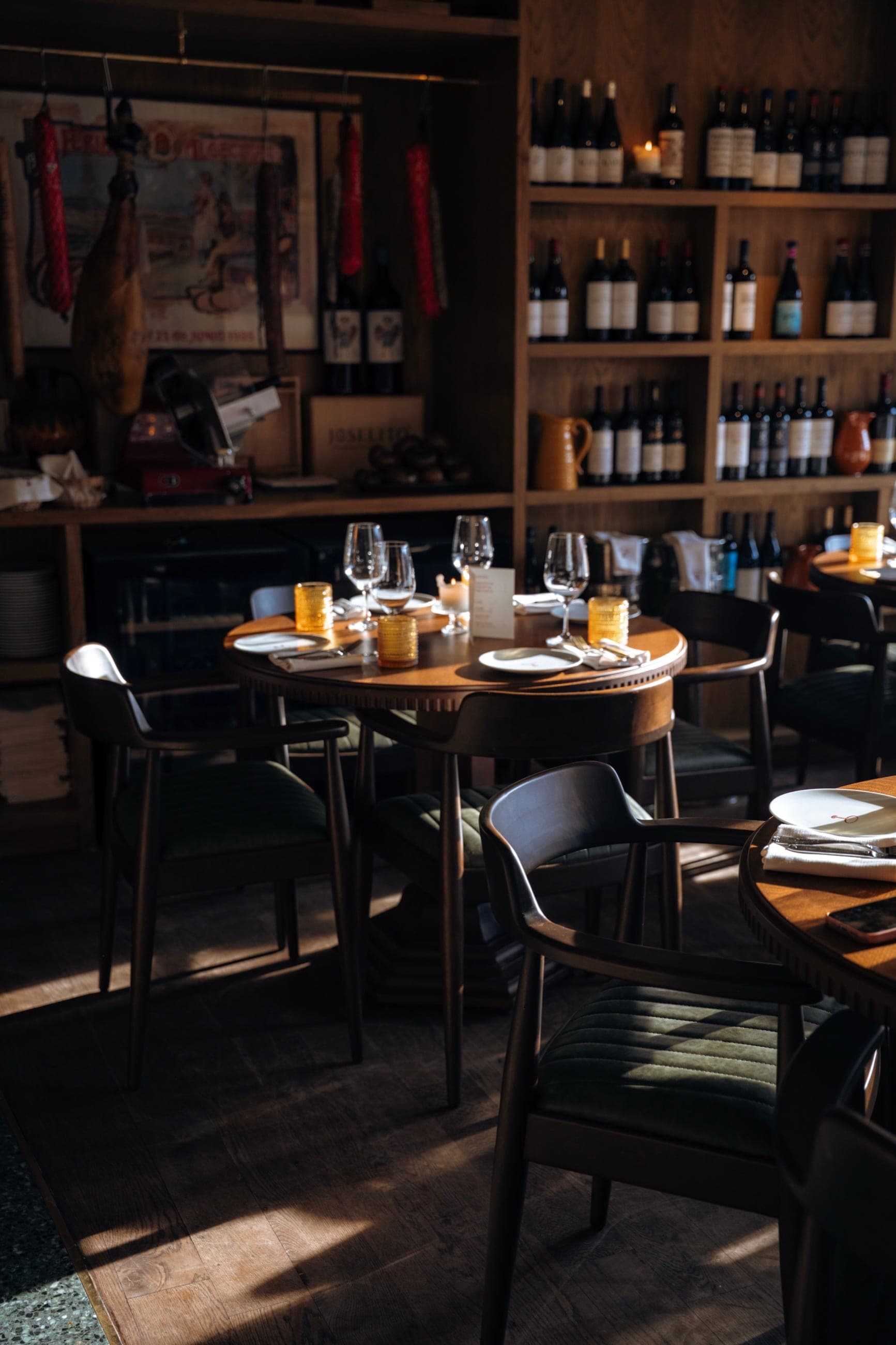
Foto: Mesa Mesa
№ 22Marie Heinekenplein · Spanish · €€7.6
Serieuze Spaanse tapas en vermut, die het Marie Heinekenplein uit de middelmaat trekken.
Het Marie Heinekenplein was jarenlang een plein waar je overheen liep, nooit naartoe, en juist daarom voelt de komst van Mesa Mesa bijna als een statement. Geopend in 2025 door mensen die snappen dat tapas een ritme is en geen menucategorie, en die de klassiekers dus gewoon recht doen: jamón ibérico met de hand gesneden, gilda's met de juiste verhouding ansjovis en olijf, pan con tomate waarin de tomaat echt de hoofdrol speelt, en een truffeltortilla die vanbinnen net vloeibaar blijft, precies zoals Madrid het bedoeld heeft. Vanuit de open keuken blijven de bordjes komen, in de correcte rommelige volgorde, terwijl jij je door de vermutkaart werkt; en ja, vermout drinken om vier uur op een dinsdagmiddag is hier exact de bedoeling. Later op de avond kaarslicht, aan de bar altijd los en spraakzaam. In het weekend gaat de deur om twaalf uur al open, de beschaafde Spaanse opvatting van een lunch die ongemerkt avondeten wordt.
Bestel · De truffeltortilla, nog wiebelig in het midden, met een glas vermut op ijs.
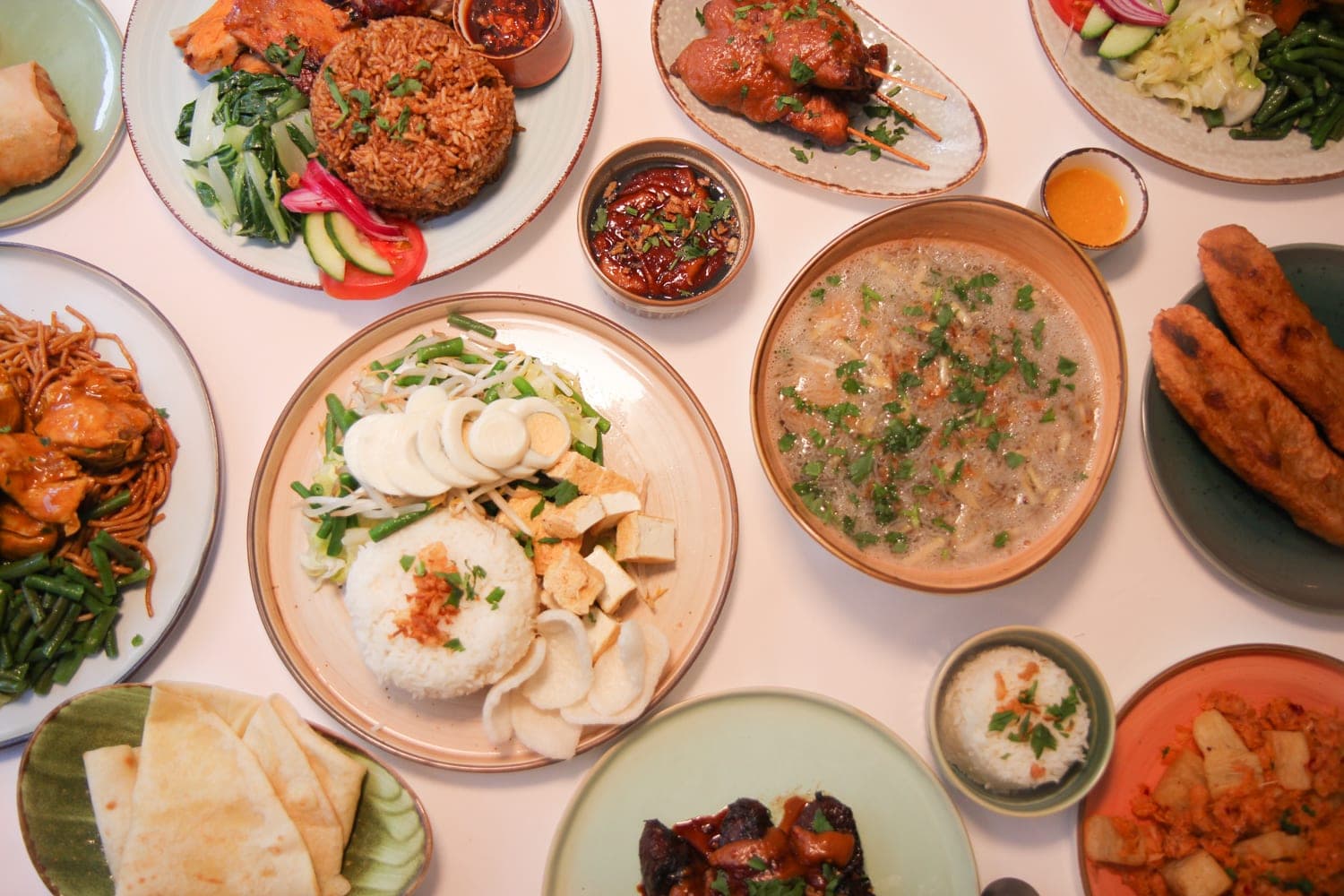
Foto: Warung Spang Makandra
№ 23Gerard Doustraat · Javanese-Surinamese · €7.5
Surinaams-Javaanse warung uit 1978 in De Pijp, nu met terras; gasten prijzen de porties en de Special, vaste gasten vinden dat het vroeger beter was.
Spang Makandra kookt sinds 1978 Surinaams-Javaans; grondlegger was Toeki. Jarenlang zat de warung op Gerard Doustraat 39, in wat FavorFlav een pijpenla noemt. Nu zit ze een paar deuren verder op nummer 33, flink uitgebreid en met terras. Vroeger kon je er niet reserveren en werd er geen alcohol geschonken; nu reserveer je online en staan er tapbier, Parbo, wijn en cocktails (9,50) op de kaart. Je eet saoto soep (8,50 of 12,50), teloh met bakkeljauw (8,00 of 11,00), rames en roti. De Spang Makandra Special kost 18,00, roti kipfilet 15,00. FavorFlav schreef in 2025 dat het rundvlees 'smelt op je tong'. Gasten zijn verdeeld. Ze prijzen de grote porties voor weinig geld en raden de Special en de roti aan. Een groep vaste gasten vindt dat de kwaliteit achteruit is gegaan, deels sinds de verhuizing. Andere klachten gaan over droge kip en pindasaus die naar pindakaas smaakt. Op Google geven gasten de zaak een 4,2 van de 5, op eet.nu een 4,1 op 10.
Bestel · Binnenlopen kan altijd; online reserveren gaat voor 1 tot 7 personen, voor dezelfde dag tot 17.00, en het terras is niet online te reserveren. Open van 11.00 tot 22.00, op zondag vanaf 13.00.
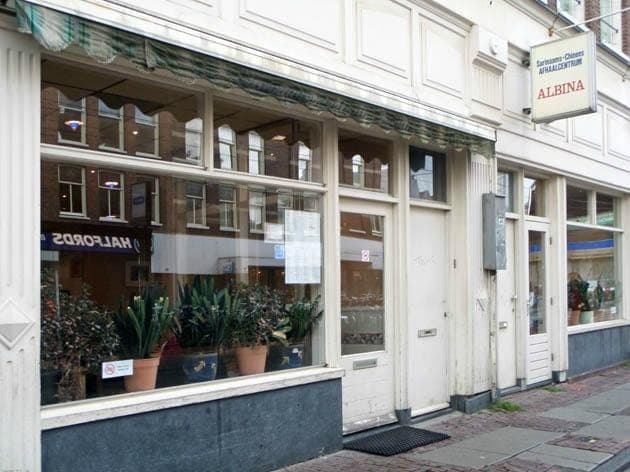
Foto: Tripadvisor user photo / Albina Restaurant
№ 24Albert Cuyp · Surinamese-Chinese · €7.5
Surinaams-Chinese rotikantine zonder franje, voedt de Albert Cuyp al sinds mensenheugenis.
Pal tegenover de kramen van de Albert Cuyp zit Albina, zo'n kantine met tl-licht en formica tafels die stilletjes elk conceptrestaurant in de omtrek overleeft. De kaart is de grote Surinaamse kruisbestuiving, met Chinese, Indiase en Javaanse lijnen dwars door elkaar: bami en nasi hoog opgetast in meeneembakken, moksi meti op rijst, en de betrouwbaarste roti kip van de stad, kerriekip, aardappel, kousenband en ei, met een platbrood van de bakplaat dat je scheurt en overal doorheen haalt. Het broodje pom, Surinames citroenige ovenschotel van tajer en kip in een zacht bolletje, is de juiste marktdaglunch voor een marktdagprijs. De bediening is snel en onsentimenteel, de porties zijn enorm en de halve clientèle komt al tientallen jaren wekelijks. Als deze gids De Pijp de buik van Amsterdam noemt, dan is deze zaak een dragend orgaan.
Bestel · Roti kip, met een broodje pom erbij voor onderweg naar huis.
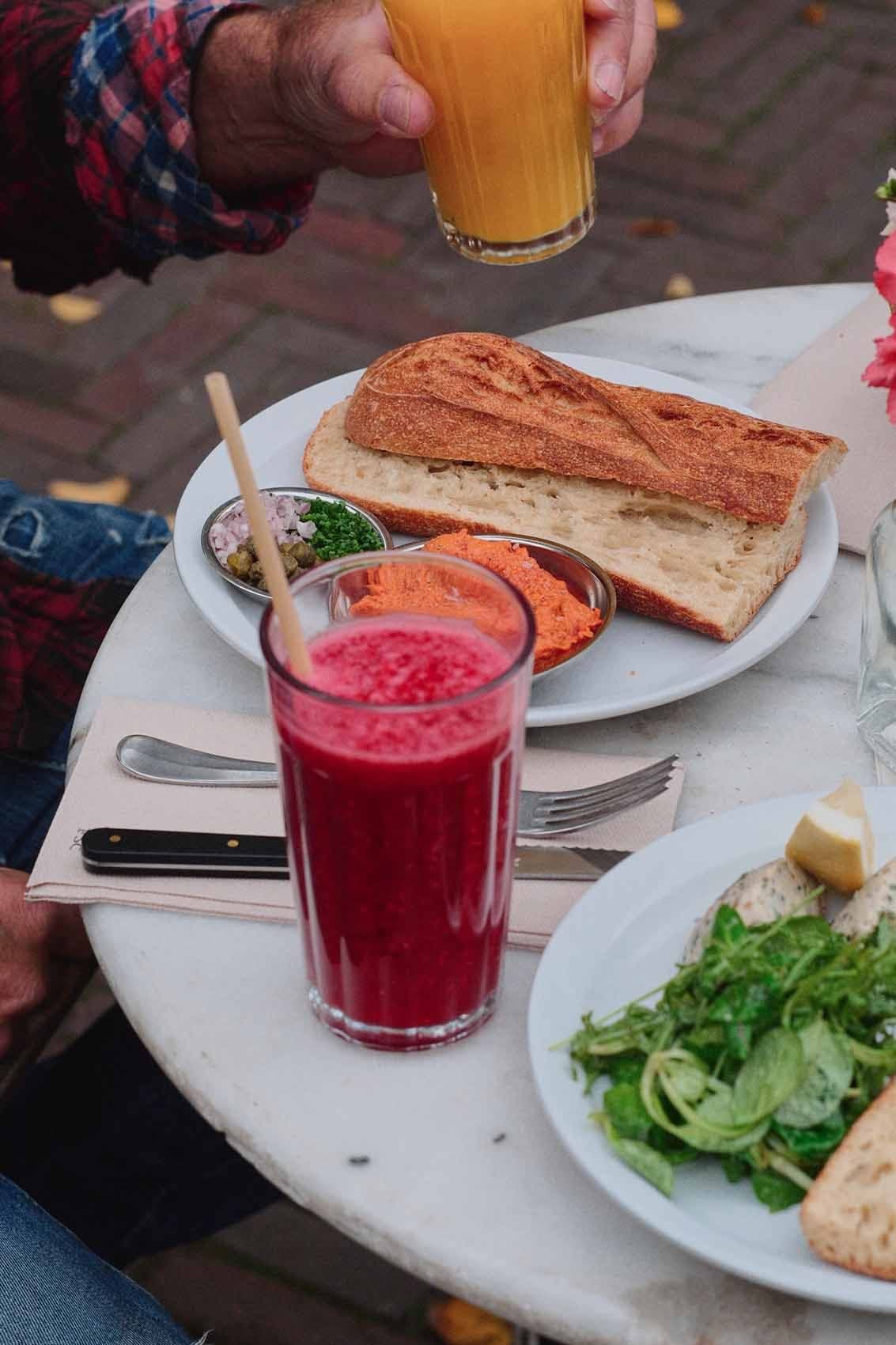
Foto: De Wasserette
№ 25Eerste van der Helststraat · Breakfast, specialty coffee · €€7.5
Elke dag om 7:30 open, één straat van de Albert Cuyp, en daarmee de meest betrouwbare vroege tafel van De Pijp.
De naam zegt het al, en de zaak heeft diezelfde weinig glamoureuze bruikbaarheid: geen concept, geen rijtheater, gewoon een dagzaak die om 7:30 opengaat en tot vijf uur doordraait, zeven dagen per week. Die constantheid is het hele argument. Om acht uur op een doordeweekse dag krijg je een rustige tent, een barista die de koffie serieus neemt, en een keuken die dan al eiergerechten, huisgemaakt gebak en open belegde boterhammen uitdraait die meebewegen met het seizoen en het humeur van de kok. Eggs benedict, Florentine en Norwegian vormen de basis van de kaart, wentelteefjes doen de zoete kant, en het broodje kip-avocado is degene die stamgasten uit zichzelf noemen. Reserveren kan niet en hoeft niet: je zit waar plek is. Het voorbehoud is de maat. Het is er klein, het wordt krap, en op zaterdag om elf uur is het er luid en traag, dus dit is uitgesproken een doordeweekse ochtendtip. Eén straat van de Albert Cuypmarkt zitten betekent dat je dicht bij de drukte bent zonder erin te staan.
Bestel · Dagelijks 7:30 tot 17:00, geen reserveringen. Ga doordeweeks voor negenen en je hebt het rijk alleen. Vermijd het weekend na tienen, als het wachten op eten lang wordt en het er luid is.
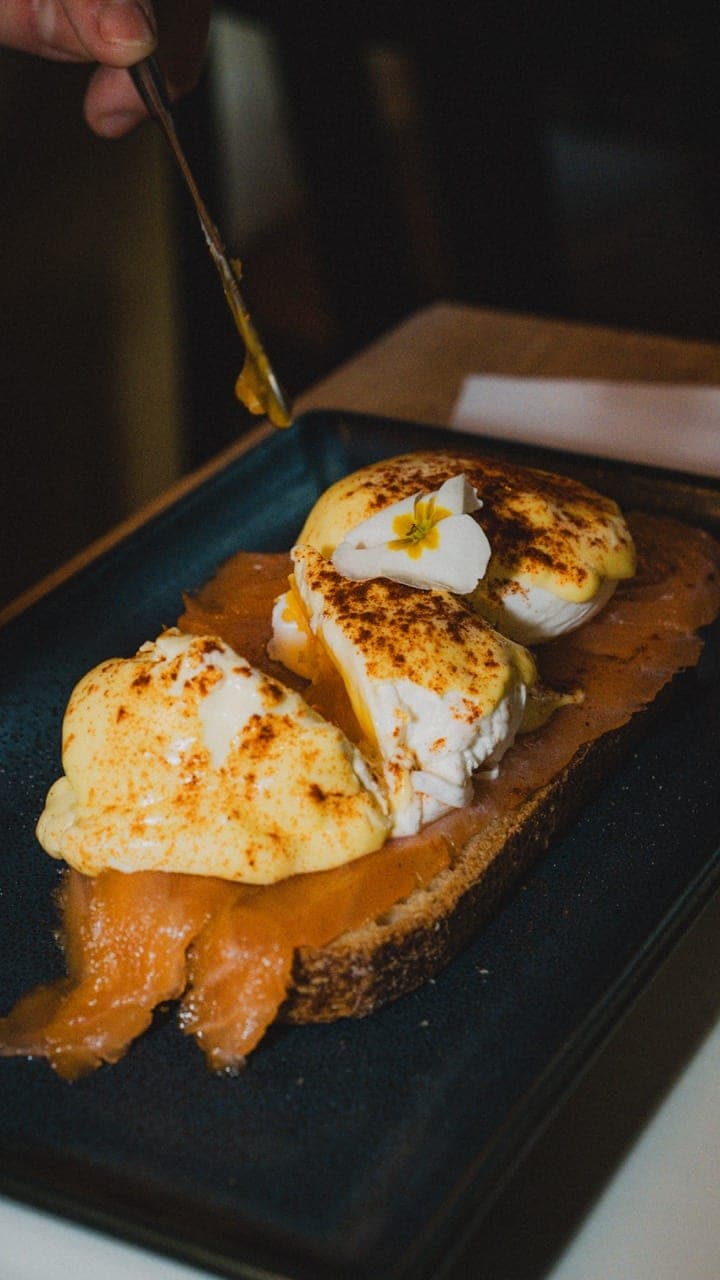
Foto: Loop51
№ 26Dusartstraat · All-day brunch, vinyl bar · €€7.5
Een platenspeler die vanaf tien uur 's ochtends draait en live dj's vanaf vrijdag, en zo wordt eggs benedict een middag.
Loop51 opende in november 2024 aan de rustige Dusartstraatkant van De Pijp met een op maat gebouwd geluidssysteem en een uitgangspunt dat als gimmick klinkt en dat niet is: elke dag de hele dag vinyl, en live dj's op vrijdag en allebei de weekenddagen met jazz, funk, house en soul. Tegen de avond gaan de stoelen aan de kant. De keuken is geen bijzaak die de draaitafels overeind houdt. De 51 Benny is gerookte boter, bacon, gepocheerde eieren en hollandaise op zuurdesem voor 13,95 euro, de Royale ruilt dat om voor zalm voor 14,50 euro, de Sticky Pulled Chicken Benny gaat voor langzaam gegaarde BBQ-kip met srirachahollandaise voor 16,50 euro, en Love me Tenders stapelt aardappelwafels, harissayoghurt, met de hand gepaneerde tenders en hot honey voor 15,50 euro. Mimosa's kosten vijf euro, en dat getal vertelt je wat voor tent dit wil zijn. Het Parool zette de zaak bij de 25 beste openingen van het jaar en hij houdt een 4,7 over 570 Google-reviews, ongewoon voor iets van deze leeftijd. Wees over één ding helder: de eetkaart verandert in het weekend niet, wat verandert is de programmering, en dat is echt de reden om op zaterdag te komen in plaats van op dinsdag. Een tweede, kleinere waarschuwing: de openingstijden op hun eigen site zijn verouderd en spreken hun eigen lopende tekst tegen, dus behandel gepubliceerde tijden als bij benadering.
Bestel · De brunchkaart draait dagelijks van 10:00 tot 17:00, maar kom op zaterdag of zondag rond het middaguur, als de dj's beginnen en de zaak volloopt. Inlopen, geen reserveringen, en de raamtafels gaan als eerste. Bestel de 51 Benny van 13,95 euro met een mimosa van vijf euro.
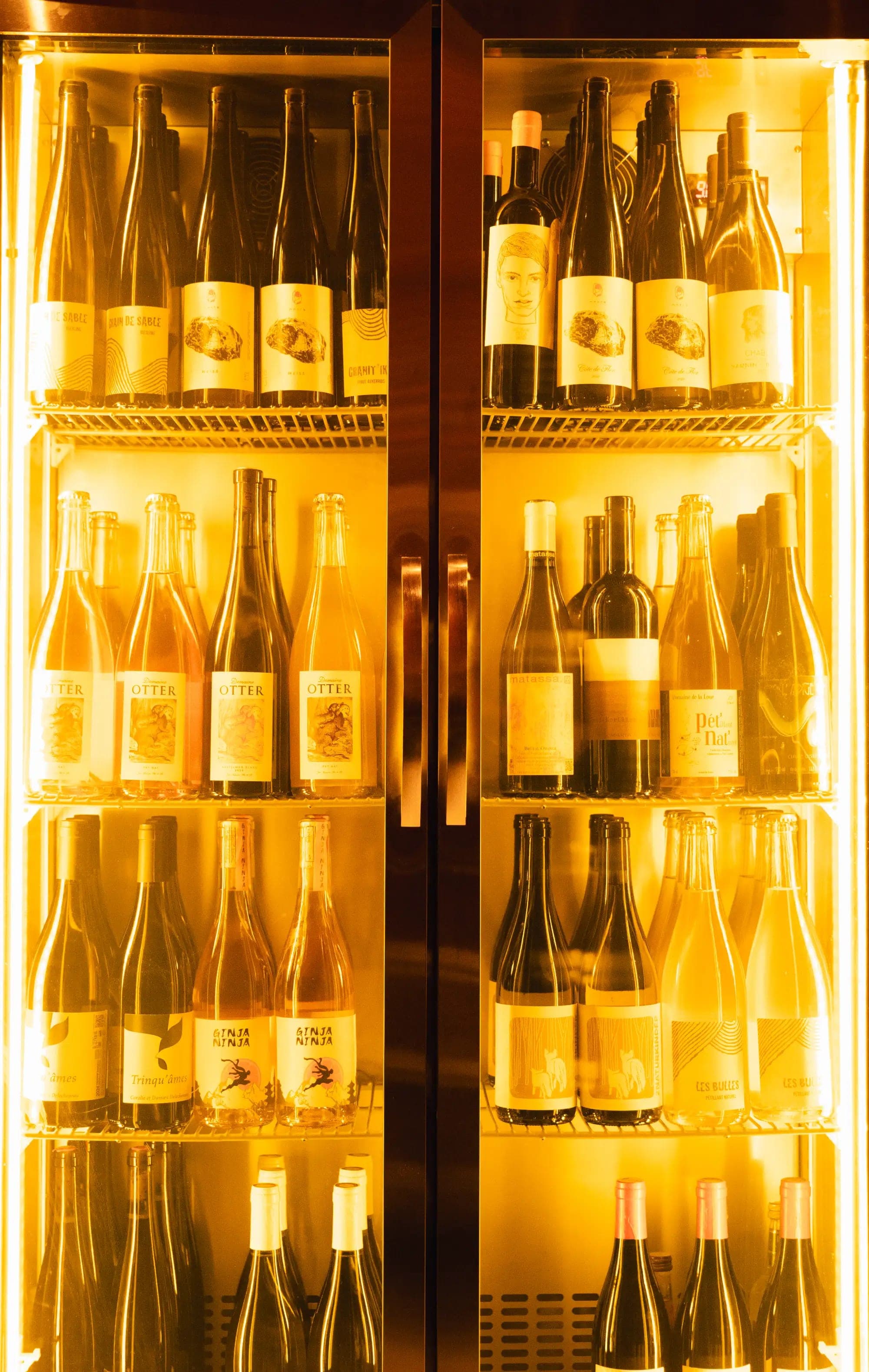
Foto: Dame aan de Kade
№ 27Oude Pijp · Mediterranean-European · €€7.5
Quirijn Roozen, Niek Roozen en Dominic Aarts bouwden deze bar met glazen bouwstenen uit de jaren zeventig zelf aan de Ruysdaelkade, overdag café en 's avonds bar met een serieuze wijnkaart.
Ruysdaelkade 169 stond leeg tot Quirijn Roozen, Niek Roozen en Dominic Aarts er zelf aan de slag gingen: terracotta muren, een discobal, glazen bouwstenen die van achteren worden aangelicht, niets uitbesteed aan een ontwerpbureau. Chef Freek Dekker en souschef Stan Burgman houden de kaart kort en mediterraan: een gegrilde kipsupreme voor op tafel, verbrande prei met beurre blanc, een steak tartaar die niet te veel moeite doet om indruk te maken. De wijnkaart is waar het echte werk zit, samengesteld met Zuiver Wijnen en Daxivin, gekozen op smaak in plaats van etiket, en ze loopt de hele lengte van de ruimte langs originele cocktails. Overdag is het een buurtcafé aan de gracht, na donker gaat het licht uit, het volume omhoog, en verandert de zaak in het soort bar dat De Pijp nog miste. In het weekend gaat het door tot na middernacht, vrijdag zelfs tot drie uur. Barts Boekje was er lyrisch over. Open sinds januari 2026 en doordeweeks al goed gevuld.
Bestel · Woensdag en zondag sluit de deur om 23:00, donderdag om 01:00, vrijdag en zaterdag nog later. Maandag en dinsdag dicht. Aanschuiven aan de bar kan zonder reservering.
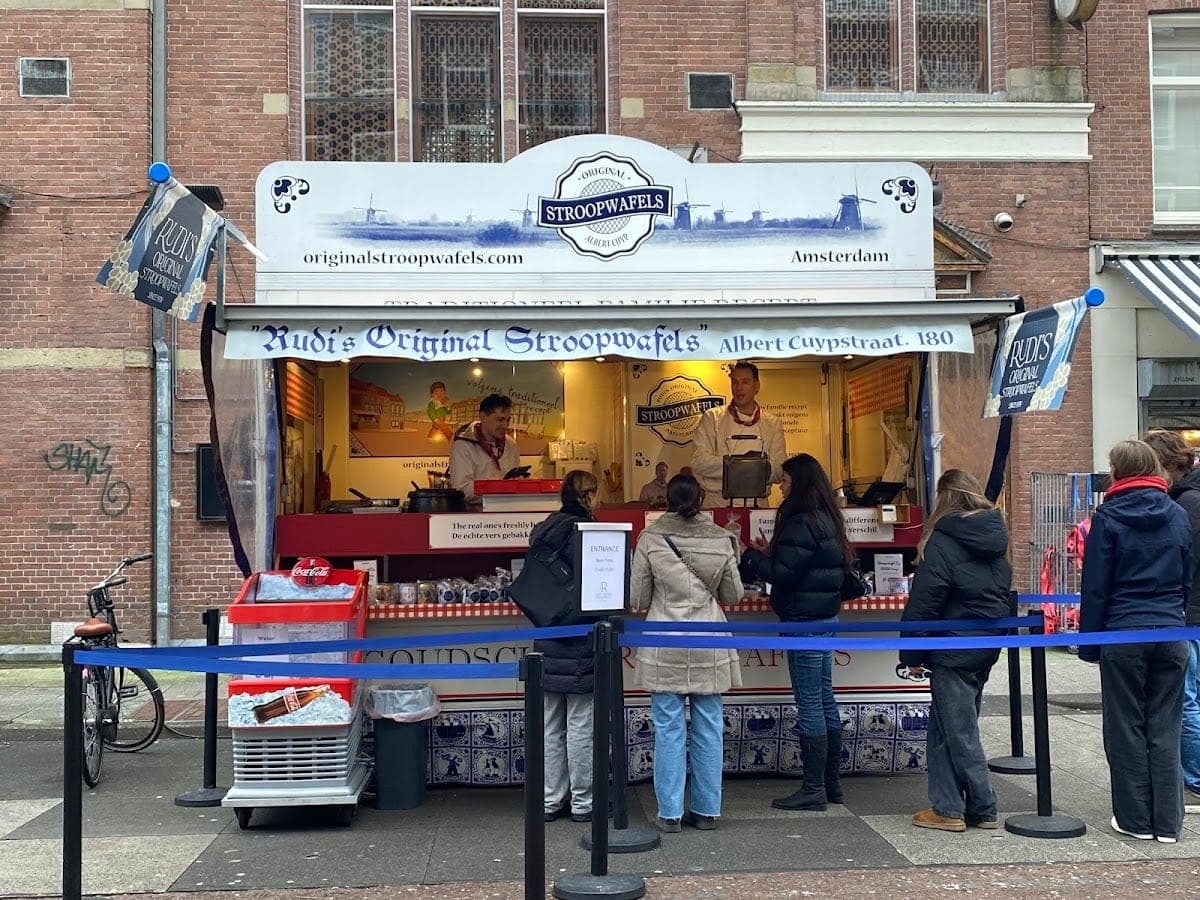
Foto: Placejoys
№ 28Albert Cuypmarkt · Stroopwafel stand · €7.5
Hete stroopwafel zo van het ijzer op de Albert Cuyp, de stroop loopt er nog uit.
De blauw-witte kar midden op de Albert Cuyp perst al sinds 1978 stroopwafels, en alleen al de geur gooit om de paar minuten de rij opnieuw door elkaar. Rudi leerde het vak in Gouda, wat in stroopwafeltermen zoiets is als voor pizza stage lopen in Napels, en de familie bakt nog altijd volgens dat recept. Bestel de verse. Een bal deeg gaat het ijzer in, wordt heet doormidden gesneden, gevuld met warme stroop en aangereikt: zacht in het midden, knapperig aan de rand, en in niets verwant aan de sealverpakte schijven op het vliegveld. Twee vijftig, op te eten in het marktgedrang tussen de kaaskramen en de stoffenverkopers, met stroop aan je vingers, waar die hoort. De in chocola gedoopte versie bestaat voor toeristen en kinderen, en vooruit, die is ook lekker. Let op de eigenwijze openingstijden: geen wafels op woensdag, donderdag en zondag, want een echt familiebedrijf rust ook weleens.
Bestel · Eén verse stroopwafel recht van het ijzer; de chocoladedip alleen als het echt moet
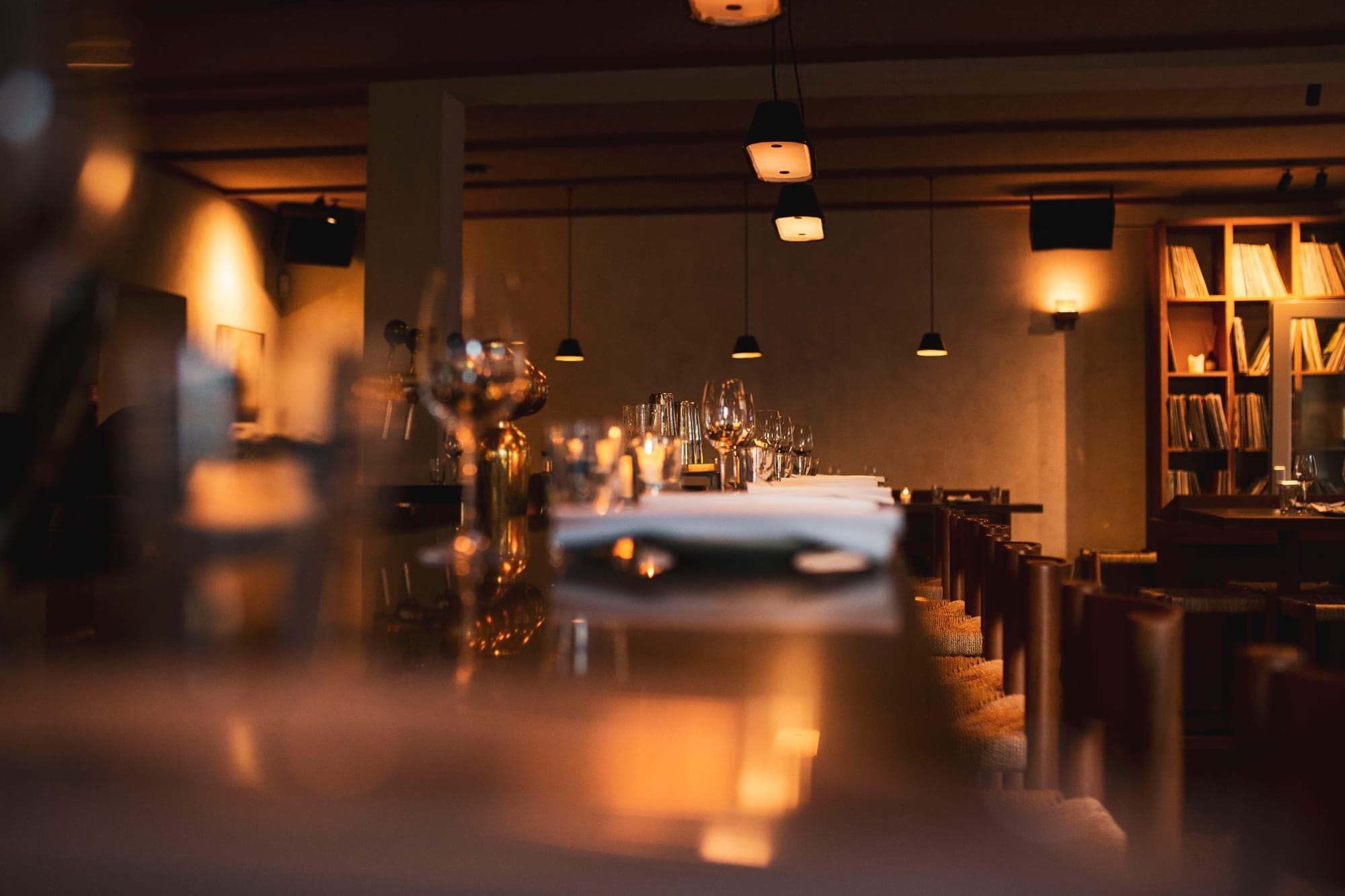
Foto: Juno
№ 29Frans Halsbuurt · Open fire, modern European · €€7.4
Na een keukenbrand herbouwden de eigenaren van Van 't Spit hun pand als grillrestaurant waar alle muziek van vinyl komt.
Een keukenbrand maakte een einde aan de rotisserie van Van 't Spit in de Frans Halsstraat. De eigenaren bouwden het pand opnieuw op als Juno en mikten op een andere honger: het naar eigen zeggen eerste muziekrestaurant van Amsterdam, waar het eten van het open vuur komt en de muziek uitsluitend van vinyl. Er is geen wifi, telefoons worden met lichte argwaan bekeken, influencerdeals worden geweigerd, en de platenkast draait door een geluidssysteem waar menige club jaloers op zou zijn. Het eten is steviger dan je bij zoveel principes verwacht: langoustines met misohollandaise, ibericoprocureur met gebrande appel en kombujus, een gedeelde ribeye van 120 dagen graangevoerd rund met chimichurri, goede friet met eigen mayonaise. YLBB en De Buik deden allebei enthousiast verslag. Elke avond open vanaf half zes, zaterdag ook lunch vanaf één uur. Kom met een groep, bestel de deelstukken en laat de platenkeuze voor één keer aan een ander over.
Bestel · Laat je telefoon in je zak, daar draait het hier om; wifi is er toch niet. Dagelijks open vanaf 17:30, zaterdag lunch vanaf 13:00. Voor de gedeelde ribeye wil je met z'n drieën of meer zijn, en hongerig.
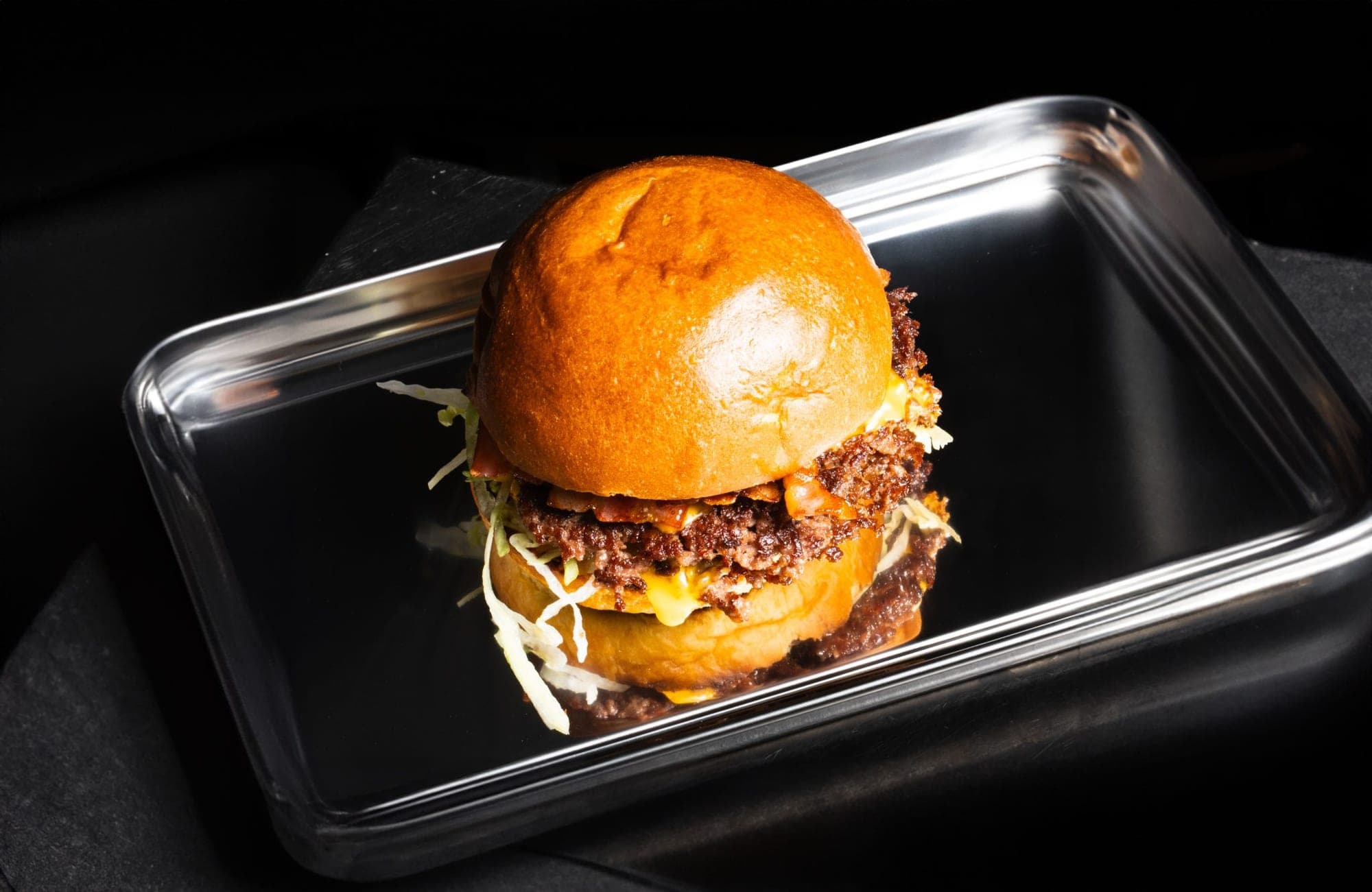
Foto: Le Smash
№ 30Govert Flinckstraat · Halal smash burgers · €€7.3
Een 100% halal smashburgertent in De Pijp, echt vakmanschap onder echte hype, het lekkerst buiten de spits.
De oprichters van Le Smash huurden een socialmediabureau in voordat ze veel trackrecord hadden, en het werkte: de lokale pers noteerde een TikTok-bereik van vierenhalf miljoen, en de zaak groeide sindsdien naar elf vestigingen door het hele land. Dat voorverhaal is goed om te weten voordat je in de rij gaat staan. Wat eronder zit houdt op eigen kracht stand: een volledig halal, dubbel geplette patty met een kant-en-klare korst en gesmolten cheddar op een zacht aardappelbroodje, plus een huisgemaakte kaassaus bij de frites die onafhankelijke recensenten steeds weer de betere helft van de maaltijd noemen. De ruimte is piepklein, bestellen via het scherm, plekken op volgorde van binnenkomst, dus behandel het als een sta-en-eet-stop, niet als een zitdiner. Een minderheid van recensenten vindt de smaak vlak naast de marketing, een eerlijke klacht op een mindere dag, al valt de meerderheid van de bezoeken dichter bij echt goed dan overhyped. De eerlijke aanpak: sla de avondrij helemaal over en ga om 17:30 of doordeweeks in de middag, wanneer de burger precies zo goed is en de wachttijd tien minuten duurt in plaats van veertig.
Bestel · Dagelijks open vanaf 12:00 tot de voorraad op is; ga om 17:30 of doordeweeks om de avondrij te ontwijken. Geen reserveringen, bestellen bij het scherm.

Foto: Le Hollandais
№ 31Nieuwe Pijp (Amsteldijk) · Classic French bistro · €€€7.3
Herrezen Franse klassieker aan de Amstel, waar de chef-eigenaar zelf de trap op komt om je zwezerik toe te lichten.
Van 1996 tot 2020 was Le Hollandais het Franse anker van de Amsteldijk, goed voor een reeks Bib Gourmands, tot de deur dichtging. Rebwar Abdulkarim blies de zaak in 2021 nieuw leven in en deed het enige juiste: hij liet de ziel intact en staat zelf achter het fornuis, vrijwel alles à la minute. Escargots, steak tartare, zwezerik in morieljesaus, crêpes Suzette, en een chefsmenu dat begint bij 55 euro voor drie gangen en doorloopt tot tien gangen voor wie zich overgeeft. Tussen de bedrijven door komt Rebwar de trap op om je borden toe te lichten, met het enthousiasme van iemand die nog steeds niet helemaal gelooft dat de tent van hem is. Binnen, kroonluchter en neonletters incluis, kijk je bij schemer uit over de Amstel. Voor De Pijp is dit de Franse huiskamer: warmer en rustiger dan alles op de Ferdinand Bolstraat, en in het weekend al vanaf twaalf uur open.
Bestel · Reserveer een tafel aan het raam op vrijdag, zaterdag of zondag vanaf 12:00, neem het driegangen-chefsmenu en eindig hoe dan ook met crêpes Suzette.