Updated October 2026 · 20 places where the location is the reason to go

Location, Location, Location.*

Amsterdam's top destination restaurants

For this special we went looking for restaurants where the location is the reason to go, plus a few where the building has a story you can date. Some take a journey. Vuurtoreneiland can only be reached on the restaurant's own boat, and Fosfor is the last pavilion on Zandvoort's south beach, with no road to the door. Others are in town and sit somewhere unlikely: on the swing section of a 1922 railway bridge, in the engine room of an 1899 pumping station, in a former bank hall behind the Dam, on the 23rd floor of a 1971 hotel tower.

Some of the stories go back centuries. At Vinkeles you walk in through the gate of Amsterdam's first stone theatre, which opened on 3 January 1638 and burned on 11 May 1772; the gate survived, and the dining room behind it is the former bakery of a poor-relief office set up in 1773. A lighthouse has stood on Vuurtoreneiland since around 1700, and the island's coastal battery was built from 1886 to 1894. Other buildings were nearly lost. The city bought Wolf Atelier's railway bridge in 1996 and prepared to demolish it until neighbours protested. Hotel de Goudfazant opened in a shed in Noord in 2006, and in February 2026 the city agreed that its building stays. De Kas's 1920s nursery greenhouse was too far gone to save; it was rebuilt to its original design, and Gert Jan Hageman opened the restaurant there in 2001.

The order is the editor's, on one question: how much is the location the reason to go? Vuurtoreneiland is first, because there is no way there except the boat. Café-Restaurant Dauphine is twentieth: a brasserie opposite Amstel Station, reached by train or metro, in a late-1950s Renault building worth knowing. Each place also carries a kind, so you can sort by what you are after: on the water, high up, by the sea, in the green, or a building with a past. Five more places sit on our radar at the bottom of the page, each with the reason it is not ranked.

Check before you go. The boat to Vuurtoreneiland leaves the Veemkade opposite the Lloyd Hotel at 17:30 sharp from Tuesday to Saturday and at 15:30 for the Sunday matinee, and if you miss it there is no refund; tables are released three months ahead, daily at 13:00, and the whole outing takes about five hours. Fosfor's 2026 season ended on 4 October and no reopening date has been announced. Pampus is a day trip by ferry from Muiden until 1 November; after that the fort island serves Winterlicht dinners on Fridays and Saturdays from 6 November to 19 December, with the boat leaving from IJburg on most dates and from Muiden on 26 to 28 November.

Vuurtoreneiland
Photo: Vuurtoreneiland
№ 01

Vuurtoreneiland

A small artificial island off Durgerdam with Amsterdam's only lighthouse, a cast-iron tower of 1893, and a coastal battery built from 1886 to 1894. In winter dinner moves into the fort's old bombproof barracks, by the fire. The only way there is the restaurant's boat, IJveer XIII, from the Veemkade: 17:30 sharp Tuesday to Saturday, 15:30 on Sunday.

Amsterdam's most extreme dinner reservation: a boat, a lighthouse island in the Markermeer off Durgerdam, and a six-course menu cooked largely over fire by people who grow, pickle and preserve most of it themselves. In summer you eat in a glasshouse among the island's greenery; from October the whole operation moves into the vaulted nineteenth-century fort, all candlelight and stone. The menu is €100 and the boat €35 on top, with snacks on board and dessert served on the way home, which beats any petit four ever plated. It sells on a rolling three-month window, new dates drop daily at 13:00, and persistence is genuinely required. Worth it: this is slow, smoky, deeply Dutch cooking in a setting no city restaurant can counterfeit, on an island that spends the rest of its time as a nature reserve. Take someone you're serious about and let the boat do the rest.

Tip · Save room, dessert is served on the boat back to the mainland.

Full entryBookOn the map
Fosfor
Photo: Fosfor Zandvoort
№ 02

Fosfor

The very last beach pavilion on Zandvoort's south beach, among the dunes and on the nudist stretch, with clothing required on the terrace. There is no road to the door: you park in Zandvoort and walk south along the sand, sea on your right. Closed for the winter since 4 October 2026, with no reopening date announced.

Fosfor is the very last pavilion on Zandvoort's south beach. Robert Hartog took it over in 2015, when it was still South Beach. The name is the local word for sea sparkle, plankton that makes the sea glow at night. It sits on the nudist beach; on the terrace and inside, bottoms or a sarong are required. Breakfast, lunch and dinner come from a menu that changes monthly and is not online. Anne de Buck of Your Little Black Book calls the food "incredibly diverse and, above all, incredibly delicious" and suggests looking out for deer in the dunes and seals in the sea. Guests say the food beats what they expect from a beach pavilion and often mention the burger. They also praise the friendly service and the sunset.

Tip · Fosfor closed for winter after 4 October 2026; this year's season opened on 28 March. Do not put Zuiderduin 7 into your satnav: park near Boulevard Paulus Loot 103 and walk south along the beach, sea on your right, to the very last pavilion.

Full entryBookOn the map
De Kas
Photo: Restaurant De Kas
№ 03

De Kas

A tall glass greenhouse in Park Frankendael, on the grounds of the city nursery founded in 1885. The 1920s nursery greenhouse was slated for demolition and rebuilt to its original design; the restaurant has been here since 2001, and you eat under the glass beside beds of vegetables and herbs. Fixed menus only, Monday to Saturday.

Every city now has a restaurant claiming its vegetables were 'harvested today'. De Kas has been making that literally true since 2001, when Gert-Jan Hageman rescued the municipal nursery's 1926 greenhouse in Park Frankendael and planted tomatoes where the city once grew its street trees. The set menu is written around whatever the gardeners cut that morning, here and at the restaurant's Beemster field, and the kitchen holds both a red Michelin star and a green one for the trouble. Meat and fish appear, but as supporting cast; the vegetable cooking is the point, and it has more swagger than most steakhouses. The room is all light and leaf, herbs growing at eye level, Frankendael's lawns beyond the glass. Weekday lunch is the smart-money move; dinner under the glowing glass is the anniversary one.

Tip · Ask for the fully vegetarian version of the menu in high summer, when the tomato course comes from metres away.

Full entryBookOn the map
Ciel Bleu
Photo: Ciel Bleu / Hotel Okura Amsterdam
№ 04

Ciel Bleu

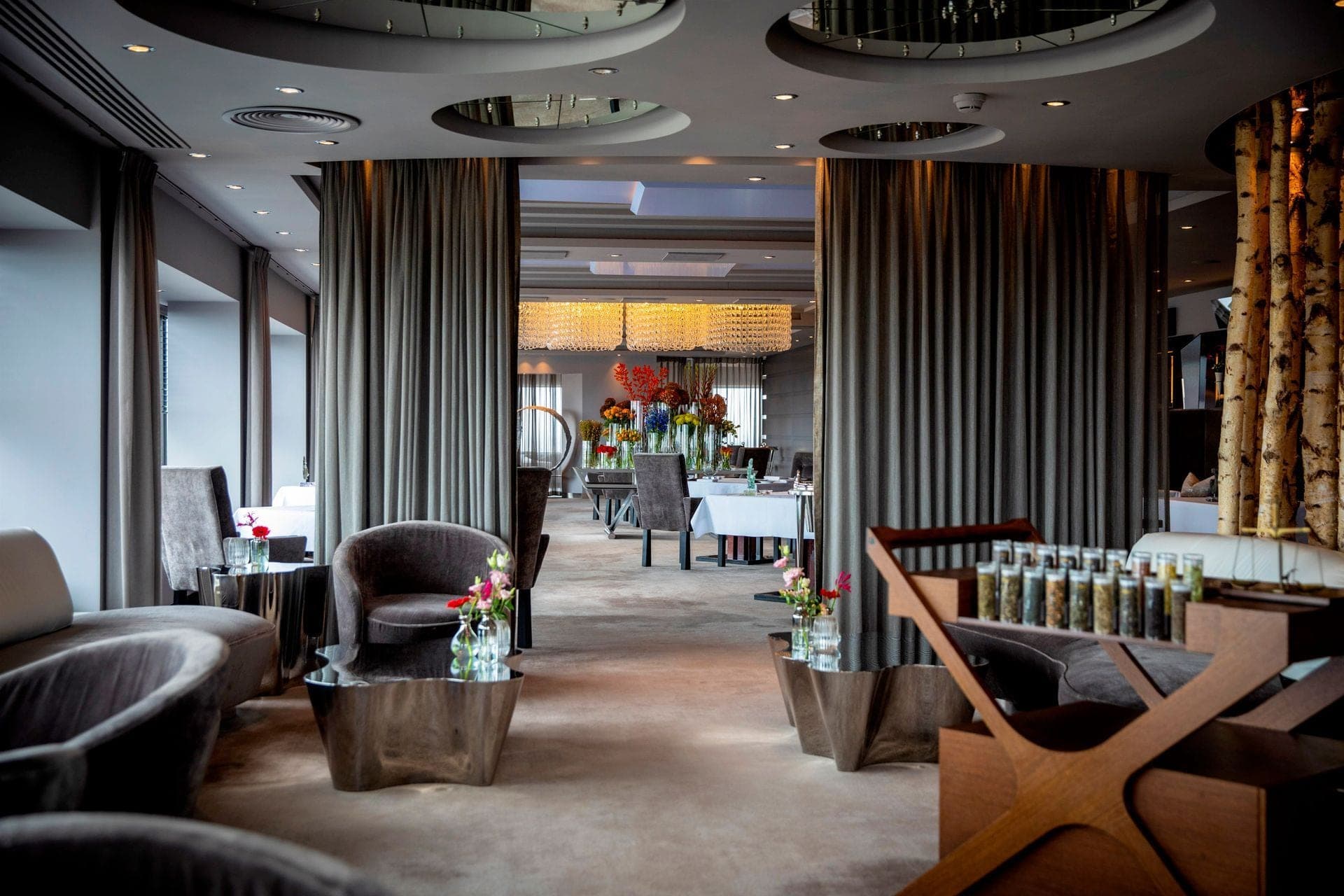
On the 23rd floor of Hotel Okura, a 78-metre tower on the Amstelkanaal that opened in September 1971 as the first Okura in Europe; the name means blue sky. Two Michelin stars since the 2008 guide. Dinner Tuesday to Saturday, with a smart casual dress code: no shorts, caps or hoodies.

On the 23rd floor of Hotel Okura, Ciel Bleu is where De Pijp stops being about market stalls and starts being about occasions with a capital O. Chef Arjan Speelman kept the two Michelin stars in the 2026 guide, and the cooking earns them: precise, technically dazzling French plates, a spring pigeon course of real swagger, langoustines treated like royalty, sauces that get quietly refilled at the table. The dining room is all soft leather and floor-to-ceiling glass, so you watch trams shrink to toys while the sommelier steers you through a cellar with genuine depth. Yes, it costs what a weekend abroad costs. But as the only two-star table in the neighborhood, perched, pleasingly, above the street where you bought a stroopwafel that morning, it is the chapter's undisputed blowout.

Tip · Book a window table at sunset; if the pigeon course is running, take it.

Full entryBookOn the map
Sea Palace
Photo: Sea Palace
№ 05

Sea Palace

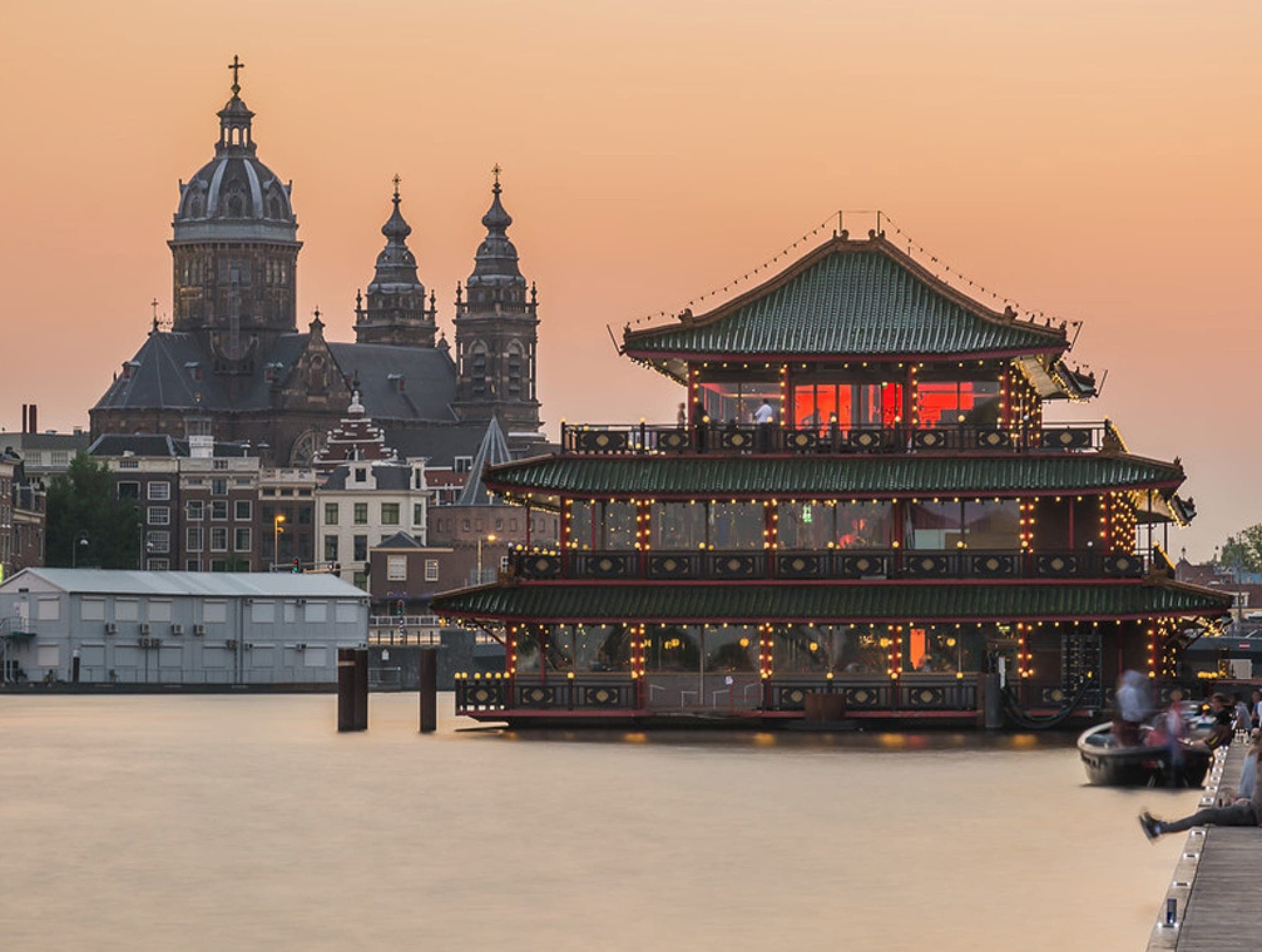
A three-storey pagoda-style Chinese restaurant floating in the Oosterdok since 1984, about five minutes on foot from Centraal and reached over a gangway. In November 2016, after a court ruling, the whole restaurant was moved forty metres towards the station. Open daily, with dim sum until 16:00.

Sea Palace has floated in the Oosterdok since 1984, a pagoda on three floors five minutes on foot from Centraal Station. It was built with money from entrepreneurs in Amsterdam and Hong Kong and opened with Chinese fireworks, a dragon parade and a nine-course dinner. It began as a Chinese-Indonesian restaurant and later switched to Cantonese cooking. Residents of the Oosterdokseiland fought the move laid down in the 2001 zoning plan; after a court ruling, the whole restaurant was shifted forty metres towards the station in 2016. Today it seats 600. Dim sum runs until 16:00, dinner from 15:00, with Peking duck and Sichuan dishes, ordered by QR code. Gilles van der Loo gave it an 8 in Het Parool around 2020; Michelin added a Bib Gourmand in 2024 and calls the detail in the decor extraordinary. Guests praise the dim sum and the duck, complain of rushed or careless service and the QR ordering, and call it touristy and not cheap.

Tip · Dim sum is served until 16:00 and the last guests are let in at 20:30. Book through the Frank widget on seapalace.nl; walk-ins are possible, but guests report waits.

Full entryOn the map
Vinkeles
Photo: The Dylan Amsterdam
№ 06

Vinkeles

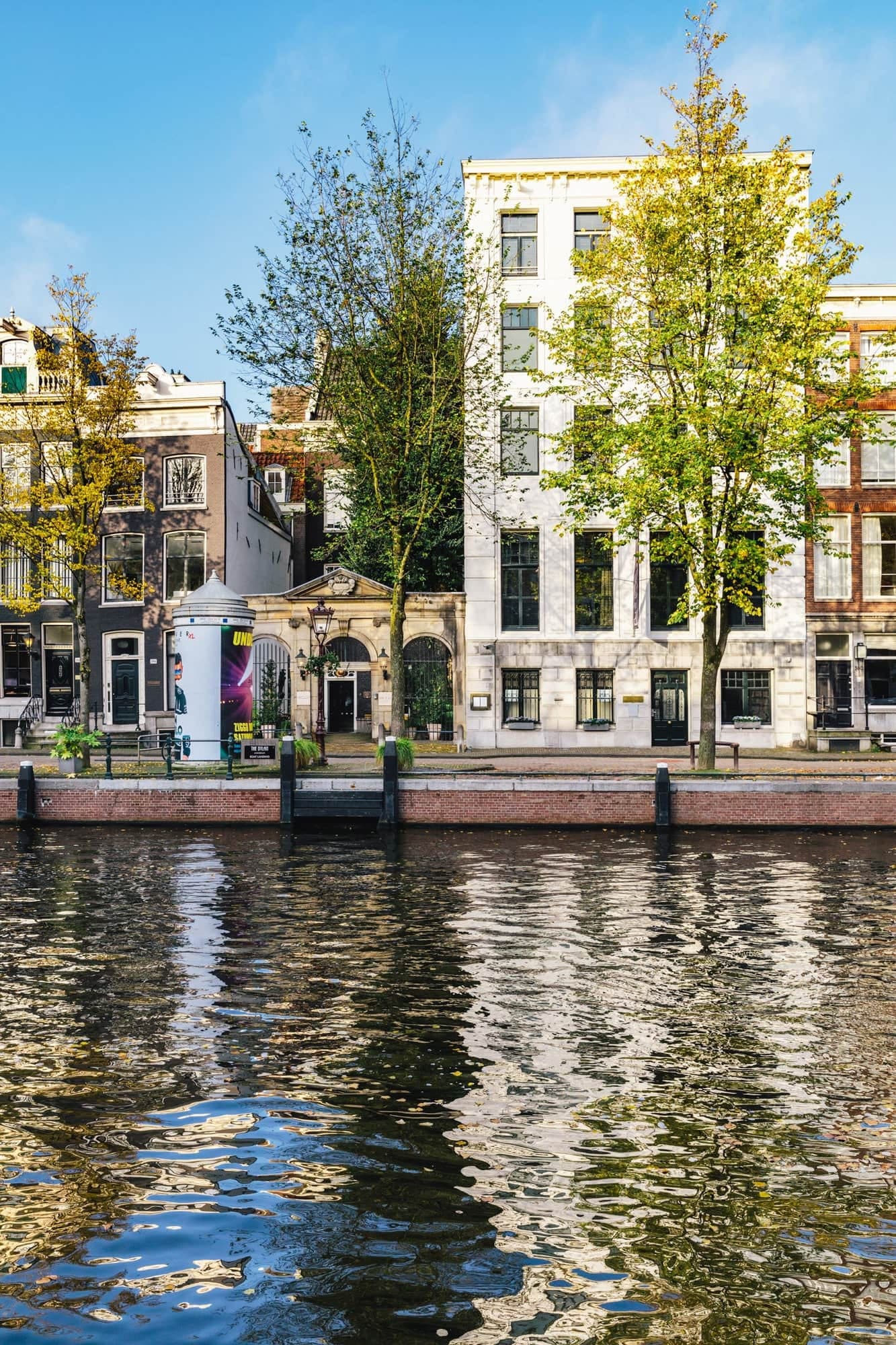
You enter through the sandstone gate of Amsterdam's first stone city theatre, which opened in 1638; the theatre burned in 1772 and the gate survived. Behind it lies the courtyard of the 1773 Roman Catholic poor-relief office, now hotel The Dylan; the dining room is its former bakery, ovens and all. Two Michelin stars, dinner Tuesday to Saturday.

Vinkeles, the restaurant of The Dylan hotel on the Keizersgracht, is reached through a sandstone gate of 1638, the only remnant of Jacob van Campen's city theatre. It opened with Vondel's Gijsbrecht van Aemstel and burned on 11 May 1772, killing 18. Behind the gate, the Roman Catholic poor-relief office was built in 1773; from 1787 to 1811 it baked bread for the poor. Vinkeles cooks in that bakery, old ovens included. The first Michelin star came in 2009 under Dennis Kuipers. Jurgen van der Zalm, who started here as an apprentice in 2008, took over in summer 2022 and won a second star in April 2023, kept in the 2026 guide. Michelin writes that premium ingredients and complex sauces remain central. Gault&Millau gives 17.5 for restrained quality and luxury. Food blogger Stefan Boer returned in 2025, found it better than in 2023 and called the pigeon's cuisson perfect. The Chef's Signature Menu is €280 for seven courses, the Vegetable Menu €185, wine pairing €117. Dinner only, Tuesday to Saturday.

Tip · Enter through the 1638 gate at Keizersgracht 384 into the hotel courtyard. Book by phone on +31 20 530 2010 or via the site; tables seat up to eight, the private dining room 14.

Full entryBookOn the map
Wolf Atelier
Photo: Wolf Atelier
№ 07

Wolf Atelier

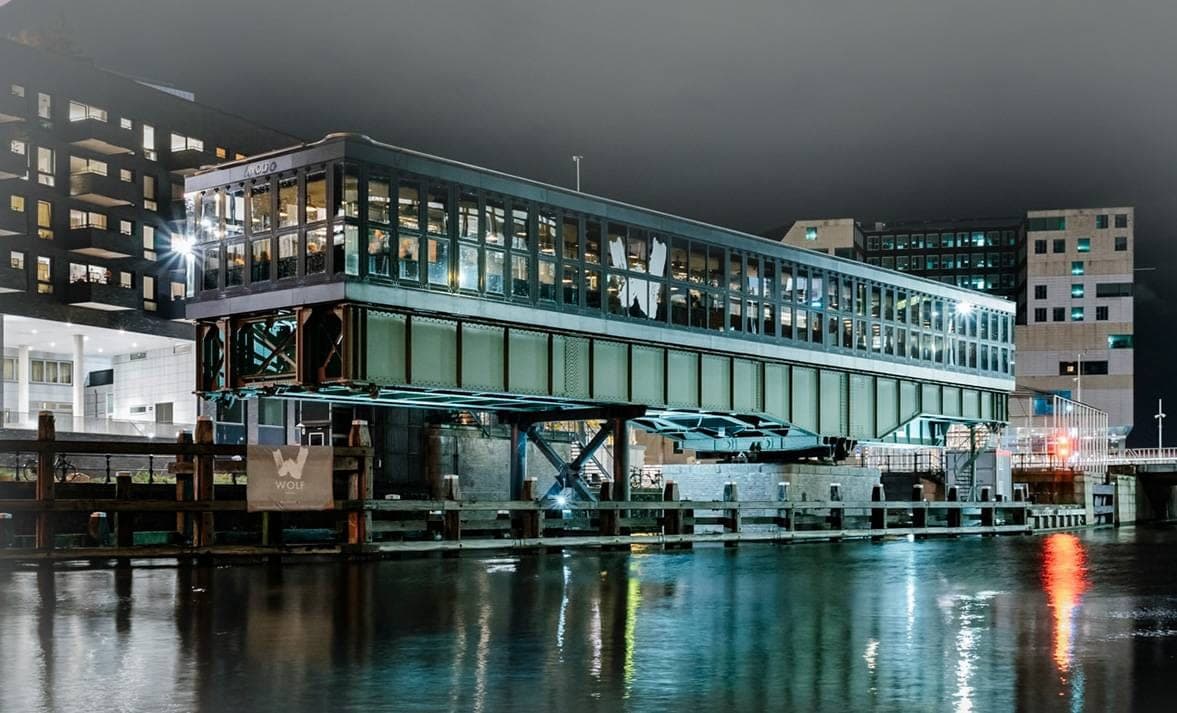
A glass box 37.5 metres long on the swing section of a steel railway bridge from 1922 over the entrance to the Westerdok, with eighty tall windows looking over the IJ. The city bought the bridge in 1996 and prepared to demolish it; neighbours saved it. Michael Wolf opened here on 21 June 2015, a short walk west of Centraal.

Wolf Atelier sits in a glass box on bridge 19S, a steel swing railway bridge that from 1922 carried freight trains from Centraal Station to the rail yard on Westerdokseiland. Bought by the city in 1996 with demolition planned, it was fixed open in 2000 and kept in 2001 after a neighbourhood campaign. The glass pavilion by Architekten Cie (Pi de Bruijn) opened as restaurant Open in 2008. Austrian-born Michael Wolf, formerly of Oud Sluis and Envy, took over in June 2015; since March 2026 he splits his time with his second restaurant, Amice. Set menus only: four or five courses at €72 or €82, also fully vegetarian, or 15 courses at €145. Gault&Millau gives it 14 out of 20 and calls it "precise and thoughtful". Lekker has listed it every year since 2022, though in 2026 it found the menu hardly changed. Guests come for the IJ view and the 15 courses, and warn of noise when full and evenings of up to four hours.

Tip · Guests report three and a half to four hours for the 15 courses, so book an early table. The room is up a stair from Westerdoksplein; drivers can park at Interparking IJDock.

Full entryBookOn the map
Hotel de Goudfazant
Photo: Hotel de Goudfazant
№ 08

Hotel de Goudfazant

A former industrial shed of about 1,200 square metres on the IJ in Noord's Hamerkwartier, once Stork's and later a workshop for theatre sets, with old cars in the room. Four friends opened it in 2006, and in February 2026 the city agreed the building stays. The name comes from a Jacques Brel song; it is not a hotel.

Hotel de Goudfazant is not a hotel: the name comes from Les Bourgeois, a Jacques Brel song. Four friends, Niels Wouters, Rogier Klooster, Frederic van de Laar and Marco Birsak, opened it in 2006 in a former Stork shed of 1,200 square metres on the IJ, and it turned twenty this summer. Lennart Ylstra and Neil Martin now run the kitchen. Three courses cost €49.50, from a French menu of fish, meat, vegetarian and vegan dishes that changes now and then, each also sold à la carte. Gault&Millau rates it 12.5 out of 20 for hearty cooking that follows the seasons, and Time Out gave it five stars out of five in 2025. Guests praise the space, with its old cars and bottle chandelier, and the friendly table service. The recurring complaint: nobody greets you at the door, and service gets slow or chaotic when it is full. Several reviews from 2026 call dishes too salty or undercooked. The menu is in Dutch only; the staff explain it.

Tip · Open Tuesday to Sunday from 17:30, closed Monday; book online for up to fifteen people, larger groups email info@hoteldegoudfazant.nl. Parking is on site, and the in-house bakery opens Tuesday to Sunday from 10:00.

Full entryBookOn the map
De Mark
Photo: Aedes
№ 09

De Mark

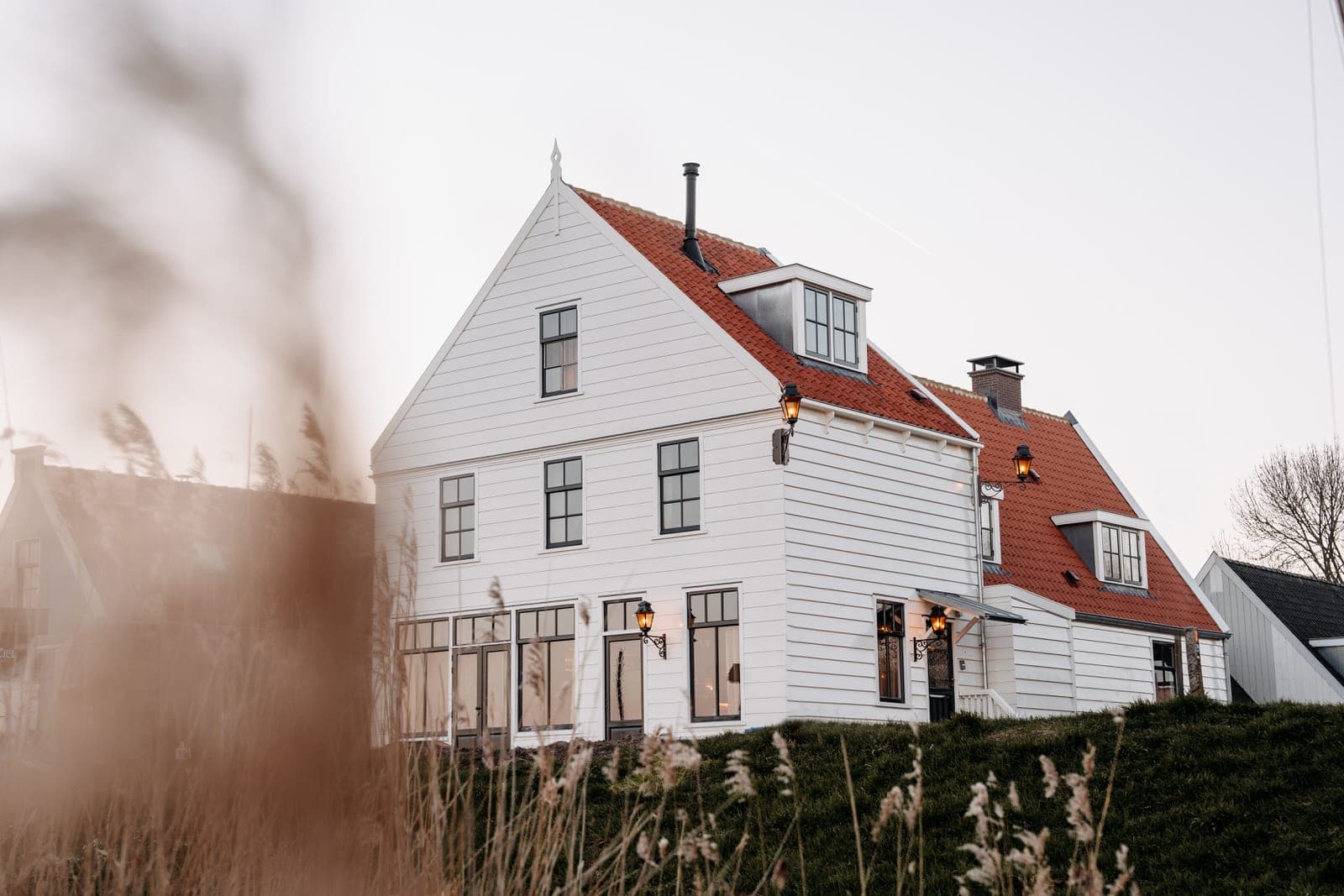
In hotel De Durgerdam, a restored dike inn in the protected village of Durgerdam on the IJmeer, a fishing village until 1932. The owners say an inn has stood here since 1664; it reopened in spring 2023 after a renovation that numbered every plank and stone. No public transport to the door: 30 minutes by bike from Centraal.

De Mark is the restaurant of hotel De Durgerdam, a rijksmonument on the dike of Durgerdam, a protected former fishing village about 6 km east of Centraal. An inn has stood here since 1664; from the early 18th century it was called Prins te Paard and later doubled as the ferry house to Amsterdam. Restored from 2018, it reopened in spring 2023 with 14 rooms and a terrace on the water. Chef Wijnand Schoen cooks over a wood fire, advised by Richard van Oostenbrugge and Thomas Groot of the 212 group. Het Parool gave it a 7.5 in 2023, under opening chef Koen Marees, calling the location pure idyll while the dishes still needed perfecting. In 2026 Michelin named it an Inspecteursfavoriet, one of 26 Dutch restaurants without a star, and notes that each dish revolves around three ingredients, often joined by the wood fire. Gault&Millau rates it 13.5 out of 20. Dinner runs 4, 5 or 6 courses at €80, €95 or €105.

Tip · There is no public transport to the door: it is 30 minutes by bike or 15 by taxi from Centraal, and Michelin advises parking outside the village and walking in along the dike. Book through the website or on +31 20 218 4463; card only.

Full entryOn the map
The Duchess
Photo: The Duchess
№ 10

The Duchess

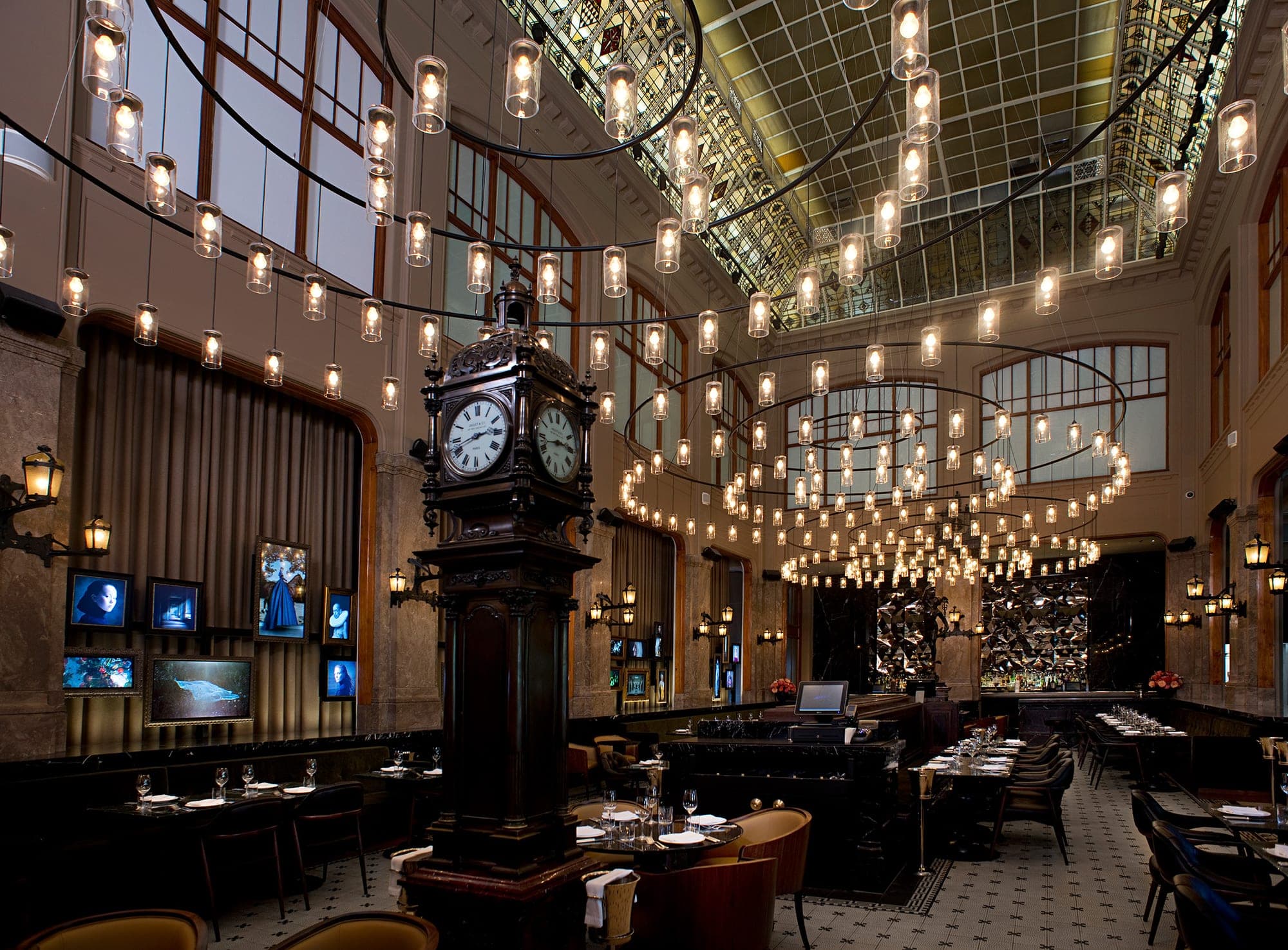
A brasserie under the leaded-glass roof of the bank hall in a bank building behind the Dam, built from 1906 to 1908 for Labouchere, Oyens & Co. and from 1914 home of what became the KasBank. Winhov turned the building into the W Amsterdam, and The Duchess opened in summer 2015. Afternoon tea Friday to Sunday.

The Duchess sits in the old KAS Bank on Spuistraat, a national monument that F.W.M. Poggenbeek designed for the bank Labouchère, Oyens & Co., built from 1906 to 1908. The Kas-Vereeniging moved in in 1914; from 2002 it was called KasBank. Between 2013 and 2016 Winhov converted the building into the W Amsterdam, and the central bank hall under a leaded-glass roof became The Duchess, opened in the summer of 2015 by The Entourage Group, which also runs Mr Porter and Momo. Canadian chef Jeffrey Graf has led the kitchen since the opening. The menu runs to fifteen mains, from Dover sole meunière and beef Wellington to spaghetti with Beluga caviar. Michelin awarded a star from 2018 to 2024 and now lists it without distinction, praising the Belle Époque charm of the room; Gault&Millau gives it 14 out of 20. Guests praise the room almost without exception, call the food fine but uneven, question the prices and find it noisy when full. The menu online shows no prices.

Tip · Dinner from 17:00 Monday to Thursday, open from 12:00 Friday to Sunday, and afternoon tea in the Tea Room; book through SevenRooms on the site or call +31 20 811 3322.

Full entryBookOn the map
MOS
Photo: MOS Amsterdam
№ 11

MOS

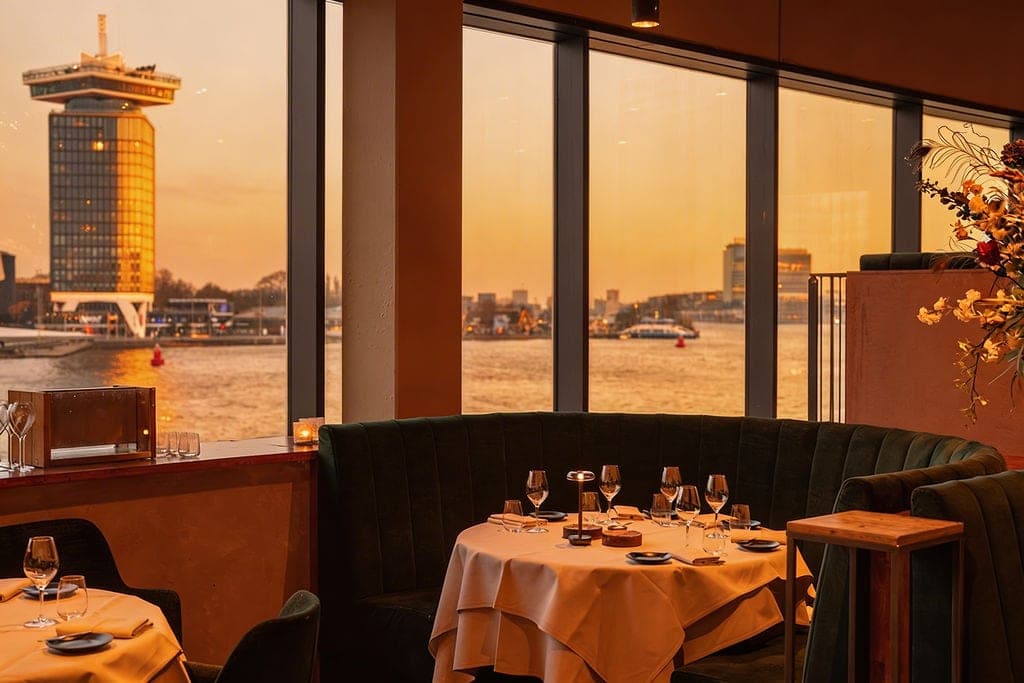
At the very tip of IJDock, a peninsula built into the IJ from 2008 to 2012 on 860 driven piles, with windows looking across the water to EYE and the A'DAM Toren. Egon van Hoof opened MOS on 15 August 2015, and it has held a Michelin star since the 2017 guide. Ten to twelve minutes on foot from Centraal.

MOS sits at the very tip of IJDock, a peninsula built into the IJ between 2008 and 2012 off the Westerdoksdijk, where a 1911 colonial building and later the water police once stood. The windows look across the water at EYE and the A'DAM Toren. Egon van Hoof, who cooked at Ron Blaauw and Aan de Poel, opened it on 15 August 2015 with co-owner and host Henry Pattiwael van Westerloo. The cooking is French-international: dinner is 4, 5 or 6 courses for €105, €125 or €140, every dish also à la carte, with a separate vegetarian menu from €105. Michelin awarded a star in the 2017 guide and kept it in 2026, crediting Van Hoof with unusual combinations that never lose the harmony of flavours. Gault&Millau gives 16/20. Het Parool's Hiske Versprille gave MOS a 9- out of 10 in 2015, calling the sea bass in two preparations breathtakingly balanced, while noting spelling errors on the menu and a kitschy red glitter spray.

Tip · Lunch, Thursday to Saturday from 12:00, is the cheaper way in at €90 for four courses; MOS is closed Sunday and Monday. Coming by car, reserve a spot in the underground IJDock garage when you book for a parking discount.

Full entryBookOn the map
Café-Restaurant Amsterdam
Photo: Café-Restaurant Amsterdam
№ 12

Café-Restaurant Amsterdam

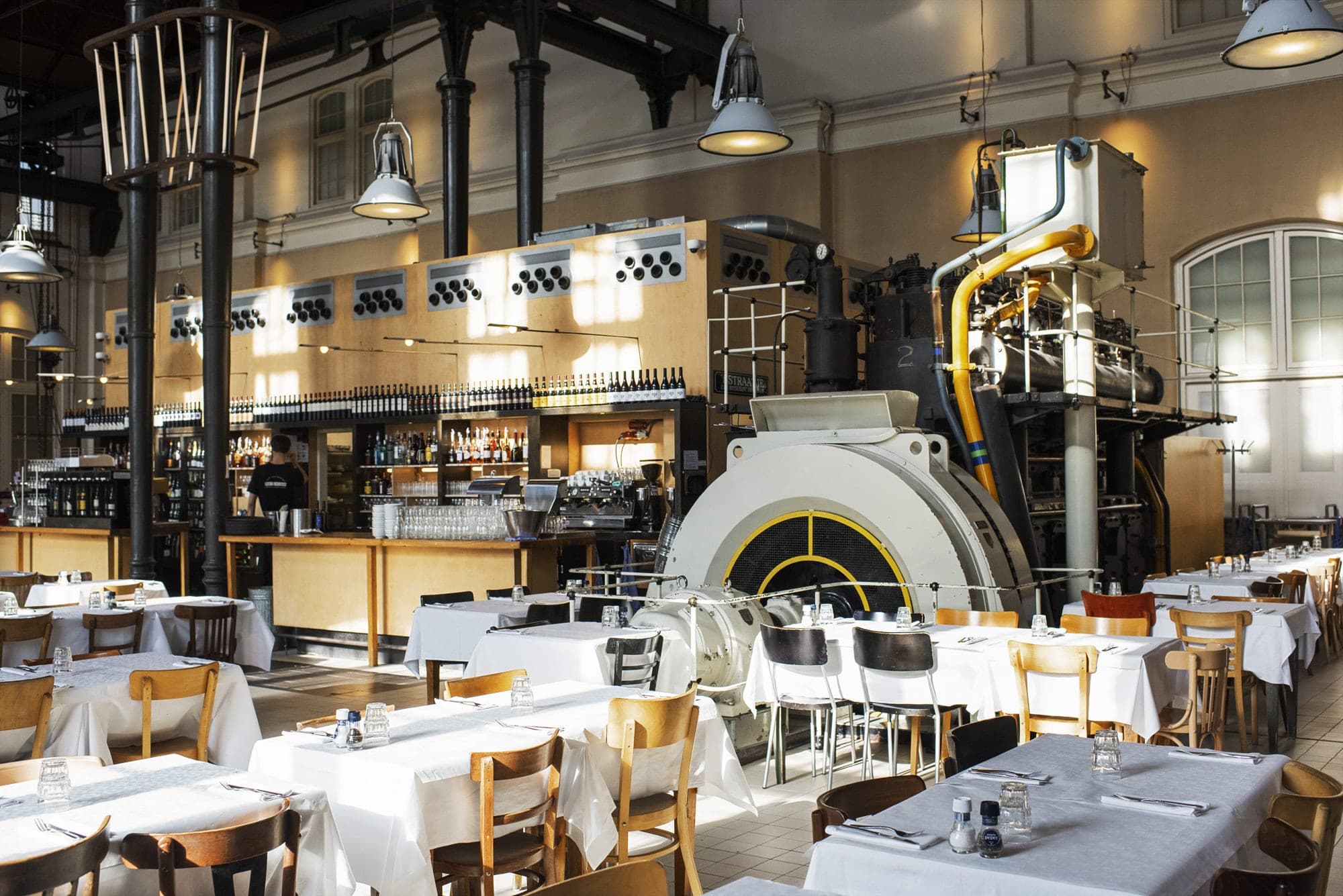
An all-day brasserie in the 16-metre-high engine room of the city water works' pumping station, built in 1899 and closed in 1996, on the former water works site next to the Westergasfabriek. One of its two 1940 diesel engines still stands in the room, lit by 22 floodlights from Ajax's old De Meer stadium and the Olympic Stadium.

From 1900 to 1996, four pumps in this engine room pushed dune water from Vogelenzang into Amsterdam. The Machinepompgebouw, a national monument begun in 1897, stands on the former water company grounds beside the Westergasfabriek. Café-Restaurant Amsterdam moved into the engine room on 20 December 1996 and kept one of the two 1940 backup diesel engines in place; 22 floodlights from the old Ajax stadium De Meer and the Olympic Stadium light the room. The kitchen is a French-Dutch brasserie: baguettes and croques at lunch, steak frites from €18.50 at night. That evening card also lists oeufs durs mayonnaise at €4.80 and 30 grams of caviar at €60.50. Gault&Millau gives it 12 out of 20 for "recognizable classics, executed cleanly and correctly". Time Out's Karin Engelbrecht ranks it 11th among the city's best restaurants in 2026, a locals' favourite for mixed generations and picky eaters. The Entree Awards named it Best All Day Classic in 2023.

Tip · Online booking covers up to six people; groups of 7 to 15 book by phone on 020 682 2666, and it is card only, no cash. Tram 5 and bus 21 stop about 100 metres away.

Full entryBookOn the map
De Belhamel
Photo: Restaurant De Belhamel
№ 13

De Belhamel

A corner canal house where the Herengracht meets the Brouwersgracht, at the edge of the Jordaan, with views along both canals and a terrace by the water in summer. Inside, the restaurant and a separate bar have art nouveau details the owners call original; Milan, Bram and Stijn have run it since July 2022. Five minutes' walk from Centraal.

The prettiest dining room on the prettiest corner in Amsterdam: art nouveau woodwork, whiplash curves, and windows onto the point where the Brouwersgracht pours into the Herengracht. De Belhamel does French-Italian classics properly, terrine de campagne, sole, lamb shank that slides off the bone, without ever chasing trends. In summer the waterside terrace is the single most romantic table in the city that doesn't require a boat. Yes, you'll hear other languages around you; the corner is too photogenic to stay secret. But the kitchen cooks for the postcode, not the camera, and lunch here is one of the better deals in the neighborhood. Take your parents, take a date, take anyone you need to impress without explaining fermentation to them.

Tip · Book the canal-side terrace at golden hour and start with the terrine de campagne.

Full entryBookOn the map
Restaurant Merkelbach
Photo: Restaurant Merkelbach
№ 14

Restaurant Merkelbach

Daytime restaurant in the right-hand coach house of Huize Frankendael, the last country house of the Watergraafsmeer, which Izaak Balde gave its present look around 1733. City architect Ben Merkelbach moved in in 1957 and restored it, and his descendants stayed until 2004; the restaurant carries his name. Lunch 12:00 to 15:00, with a terrace in the formal garden.

In the right coach house of Huize Frankendael, the last country house of the Watergraafsmeer, Geert Burema has been quietly running one of Amsterdam's most principled kitchens since 2004. He founded the Dutch Slow Food chefs alliance, and the menu reads like the manifesto: daytime cooking that is largely vegetarian, herbs from Park Frankendael itself, meat and fish from farmers he can name without checking. Lunch might be kimchi hummus with grilled pointed cabbage or a koolrabi tartlet with green asparagus, plated with a precision that would cost double across the ring. The terrace looks onto what locals stubbornly call the most beautiful garden in Amsterdam, and they are right. Evenings belong to the neighborhood in the oldest sense: birthdays, weddings and condolence gatherings in the eighteenth century salons. De Kas gets the taxis and the headlines. The Watergraafsmeer keeps Merkelbach for itself, on weekdays, in daylight, at half the fuss.

Tip · It is a daytime restaurant, so treat it as the long lunch it wants to be: the three course menu, a glass from the small list, and a walk through the Frankendael stijltuin afterwards. Book ahead for a terrace table in summer.

Full entryBookOn the map
Café-Restaurant De Plantage
Photo: Café-Restaurant De Plantage
№ 15

Café-Restaurant De Plantage

A café-restaurant in the Ledenlokalen, the members' building of zoo society Natura Artis Magistra, designed in 1868 and completed around 1870; most tables sit in its original glass conservatory. From 1941 to 1968 the building held the city's population register. It faces the free public Artisplein, so no zoo ticket is needed; tram 14 stops at Artis.

Next to the Artis zoo gates sits the Ledenlokalen, designed by G.B. Salm in 1868, whose glass conservatory was restored into this all-day brasserie, and honestly, half the point is the room. Light pours through the wraparound windows onto marble, birch chairs and one enormous indoor tree; on a grey Tuesday it feels like being let off the hook for winter. The kitchen holds up its end with sunny Mediterranean cooking: ricotta-and-pea ravioli with lemon butter, barbecued squid stuffed with scampi, sardines with peperonata, and a slow-roasted Burgos lamb shoulder carved for two. Wines lean organic, prices stay reasonable, and the terrace faces the greenest street in the city. It runs from morning coffee to late drinks daily, takes groups without flinching, and is the rare parents-visiting option that locals use anyway.

Tip · Split the slow-roasted Burgos lamb shoulder for two, with frites on the side.

Full entryBookOn the map
BAK
Photo: BAK Restaurant
№ 16

BAK

The third floor of Het Veem, a warehouse in the Houthavens opened in 1898 to store coffee, tea, tobacco and cacao; its coffee tasting room was on this floor. Squatted in 1981, the building was bought by the Het Veem association for one symbolic guilder. In the evening you ring the bell at street level.

BAK started as a pop-up in a squatted Houthavens warehouse in 2013 and grew up into one of the city's defining restaurants without losing the plywood soul. Third floor of the old Het Veem building, wooden beams, big windows over the IJ, the room does half the work, and the kitchen does the rest with a vegetable-led, whole-animal tasting menu that changes with whatever their farmers are pulling out of the ground. This is where Amsterdam's natural wine scene learned to walk; the list is long, funky and poured by people who can actually explain it. Weekend lunch is the connoisseur's move: same cooking, low afternoon light on the water, gentler bill. Michelin lists it, 50 Best Discovery lists it, and it still somehow feels like yours.

Tip · Book the Saturday or Sunday lunch sitting and surrender to the wine pairing.

Full entryBookOn the map
Blik
Photo: Blik, via Reguliers.net
№ 17

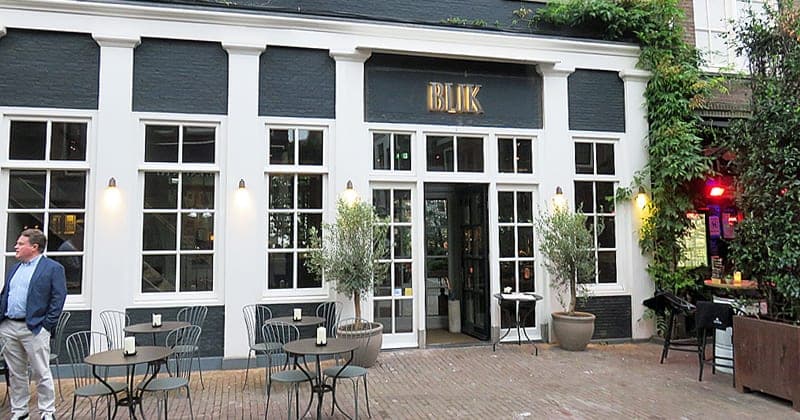
Blik

A bistro-bar in the 18th-century coach house of Huis de Neufville, the canal house at Herengracht 475 built from 1731 to 1733; the walled garden between them is the terrace in good weather. The coach house held French restaurant Het Tuynhuys from 1985 and Lion Noir from the end of 2010. Blik opened on 3 September 2025.

Blik is a bistro and bar in the 18th-century coach house of Huis de Neufville on the Herengracht, with a garden in between, open since 3 September 2025. Jacob Jan Boerma, formerly chef of the three-Michelin-star De Leest in Vaassen, wrote the menu but does not cook here every day. Actor Manuel Broekman works the floor three days a week. Partner Tijn Verstappen, who co-owns nineteen Amsterdam restaurants, told Het Parool at the opening: "We got a 4 in Het Parool; that led to this new restaurant." The 4 was for his Nonna, since closed. The June 2026 menu is à la carte: steak tartare with white chocolate crumble (€22.50), lobster mac and cheese (€26), and whole chicken (€49) or turbot (€69) for two. A three-course chef's menu costs €49.50. The wine list leans on Burgundy and Bordeaux, from €37.50 to €300 a bottle. In 2025 Barts Boekje praised the wine list and the chicken. Guests praise quick, attentive service and the garden, and score the food lower than either.

Tip · Dinner Tuesday to Sunday from 18:00, lunch with live music on Saturday and Sunday from 12:00; closed Monday. Book online or by phone or WhatsApp on +31 6 11 99 91 94.

Full entryOn the map
VRR
Photo: VRR
№ 18

VRR

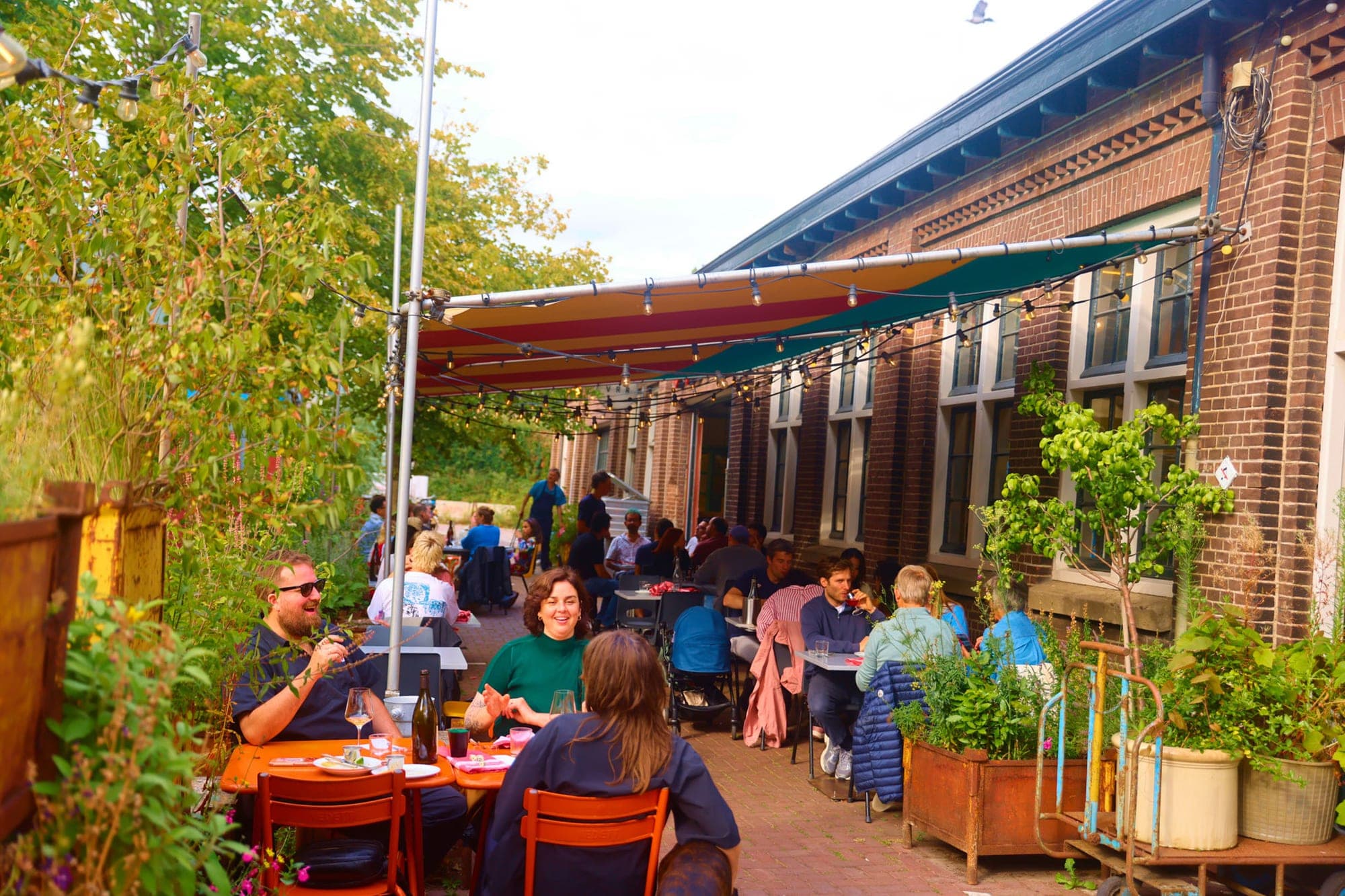
One big high room on Oostenburg, the old shipyard island, in an 1895 building the owners describe as the staff canteen and washroom of the Nederlandsche Scheepsbouw-Maatschappij. The bakers of Stadsbakkerij As start here at five; around two the room becomes the restaurant. Sander Overeinder opened VRR in May 2021; the name stands for 'Voorheen Rosa en Rita'.

First the bad news: Restaurant As is gone from the Beatrixpark. The good news is that Sander Overeinder packed up his sourdough and his Beemster farmers and moved everything to Oostenburg, into what the owners say was an 1895 shipyard canteen, teaming up with the Hotel de Goudfazant people along the way. By day this is Stadsbakkerij As, all long fermentation and pastry. Around six the flour settles and VRR takes over: a generous a la carte of Dutch ingredients cooked with real intent, grilled fava beans with sheep's cheese, kruudmoes with marrow and cockles, milk ice cream people describe in hushed tones. The name stands for Voorheen Rosa en Rita, a nod to the previous tenants of the building. The terrace between the brick and the wildflowers is one of the nicest places to sit in Oost, and the wine room leans biodynamic without preaching about it. Parool's critic went to an 8,5. She is not wrong.

Tip · The Diner de Quartier neighbourhood menu is the cheat code at 29.50; no reservation needed if you take a seat at the bar.

Full entryBookOn the map
Choux
Photo: The Greenlist
№ 19

Choux

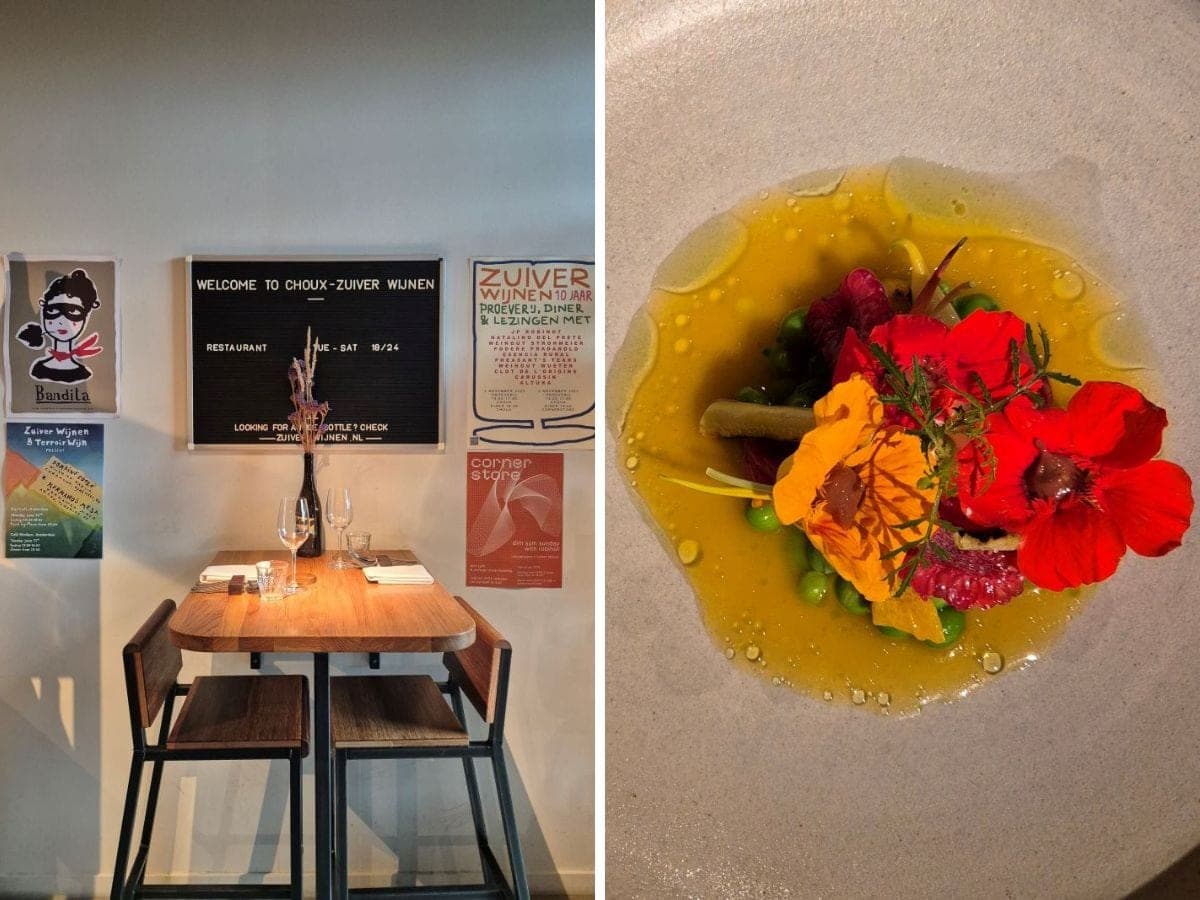
The ground floor of Spring House, a red-painted former factory and distillery on the IJ quay behind the tracks on the east side of Centraal. Merijn van Berlo and sommelier Figo van Onna settled here in 2015 after their pop-ups Repere and Foyer. Booking by phone or email only, up to eight people.

The red-painted factory building on the quay behind Central Station has been quietly outcooking half the city since 2015. Choux began as pop-up kids with natural wine convictions and grew up into a Michelin star, collected in 2025 without changing the plan: ninety percent vegetables and fruit, ten percent mostly game and shellfish, everything fermented, pickled or smoked somewhere on the premises, including a house condiment line called 621 Ferments. Merijn van Berlo still oversees the kitchen and there are more ideas per plate here than at tasting menus twice the price. Five courses run 82.50 euros, and the Theatre Menu gets you three for 52.50 if you hand the table back by 8pm. The wine is the other half of the story: owner Figo van Onna is a sommelier first, imports through sister company Zuiver Wijnen, and runs a bottle shop with wine bar a few doors down at number 143. He will tell you the Michelin star matters less to him than the team, and after years of stubborn filter-only coffee the espresso machine is back, which counts as growth. Card only, and vegetarians are the default rather than an accommodation.

Tip · Take the 18:00 Theatre Menu seat: same kitchen, 52.50 euros, table until 20:00. Then walk to the Zuiver Wijnen bar at De Ruijterkade 143 for another glass. Book by phone or email, no online widget, and nothing over 8 people.

Full entryOn the map
Café-Restaurant Dauphine
Photo: Café-Restaurant Dauphine
№ 20

Café-Restaurant Dauphine

A brasserie of 1,220 square metres on the ground floor of the former Renault building opposite Amstel Station, built in 1958 and 1959 on mushroom-shaped columns and opened in January 1960. Renault left for Schiphol in 2000; the restaurant opened in 2006, named after the Renault Dauphine. Train and metro stop across the road.

A late-1950s Renault showroom, opened in January 1960, turned all-day brasserie, which explains the acreage: soaring glass, leather banquettes, and enough floor space to park the cars that used to live here. Dauphine has been feeding this unglamorous corner by Amstel station for years and remains the definitive answer to several Amsterdam problems, where to take eight colleagues, where to meet your parents off the train, where to eat a proper steak tartare at half past two on a Tuesday. The kitchen does French-Italian brasserie standards without irony: tartare cut to order, a côte de boeuf for sharing, bavette-frites, decent oysters. Nothing chases trends, everything arrives competent and generous, and the room does the rest. Note the hours: kitchen from ten in the morning on weekdays, doors open at noon at weekends. It's the neo-bistro's older, better-tailored uncle, and Oost is lucky to have him.

Tip · Steak tartare, cut to order, with a mountain of frites.

Full entryBookOn the map

By kind of place

High up

The 23rd floor of a 1971 hotel tower. Book ahead and mind the dress code.

Ciel Bleu · 9.3
By the sea

A beach pavilion with no road to the door, open only in season. Check that it is open, then walk the last stretch over the sand.

Fosfor · 8.3

On the radar, not in the guide yet

New, or not fully reviewed yet. They get a score once they have a full entry.

  • REM Eiland · A platform built in Cork that broadcast TV Noordzee off Noordwijk from 15 August 1964, until police and navy boarded it that December. Since 2011 it has stood on its legs in the Houthaven, with a restaurant and a rooftop terrace. New owners took over in June 2026 and there has been no independent review since, so it stays on our radar.
  • Moon · A revolving restaurant on the 19th floor of the A'DAM Toren, Shell's 1971 tower in Noord, where the tables make a full turn every 45 minutes; the free F3 ferry crosses from behind Centraal. The view is the draw, and no independent food review has appeared since 2017. We keep watching.
  • Pampus · A fort island in the IJmeer built from 1887 to 1895 for the Stelling van Amsterdam, reachable only by boat. Winterlicht dinners run on Fridays and Saturdays from 6 November to 19 December 2026, at €102.50 including the boat, mostly from IJburg and from Muiden on 26 to 28 November; a seasonal package with no named chef and no food review. Noted for later.
  • In de Waag · The ground floor of the Waag on Nieuwmarkt, a city gate whose first stone was laid in 1488 and a weigh house from 1617, where the surgeons once had their anatomy theatre upstairs; the restaurant-café has been here since 1996. We found no critic's review of the food, so it waits on our list.
  • The Gym by Sidney Schutte · Sidney Schutte, twelve years at two-star Spectrum, opens on 10 December 2026 in the 1902 gym of a 19th-century school building in Oud-Zuid, beside The College Hotel, with rings hanging in the room. Nothing to taste yet; first in line once it opens.