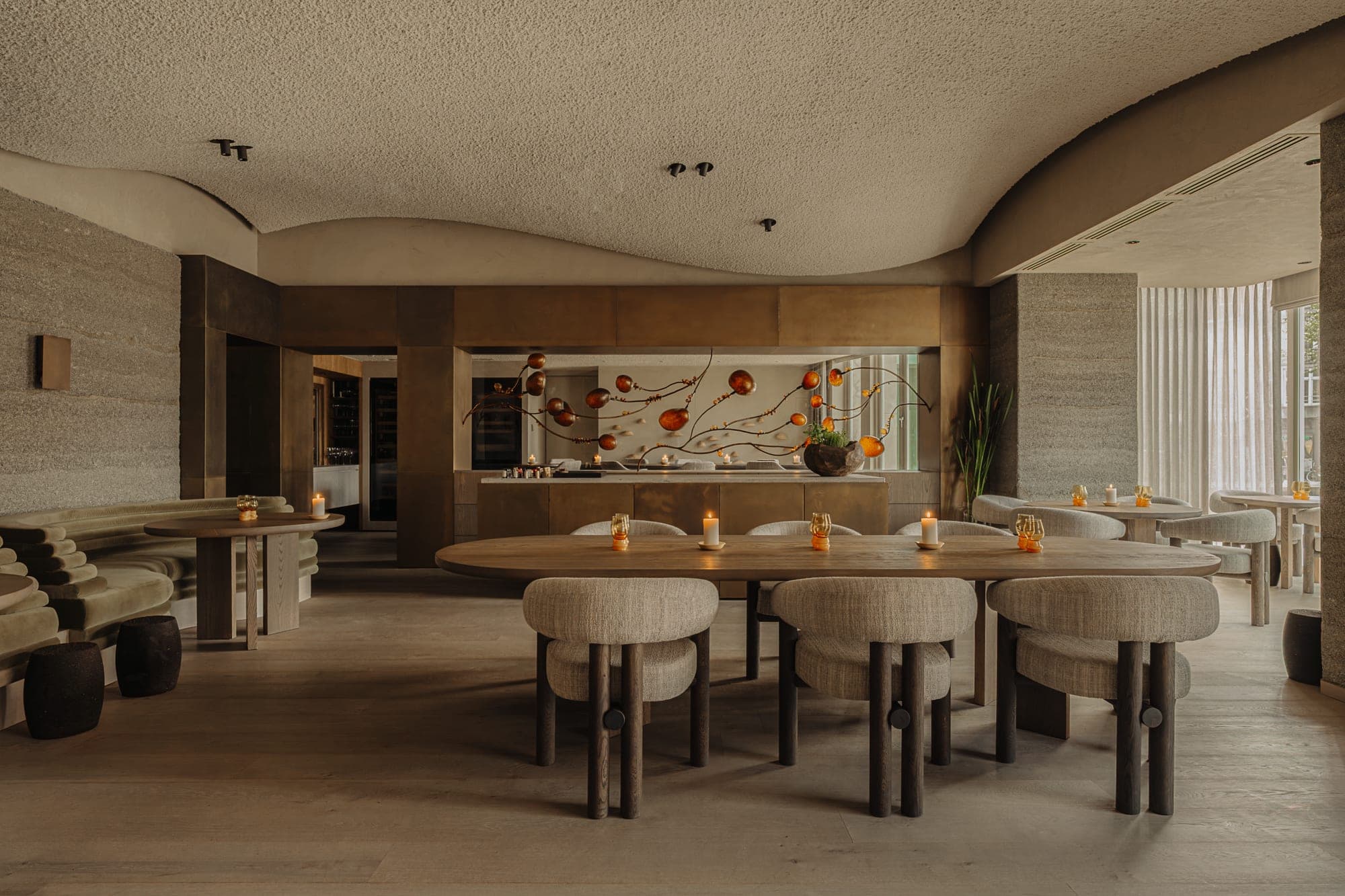
Photo: Restaurant Flore
№ 01Binnenamstel · Modern Dutch · €€€€9.3
Amsterdam's most convincing case that two-star dining can be plant-led.
Dinner starts in the kitchen, where Bas van Kranen's team hands you a snack and a short, genuinely interesting briefing on the biodynamic farms behind the menu. Then you're walked into a dining room of pale wood and eleven tables at De L'Europe, renovated top to bottom in early 2026, and the botanical tasting menu takes over: no dairy anywhere, vegetables aged and fermented like proteins, a celeriac course that outmuscles most steak. The fully plant-based menu isn't the apology version, it's the constant, year-round. Two Michelin stars plus the green one, and unusually for that tier, the pacing is brisk and the staff are funny. The non-alcoholic fermentation pairing is a serious piece of work in its own right. Book weeks ahead; the doormen will pretend you belong.
Order · Take the non-alcoholic fermentation pairing over the wine, it's the kitchen's real flex.
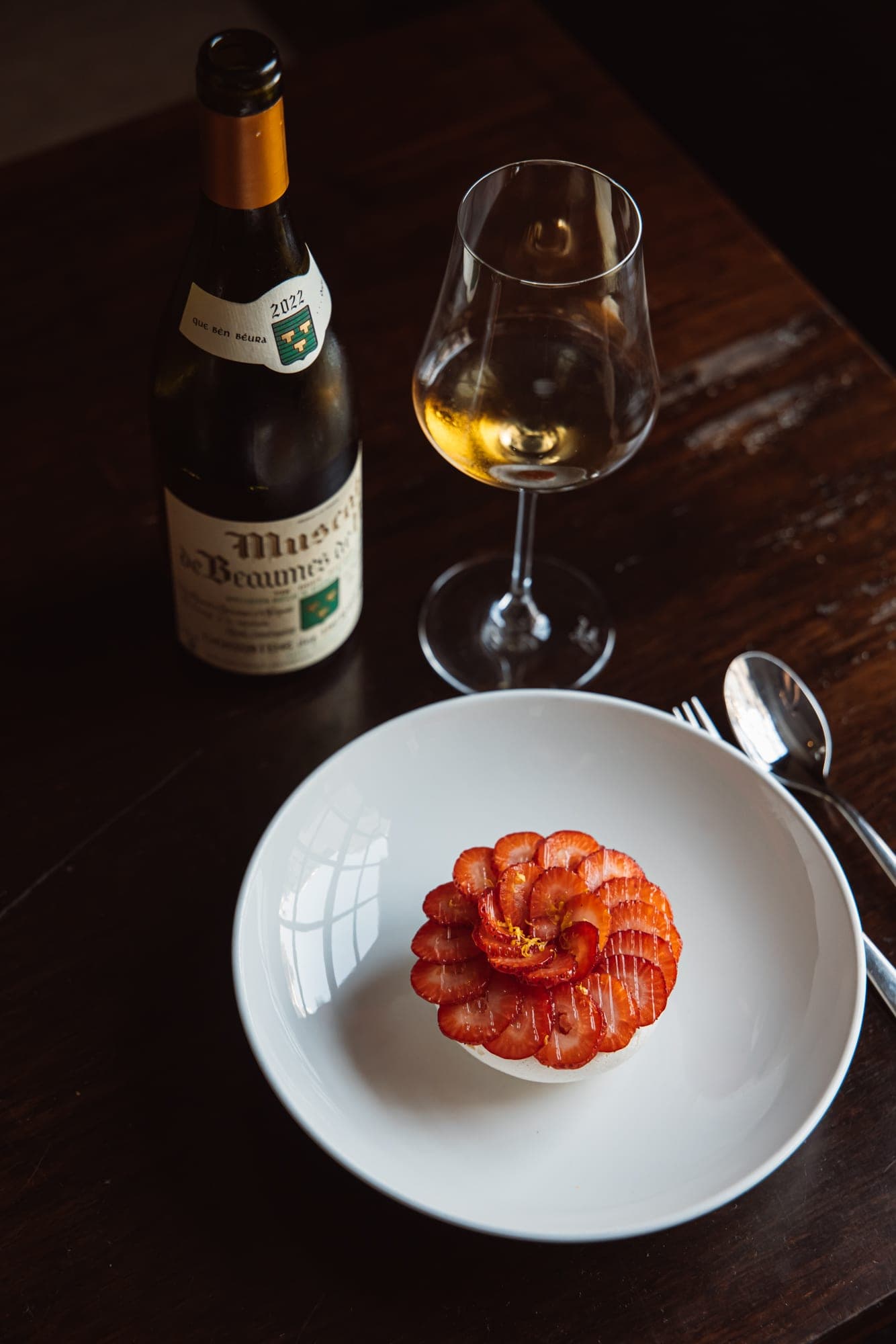
Photo: Zoldering
№ 02Utrechtsestraat · French · €€€9.0
A Michelin star wearing a brown-café jacket, with an 800-bottle wine list.
Founded by a Ciel Bleu sommelier, a chef who did time at De Librije, and two partners who also run the Lof wine shop up the street, Zoldering is what happens when wine people build the restaurant instead of the other way round. The room feels like an old Amsterdam café, dark wood, low light, people actually laughing, but the plates are starred-level French with the collar unbuttoned: a strawberry-shingled pavlova poured over with Muscat de Beaumes-de-Venise, turbot in a brown-shrimp foam, a caramel-drenched tartlet finished at the table. The list runs past 800 labels, from twenty-euro honest to icon-cellar silly, and three sommeliers will happily meet your budget wherever it lives. Open until midnight Monday through Saturday, which on the Utrechtsestraat makes it both the smartest dinner and the best last stop.
Order · Surrender to the wine pairing, it is the whole point of the place, and save room for the pavlova.
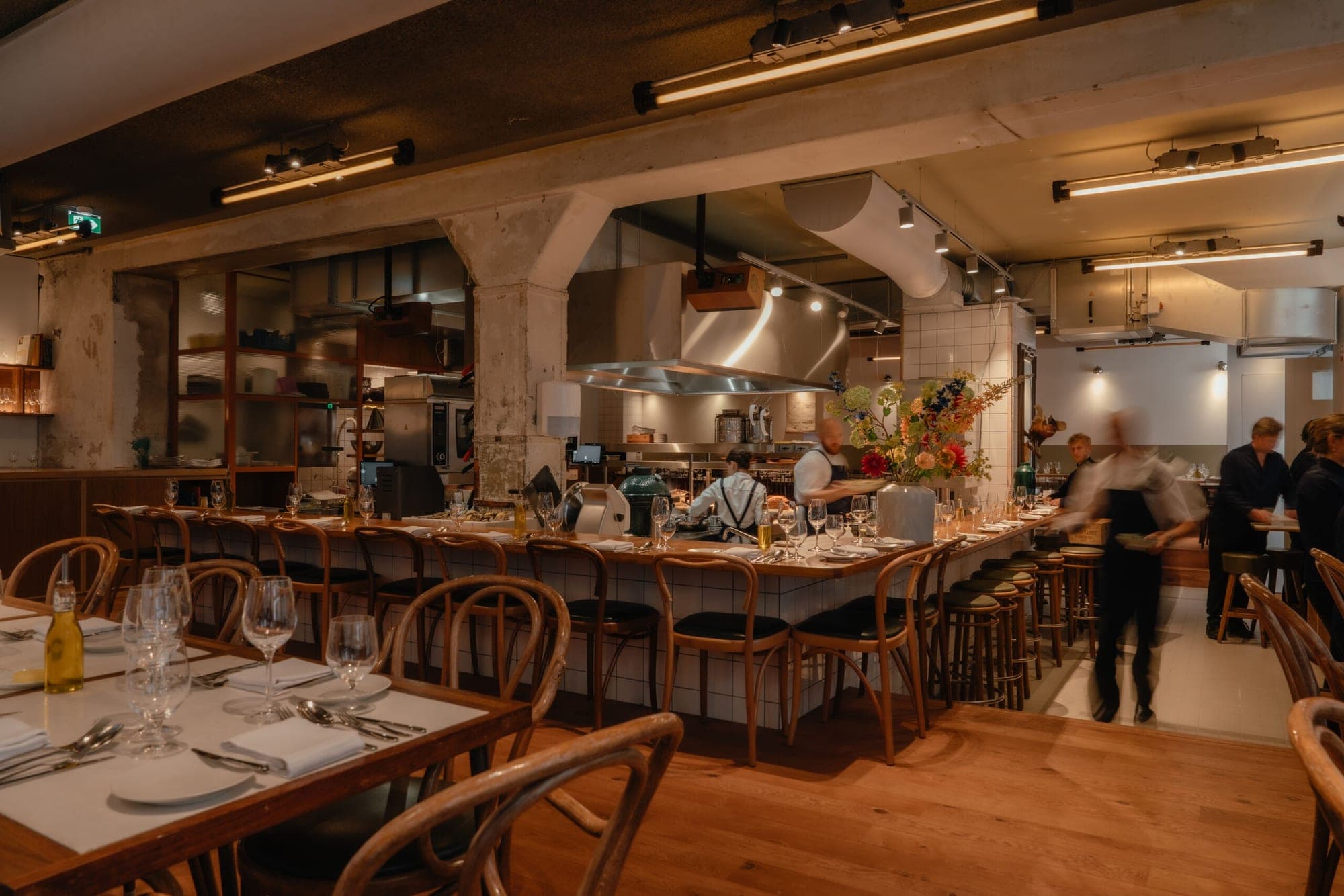
Photo: Kaagman & Kortekaas / Chantal Arnts
№ 03Nieuwendijk · Dutch-French bistro · €€€8.8
Two chefs cooking pigeon, offal and house charcuterie better than anyone downtown.
Giel Kaagman and Bram Kortekaas cook the kind of Franco-Dutch food most kitchens are too nervous to serve: game birds, sweetbreads, terrines and house-cured charcuterie, with sauces that have actual backbone. The setting is a small, warm room on Sint Nicolaasstraat, a scruffy little street behind the Nieuwendijk you would otherwise speed-walk past, and one of the two chefs is usually visible at the pass, which tells you who is accountable for your dinner. The menu shifts with the seasons: pigeon with beets in autumn, herring and asparagus when the calendar allows, bread and butter worth ruining your appetite over. Volkskrant and Parool critics have purred about this place for years, and the reservation calendar fills accordingly. Dinner only, Tuesday to Saturday from 18:00. Book ahead and trust the chefs.
Order · Start with the house-made charcuterie, and take the pigeon whenever it's on the menu.
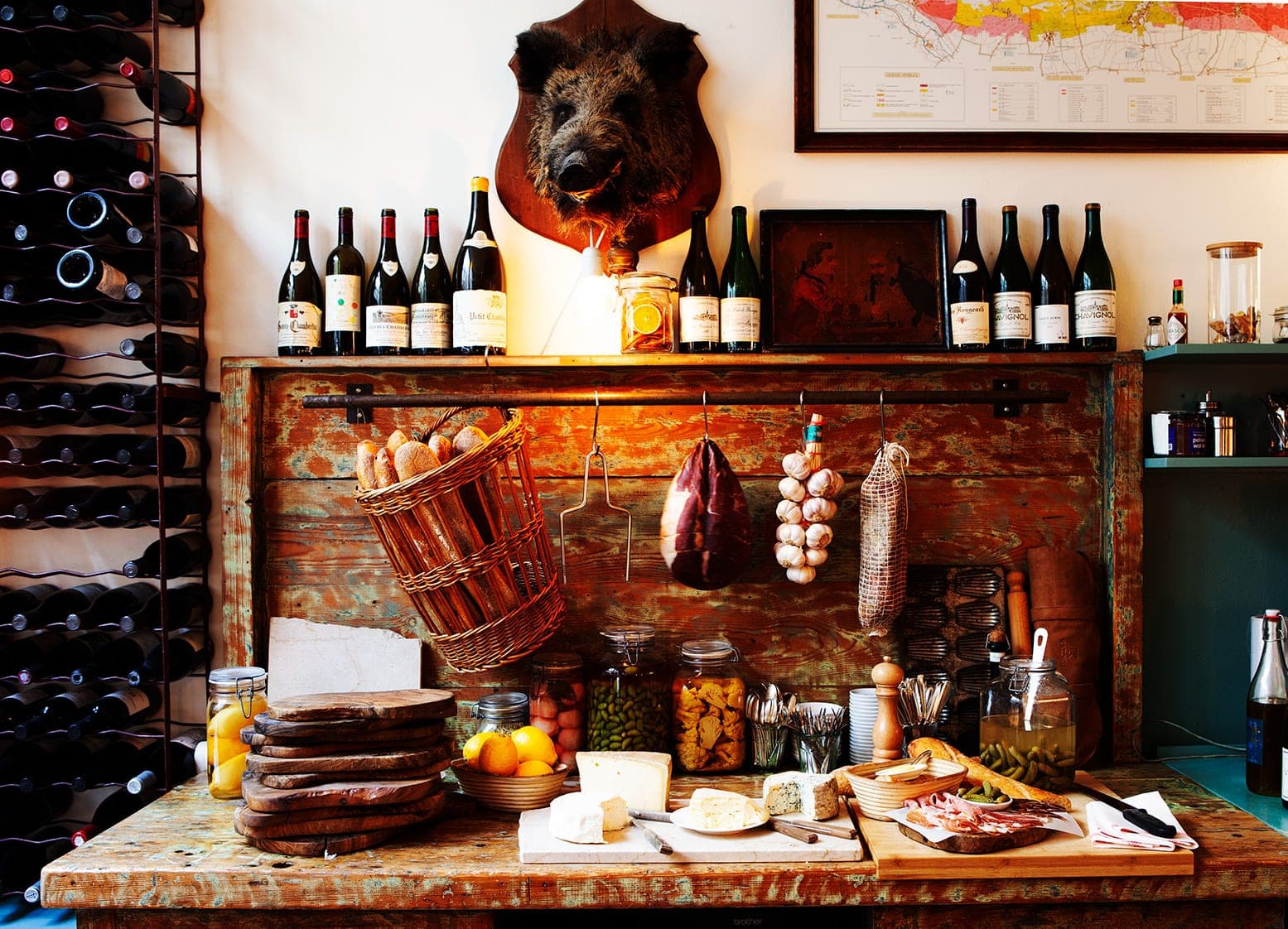
Photo: Café de Klepel
№ 04Negen Straatjes · French bistro · €€€8.6
All-French wine café where the daily bistro menu keeps pace with 300 bottles.
A brown café that quietly became one of the best French bistros in town. The deal: a daily-changing three- or four-course menu (€54.50 or €64.50), cooked from whatever came in that morning, and a wine list that is France or nothing, more than 300 bottles in stock, around 25 poured by the glass on any given night, rotating constantly. The room is dark wood, candlelight and murmur; tables max out at eight people, so leave the stag do at home. No vegan menu, no apologies. Can't get a table? Walk in early or late for the grignoter card, a small plate, a glass of Chenin, done. Reservations open two months out via the widget on their site, and the neighbourhood books them, because everyone on the Prinsenstraat knows exactly what this place is.
Order · Take the cheese course instead of dessert, it's chosen to serve the wine list.
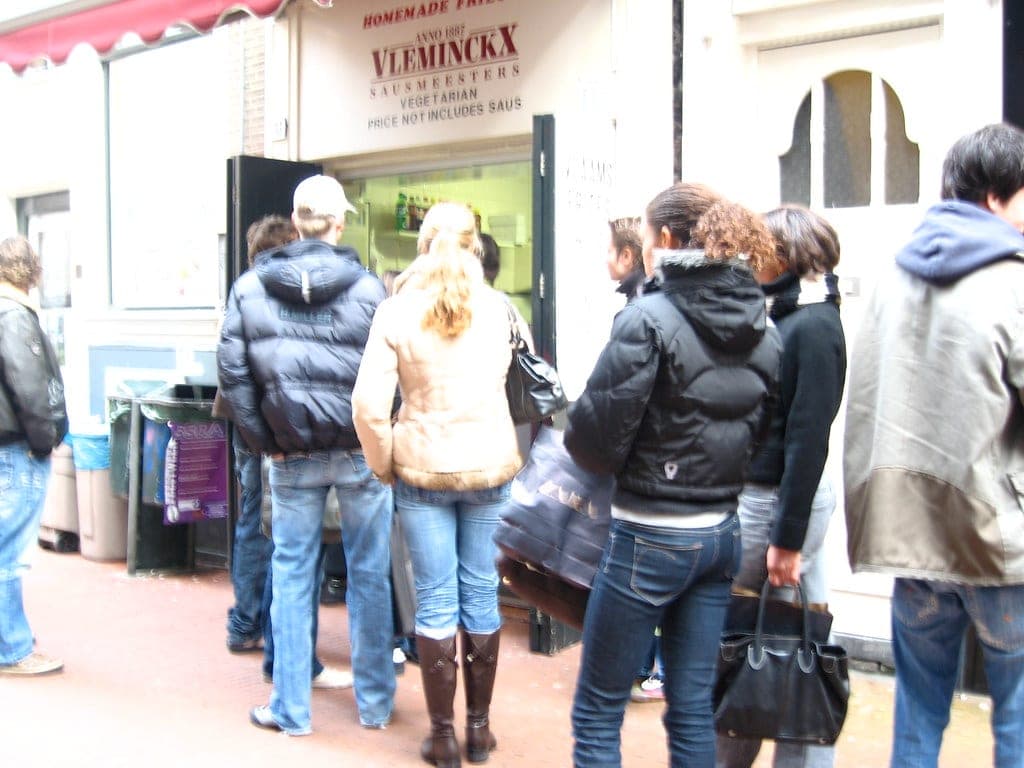
Photo: Salim Virji (Flickr, CC BY-SA)
№ 05Spui · Fries / Flemish friteshuis · €8.5
Amsterdam's fries window since 1957; the queue moves faster than your sauce decision.
The queue starts before the shutters are fully up and it has not really stopped since 1957. Vleminckx is a hole in the wall on Voetboogstraat that does exactly one thing: proper Flemish fries, cut thick, fried twice, salted like they mean it. The menu is a wall of 25-odd sauces and the correct answer is oorlog, a glorious mess of mayo, satay sauce and raw onions that ruins you for tidy food forever. Nobody is here for comfort. You shuffle forward with students, market traders and the occasional chef on a break, order in ten seconds, then eat standing in the alley with a tiny plastic fork. The fries hold their crunch to the bottom of the cone, which is the whole test. Budget ten minutes on a weekday, half an hour on Saturday, regret zero.
Order · Medium fries, oorlog, double onions
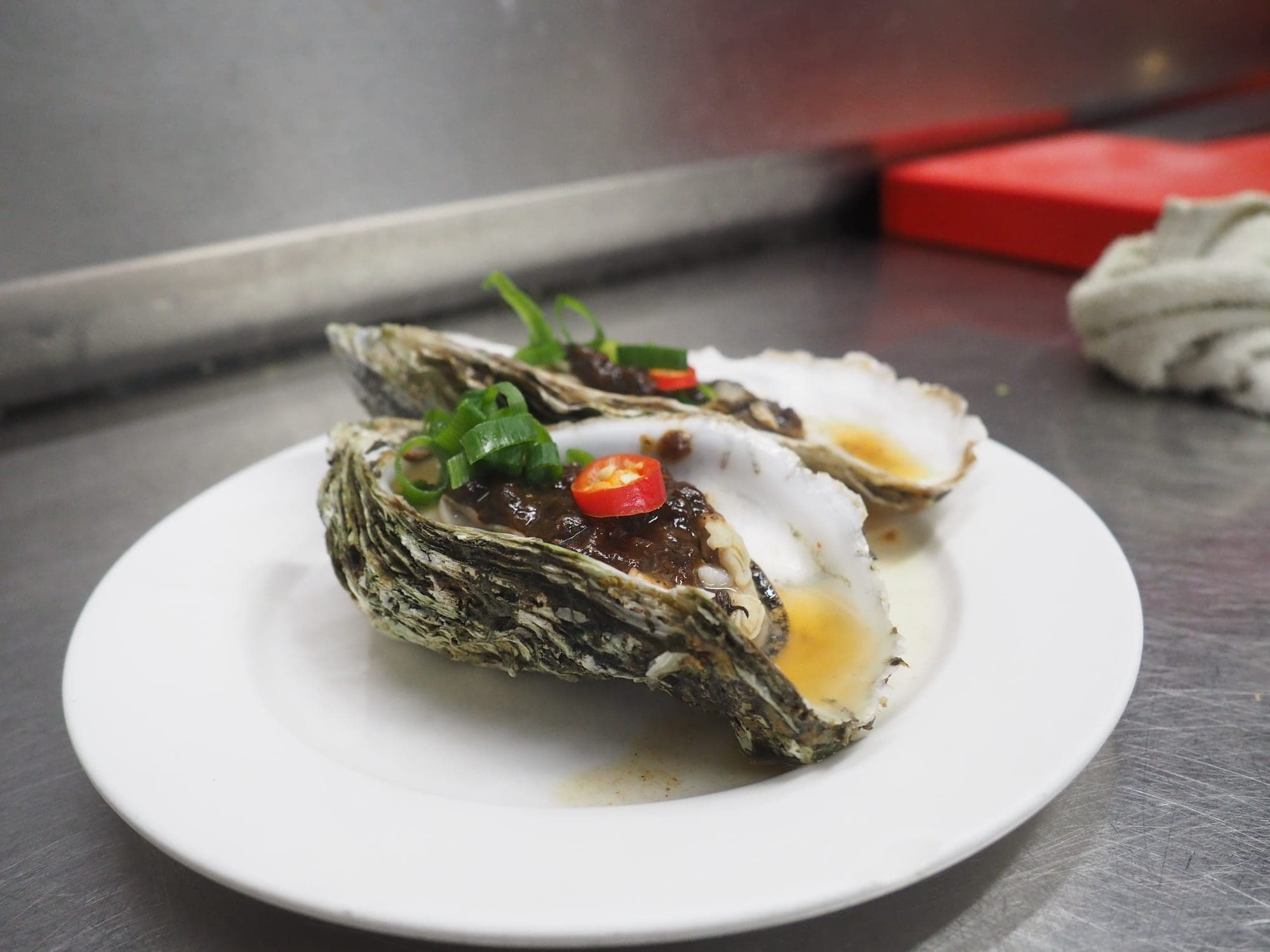
Photo: Nam Kee
№ 06Zeedijk / Chinatown · Cantonese · €8.4
Steamed oysters in black bean sauce, famous since 1981, queue and eat.
The steamed oysters with black bean sauce are the order, slippery, briny, famous enough to get a novel and a film (De Oesters van Nam Kee) named after them. Beyond that: char siu glistening in the window, roast duck on rice, and wonton soup that lands about two minutes after you order it. The Zeedijk original has been running since 1981 and looks it, bright lighting, plain tables, staff who move at speed and don't do small talk. No reservations at this branch, so put your name in and pace the block, or come at an off hour. It's cheap, it's fast, and it's the anchor of Amsterdam's tiny Chinatown. If the wait is grim, the Geldersekade branch around the corner takes bookings and seats big family tables without blinking.
Order · Start with the steamed oysters in black bean sauce, then roast duck on rice.
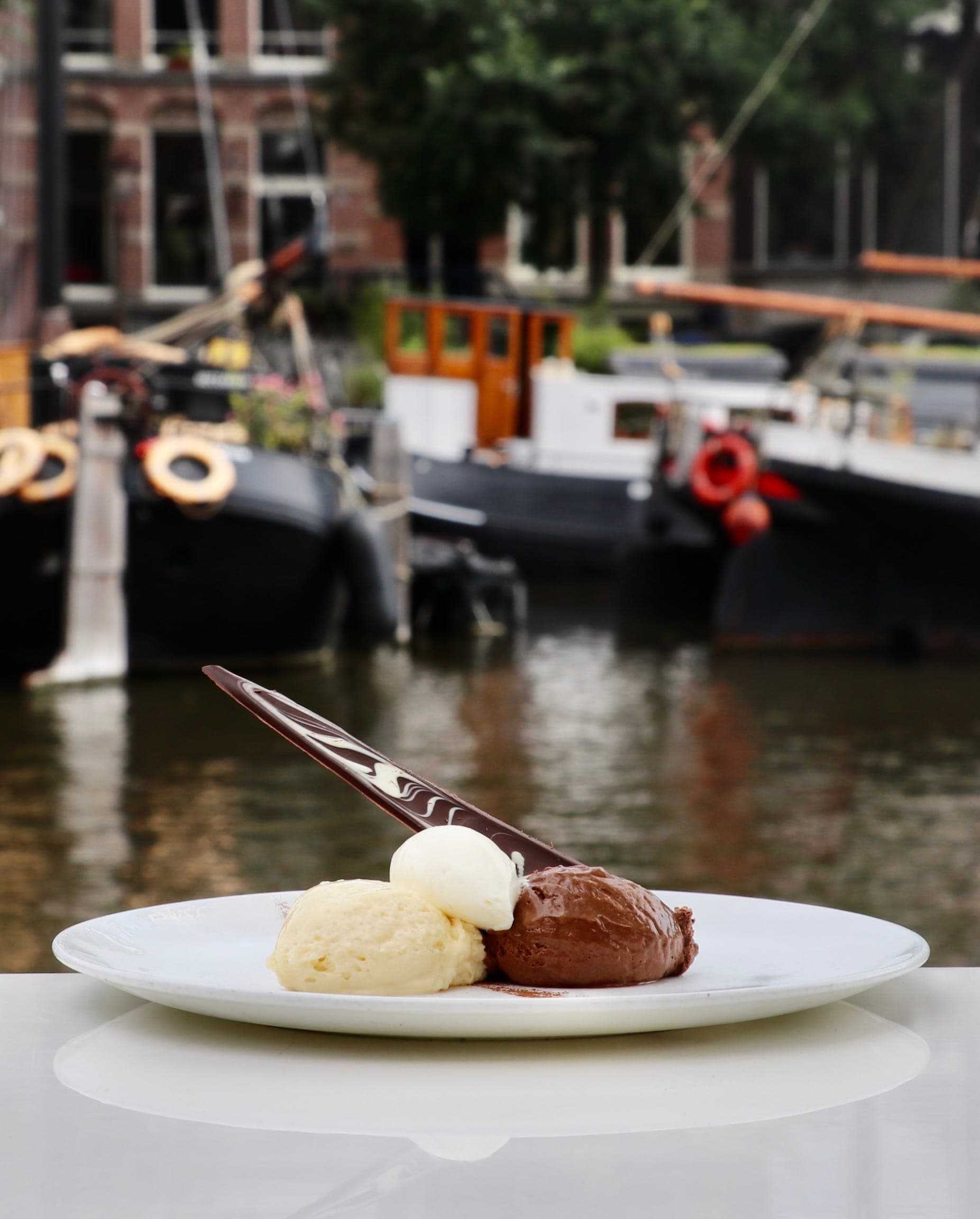
Photo: Hemelse Modder
№ 07Nieuwmarkt · Modern Dutch · €€8.3
Thirty-plus years of cooking for the neighbours, priced like it still means it.
On the quiet stretch of the Oude Waal, with the Montelbaanstoren doing its postcard thing across the water, Hemelse Modder has been feeding this corner of Nieuwmarkt since long before anyone said 'seasonal' out loud. The name means 'heavenly mud', the chocolate mousse it refers to still closes the menu, and you should let it. In between: French-boned, Amsterdam-fleshed cooking, think plaice with brown shrimp or a caramelised Cevennes onion tart, in three to five courses that stay mercifully under what one course costs elsewhere on the canals. Vegetarians get a proper parallel menu, not a shrug. The room is plain in the best Dutch Protestant way; the terrace out front on a July evening is one of the calmest canal-side seats in the Centrum. Book it for parents you actually like.
Order · Finish with the hemelse modder itself, the dark-and-white chocolate mousse the place is named after.
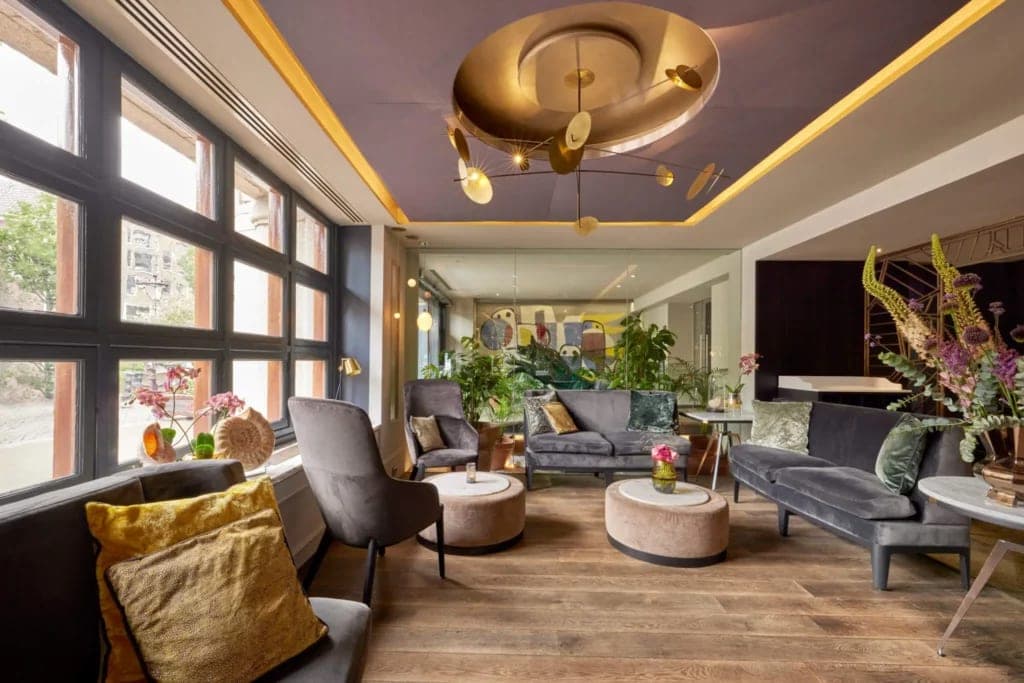
Photo: Restaurant Bridges / Michael Graste
№ 08Oudezijds · Seafood · €€€€8.3
Seafood-first fine dining behind Karel Appel's mural at The Grand.
The Grand's house restaurant hides behind Karel Appel's 1949 mural, he painted it for the building's canteen back when this was City Hall, allegedly in exchange for meals. Fitting, because Bridges is still about the food-for-art trade: chef Raoul Meuwese does French technique on North Sea fish, think langoustine with a sharpened-up beurre blanc, sole off the bone, and a caviar service for birthdays with a bonus. The room is calm, creamy and grown-up, staffed by people who actually enjoy their jobs, and the courtyard terrace is the quietest square metre within two hundred metres of the Red Light District. Weekend lunch is the smart play: same kitchen, gentler bill, daylight in the courtyard.
Order · Start with the oysters, then the North Sea sole. Lunch runs Friday to Sunday and is the value play; Tuesday to Thursday the doors stay shut, so plan around a long weekend.
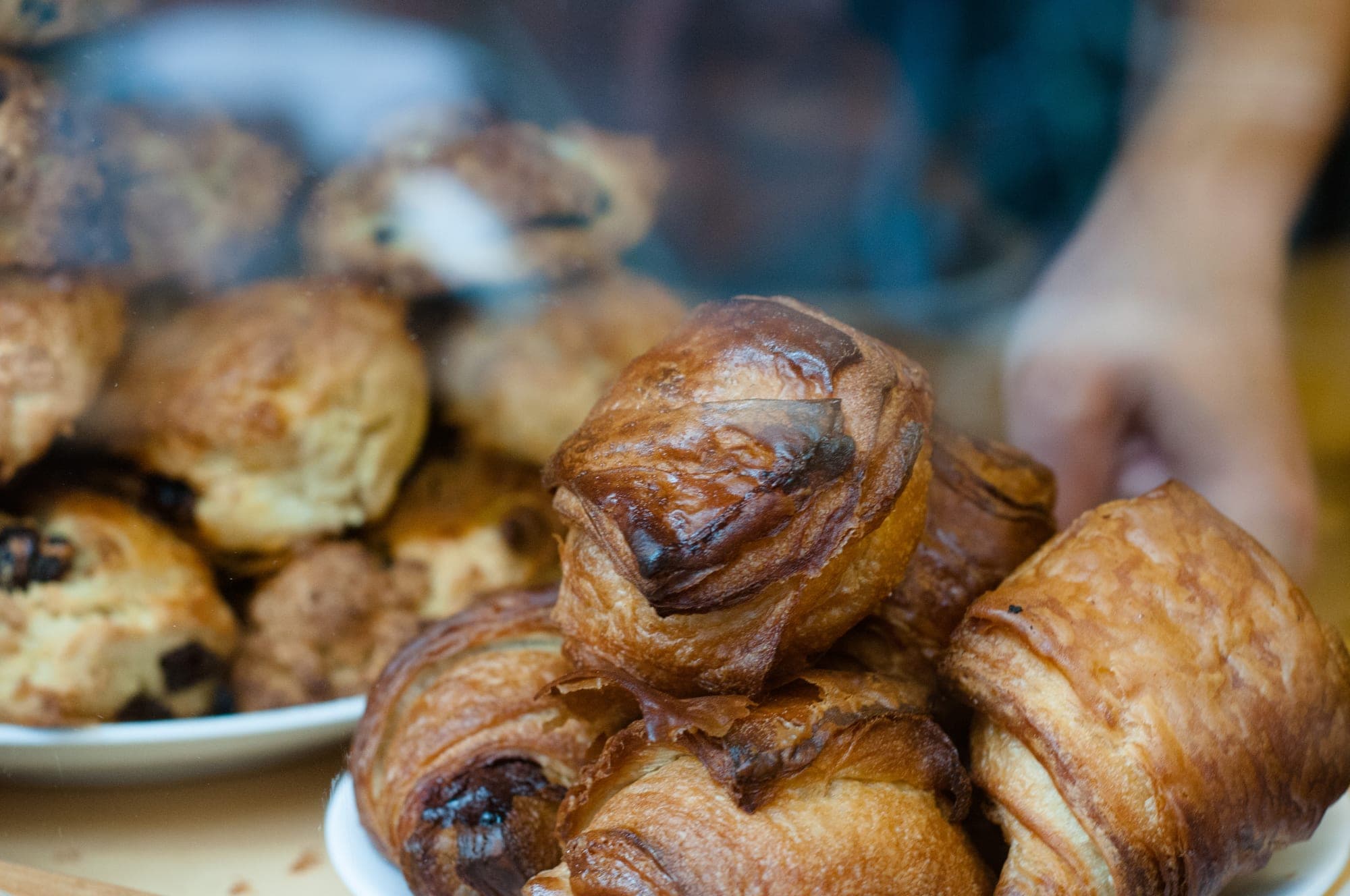
Photo: Gebroeders Niemeijer
№ 09Nieuwendijk · French bakery, breakfast · €€8.3
A proper French breakfast under an original art deco ceiling, served from 8:15 with the stone oven going behind the counter.
Issa Niemeijer opened this bakery with his brother Marco in 2008 and has run it alone since 2011, and it is still the most serious bread in the city centre: everything shaped by hand, baked in a large stone-floored oven, no additives and no prepared products. The room is the reason to bring someone here at half past eight on a Tuesday. It is a tall historic space with an original art deco ceiling and a view straight into the open bakery, quiet in the morning, with tables you can spread papers across and a staff that does not hover. The petit dejeuner at 9.95 gets you three petit pains with butter and marmalade, a croissant or brioche, coffee and fresh orange juice, and the extra version at 12.95 adds Dutch farm cheese, gruyere and free-range Italian ham. Coffee is Costadoro espresso from Turin, cheese comes from Fromagerie Kef and the charcuterie from Lindenhoff and Brandt en Levie. The one thing to plan around: it is closed on Mondays, and breakfast service stops at noon sharp. Nieuwendijk is a tourist street with a bad reputation, which makes the calm inside this address feel like a private discovery.
Order · Closed Mondays. Breakfast runs Tuesday to Friday 8:15 to 12:00, lunch from 11:00. Book a table via the Brigaid link on their site if you need a guaranteed seat, otherwise arrive before nine and you will have the room.
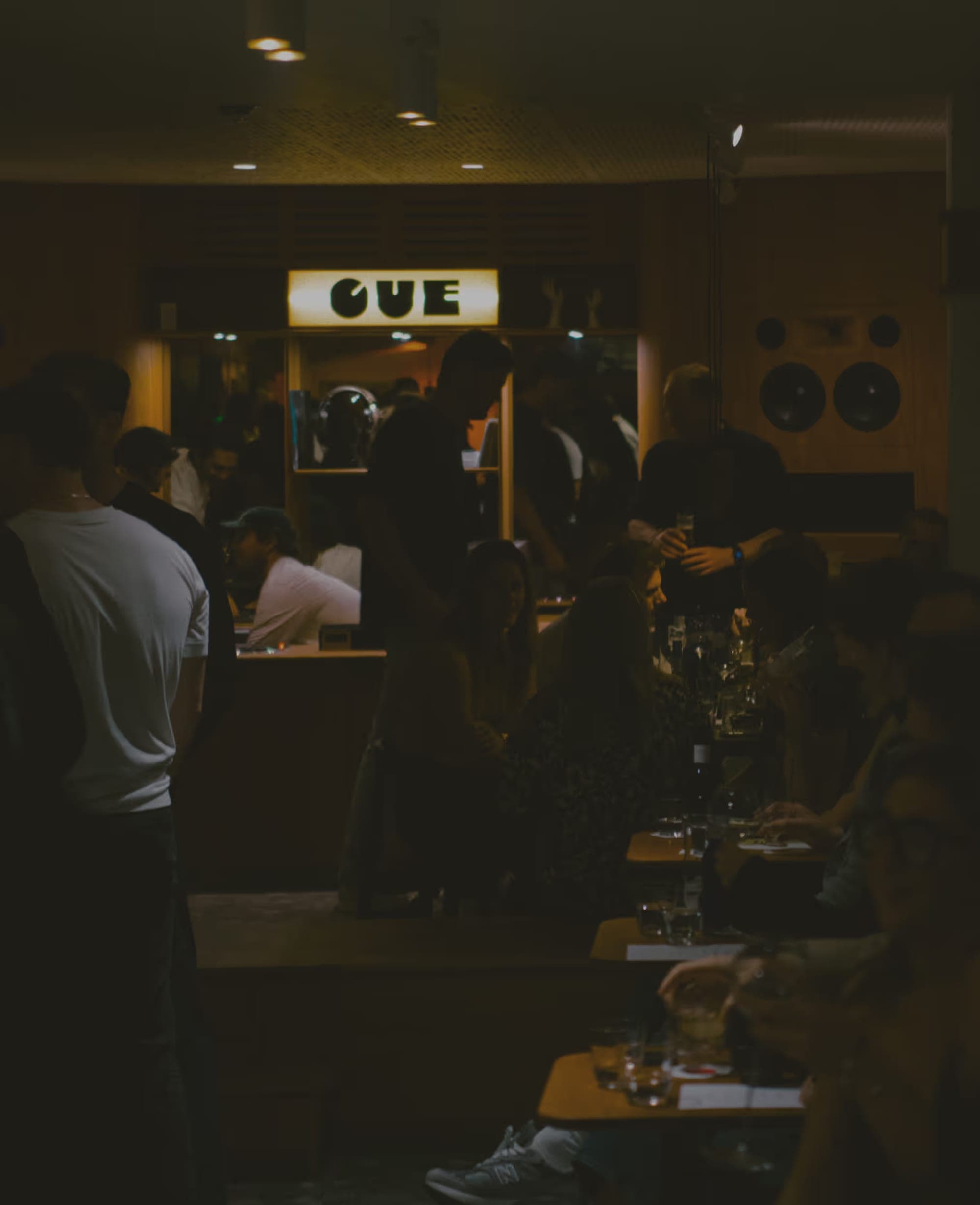
Photo: CUE
№ 10Grachtengordel · Open-fire fine dining · €€€€8.3
Michelin-starred wood-fire cooking upstairs, a vinyl listening bar in the basement, one very good evening total.
CUE is two ideas stacked on top of each other on the Utrechtsestraat, and both of them work. Upstairs, George Kataras (ex Vanderveen, where he and sommelier Mo Aous picked up a star in eighteen months) cooks everything over wood and coals: fermented, pickled, smoked, cured, then plated like it was no effort at all. The 2026 Michelin star says otherwise. Menus are called Volume 1 and Volume 2, because downstairs is the other idea: a Japanese-style listening bar where every record is vinyl, the sound system is custom built, and the dirty martini involves miso and seaweed water. It won an international cocktail award before most of the street had noticed it existed. The move is dinner upstairs, then drift down for a nightcap while someone drops a jazz record you will spend all week trying to identify. Book the restaurant well ahead; the bar is walk-in only, which feels almost generous.
Order · No reservation? The basement bar is walk-in only, Wednesday to Saturday, and runs until 01:00 midweek and 02:00 on Friday and Saturday, with Kataras's bar food the cheapest route to starred cooking in the city. Sunday to Tuesday it stays shut.
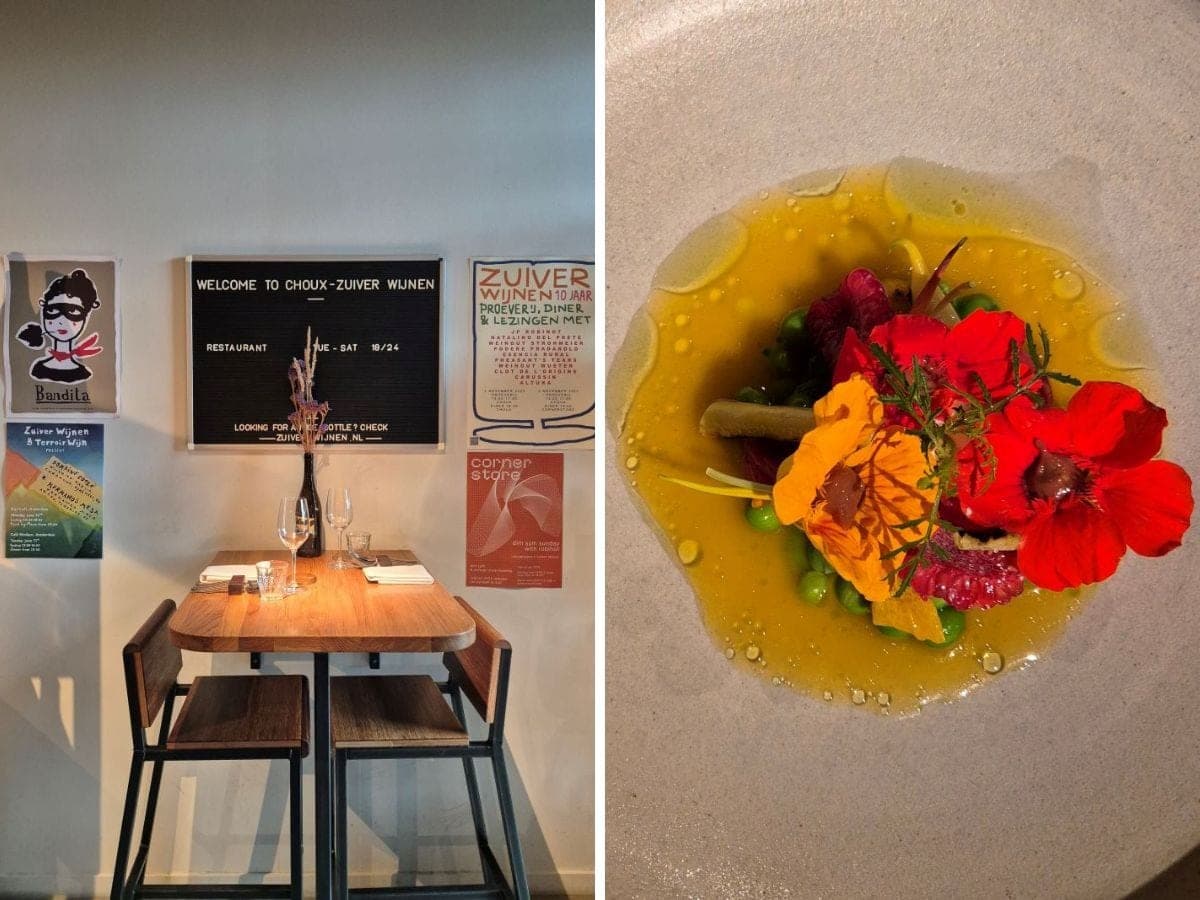
Photo: The Greenlist
№ 11Oosterdok · Vegetable-forward tasting menus, natural wine · €€€8.2
The deep-red former factory behind Central Station where vegetables earned a Michelin star and the natural wine comes in through the house's own importer.
The red-painted factory building on the quay behind Central Station has been quietly outcooking half the city since 2015. Choux began as pop-up kids with natural wine convictions and grew up into a Michelin star, collected in 2025 without changing the plan: ninety percent vegetables and fruit, ten percent mostly game and shellfish, everything fermented, pickled or smoked somewhere on the premises, including a house condiment line called 621 Ferments. Merijn van Berlo still oversees the kitchen and there are more ideas per plate here than at tasting menus twice the price. Five courses run 82.50 euros, and the Theatre Menu gets you three for 52.50 if you hand the table back by 8pm. The wine is the other half of the story: owner Figo van Onna is a sommelier first, imports through sister company Zuiver Wijnen, and runs a bottle shop with wine bar a few doors down at number 143. He will tell you the Michelin star matters less to him than the team, and after years of stubborn filter-only coffee the espresso machine is back, which counts as growth. Card only, and vegetarians are the default rather than an accommodation.
Order · Take the 18:00 Theatre Menu seat: same kitchen, 52.50 euros, table until 20:00. Then walk to the Zuiver Wijnen bar at De Ruijterkade 143 for another glass. Book by phone or email, no online widget, and nothing over 8 people.
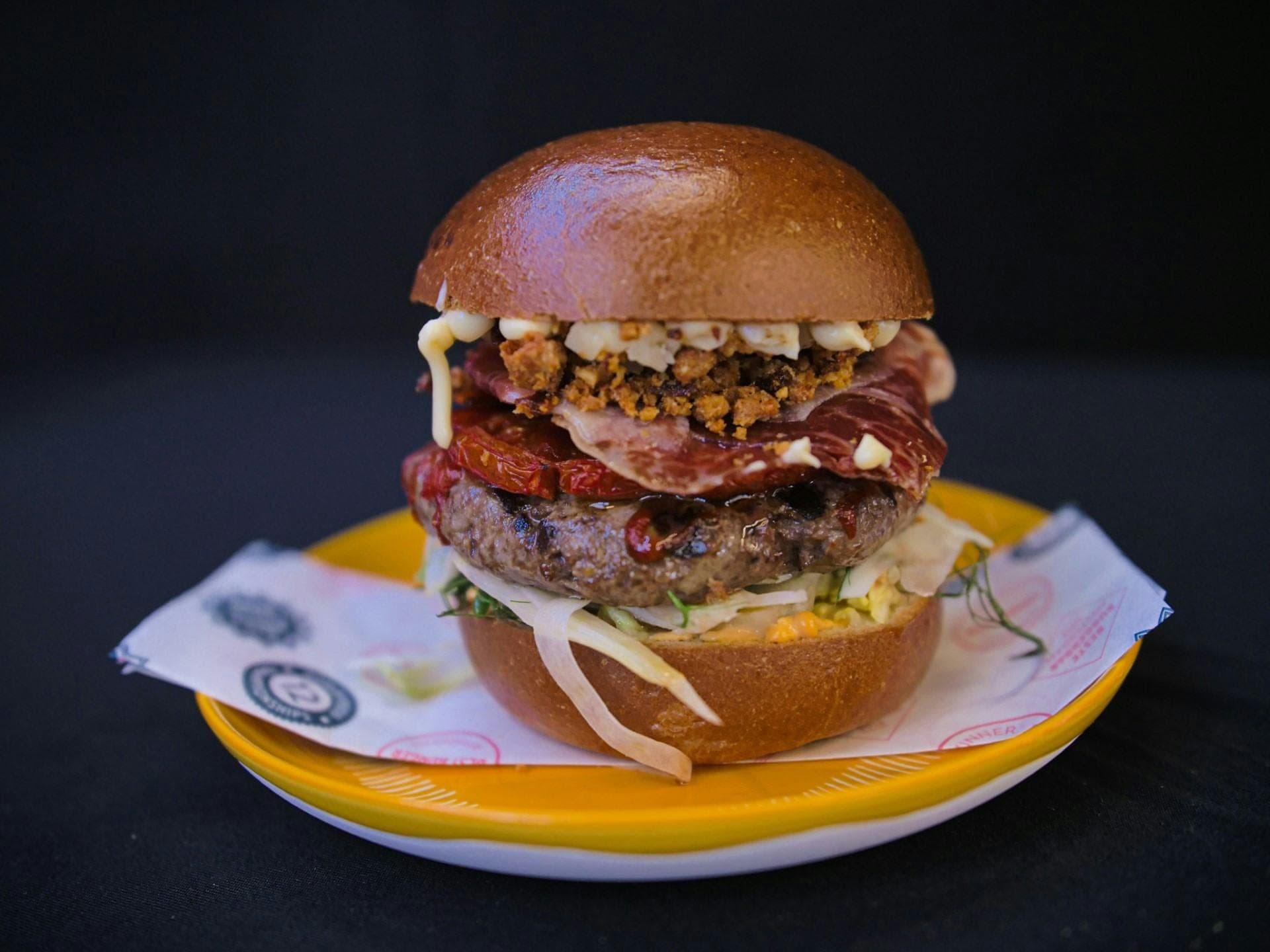
Photo: Ter Marsch & Co, via Misset Horeca
№ 12Grachtengordel · Gourmet burgers · €€€8.2
The NH Collection hotel's burger bar by the Bloemenmarkt, genuinely crowned the Netherlands' tastiest hamburger.
Ter Marsch & Co opened its first boutique burger restaurant in Rotterdam in 2014 and has spent a decade collecting national titles most burger places only claim in their own marketing. The Amsterdam branch sits inside the NH Collection FlowerMarket hotel at the corner of Singel and Vijzelstraat, right by the floating flower market, open daily from noon to ten with no reservation needed for small groups. The menu splits into Classic Hamburgers and Signature Hamburgers, and the latter carry actual trophies: La Fiesta de Carne, built on Spanish Black Angus with Manchego cheese custard, 24-month Serrano ham and a chorizo-nut crumble, won the NK Lekkerste Burger 2024, the Dutch national tastiest-burger championship judged at Horecava and organized by Stichting de Lekkerste Wedstrijden. The same chef, Andy Hoogvliets, then won NK Loaded Fries 2025 with a Bali Spice Fries recipe. Both awards are real, dated and checkable against the competition's own results pages, not just restaurant marketing copy. Brunch and lunch run until 16:00 alongside the full burger menu, and a serious cocktail list backs up the fries.
Order · Open daily 12:00-22:00, walk-ins welcome for small groups (email ahead for parties of 8+); brunch and lunch dishes run until 16:00 alongside the burger menu.
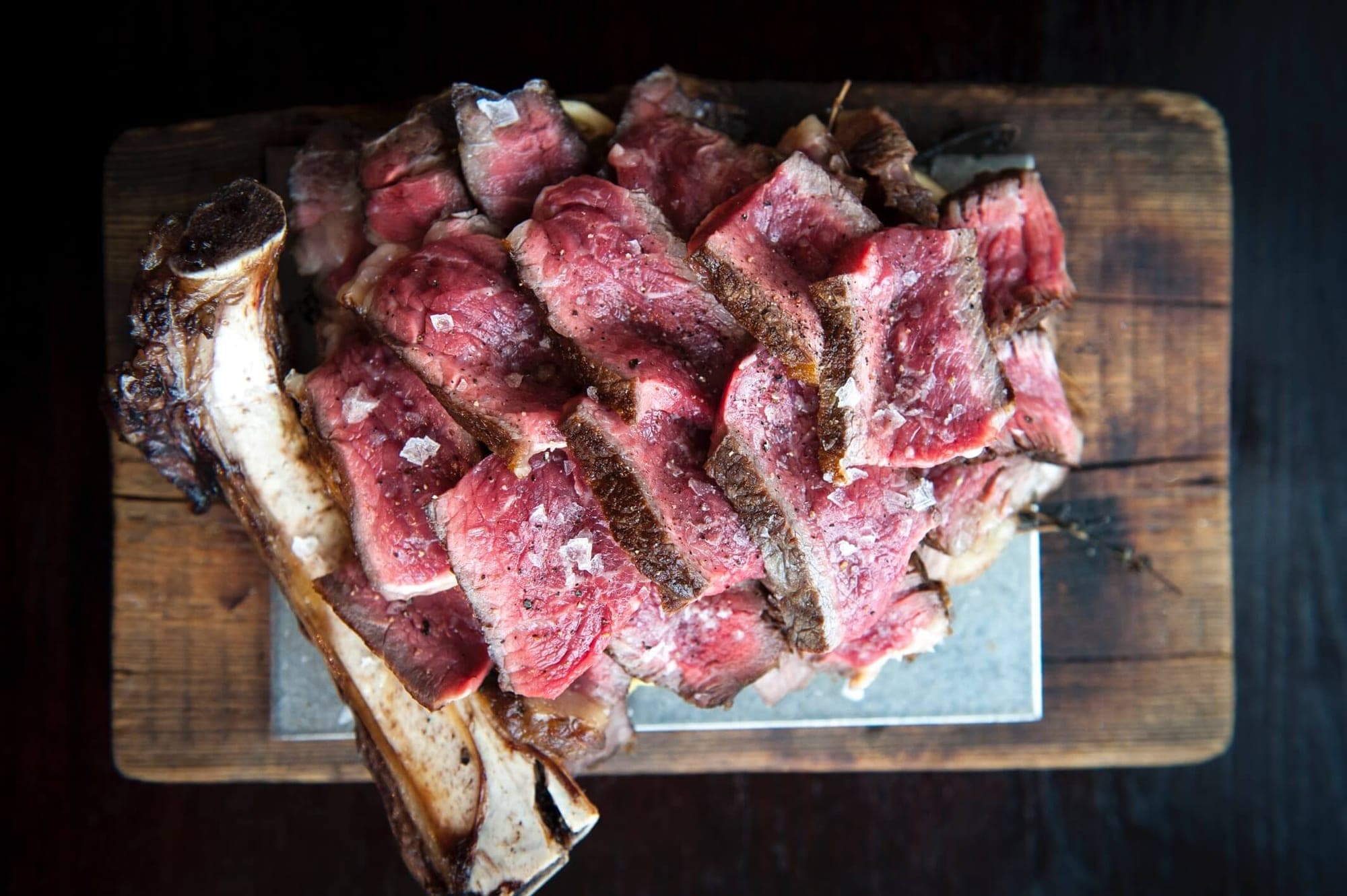
Photo: Gebr. Hartering
№ 13Lastage (Nieuwmarktbuurt) · French, nose-to-tail, charcoal grill · €€€8.1
Paul Hartering cooks a different shared-starter menu every day, and Het Parool called his rib unequalled in April 2026.
Brothers Paul and Niek Hartering opened Gebr. Hartering on a corner of Peperstraat in 2011. Paul, who started out at Van der Valk, cooks. Niek, who had barely worked in restaurants when they began, runs the floor and chooses the wines. The kitchen decides the menu daily: five courses with three shared starters, a main and dessert, or seven courses with four starters, the rib, cheese and dessert. There is a vegetarian version and a short à la carte. Het Parool's Mara Grimm gave it an 8.5 in April 2026. She wrote that fifteen years on the brothers have mellowed and the wine list has only improved, under a headline calling the rib and the wines unequalled. Gault&Millau scores it 15/20 and named it Artisan of the Year in 2019. Guests praise staff who explain each dish and wine, and single out the rib. They put the bill at €70 to €90 a head and agree the place is always full.
Order · Book well ahead. Dinner is served daily from 18:00.
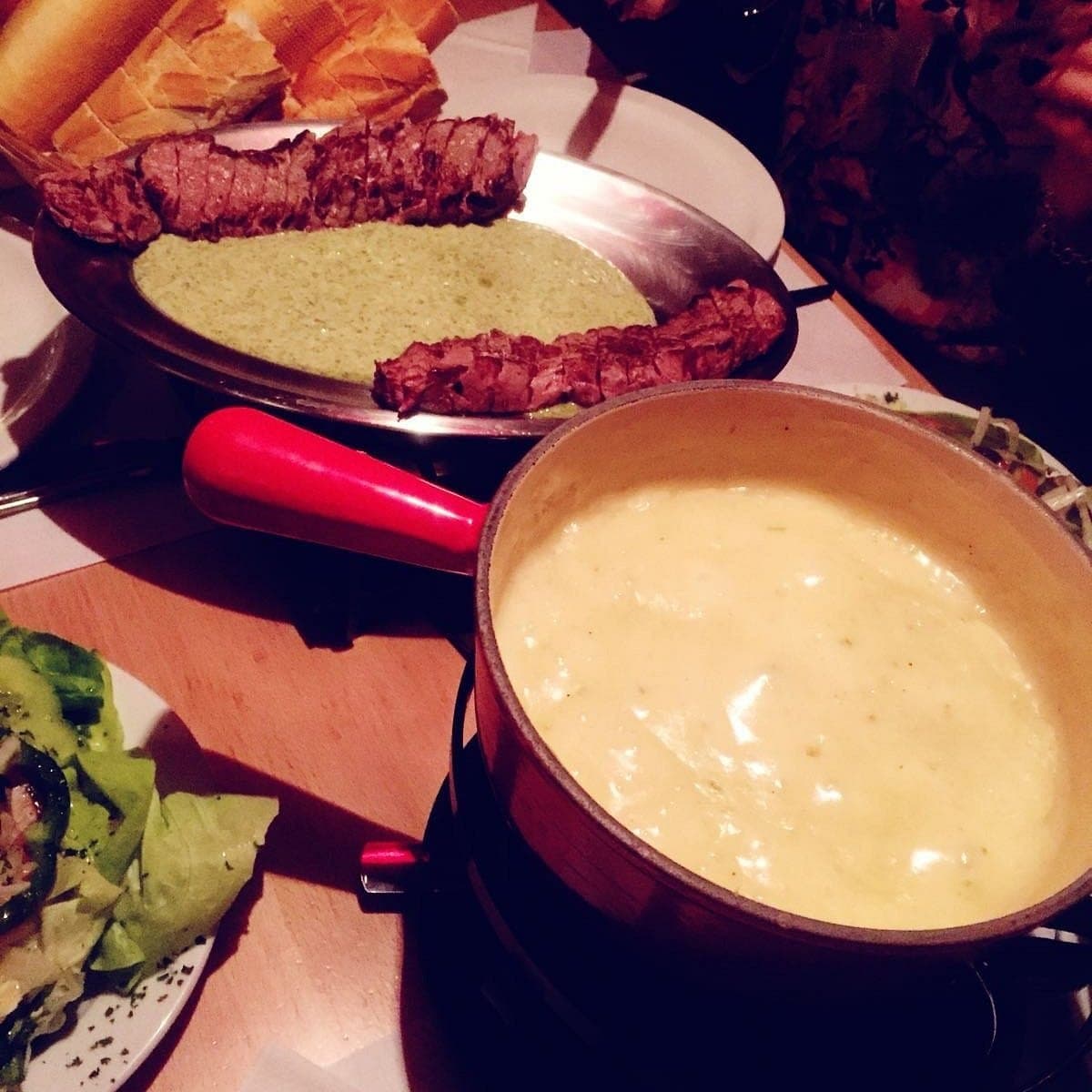
Photo: Café Bern
№ 14Nieuwmarkt · Eetcafé, Swiss fondue · €€8.1
Cheese fondue for one at a brown café bar, unchanged since 1978, phone-only bookings.
Helmut Winzeler was a Swiss nuclear physicist who worked at CERN before he opened this dark little café on the Nieuwmarkt on 26 August 1978, and the kitchen has run on his recipes with near scientific rigour ever since. The menu is a handwritten card that barely changes: cheese fondue at 24 euro a head, an entrecôte Café Bern with salad at 25, emincé de veau, steak au poivre, spaghetti with meat sauce, and a soup of the day that is the only thing that moves. The room is exactly what you want from a brown café, wood, low light, a proper bar with stools, art on the walls that changes every couple of months. What makes it an eetcafé rather than a curiosity is that the fondue is genuinely good, the bread is right and the Swiss wines by the glass are chosen with care. Het Parool has put Bern in its list of the best fondue addresses in the city repeatedly, most recently in January 2026, and its 2017 Proefwerk review called it a good café with a good kitchen rather than a cult act. The caveat is logistics: reservations only by phone from 15:00, maximum twelve people, and the room fills fast on cold nights. Solo diners can order a single fondue, which is rarer than it should be.
Order · Open daily 16:00 to 01:00, kitchen 18:00 to 23:00. Phone from 15:00 for a table or take a bar stool early. Order the fondue and the Jemenitische sla, and take a Fendant du Valais by the glass.
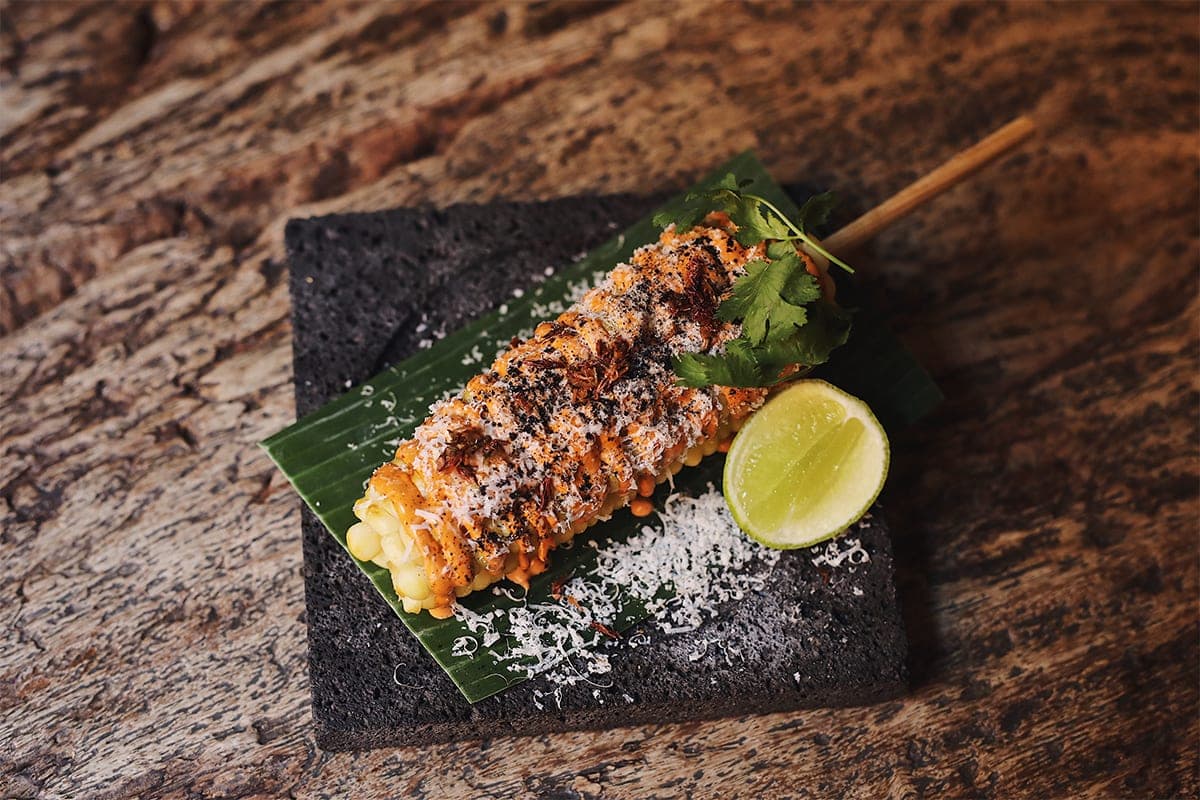
Photo: Oaxaca Amsterdam
№ 15Spuistraat · Oaxacan Mexican, mezcaleria · €€€8.1
A genuine Oaxacan kitchen and one of Europe's best mezcal rooms, hiding in a Spuistraat cantina.
Joan Bagur spent over two decades cooking in Mexico before he brought Oaxaca to a former tourist-trap address on the Spuistraat, and it shows in the details nobody fakes: chapulines when they are in season, five different salsas built fresh daily for the tableside guacamole, and chicatana ants flown in from the fields around Oaxaca City. The kitchen splits into a casual streetfood side and a full dining room running toward a ten-course tasting menu, so a solo diner grabbing tacos and a couple booking the whole table's tasting menu both get treated seriously. Behind it all sits a proper mezcaleria, 32 bottles curated with a mezcal maestro from Destilerías Tlacolula, doing serious work in a room styled like a classic Mexican cantina. The trio of oysters, done three ways with tuna, cucumber-lime sorbet and Hermosillo machaca, is the dish worth building a table around. Iberian cochinita pibil and the black mole chicken are the heavier hitters if you are staying for dinner. It is part of the Sagardi hospitality group, which explains the polish, but the cooking itself reads as personal, not corporate.
Order · Open daily 12:30-23:00, kitchen 12:30-15:00 and 18:00-22:00, mezcaleria until midnight; the lunch window is the easiest way into the tasting menu room without a wait.
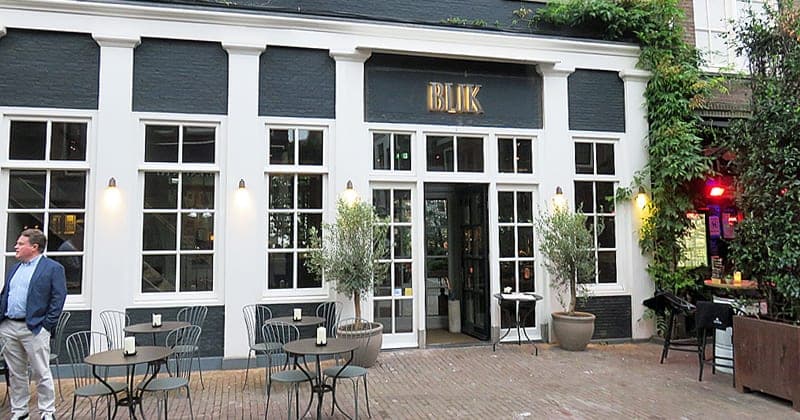
Photo: Blik, via Reguliers.net
№ 16Grachtengordel · French bistro · €€€8.1
Jacob Jan Boerma's bistro menu in an 18th-century coach house with a garden, opened after Het Parool gave sister restaurant Nonna a 4.
Blik is a bistro and bar in the 18th-century coach house of Huis de Neufville on the Herengracht, with a garden in between, open since 3 September 2025. Jacob Jan Boerma, formerly chef of the three-Michelin-star De Leest in Vaassen, wrote the menu but does not cook here every day. Actor Manuel Broekman works the floor three days a week. Partner Tijn Verstappen, who co-owns nineteen Amsterdam restaurants, told Het Parool at the opening: "We got a 4 in Het Parool; that led to this new restaurant." The 4 was for his Nonna, since closed. The June 2026 menu is à la carte: steak tartare with white chocolate crumble (€22.50), lobster mac and cheese (€26), and whole chicken (€49) or turbot (€69) for two. A three-course chef's menu costs €49.50. The wine list leans on Burgundy and Bordeaux, from €37.50 to €300 a bottle. In 2025 Barts Boekje praised the wine list and the chicken. Guests praise quick, attentive service and the garden, and score the food lower than either.
Order · Dinner Tuesday to Sunday from 18:00, lunch with live music on Saturday and Sunday from 12:00; closed Monday. Book online or by phone or WhatsApp on +31 6 11 99 91 94.
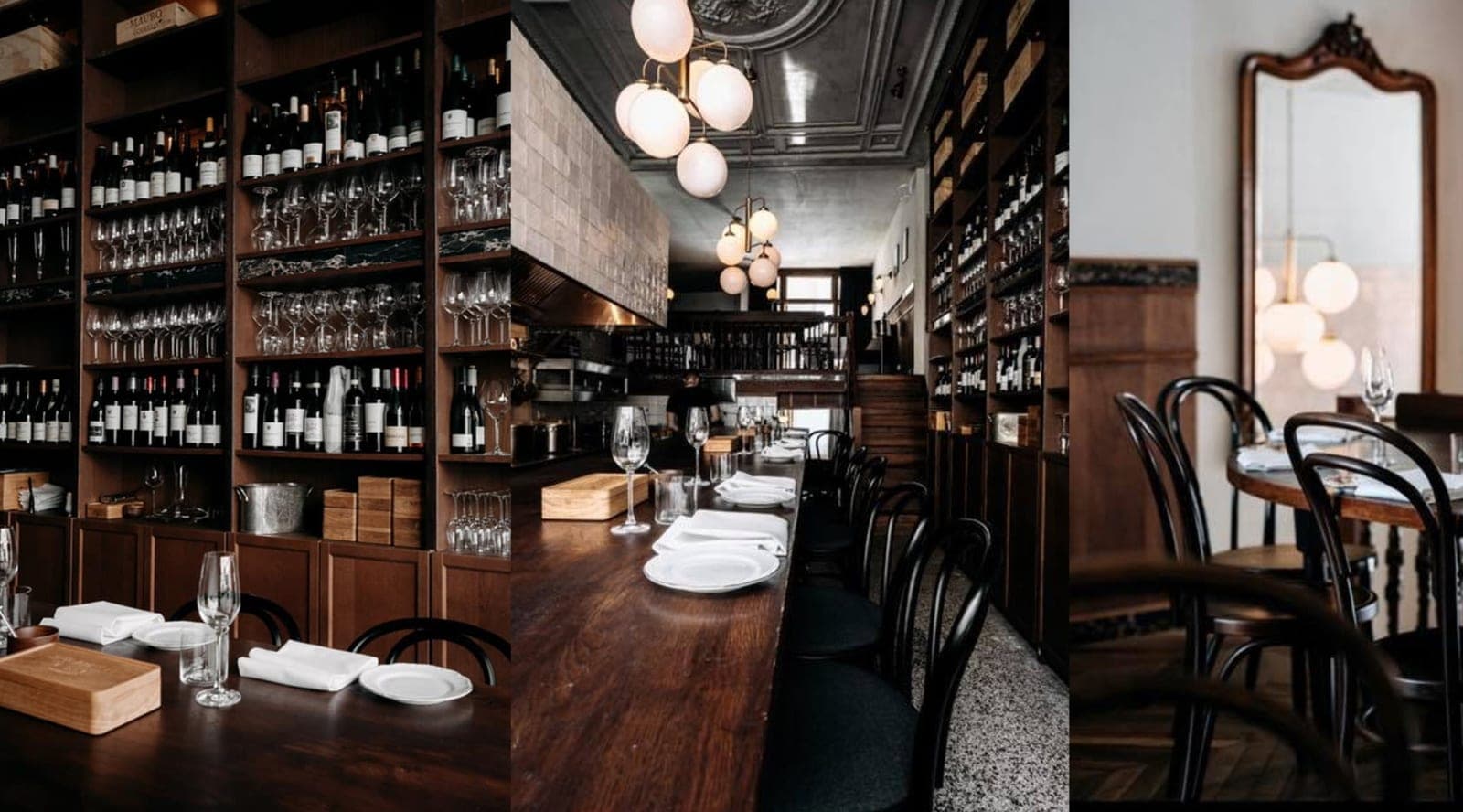
Photo: De Juwelier, via AmsterdamNow
№ 17Utrechtsestraat · Modern French, Michelin-starred · €€€8.1
The Utrechtsestraat bistro of 212's owners, with Thomas van Santvoort as chef; it lost its Michelin star at the October 2026 ceremony.
When Yoran Jacobi and Moriaan Koeleman left with sommelier Bas Hazen in 2025 to open Veneur down on the Weteringschans, De Juwelier could have coasted on its 2022 star and hoped nobody noticed the gap. At the Michelin ceremony of 5 October 2026 it lost that star. Instead owners Richard van Oostenbrugge and Thomas Groot, the pair behind two-starred 212, brought in Thomas van Santvoort, who had just closed his own starred Flicka in Kerkdriel after eight years to start a new chapter in Amsterdam. His cooking keeps De Juwelier's bistro-with-star-precision idea intact: a Holsteiner beef tartare with a wild Wadden oyster and seaweed cracker, a tomato salad that pairs tarragon against Zaanse mustard ice cream, plates that read simple and taste considered. The room hasn't changed, white tile, dark wood, a counter that watches the open kitchen, forty-five seats that fill on a Tuesday. It keeps producing chefs worth watching elsewhere in the city; Jacobi picked up the Michelin Young Chef Award here in 2022 before striking out on his own. Van Santvoort's job now is proving the room's next chapter earns the same attention.
Order · Mon-Sat 12:00-14:15 and 17:30-22:00, Sun 12:00-22:00 all day. The five-course lunch at €58 is the cheapest way into a Van Santvoort tasting menu.
№ 18Zeeheldenbuurt · Modern European · €€€8.1
Cookbook author Bloeme Burema's first bricks-and-mortar spot, two toques within a year and open till midnight.
Bloeme Burema wrote two of the better Dutch cookbooks of recent years, one about beans and one about soup, ran the roving Cafe Soigne with Gina Verheij, and in November 2025 they parked it all permanently on the Planciusstraat in the Zeeheldenbuurt. Rondo got a Gault&Millau 13 and two toques before its first birthday, and De Westkrant left sounding slightly in love. The kitchen and bar melt into one calm room, and the menu is modern European where imagination outranks technique flexing: an oeuf sambal on shiso, veal tongue with huzarensalade and smoked egg yolk, savoy cabbage from the barbecue with brown butter and walnut sauce. Desserts stay playful, see the crepe brulee with saffron ice cream. Wednesday to Saturday, five until midnight, so it doubles as one of the few serious late kitchens on this side of the station. Card payments only, and the small room fills fast.
Order · One of the rare good kitchens still feeding you near midnight; book ahead anyway, evenings fill fast. Wed-Sat 17:00-00:00, card only, no cash.

Photo: Tokoman
№ 19Waterlooplein · Surinamese · €8.0
Amsterdam's best broodje pom, handed over a counter at Waterlooplein market.
A Surinamese counter on the edge of the Waterlooplein flea market, where the Saturday lunch queue tells you everything you need to know. The broodje pom is the point: warm, tangy-sweet pom, chicken slow-baked with pomtajer root, piled into a soft roll, hot sauce on request, pickled cucumber if you're smart. There are also roti plates, bara, saoto soup and wok boxes, all cooked fresh daily and priced like the last decade never happened. Seating is minimal and that's fine; you eat leaning on the counter or standing on the square with the market crowd, sandwich in one hand, dasi in the other. Family-run, fast, cash-and-carry energy, closed Sundays like a proper institution. Locals stack takeaway orders to get through the week; do the same.
Order · Broodje pom with extra hot sauce, plus a bara on the side.
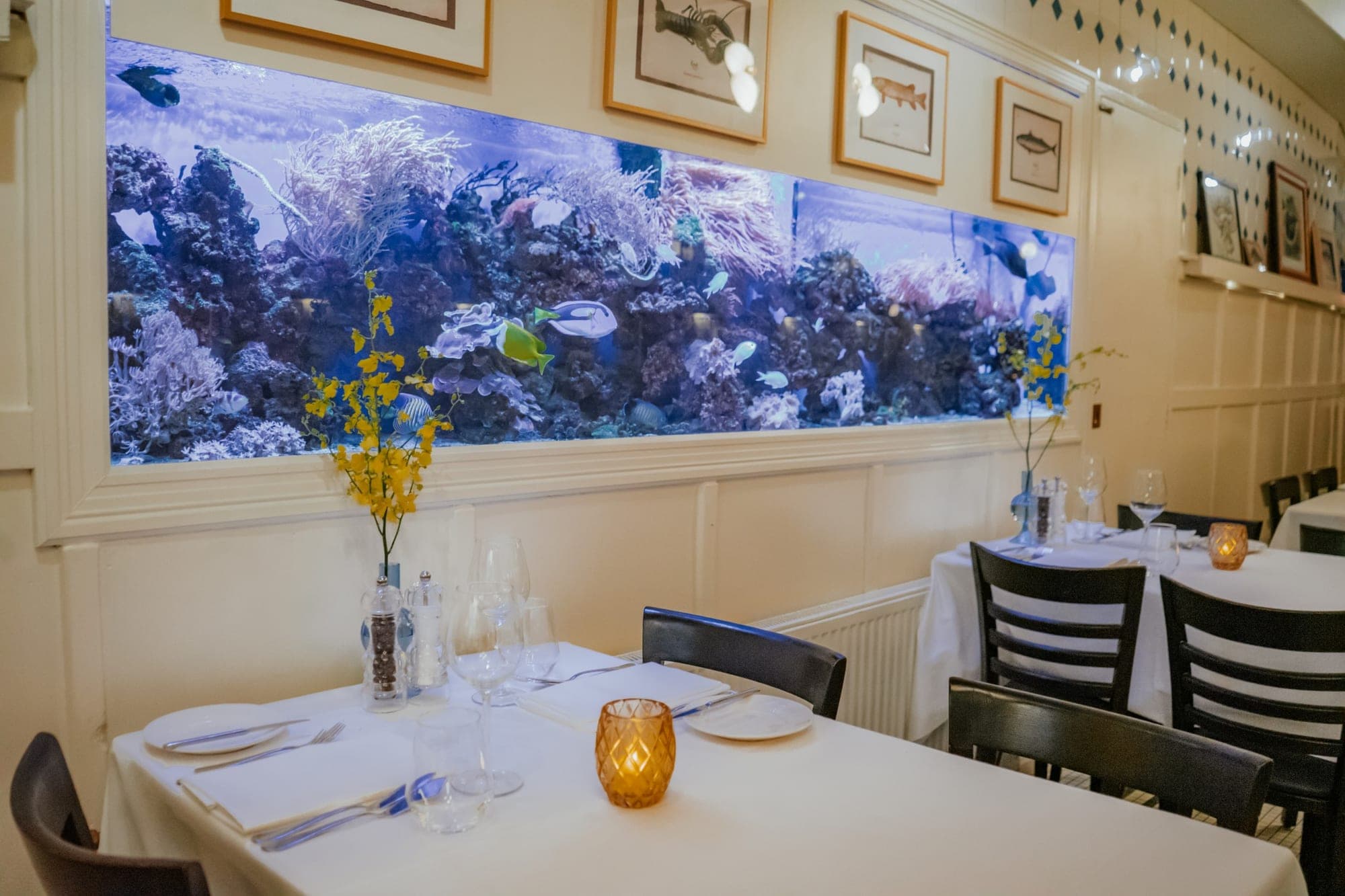
Photo: Lucius
№ 20Spui · Seafood · €€€8.0
Amsterdam's seafood classic since 1975: oysters, Dover sole, zero gimmicks.
Lucius has been shucking oysters on the Spuistraat since 1975, and the room still looks the part: tiles, a long bar, fish tanks glowing in the window, waiters who have watched every tourist wave roll through and stayed unbothered. You come for the plateau de fruits de mer, a tiered pile-up of oysters, crab, langoustines and shrimp, or a whole Dover sole grilled with nothing clever done to it. The wine list leans white and cold, exactly as it should. It is not cheap and it is not cutting-edge; it is a classic that stayed open for fifty years by staying good. The kitchen runs to 22:30 every night, with lunch from 12:30 Friday through Sunday. Sit at the bar alone with six oysters and a glass of Chablis and feel quietly superior to everyone outside.
Order · Split the plateau de fruits de mer for two with a bottle of Chablis.
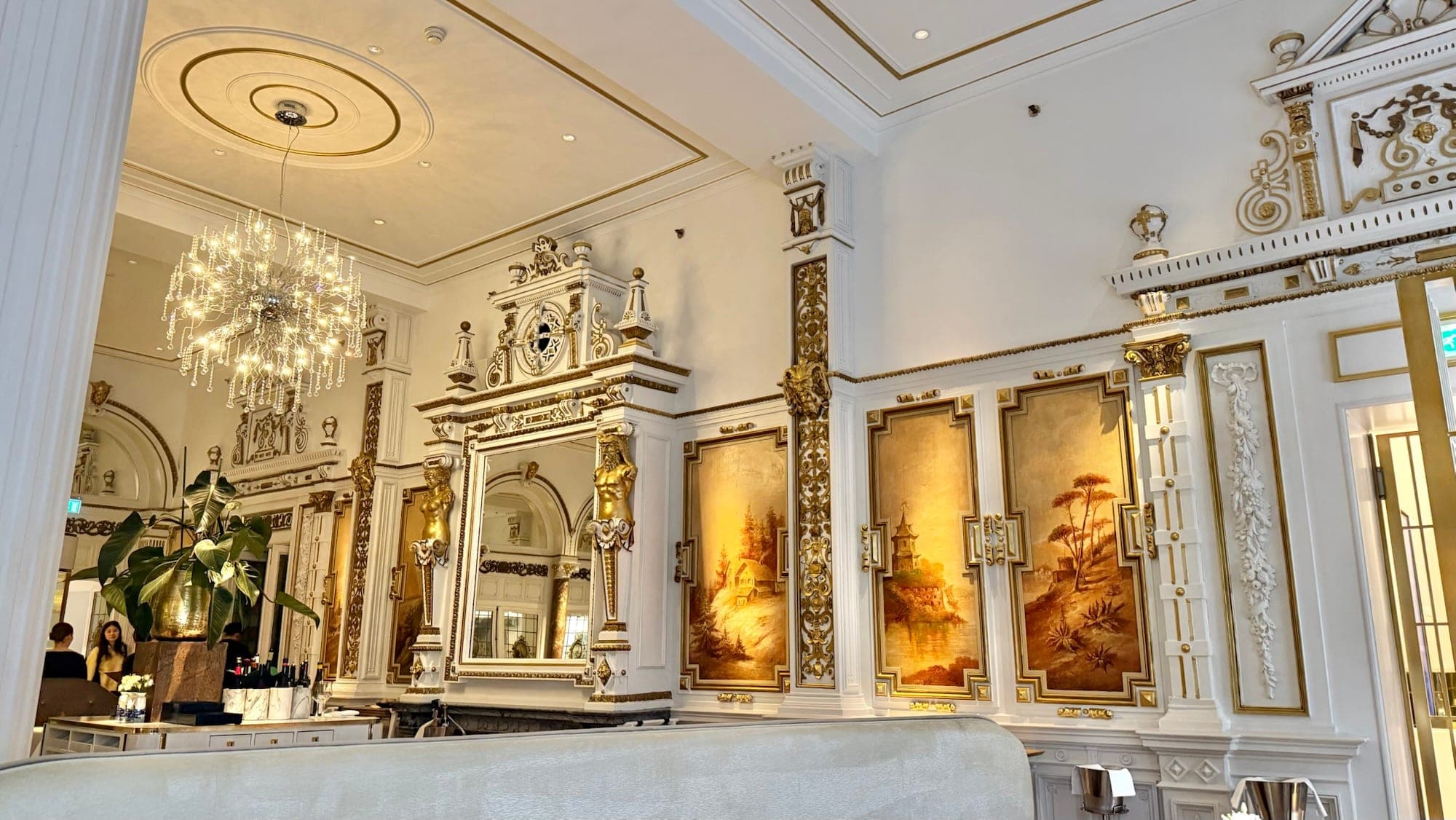
Photo: The White Room, via Stefan Gourmet
№ 21Dam / Magna Plaza · Modern French, Dutch-Asian influences, Michelin-starred · €€€€8.0
Jacob Jan Boerma's starred name-restaurant in the old Krasnapolsky ballroom, cooked today by Tristan de Boer, while Boerma builds Blik across town.
De Witte Zaal opened in 1885 and is still the grandest room in the city to eat in, gold leaf ceilings, chandeliers, wall panels nobody has had the nerve to touch. Jacob Jan Boerma built The White Room here in 2016, on the reputation of three stars at De Leest, and won his own star within a couple of years. He handed the stove to Tristan de Boer in 2021, Amsterdam-born, and stayed on as signature chef rather than walking away outright. De Boer's cooking leans into the city's old trading routes: Indonesian, Japanese, Thai and Surinamese threads run through Dutch produce across two tasting menus, Gold and Green, both €185, both built around citrus, acid and flavour combinations a smaller room might not risk. Boerma, meanwhile, went back to actual cooking himself in 2025 at bistro-bar Blik, a looser, cheaper room across town. The two restaurants read like a set: one is the formal hall where his name still hangs on the door, the other is where he goes to loosen his tie.
Order · Dinner Wed-Sat from 18:00 (last arrival 20:15), lunch Saturday only 12:00-16:00 (last arrival 13:15), closed Sun-Tue. Gold and Green menus both run €185; the classic pairing at €130 covers either one.
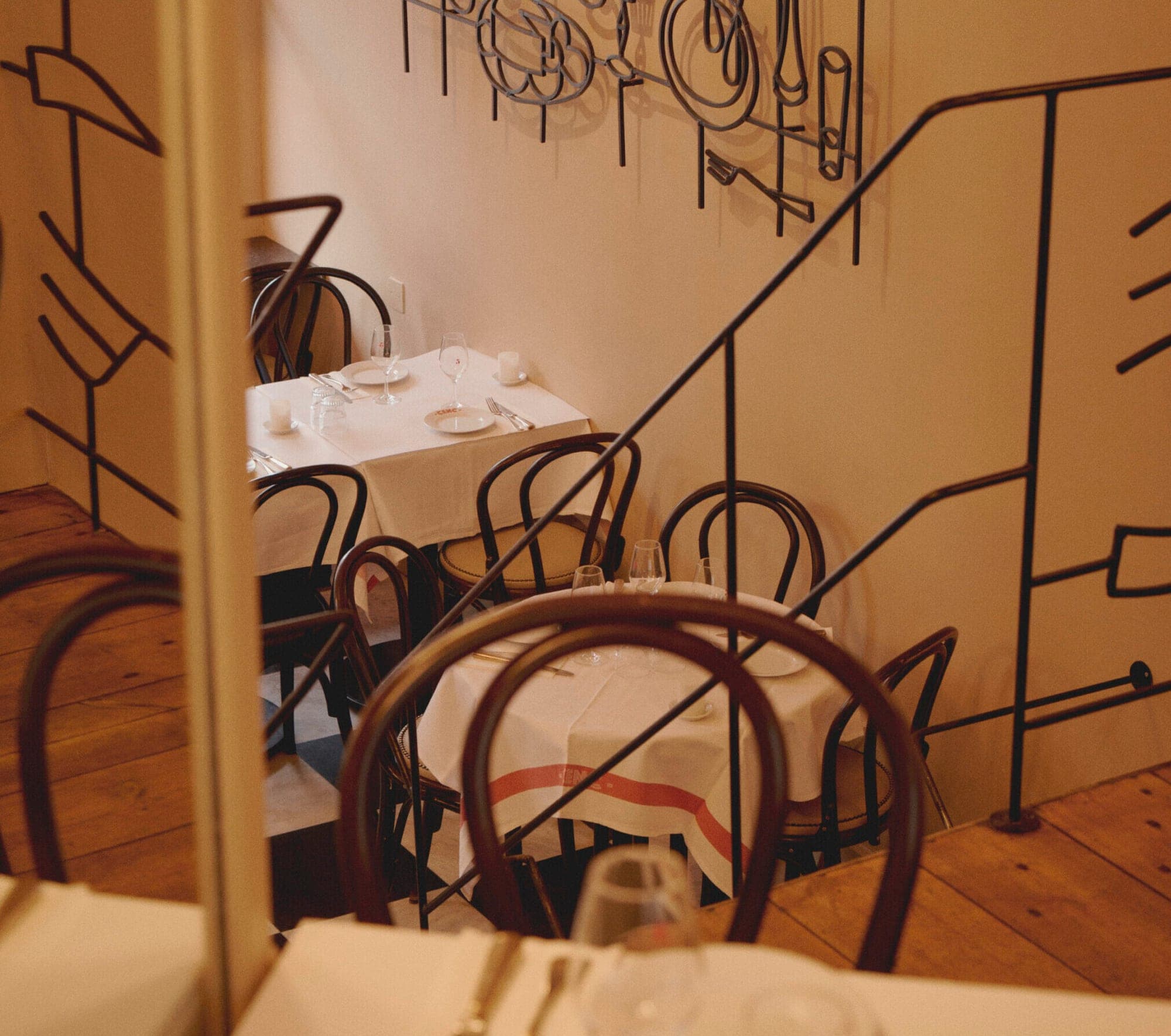
Photo: Café Cenc
№ 22Weteringschans · Mediterranean · €€€8.0
Fish-forward Mediterranean from the Balthazar's Keuken and Bar Parry family, on the Vijzelgracht since 2024.
Café Cenc is the third act for the family behind Balthazar's Keuken and Bar Parry, and the first of the three built as a full sit-down restaurant rather than a fixed menu or a walk-in bar. It took over the old Bar Bambino address on the Vijzelgracht in June 2024 and turned it fish-forward and Mediterranean: brioche with prawn and lemon marmalade, gravad lax with pickled red onion, a whole fish with caramelized fennel and harissa, poulet jaune with pointed cabbage and tarragon sauce. Order it a la carte or take the fixed three courses for €45.50, starter to dessert, with no real weak link either way. By day the same kitchen runs proper sandwiches, shrimp croquette on a baguette, smoked mackerel with lemon mayonnaise, plus snacks like oeuf mayonnaise and fish beignets straight through to 22:00. The wine list, again sourced via De Wijnwinkel, leans Portuguese, Spanish and Italian. Open six days, closed Monday and Tuesday, with a room that fills fast on instinct as much as on bookings.
Order · Open Wednesday-Sunday from 12:00, lunch straight into dinner. A booking widget is now live on the site, but the room built its name on walk-ins, so a spot at the bar is always a fallback.
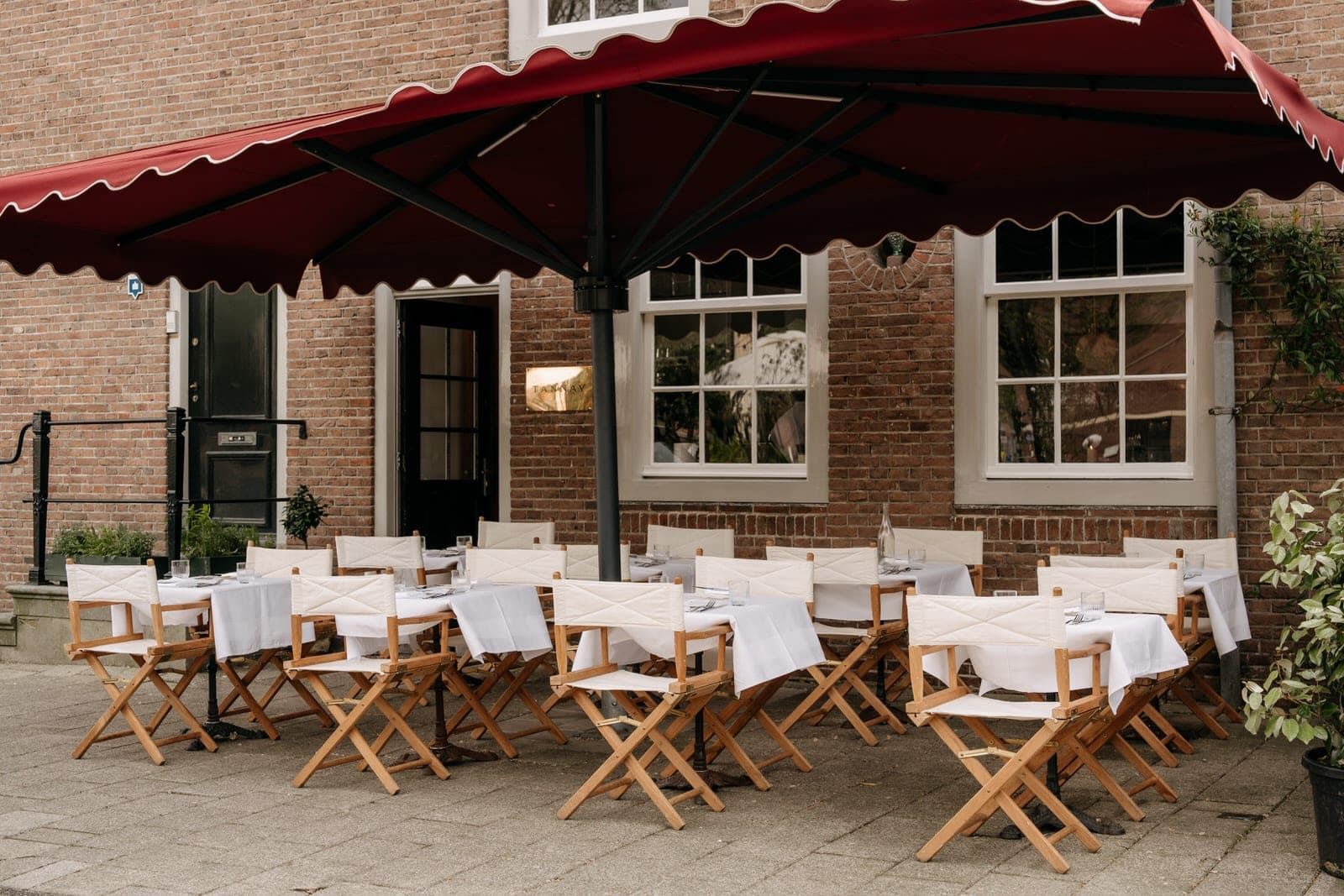
Photo: Tannay / Chantal Arnts
№ 23Realeneiland (Zandhoek) · Classic French · €€€€8.0
The Caron family's French flagship, renamed for its chef's Burgundy village, with the loveliest drawbridge terrace in town.
This was De Gouden Reael, Alain Caron's French flagship on the Zandhoek, until the family renamed it in April 2024 after the Burgundy village where chef Thomas Demuth grew up. Demuth cooked at the George V in Paris, his parents still run a vineyard back home whose bottles appear on the list, and the whole operation radiates unforced French confidence. Classic dishes, precise sauces, a five course chef's menu at 92 euros or a la carte, with a cellar that leans hard into Burgundy, Loire and Champagne. The setting does half the work: a monumental seventeenth century house on Realeneiland with a terrace by the old drawbridge that is one of the loveliest places in Amsterdam to lose an afternoon. Weekends add lunch and a three course Menu du Marche at 58 euros, the sane way in. Michelin lists it, the Westelijke Eilanden stay quiet, and the ducks paddle past.
Order · The weekend Menu du Marche lunch (Sat-Sun 12:30-14:00, three courses) on the terrace by the drawbridge is the smart first visit; dinner seatings Wed-Fri 18:30-20:30, weekends 18:00-20:30.
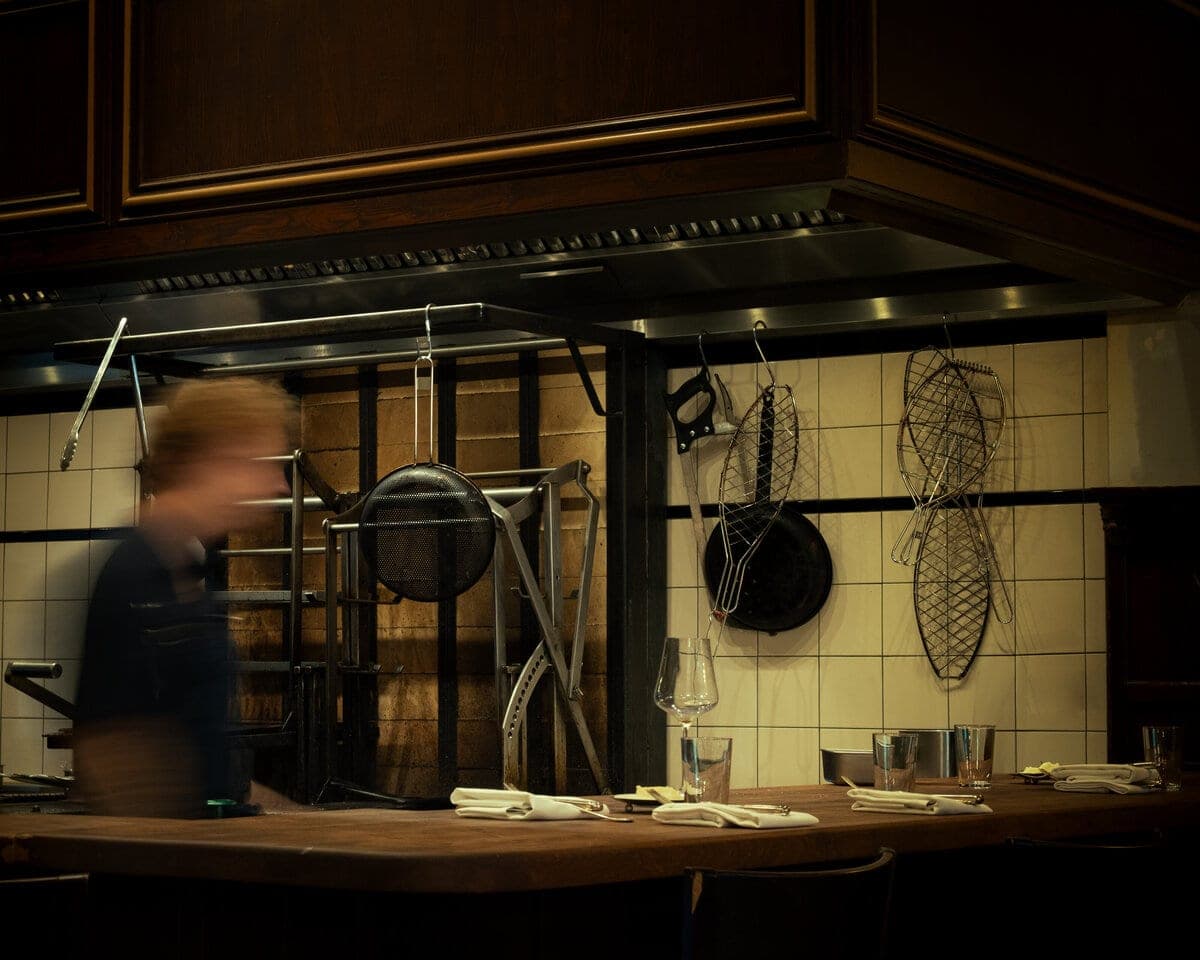
Photo: Veneur
№ 24Weteringschans · French, game and open fire · €€€8.0
The De Juwelier crew gone hunting: wood-fired French cooking with venison for the table and serious wine.
When part of the team behind the starred De Juwelier struck out on their own, they took over a panelled space on the Weteringschans, installed a wood and coal fire, and named it after the French word for a master of the hunt. That is the menu in one word: game and grill, French technique, direct flavors. Chefs Yoran Jacobi and Moriaan Koeleman send out venison tartare Andalouse, drunken rabbit with girolles, wood pigeon salad with smoked cherries, and a 400 gram venison chop Grand Veneur for the table, while co owner and sommelier Bas Hazen pours from a list good enough for Star Wine List. Michelin already has it in the guide. The room keeps its old mouldings and nostalgia, the cooking has none of the fuss you might fear. Friday through Sunday there is proper lunch service too, and a Sunday afternoon here, fire crackling, feels like France with better bike parking.
Order · Sunday lunch (12:00-15:00) is the easiest table and the fire is going all day; for dinner, share the 400 gram venison chop Grand Veneur. Closed Monday; Tue-Thu dinner only from 17:30.
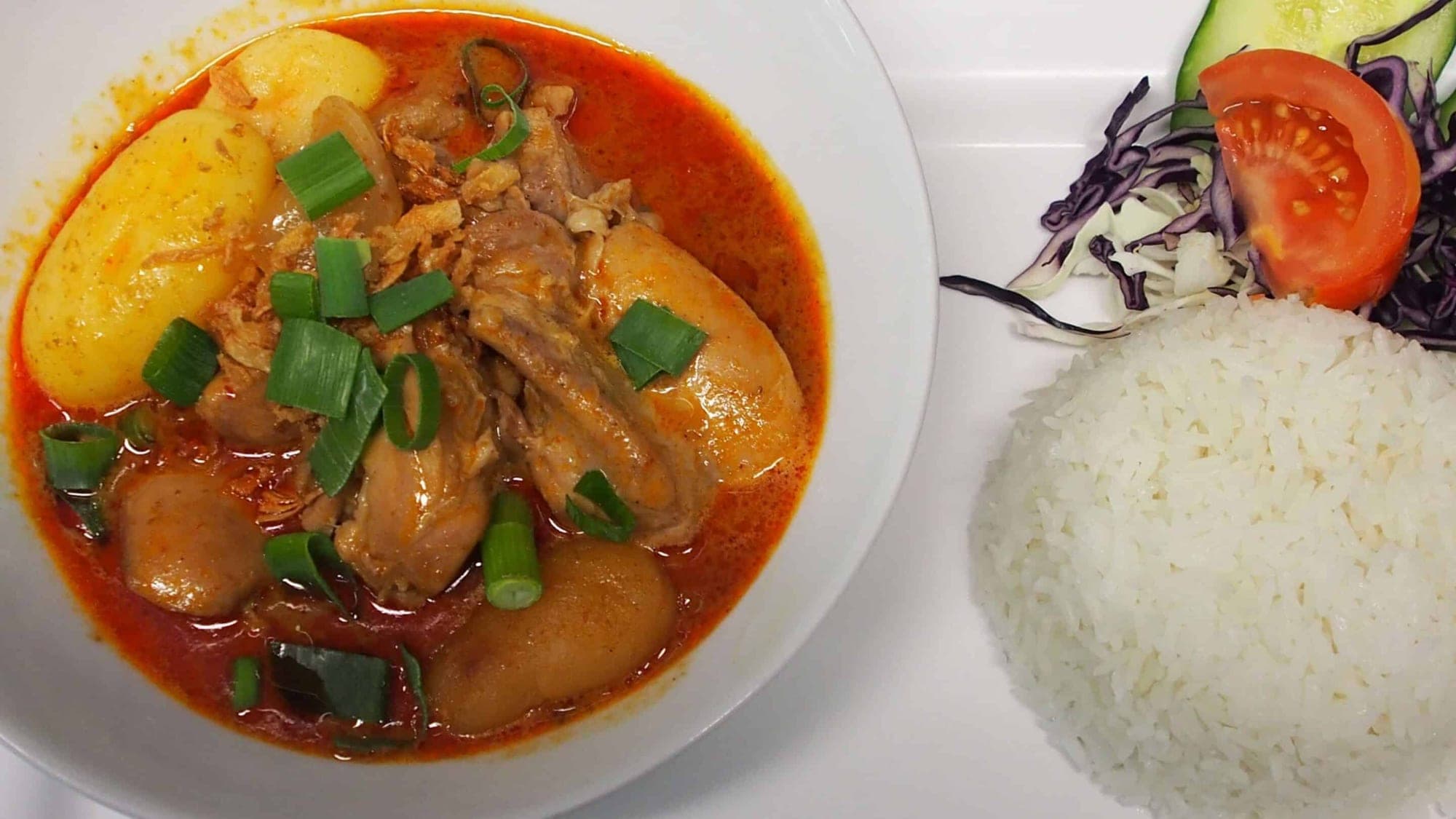
Photo: Bird Thai Restaurant
№ 25Chinatown / Zeedijk · Thai · €€7.9
The Zeedijk's Thai anchor: proper curries, teak everything, zero concessions to timid palates.
Bird started as a snackbar the size of a wok across the street at Zeedijk 77, got so mobbed that the family opened this bigger teak-carved dining room at 72-74, and both have been packed since the nineties. In a neighbourhood where half the menus are laminated traps, Bird is the real transaction: Thai cooks, Thai portions, and a kob-khun-kha level of spice honesty, when they say phet, believe them. Order the massaman with chicken, the som tam that actually bites back, or whole fish with garlic and pepper, and watch the table of homesick Thai students next to you order the same. It's cash-friendly, fast, loud, and open every single day from noon to 22:30, which by Amsterdam kitchen standards practically counts as nightlife. Groups fit; romance doesn't. That's fine.
Order · Get the massaman curry, slow, coconutty, with potatoes that have absorbed all the good decisions.
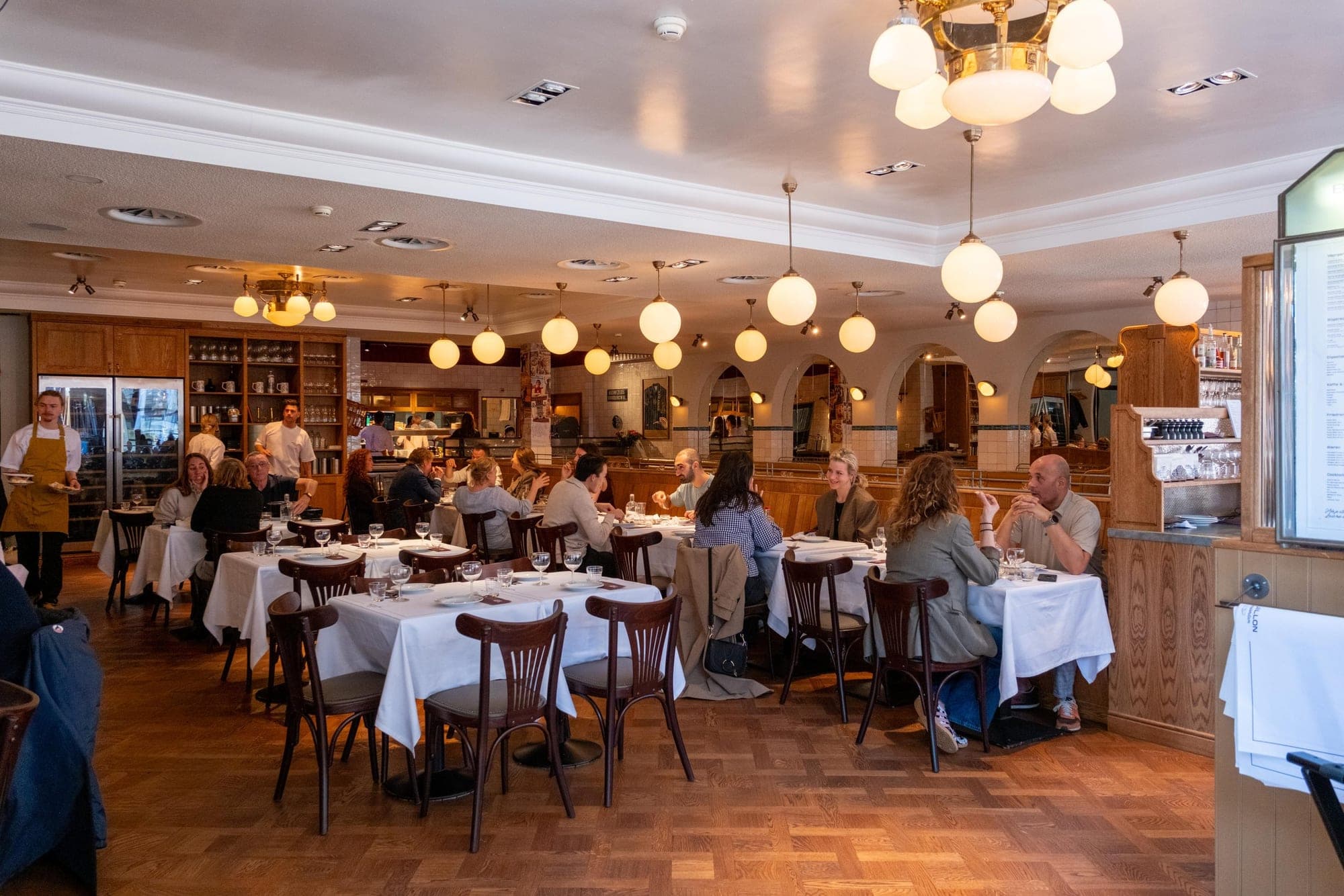
Photo: Bouillon d'Amsterdam (A Delicious Story)
№ 26Dam / Magna Plaza · French bouillon classics · €7.9
The Parisian bouillon formula lands behind the Dam: steak frites for €16.90, oeufs mayo for pocket change, and a room full of actual Amsterdammers.
Amsterdam has spent a decade watching its centre become a place locals apologise for, so when Michiel van der Eerde (the BAUT man) and partners installed the Parisian bouillon formula in Hotel Die Port van Cleve, the city responded by filling every seat. The formula arrives intact: a grand, buzzing room, long tables, service at a canter, and classic French cooking at prices that read like a misprint. Oeufs mayonnaise for 3.60, onion soup gratinated with Old Amsterdam for 6.40, and the house flex, steak frites 'Cafe de Paris' at 16.90, cut from the numbered steak Die Port van Cleve has been serving since 1874. Knowing Amsterdam touches (a Kesbeke pickle here, an appeltaart from the Groene Hart there) keep it the right side of pastiche. By day the Molsteeg corner runs as Bouillon Service, pouring coffee and stacking baguettes from nine. It worked so well that a compact second branch, Le Petit, opened in the old BAUT space in Zuid within four months. TripAdvisor already ranks it in the city's top hundred, and the room is conspicuously full of Amsterdammers, which behind the Dam counts as a small miracle.
Order · Walk-ins are the house religion but the room fills fast; book online or slide in before 18:00, and start with the oeufs mayonnaise while you think.
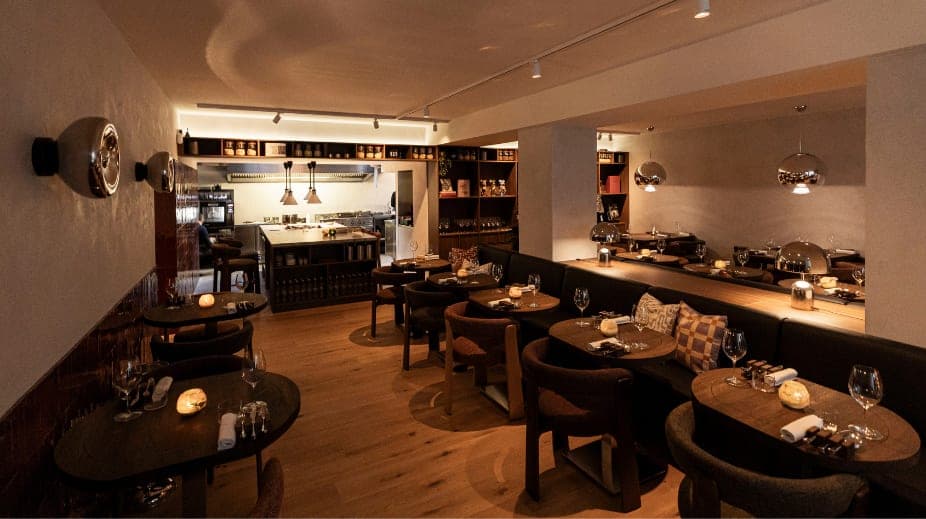
Photo: Entree Magazine
№ 27Weteringbuurt · Modern French with Asian accents · €€€7.9
Wolf Atelier's chef duo goes a la carte: one ingredient, two preparations, prices that behave.
Fifteen years is a long apprenticeship for a co-billing. Michael Wolf and Jordy Koopmans cooked side by side at Envy and then Wolf Atelier before opening Amice, Latin for friends, in a former Thai restaurant on the quiet Noorderstraat in early March 2026. The premise is disarmingly simple: a handful of seasonal ingredients, each served in two preparations, so the tuna arrives raw with aguachile, jalapeno and kumquat or raw with red pepper and Greek yoghurt, and the white asparagus comes off the BBQ with wild garlic or folded into a risotto. Most plates sit between 14 and 24 euros, which for cooking with this pedigree qualifies as a public service. Concrete, the 212 and NENI people, did the room in warm wood, deep greens and browns, with an open kitchen you can actually talk to and a wine room where you pull your own bottle, starting at 35 euros. Early reviews are uniformly smitten, from Barts Boekje's approving nod to bloggers calling it like coming home to friends who happen to cook at fine dining level. For two, the whole sole with cockles and BBQ lemon makes the closing argument. Open until 01:00, which this corner of the Centrum quietly needed.
Order · Order one ingredient in both preparations, that is the whole point; then pick your own bottle from the wine room. Dessert is the wentelteefje with tiramisu cream, and yes it works.
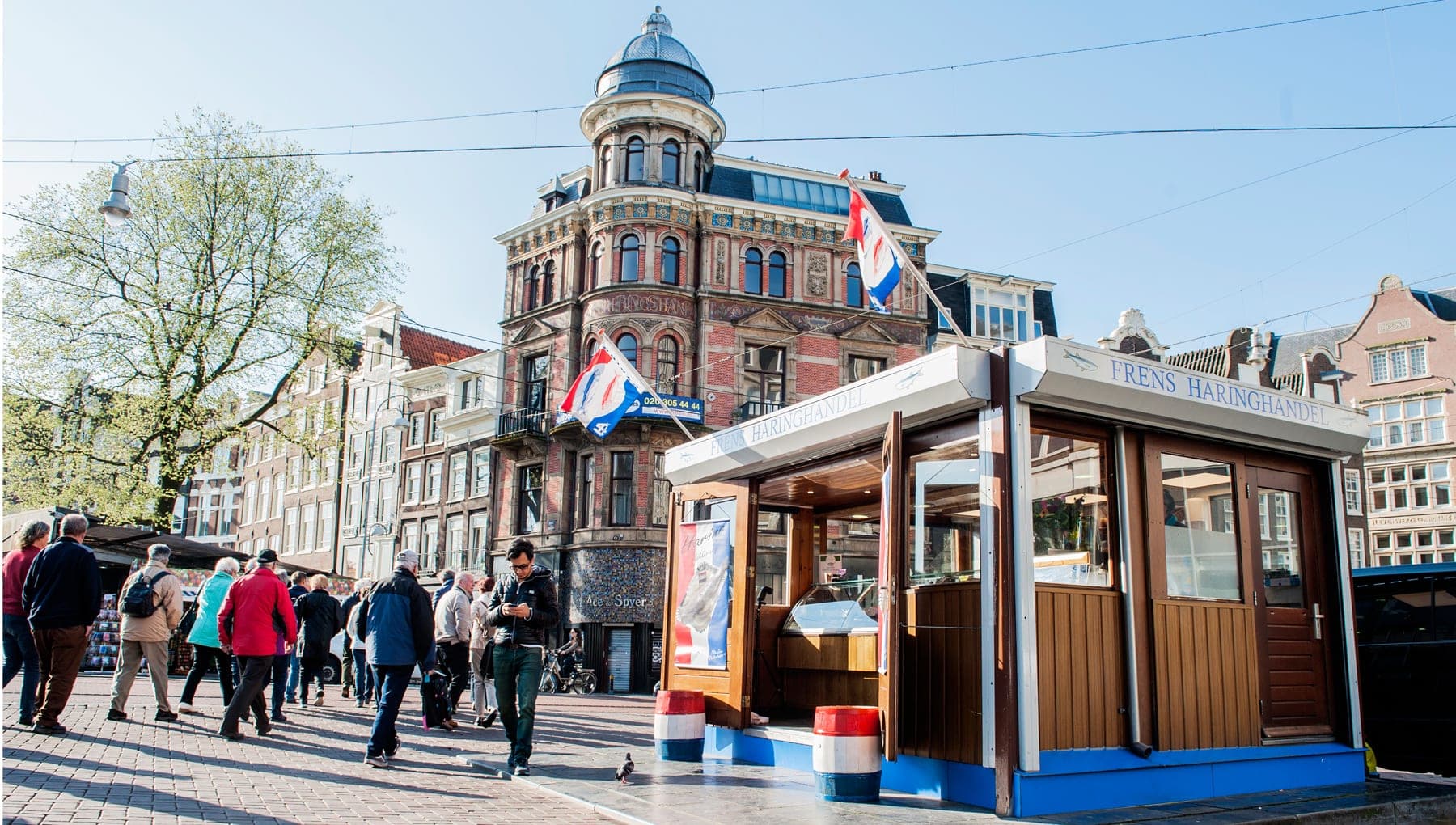
Photo: Frens Haringhandel via I amsterdam
№ 28Koningsplein / Bloemenmarkt · Dutch herring stall · €7.9
Raw herring at the flower market corner, the cheapest great lunch in Centrum.
Every city needs a counter where lunch costs a fiver and tastes of the North Sea. Frens has been that counter since 1976, parked on the corner of Singel and Koningsplein next to the flower market, run by the same family the whole time. The order is broodje haring: silky raw herring, sharp raw onion, sliced pickle, soft white roll, assembled in about forty seconds by people who have cut more fish than you have eaten. In June, when the Hollandse Nieuwe arrives, the line folds around the stall and half of it is regulars taking their herring whole, tail up, like the postcard says. Kibbeling and smoked eel are there for the cautious. There is nowhere to sit and nothing to look at except tulip sellers and canal traffic, which is to say the view is perfect.
Order · Broodje haring with onions and pickle; in season, ask for the Hollandse Nieuwe
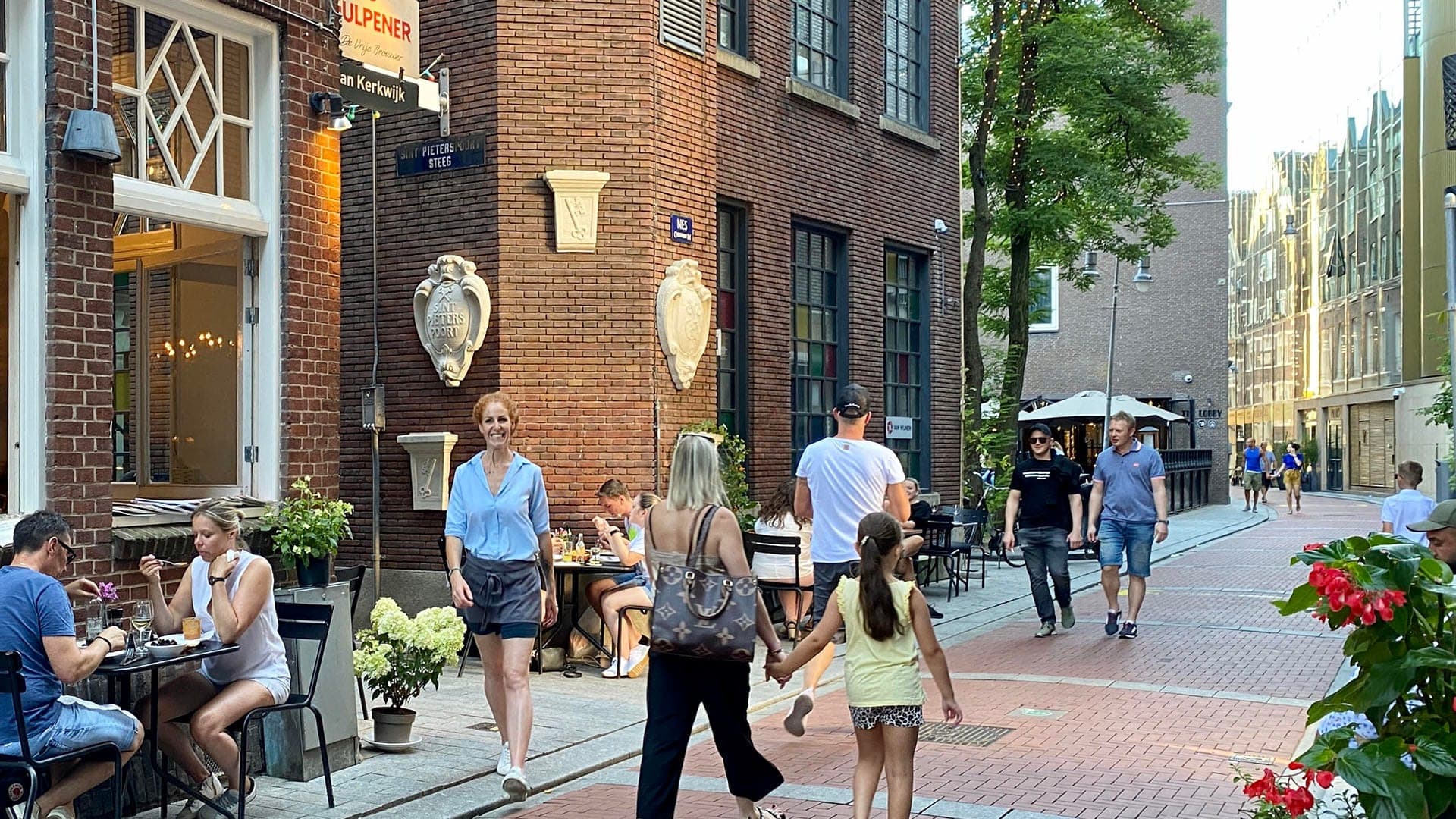
Photo: Van Kerkwijk
№ 29Nes · Bistro · €€7.8
No menu, no reservations: the waiter recites, you choose, everyone wins.
There is no printed menu and there never will be. Your waiter pulls up, recites tonight's five or six mains from memory, always a steak, always a fish, usually something Indonesian-leaning or a proper vegetarian plate, and you decide on the spot, which is weirdly liberating. The room is tall, wood-panelled and candlelit, on the Nes, the old theatre street one block from Dam Square that tourists somehow never find. Mains hover around twenty-something euros, portions are honest, and the entrecôte with pan jus rarely leaves the rotation. No reservations either: give your name, take a drink at the bar or out on the street, and wait your turn like everyone else. Finish with the homemade appeltaart, the website is basically a shrine to it, correctly. Open daily from 11 until 1am.
Order · Save room for the homemade appeltaart with whipped cream.
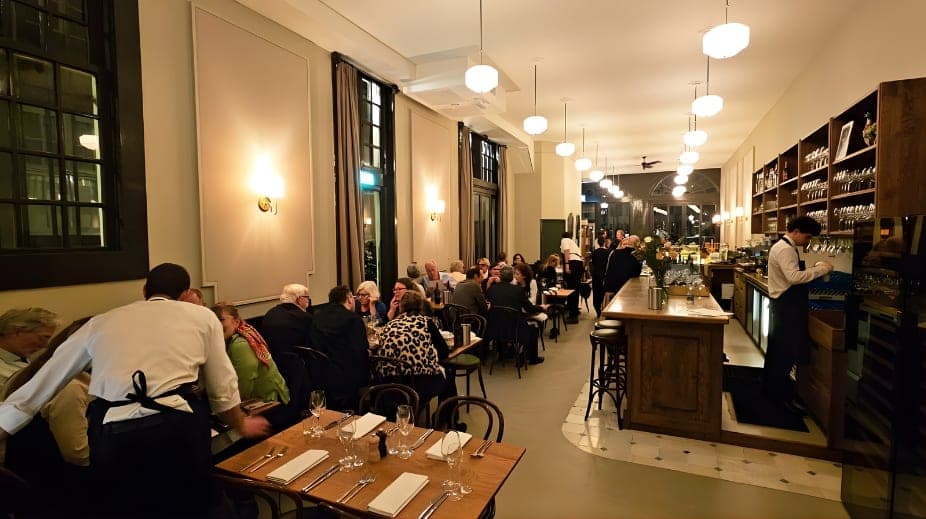
Photo: Weinlokal Stern, via Entree Magazine
№ 30Negen Straatjes · German · €€7.8
The Scheepskameel crew takes German food and wine seriously in Breda's old spot on the Singel.
Breda's old cheese warehouse on the Singel stood empty until three Scheepskameel alumni moved in with an idea Amsterdam somehow never had: treat Germany as a serious food country. Chef Luke de Jong, sous-chef there for years, cooks Neue Deutsche Küche, which in practice means a veal schnitzel with real craft, schweinshaxe, spätzle, oysters from the German Wadden Islands and a straight-faced Spaghetti-Eis. Mo Moody and Chanan Wisse, Magister Vini, wrote the list: everything under 75 euros is German and much of it pours by the glass, with Burgundy and Champagne waiting above that line. Rothaus on tap, fritz-kola instead of Coke, cold schnapps if the night tilts that way. Since opening in February 2026 the sixty seats fill fast, but ten bar stools are built for dropping in alone. De Buik called it supergeil. Hard to argue after the schnitzel.
Order · Sunday is the sleeper: doors open at 12:30 for the only daytime service of the week, and the bar takes walk-ins.
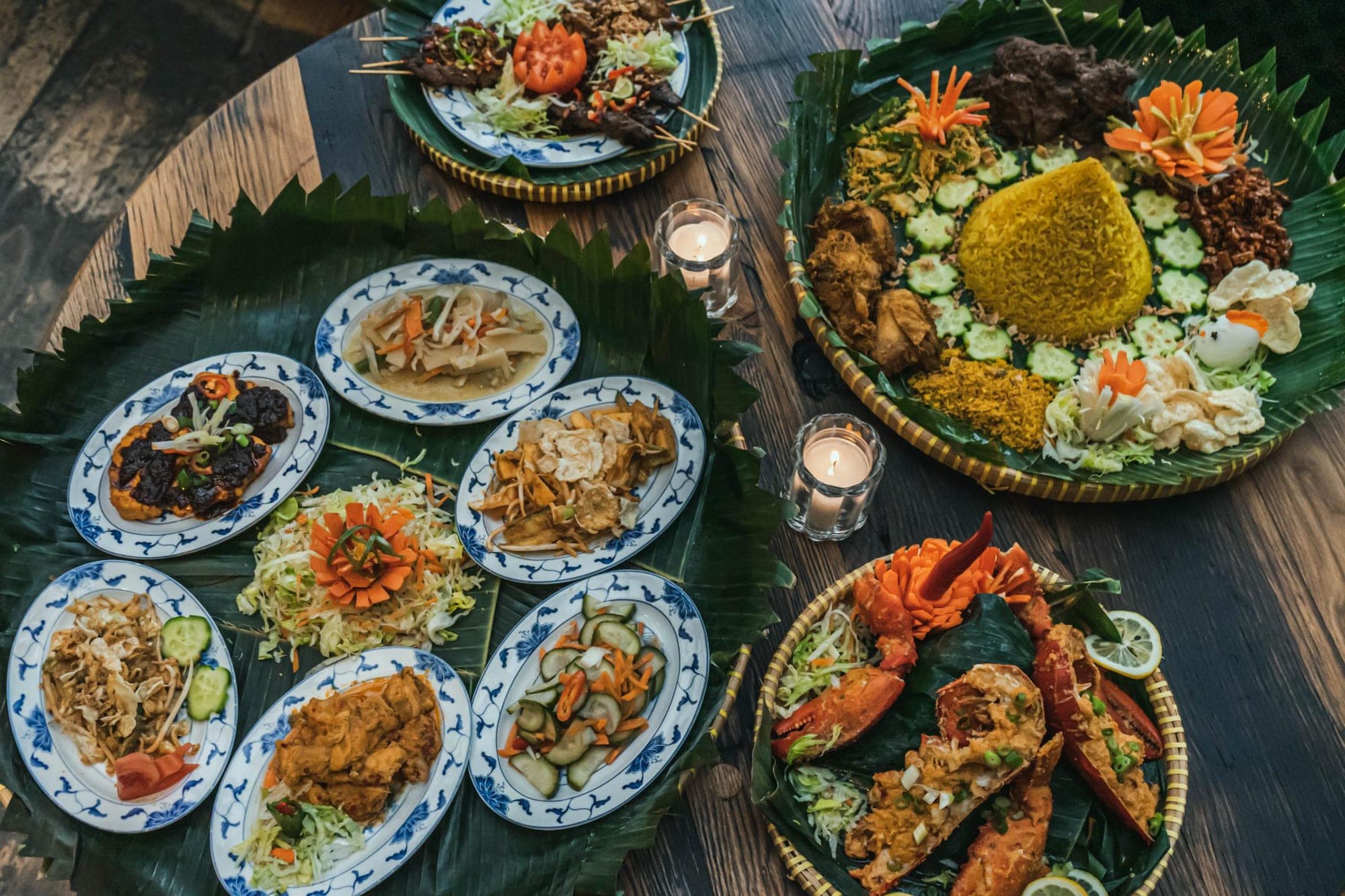
Photo: Indrapura
№ 31Rembrandtplein · Indonesian · €€€7.7
Rembrandtplein's grand old rijsttafel room, still the classic Indonesian spread.
Tempo Doeloe, the old rijsttafel standard-bearer on Utrechtsestraat, went bankrupt in 2021, Indrapura is where you take that appetite now. It has been doing colonial-era Indonesian on Rembrandtplein since 1987: a big, handsome dining room, dark wood and warm light, waiters who talk you through the fifteen-odd little dishes as they land. Order the rijsttafel and watch the table disappear under rendang, gado-gado, sambal goreng beans, satays and a sambal terasi that means business, tell them your actual heat tolerance and they calibrate. It absorbs big tables and parents-in-town dinners without breaking sweat, the kitchen runs daily until 10:30pm, late for this genre, and vegetarians get a full parallel spread rather than an afterthought. On a square wall-to-wall with tourist traps, this is the one run by people who care.
Order · Take the full rijsttafel and ask for the sambal terasi on the side.
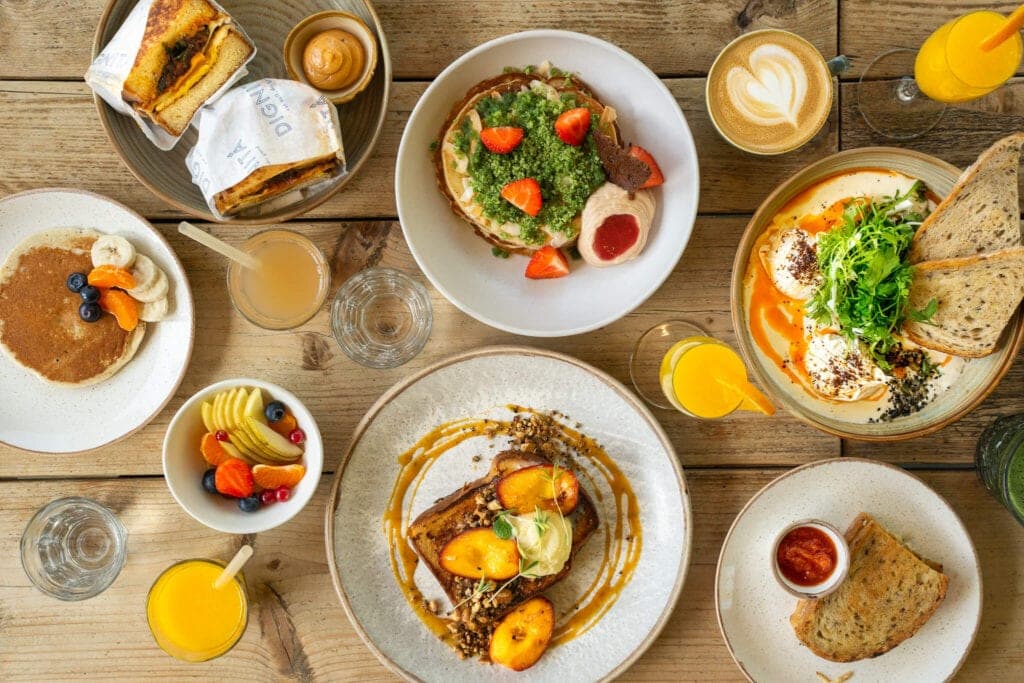
Photo: Dignita
№ 32Hoftuin, Nieuwe Herengracht · All-day brunch, social enterprise · €€7.7
Every euro of profit goes to Stichting Dignita, and the walled Hoftuin garden behind the H'ART museum is the quietest brunch terrace in the Centrum.
Dignita is a social enterprise first and a brunch room second, which is unusual only in that the food is good enough that you would go anyway. All profit goes to Stichting Dignita, which trains and supports people in vulnerable positions, and the kitchen has been serving brunch here since August 2015 by their own count. The card is more considered than the format usually allows: Brave the Lamb is 16-hour lamb shoulder with tahini labneh and a feta fried egg at 22 euros, Green and Gold pairs poached eggs with sweetcorn salsa and a potato rosti at 17, Bright Side Eggs keeps it to fried eggs on Farine sourdough with crispy chilli oil at 15, and the Bananoffee French Toast at 17 does the sweet half properly. Sourcing is named and checkable: coffee from Rum Baba, bread from Farine and baked in house, produce, eggs and meat from Lindenhoff. The setting is the argument for coming: a walled garden tucked behind the former Hermitage, now the H'ART museum, where the tables under the trees make a Saturday morning disappear. One caveat worth knowing, because we would want to be told: the group has contracted rather than grown, Dignita Westerpark closed on 1 September, the site is now Dutch only and still carries unfinished placeholder text in places. Hoftuin is the one that matters now, and it is holding up.
Order · Open seven days, 09:00 to 17:00, with an aperitif card from 16:00. Book the weekend through the Formitable widget on their site, the garden tables go first and they go early. Order Brave the Lamb at 22 euros, add the Melbourne wedges at 6.50.
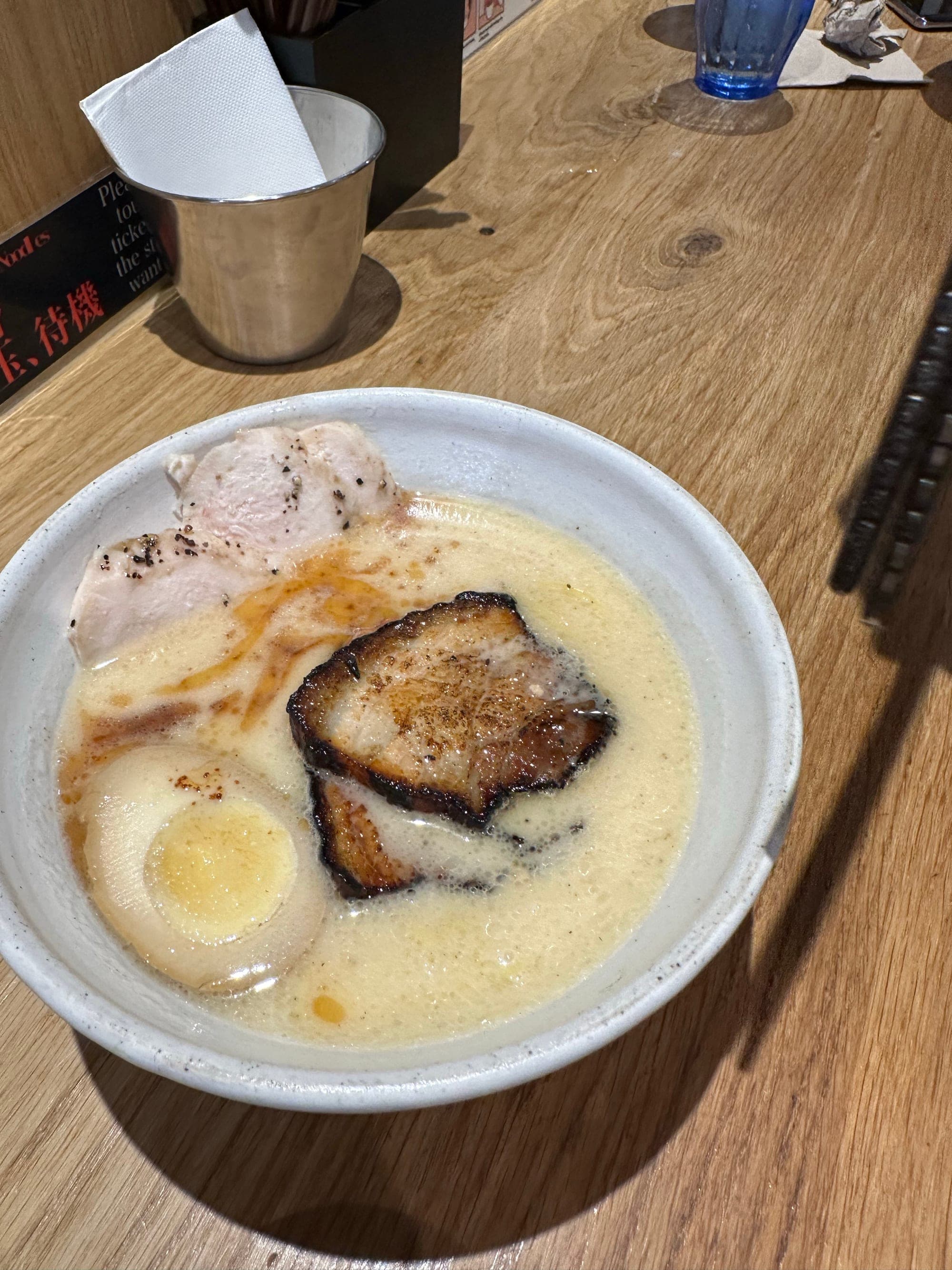
Photo: Amsterdam Wonderland
№ 33Prins Hendrikkade · Ramen · €€7.7
The cult counter by Centraal is back after two dark years: same rich broth, new owner, same merciless queue.
For years this twenty square metre counter opposite Centraal was the city's cult ramen shrine: touch-screen ordering, a one-seat-at-a-time system, One Piece volumes between the chopstick pots and a giant Mario in the window, plus the bowl Amsterdam Foodie crowned Ramen Nirvana. Then it went dark for roughly two years. The comeback landed in spring 2026, and so did the queue, which on a weekend afternoon can pass an hour before you even reach the kiosk. The kitchen still pours that creamy, deeply savoury pork broth under charred chashu, and the kaedama ritual survives: keep your broth, hand over the extra-noodle ticket, receive a fresh tangle. Regulars from the old days say the bowls taste exactly as they used to. They also note the owner changed in the handover and the room runs slower than before, which is why our score stays provisional until we sit down ourselves. Bowls run about €20, portions lean Japanese rather than Dutch, and the spicy pork remains the order that built the legend.
Order · Daily 12:00-22:00 under the new regime. Weekend afternoons the line can eat two hours; a weekday lunch or a Saturday after 20:00 gets you seated in minutes. One ramen per person minimum, no sharing, no reservations.
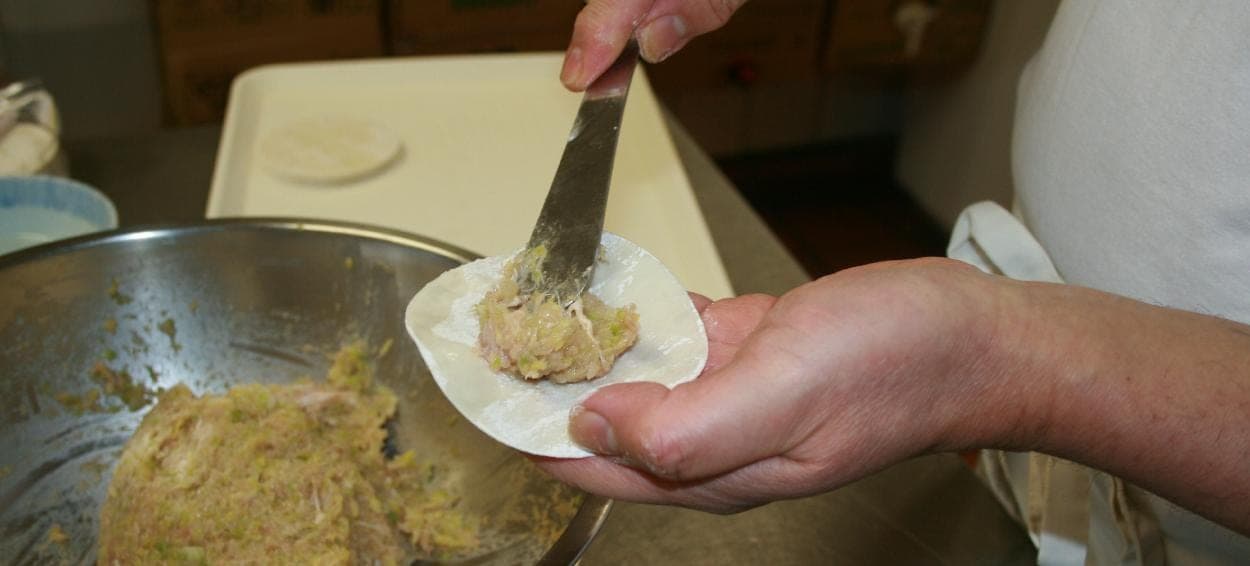
Photo: Japans Restaurant AN
№ 34Weteringbuurt · Japanese home cooking, omakase · €€7.7
Couple-run Japanese home cooking since 1989, where even the mochi and the ice cream are made by hand.
AN has been making Japanese home cooking on the Weteringschans since 1989, which makes it one of the oldest Japanese restaurants in the country and the kind of place expats measure other restaurants against. A couple runs it, the kitchen is open, and everything, from the gyoza wrappers to the ice cream to the wagashi sweets, is made by hand, an approach that predates the word artisanal and will outlive it. The omakase is the move: a Japanese tray crowded with small dishes, sashimi and tempura and simmered things, generous for the price and quietly precise. Vegetarians and vegans are taken seriously rather than tolerated. The room is plain, the pace unhurried, the welcome genuinely warm. Nearly four decades in, it does not chase attention and does not need to; it simply reopens after the summer break and the regulars flow back. Book by phone, like it is 1989.
Order · Closed for summer holidays, reopening 1 September 2026. Normally dinner Tue-Sat 18:00-22:00, last order 21:30, closed Sun-Mon. Book by phone and just say omakase.
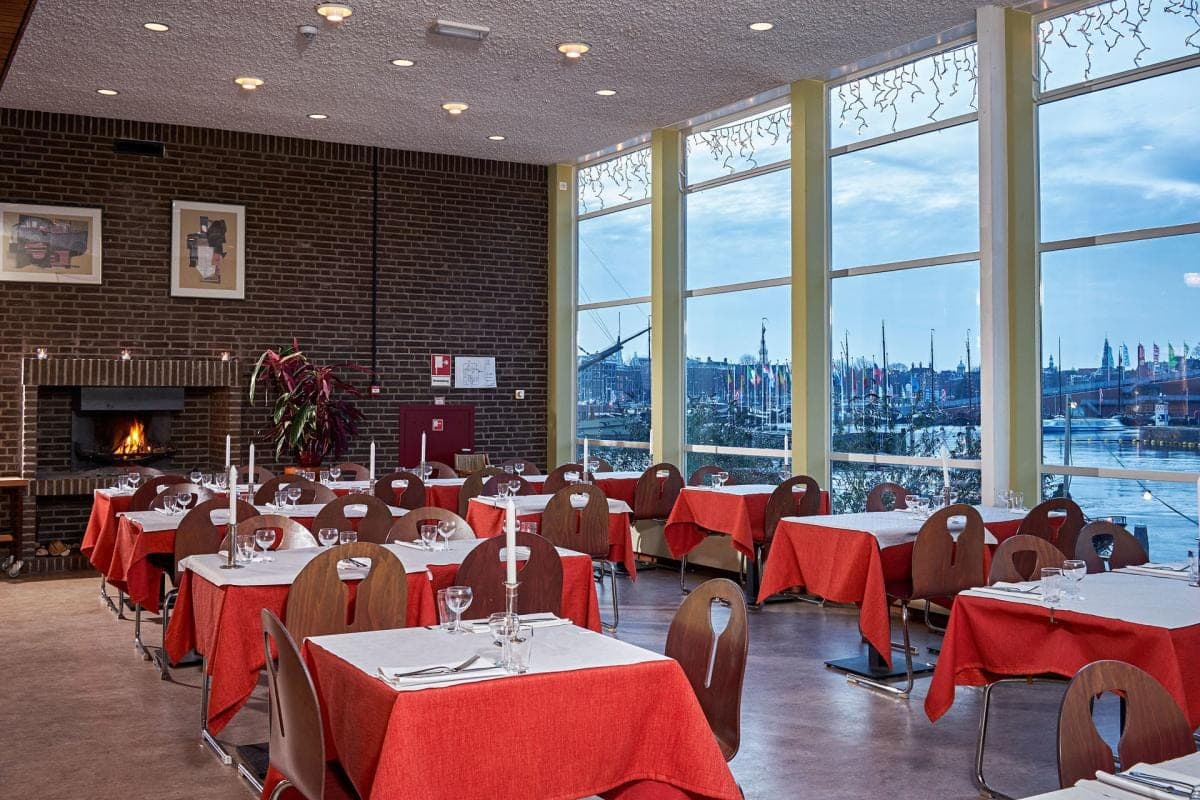
Photo: Pension Homeland
№ 35Marineterrein (Oostelijke Eilanden) · Dutch all-day kitchen, breakfast · €€7.6
Breakfast from 7:00 in the old naval officers' mess on the Marineterrein, eaten with the marines' own cutlery and a view over the water.
This is the officers' mess of the former navy yard, converted into a hotel and restaurant, and it still serves food on the standard-issue cutlery every Dutch marine was once handed. That detail tells you the tone: unfussy, a bit institutional in the good way, and completely unbothered. It is the earliest genuinely good breakfast in the centre, open from 7:00 every day of the week, which makes it the rare Amsterdam address where you can actually schedule a 7:30 meeting. The room is large and high, with a fireplace for cold mornings and a terrace on the water for the other twelve days of the year, and at that hour it is close to empty. The kitchen calls itself traditional, seasonal and homemade, and does the honest version of that: the Homeland breakfast is coffee, juice, croissant, toast, cheese, a boiled egg and yoghurt with fruit and granola, with scrambled eggs with avocado and feta or fried eggs with breakfast sausages if you want a plate rather than a spread. They brew their own beer on site, which is not the point at eight in the morning but tells you they are not phoning it in. Kattenburg is a walk or a short cycle from Centraal, far enough out that nobody wanders in by accident.
Order · Breakfast 7:00 to 11:30 daily, then the fixed menu from 12:00. Groups of twelve or more get a set menu and need to mail ahead. Take a table by the water side of the room, and note that the Marineterrein gate walk adds five minutes.
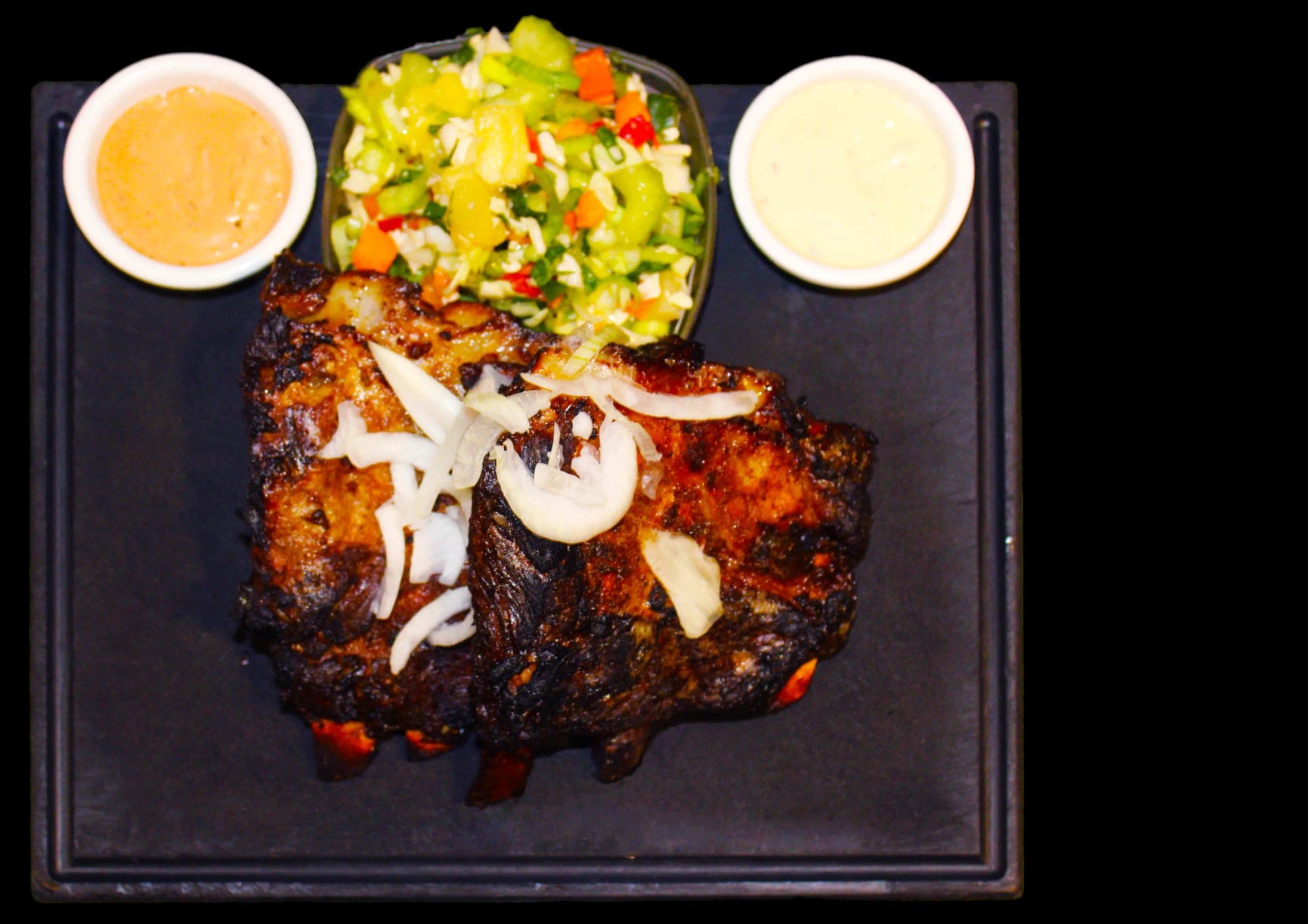
Photo: Café de Klos
№ 36Kerkstraat, Grachtengordel · Eetcafé, grill and spareribs · €€7.6
Serving meat to the masses since 1971: charcoal-grilled spareribs, no reservations, no exceptions.
De Klos has been grilling on the Kerkstraat since 1971 and its website still says what the sign says: serving meat to the masses. It is a small dark café with a bar, a grill you can smell from the Leidsestraat, and a menu that has barely moved in decades. The classic spareribs come as two racks for 24.70 with garlic sauce, the smoked version at 29.75, and around them a 300 gram entrecôte, a 600 gram T-bone, a smoked half chicken and a shoulder of lamb for the table. The rule that defines the place is the door policy: no reservations, only walk-ins, and if it is full you wait across the street in the sister café with a beer until a table clears. Your Little Black Book's spareribs guide calls the ribs waanzinnig, and most Amsterdammers who grew up here would agree that this is the reference rib in the city, even if the room is loud, the tables tight and the tourists have found it. Prices have crept up with the meat, and this is a place for a group and a big appetite rather than a quiet dinner. Bring cash-era patience.
Order · Open Monday to Thursday from 16:00, Friday to Sunday from 14:00, until 23:00. Arrive before 18:00 or after 21:00 to skip the wait; the sister bar opposite holds you. Order the classic ribs with garlic sauce and share a lamb shoulder if you are four.
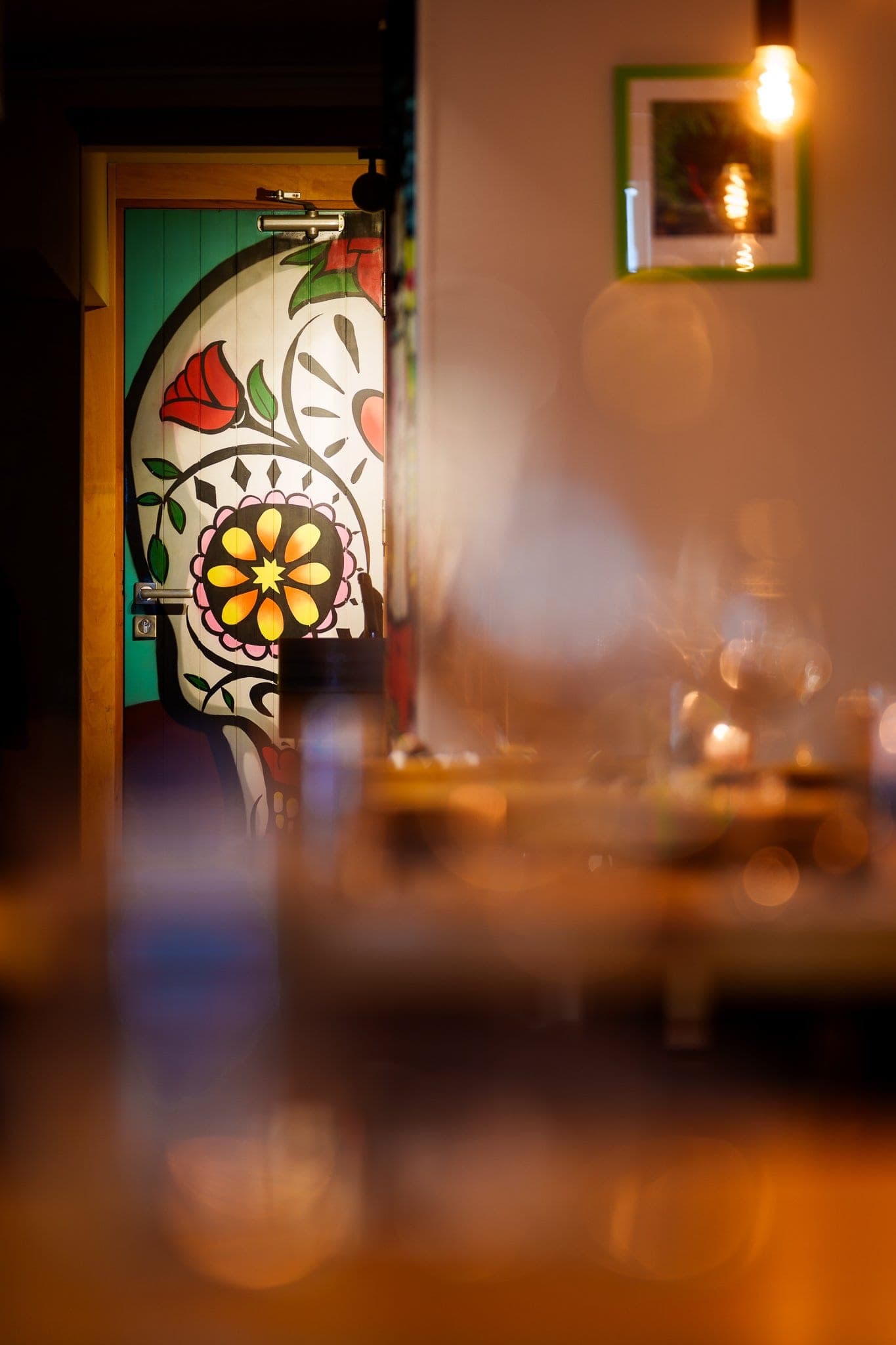
Photo: Copal, photo Studio Tentusscher
№ 37Grachtengordel · Modern Mexican · €€€7.6
Miguel Martin Gomez's smoke-and-craft reboot of Colima, one block from CUE.
Copal used to be Colima, and Colima was, in its own owners' words, too much of a taco restaurant. So chef-owner Miguel Martin Gomez and his three partners closed the doors in late 2025 and reopened weeks later with a menu built around the resin the restaurant is named for, the incense Aztec priests burned as offering. The result reads more fine dining than taqueria: Wagyu croquetas, bluefin tuna tostadas, a 250-gram Holstein ribeye finished with chimichurri and warm tortillas, BBQ octopus, huitlacoche instead of a safer vegetable. Forty-three mezcals and tequilas back it up, alongside Mexican whisky and corn liqueur cocktails. Two chef menus give you the kitchen's edit for €42 or €55 a head. It is barely a year into this version of itself, replacing a restaurant Het Parool liked well enough, so treat it as promising and recently reinvented rather than a fixture with a decade of receipts. Book ahead; the room is small and the evening-only hours mean no walk-in safety net.
Order · Open Wednesday-Saturday 17:00-22:00 and Sunday 17:00-21:30, closed Monday-Tuesday; no lunch service despite what the website copy claims.
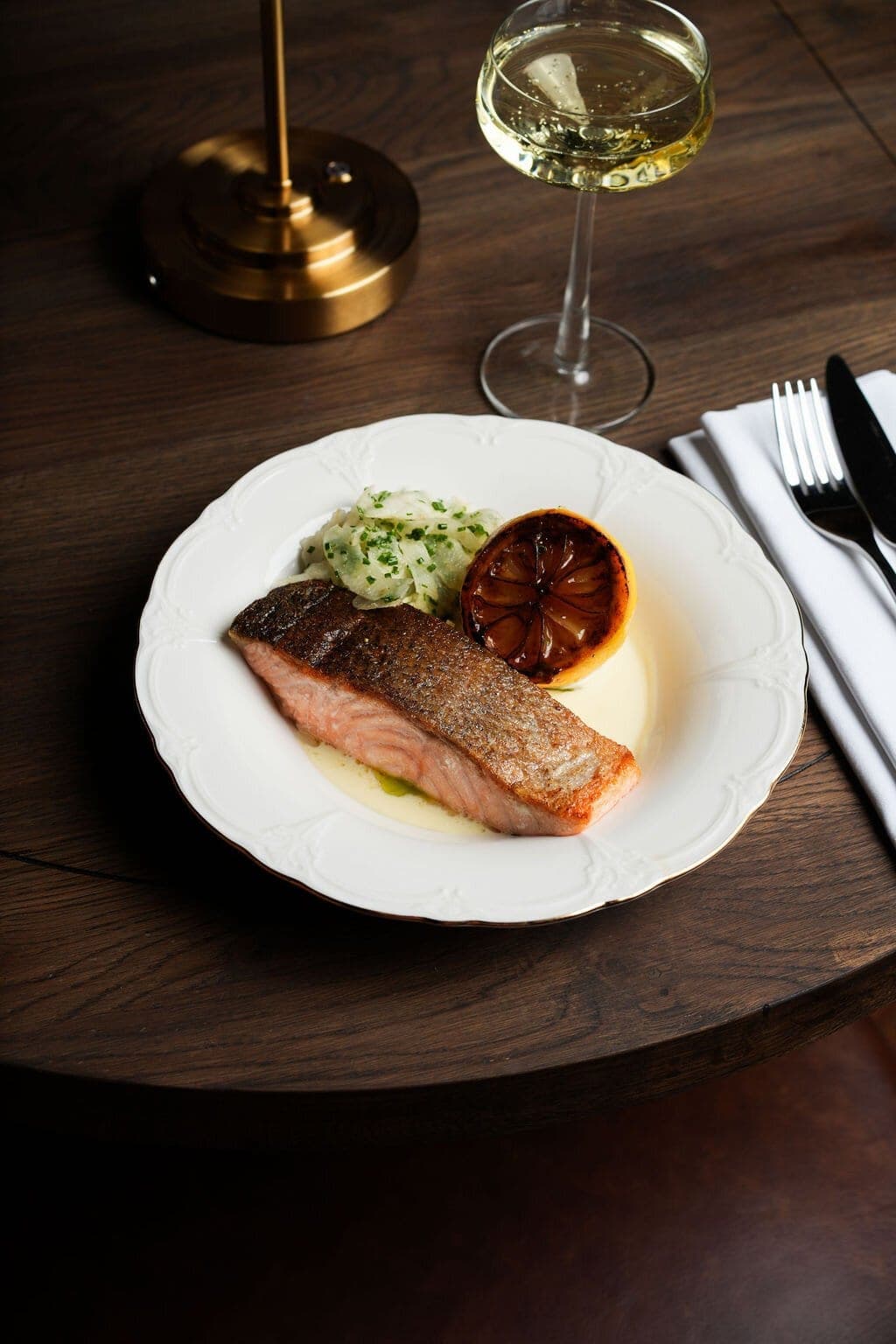
Photo: Chez van Rijn
№ 38Rembrandtplein · French brasserie · €€7.6
Parisian bistro swagger in art-nouveau De Kroon, the rare Rembrandtplein table locals actually book.
Rembrandtplein has spent decades perfecting the art of separating tourists from their money, which makes Chez van Rijn feel almost subversive. The Poppes family, square fixtures since the nineties, gutted their old Kitchen & Bar Van Rijn and reopened it in February 2026 inside De Kroon, the monumental corner built for Wilhelmina's coronation, now all crystal chandeliers, fringed lamps, tapestry walls and oxblood banquettes. The kitchen plays the French bistro standards straight: oysters at 4.50, oeuf mayonnaise at 5.50, chicken liver pate, escargots, moules frites in beurre blanc, and the signature steak frites with entrecote and house sauce at 24.50. Holtkamp supplies the croquettes, which in Amsterdam is a statement of intent. The stated mission is giving the square back to Amsterdammers, and the room is doing its part: DJs on Friday and Saturday, someone at the grand piano on Sundays, kitchen running from lunch through late. Early reviews land on warm service and honest cooking rather than fireworks, which is precisely the assignment. It is not the best French food in the city; it is easily the best reason to be on Rembrandtplein after dark.
Order · Go Sunday for the grand piano, or early on Friday before the DJ takes over; the 5.50 oeuf mayonnaise is the smartest opener on the square.
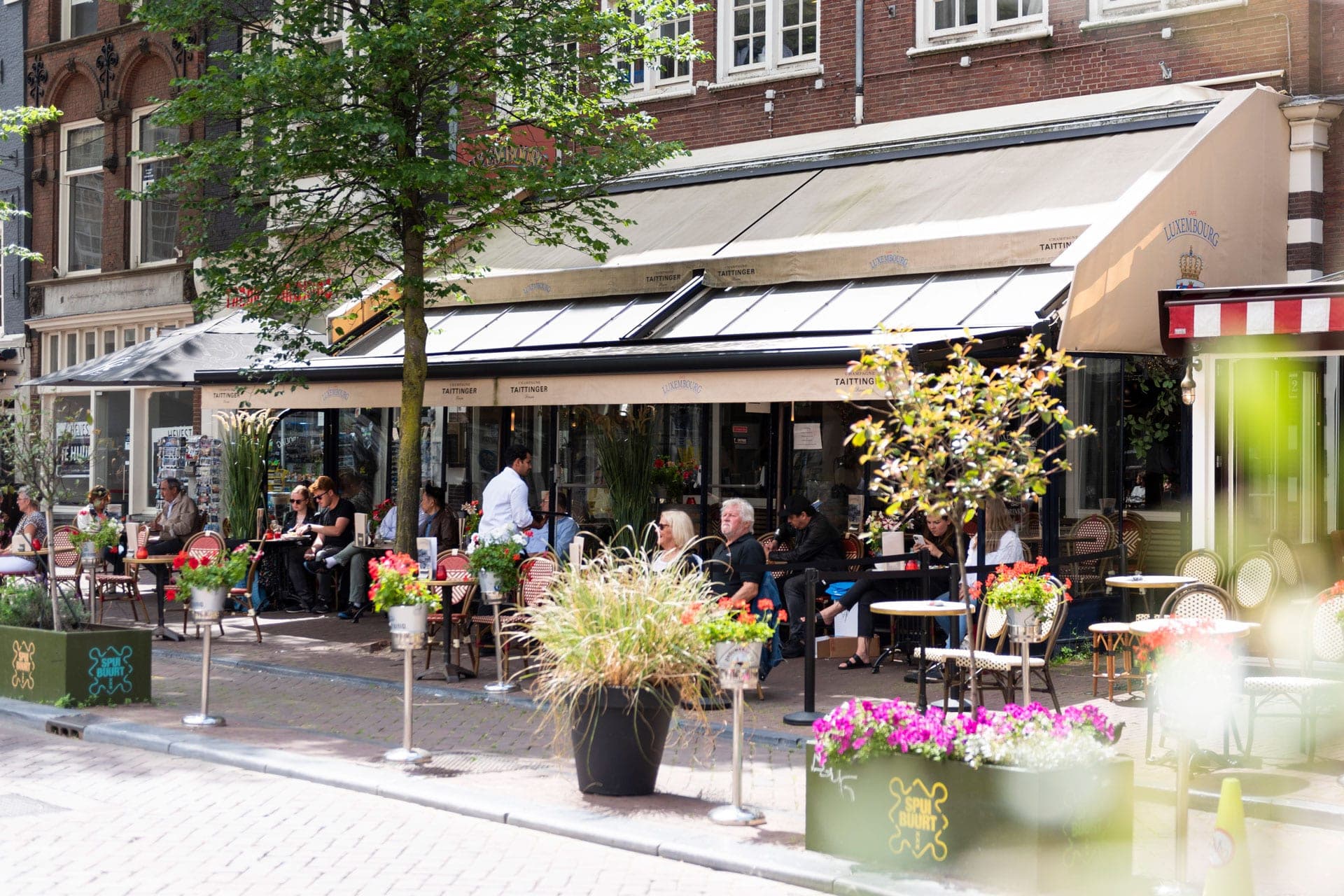
Photo: Café Luxembourg
№ 39Spui · Brasserie · €€7.5
The Spui's grand café since the eighties, home of the Holtkamp shrimp croquette.
Every city needs one room where you can read a newspaper at eleven, lunch at one, and still be arguing about politics at six, and in Amsterdam that room has been Café Luxembourg since the late eighties. The marble tables and reading racks channel Paris; the kitchen is French brasserie recalibrated for Dutch appetites. The reason you cross town, though, is the garnalencroquet from Patisserie Holtkamp, Luxembourg helped develop the thing and introduced it to the city's café culture, and it remains the benchmark: molten North Sea shrimp inside a shatter of crumb, mustard on the side, white bread doing quiet support work. Holtkamp's bitterballen are here too, plus a genever list that starts with Bols and its 1575 paperwork. The heated terrace looks across the Spui to Hoppe, open since 1670. Sit, order, watch the book market amble by.
Order · Two Holtkamp garnalenkroketten on white bread with mustard, the definitive Spui lunch.
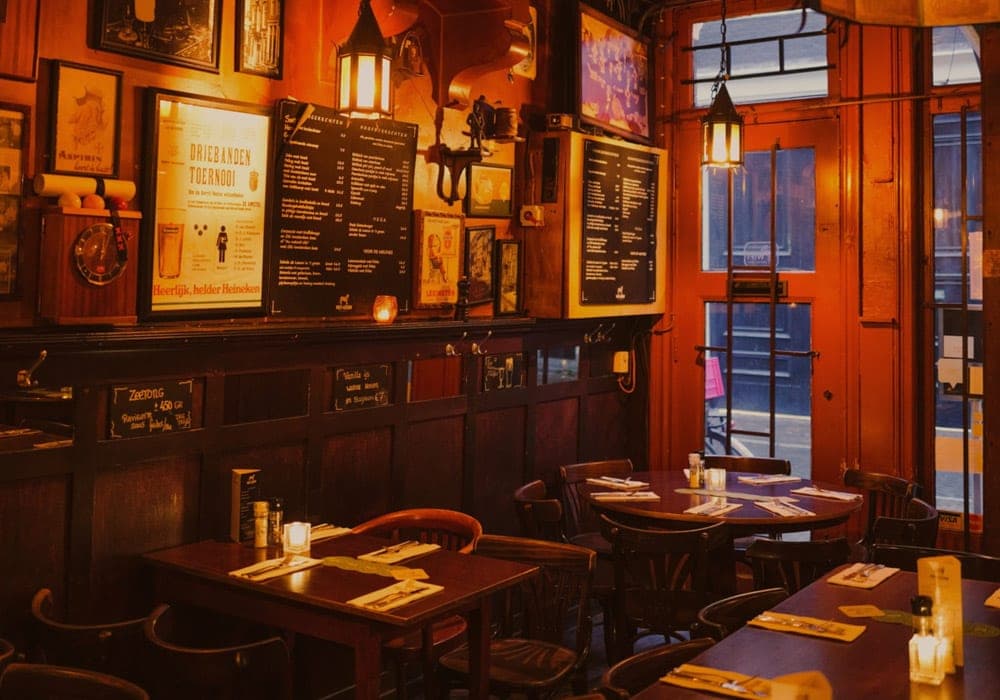
Photo: Steakhuis Piet de Leeuw
№ 40Weteringbuurt (Noorderstraat) · Dutch steakhouse, brown cafe · €€7.5
Steak in its own jus with white bread since 1949, served in a brown cafe that has outlived every food trend twice.
Since 1949 this has been where Amsterdam goes when it wants steak without ceremony: a low-lit brown cafe of dark wood, jenever jugs, chalkboards and oil paintings, where the biefstuk arrives in its own jus with white bread for mopping and fried onions if you have any sense. The menu has grown, ribeye off the grill, carpaccio, even eel on toast, but ordering anything other than steak on a first visit is showing off. There was a small scandal years back about horse meat quietly served as beef; the horse tenderloin is now honestly on the menu and, whisper it, it is excellent. Prices stay fair for the centre, mains under 33 euros, and the waiters have the timing of people who have done this for decades. It hides in a plain side street off the Vijzelgracht, which is exactly how it kept the tourists out and the regulars in.
Order · Come on a weekday between 12:00 and 17:00 when the full menu runs and tables are easy; add the gebakken uien for 3.50, non-negotiable.
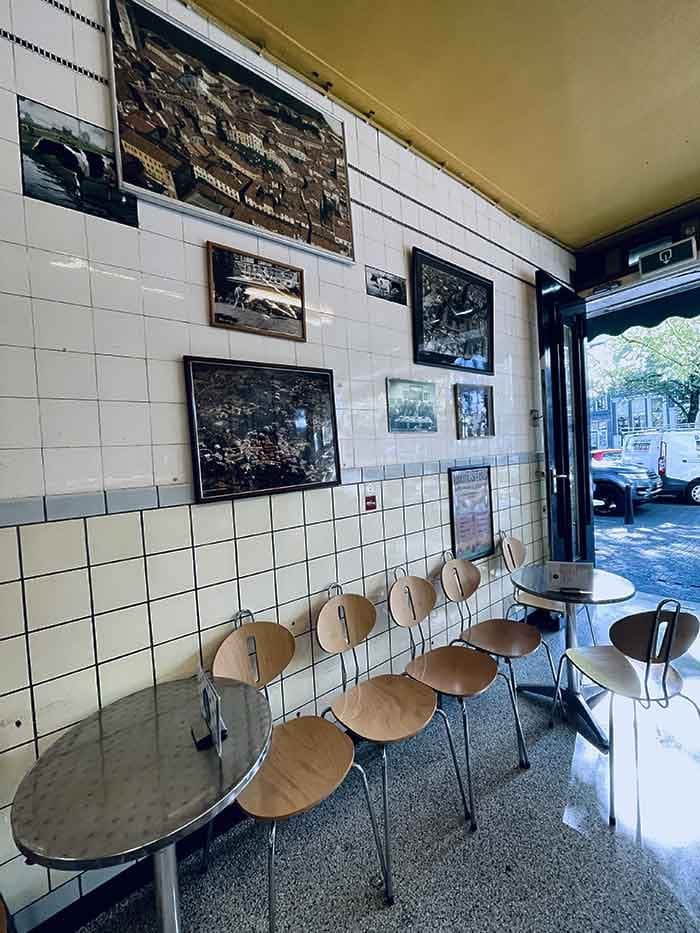
Photo: Amsterdam Walks
№ 41Nieuwmarkt · Gelato · €7.5
The Nieuwmarkt's summer-only Italian corner, scooping on this canal since 1942.
Brothers Michele and Antonio Tofani left the Tuscan village of Benabbio in 1920 to sell plaster saints, discovered Amsterdammers preferred ice cream to religion, and opened their first salon in 1939. The Kloveniersburgwal branch followed in 1942 and never moved. Since 2003 it belongs to Riccardo and Daniele Politi, also from Benabbio, who apprenticed under the Tofani family before taking over, which is about as orderly as successions get in this business. The rhythm is strictly Italian: open roughly April to October, then the shutters come down and everyone goes home for winter. In season you get proper gelato, real espresso, cannoli and a canal-side terrace where half the Nieuwmarkt kills its afternoons. The mojito and pistachio scoops are the ones people cross the bridge for. A daytime and evening counter with terrace, not a dinner address, and in January not an address at all.
Order · Order the caffè shakerato with a scoop on a hot day, and note the season: they close for winter entirely, so check before crossing town from November to March.
Photo: Fiona
№ 42Wallen · Mexican · €€€7.5
A Mexican dining room and cocktail bar on Warmoesstraat, menu built by chef Zahie Tellez, kitchen run night to night by Jef van Hout.
Fiona sits under a hostel on Warmoesstraat, which tells you nothing about what's happening in the kitchen. The menu was designed by Zahie Tellez, the Mexican television chef and cookbook author, but she is not back there cooking dinner: day-to-day service belongs to chef Jef van Hout, who came up through Bord'Eau and Le Restaurant before running his own place, The French Connection. That distinction matters and Fiona is upfront about it rather than trading on Tellez's name alone. The food leans classic: tuna ceviche in leche de tigre, slow-cooked octopus with wasabi mayo, spare ribs, a proper chile en nogada when it's in season, tacos and quesadillas for the less committed. The Tulum-meets-Mexico-City room gets loud after dark and the cocktail bar keeps going past dinner. It's a big, market-tested operation, over a thousand reviews and counting, more crowd-pleaser than personal statement, but the kitchen delivers on what it promises.
Order · Kitchen runs Monday-Thursday 17:00-00:00, weekends from 12:30. Taco Tuesday is two tacos and a cocktail for €24; the Sunday Club, second Sunday of the month, is a three-course €35 menu with a frozen margarita.
№ 43Nieuwmarkt · Eetcafé, Mediterranean-Dutch · €7.4
The De Reiger crew's third brown café, reopened spring 2026 with three courses for about 30 euro and a hidden courtyard.
Van Beeren is named after Gerrit van Beeren, the greengrocer whose shop stood on this Koningsstraat corner from 1936, and for decades it was the Nieuwmarkt's squatter-and-student eetcafé with a courtyard garden nobody expected. In spring 2026 it changed hands to Xander Waller, Jasper Gottlieb, Wout Meulemans and Fons Lagendijk, the team behind Proeflokaal De Druif and the revived Café de Reiger, with Xavier Berben as fifth partner, and reopened with a rebuilt but recognisable room: wood panelling, candlelit tables, bar seating, the garden intact and served until 22:00. The card is deliberately short and Mediterranean: sardine escabeche at 10, lentil soup at 6.50, melanzane at 14, merguez at 15, a lamb brochette at 18, half a chicken at 19.50, a plancha entrecôte at 26 and a fish of the day at 23, so three courses land around 30 euro as promised. AmsterdamNow covered the reopening in April 2026 and Broersma's 2026 openings list picked it out for its affordability. It is too new for a settled verdict, but the pedigree is the best in the brown-café business right now and the courtyard alone is worth the detour from the Nieuwmarkt terraces.
Order · Open daily 16:00 to 01:00, kitchen from 17:00, courtyard until 22:00. Part of the room is always kept for walk-ins; early or late gets you the bar. Order the escabeche, the merguez and whatever fish came in.
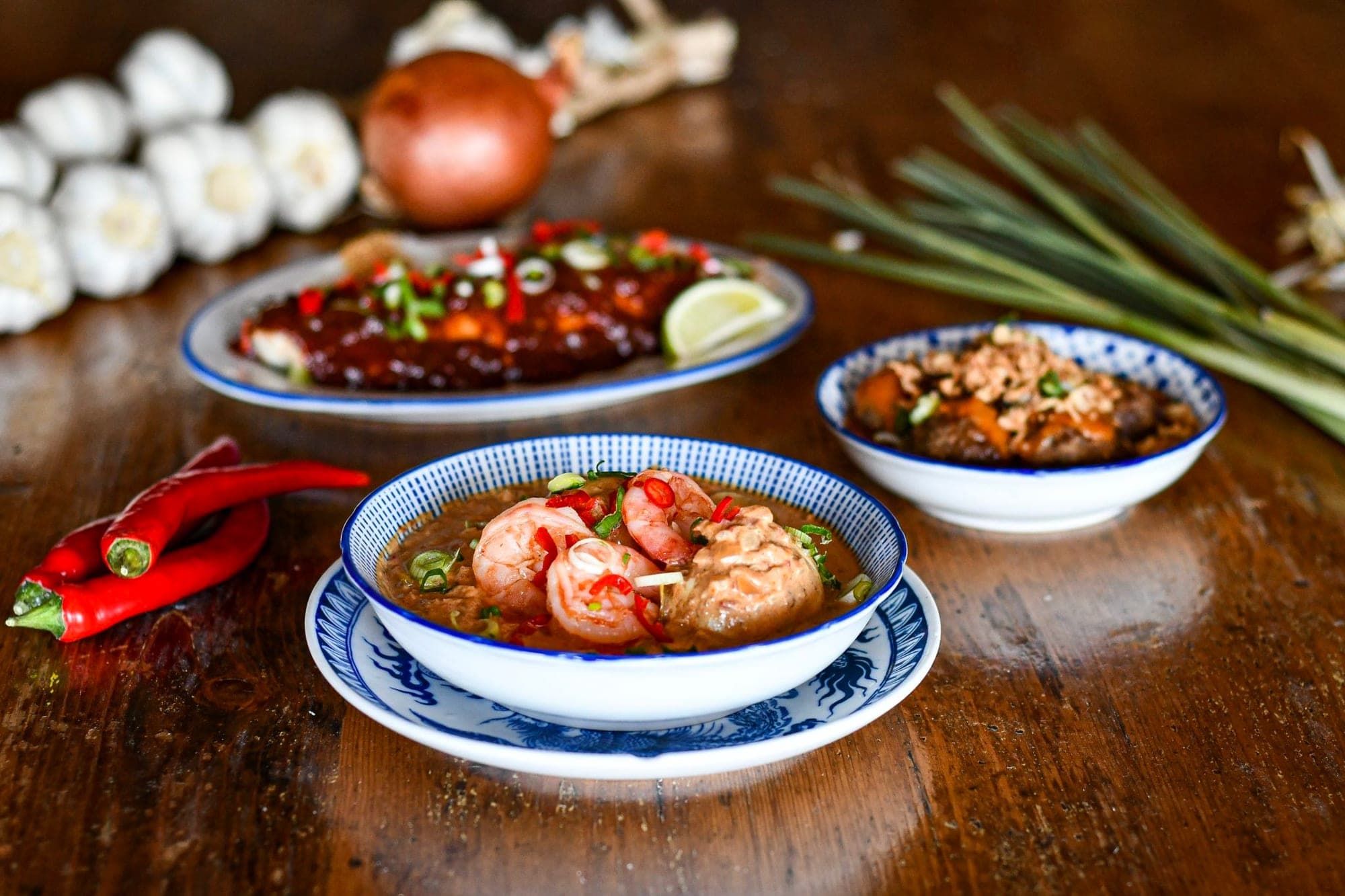
Photo: Café Kadijk
№ 44Kadijken · Eetcafé, Indonesian · €€7.4
The Indisch bordje on a 1727 corner by the Entrepotdok: a family eetcafé where the rijsttafel comes as one plate.
Kadijksplein 5 is a 1727 house that Stadsherstel restored in 1997, notorious in the sixties as Café Confianza, and for about twenty years now it has been Café Kadijk, a family café whose kitchen cooks Indonesian family recipes. The idea is that you come for a drink and end up eating: the Indisch bordje at 25.50 puts rendang Padang, smoor daging, ayam boemboe Bali, gado gado, rice, krupuk and atjar on a single plate, a rijsttafel without the ceremony, and around it sit Indische makreel in a hot sauce, lamb gulai, saté ayam and eitjes à la tante Bea. Johannes van Dam's Parool review years ago is what first filled the room, and the room stayed full; Tip de Toko's 2024 test scored it 7.5 and noted it was packed on a Wednesday with quick turnover. No reservations, a café-style interior with a bar, and a large terrace plus a covered heated one on the square, which on a summer evening is one of the nicer places to sit in the eastern centre. Two honest caveats: the flavours are gentler than a toko purist wants, and the site itself says the bases are prepared each morning in a kitchen in Noord and finished on the spot in the evening, so this is a family prep kitchen rather than a wok behind the bar.
Order · Open daily 17:00 to 01:00, no reservations, so arrive before 19:00 on weekdays or expect a short wait at the bar. Order the Indisch bordje and a saté ayam to share, with a Bintang.
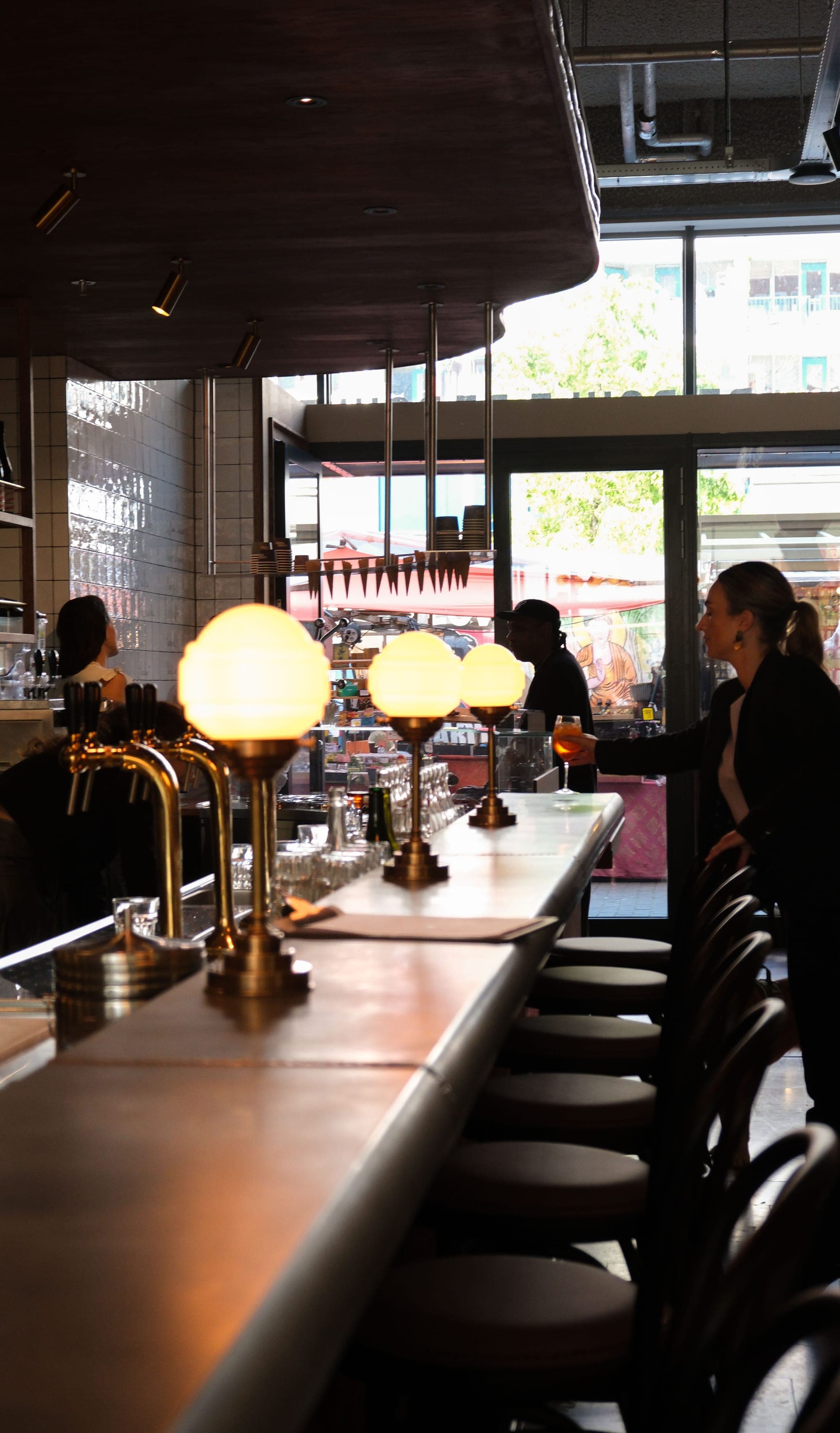
Photo: De Boule De Boule
№ 45Waterlooplein · Ice cream · €7.4
The country's first ice and wine salon, pouring natural wine next to plant-based boules at the Stopera.
Opened in June 2026 by hospitality entrepreneur Kirsi Rautiainen and sommelier Dominique, De Boule De Boule is the first ijs- en wijnsalon in the Netherlands, which sounds like a gimmick until you sit down. Two pastry chefs make a dozen fully plant-based flavours in house, and the combinations read like someone enjoying themselves: saffron and orange, olive oil and basil, coconut and lime. The wine list runs organic and natural with serious alcohol-free options, the room at the Stopera has a long bar, a lounge corner and a covered terrace, and vinyl or a DJ carries the sound from afternoon into evening. The pitch is that ice cream deserves a place in hospitality beyond the after-dinner shrug, and the trade press bit hard, with RestaurantKrant, Misset Horeca and Talkies all covering the opening. Too new for institution status, scored accordingly, but the craft is real. Closed Sundays, oddly.
Order · Go for the pairing: a boule of olive oil and basil next to a glass of natural white is the order that explains the whole concept. Weekday afternoons are calmest.
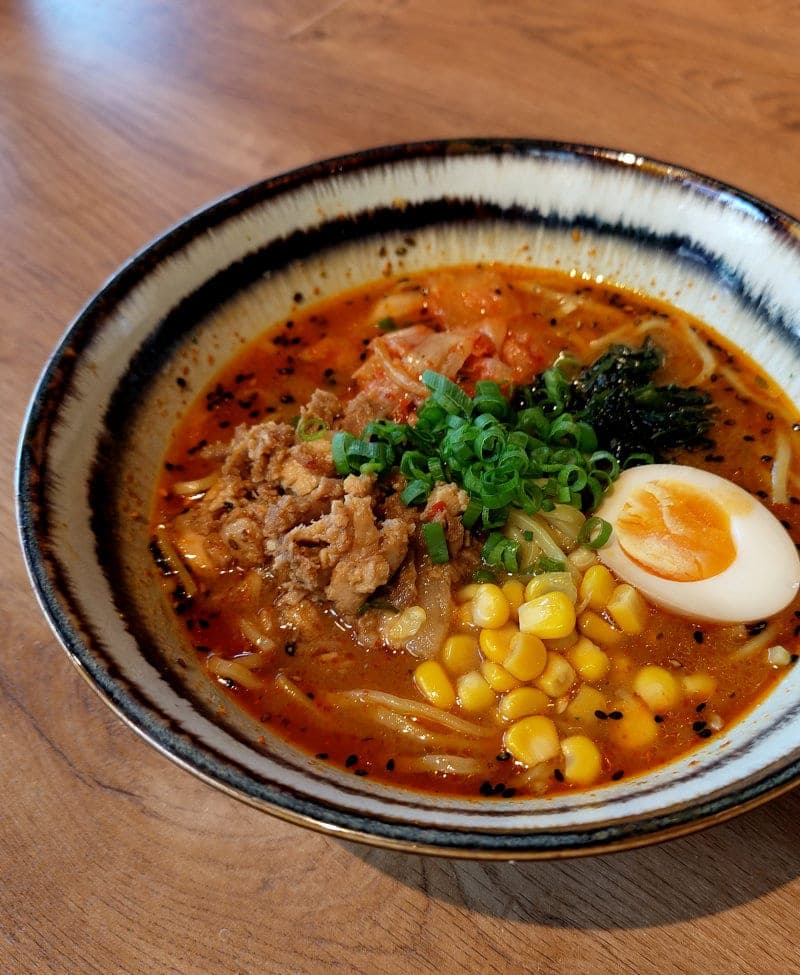
Photo: Taka Ramen
№ 46Nieuwmarkt · Ramen, Japanese street food · €€7.4
Tokyo-trained Taka ladles lunch-only ramen on the top floor of Toko Dun Yong, four flights up with the Geldersekade below.
Taka came to the Netherlands in 2008 for an office job, decided the local ramen situation was unacceptable, and went back to Tokyo to train for three years before returning in 2012 to sell bowls from a stall at Waterlooplein. The stall became a counter on the top floor of Toko Dun Yong, then moved to a spot in the Jordaan for a stretch, before Taka came back for good to that same top floor of the Asian department store on the Stormsteeg, where you climb past crockery and kitchenware to a plain room with a view over the Geldersekade. The menu is short and daytime only: shouyu, miso and a properly spicy tan tan men at €16.95, a halal chicken bowl, a seafood bowl, and street food on the side, tori gyoza, karaage, takoyaki, yakisoba. Everything is made by the man himself, to his own exacting standard and nobody else's, which is exactly what you taste. Specials rotate, and a tsukemen with a fish, pork and chicken dipping broth turns up often enough to be worth asking about. Your Little Black Book has called Taka possibly the best ramen chef in the country; we would not go that far, but at these prices, with this view, the Saturday queue makes sense. A second branch runs near Gelderlandplein; this floor is the original.
Order · Daily 12:00-16:00, lunch only, no reservations. Come on a weekday before 13:00 or the small room fills; the €7.50 tori gyoza are the side order to keep, and ask about the tsukemen special before committing to a bowl.
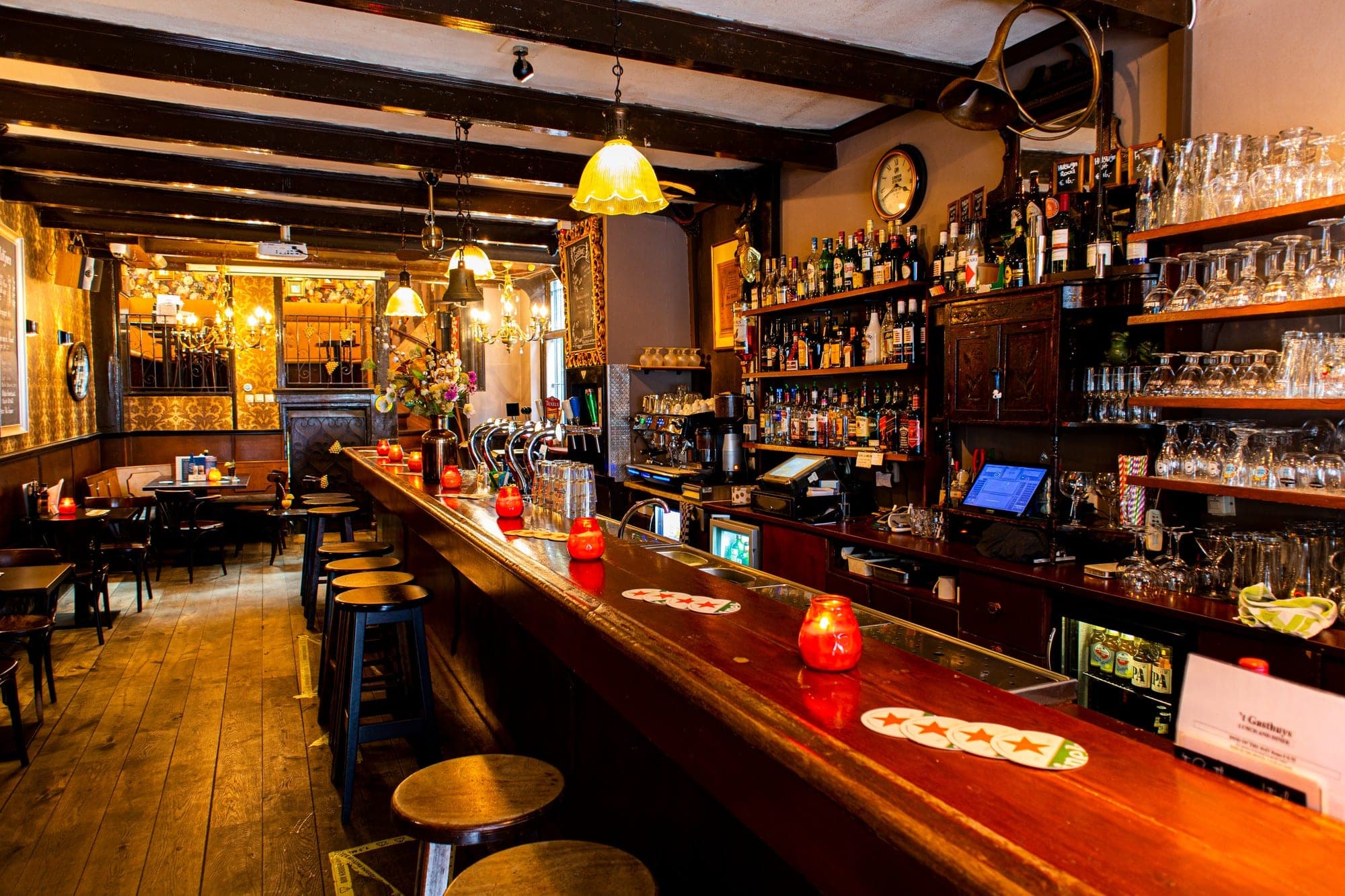
Photo: Café 't Gasthuys
№ 47Grimburgwal, Oude Zijde · Eetcafé, Dutch · €7.2
A 1977 brown café behind the university with a waterside terrace and a daily special that still starts under ten euro.
't Gasthuys has been on the Grimburgwal since 1977, wedged between the old university buildings and the Oudezijds Achterburgwal, and it is the last honest eetcafé in a corner of the centre that has otherwise surrendered to waffles. Dark wood panelling, a bar that regulars lean on, and a small terrace over the water that catches the afternoon. The kitchen is unpretentious in the original sense: a homemade Gasthuys burger and a vegetarian one at 14.50, homemade chicken satay at 16.50, spareribs with whisky and garlic sauces at 17.50, a steak at 18 with herb butter, all served with fries and salad, and a chalkboard daily special that Barts Boekje's budget list clocks from 9.75, which is how students still eat here. Your Little Black Book's September 2024 brown-café list picked it out for exactly that, a daily special or something from the fryer with a beer on the canal. The kitchen runs until 21:00 on weekdays and 21:30 on Friday and Saturday, so this is an early dinner, not a late one. It will not change anyone's life, and the tourist traffic on the Grimburgwal is relentless in summer, but as a place to eat a proper plate for under twenty euro in the very heart of the old city it is close to unique.
Order · Open daily from noon; kitchen until about 21:00, 21:30 Friday and Saturday. No bookings needed on weekdays. Check the board for the dagschotel first, then the satay; take the terrace over the water if it is free.