Photo: RIJKS
№ 01Museumkwartier · Modern Dutch · €€€€9.2
Bijdendijk's Low Countries cooking is the Rijksmuseum's best exhibit, and it's edible.
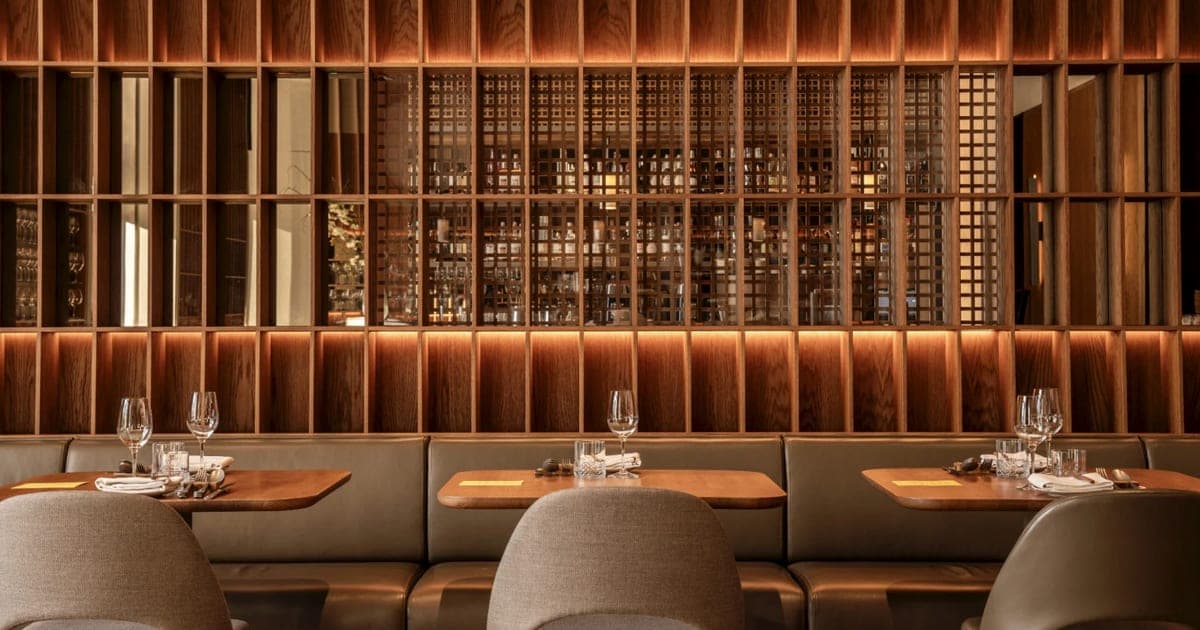
Since 2014, the Philips Wing of the Rijksmuseum has housed the most convincing argument that Dutch food is worth taking seriously. Executive chef Joris Bijdendijk and his kitchen chefs Yascha Oosterberg and Friso van Amerongen call it 'Low Food': Dutch soil, Dutch water, and every spice-route flavour that four centuries of trade dragged back to it. The room is all high glass and calm confidence, with an open kitchen that hums rather than shouts, and a Michelin star that has sat comfortably here for years. Lunch is quietly the smart play, same brigade, softer bill, museum light pouring in, while dinner is a full-dress occasion. Yes, tourists find it. Doesn't matter. When a kitchen this ambitious sits inside the national museum and still cooks like it has something to prove, you book the table.
Order · Do the full chef's menu and take the vegetarian version seriously, the vegetable courses are where Bijdendijk flexes hardest.
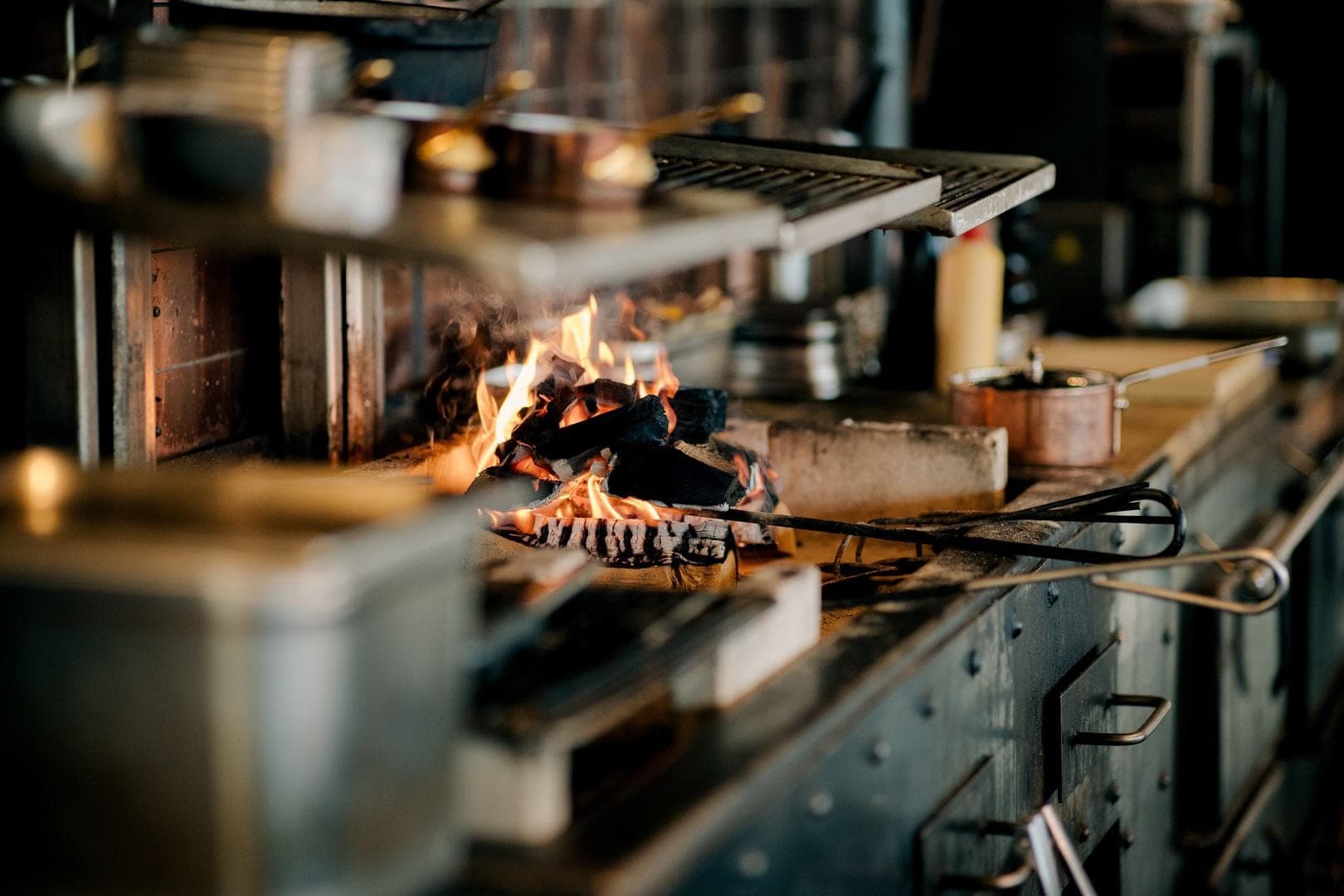
Photo: Restaurant Wils (Nina Slagmolen)
№ 02Olympisch Kwartier · Live-fire · €€€€8.8
Michelin-starred fire worship on the third floor above Stadionplein.
Joris Bijdendijk's second act sits three floors up on Stadionplein, and it runs on flame: no dish leaves this kitchen without meeting wood, smoke or ember first. The Michelin star arrived in 2021 and stayed, which tells you the fire is a discipline here, not a gimmick, charred alliums turned sweet, fish kissed with smoke, sauces built on drippings. The chef's menu comes in four or five courses, à la carte if you'd rather freelance, and the vegetarian and vegan versions are genuinely composed rather than apologetic. The concrete-and-timber room stays open until midnight, late by Amsterdam fine-dining standards, and Friday and Saturday lunch is one of the city's best-kept quiet luxuries. Downstairs, the Wils Bakery Café handles the daytime crowd; upstairs is where the Olympic quarter earns its serious-kitchen reputation.
Order · Book the Friday or Saturday lunch, the five-course chef's menu with the room half-empty is the connoisseur's version.
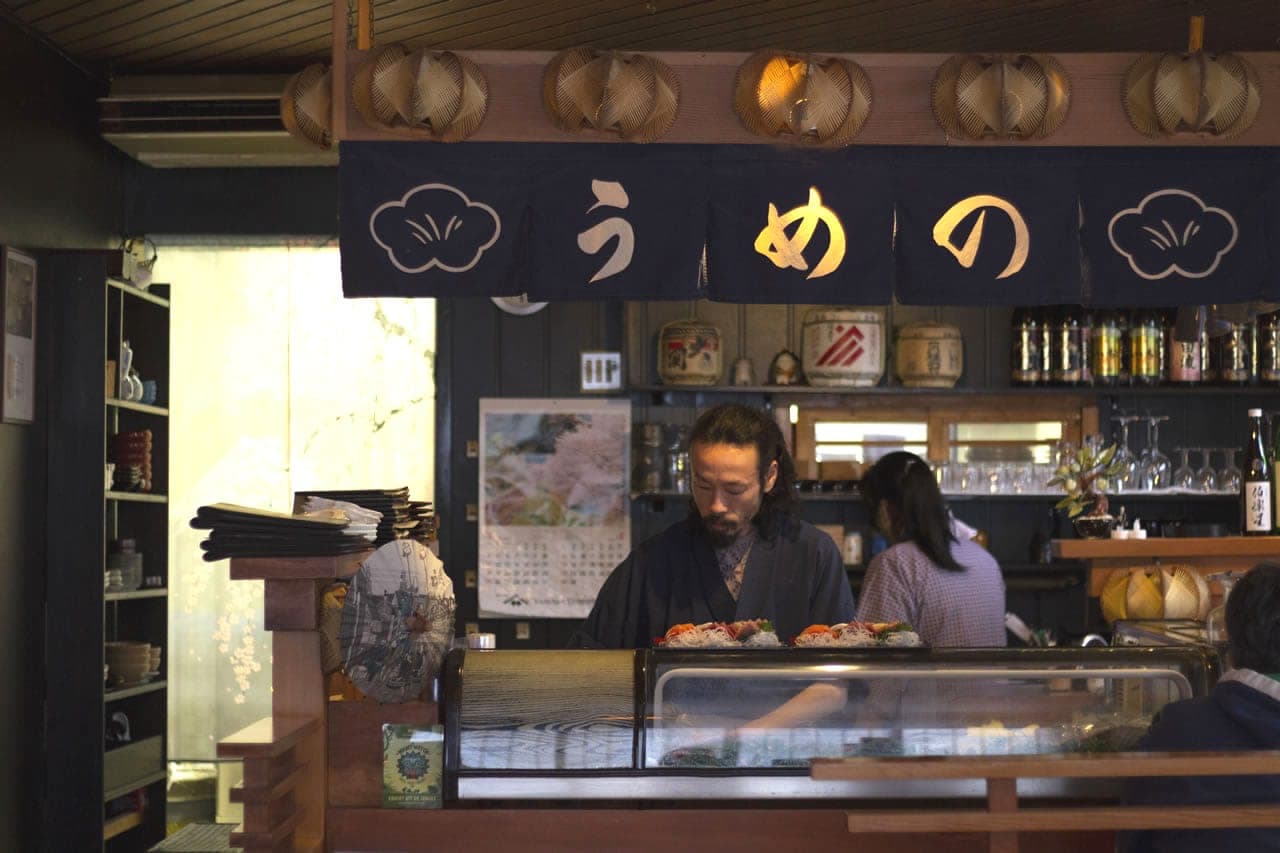
Photo: Japanese Foodie Guide
№ 03Stadionbuurt · Japanese (omakase) · €€€8.3
A family-run Japanese counter from 1978 serving one fixed omakase to a lucky few, three nights a week.
Amsterdam has a dozen omakase counters that cost twice as much and deliver half the conviction. Umeno has been doing this since 1978, when it was one of the first Japanese restaurants in the country, and the room still looks the part: a wooden counter, paper lanterns, a noren curtain that has outlived most of the city's restaurant trends. The founder's nephew Atsu took over in 2008 and runs it with his family, ageing fish properly, switching between two sushi vinegars, and serving one fixed menu of about nine courses to a handful of guests. Parool critic Mara Grimm gave it a 9.5 and called it one of the best Japanese restaurants in the Netherlands, which promptly made the tiny room even harder to get into. It opens three evenings a week, asks a deposit up front, and answers only on WhatsApp. All of that starts to feel reasonable around the third nigiri.
Order · Reservations run through WhatsApp only, with a full deposit that comes off the bill; the menu is fixed, so read it online before you commit. It opens Friday and Saturday only, from 19:00, so send the message early in the week.
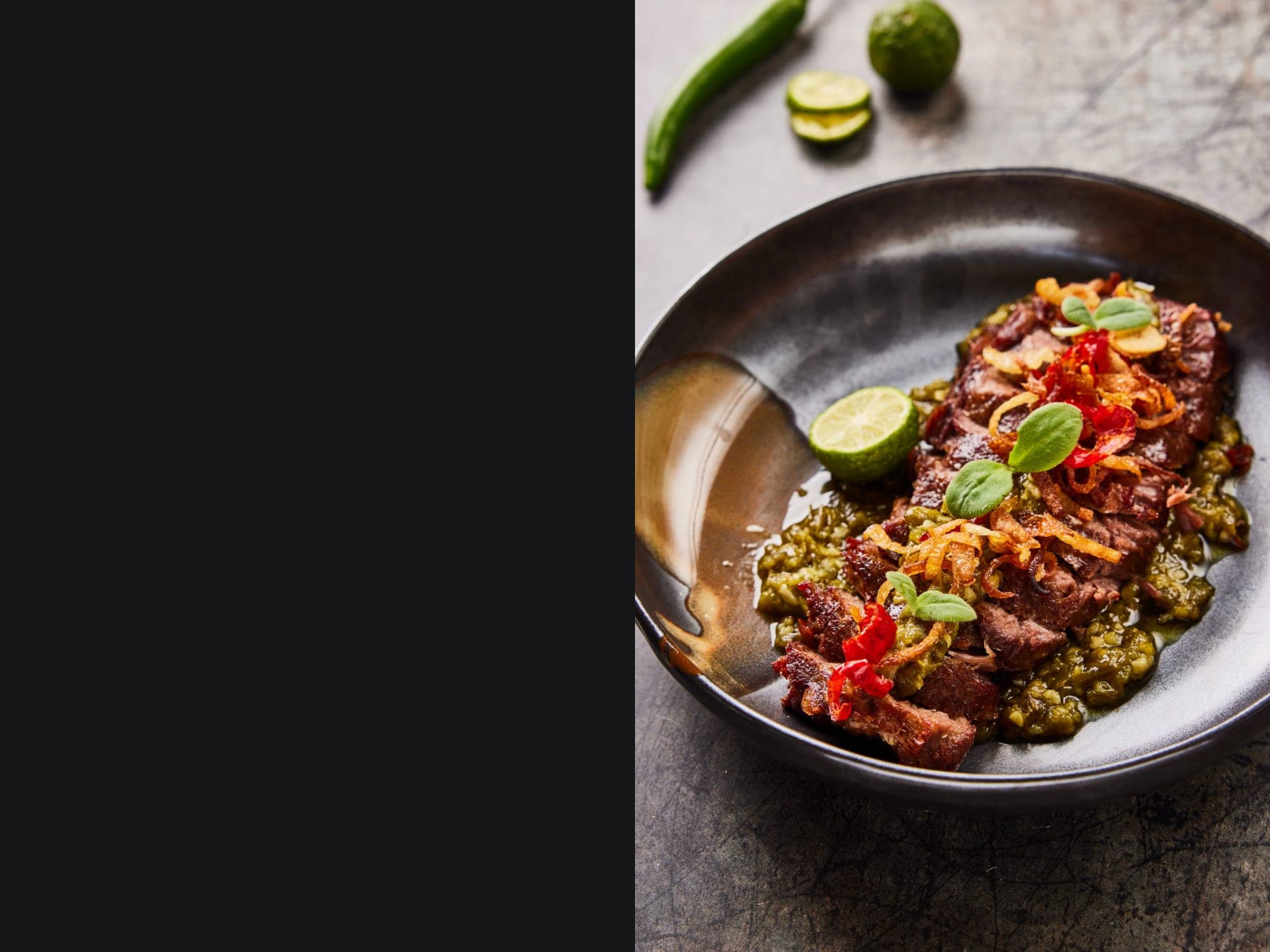
Photo: Restaurant Blauw
№ 04Vondelpark-Zuid · Indonesian · €€8.3
Four Indonesian rijsttafels, from fully vegan to meat, fish and vegetables, at the restaurant Time Out named Amsterdam's best Indonesian in 2026.
Blauw has two branches, this one on Amstelveenseweg by the Vondelpark and one in Utrecht, and both serve the same menu. Henk van Hees took over in 2013. Hendra Subandrio, born in Jakarta, ran the Amsterdam kitchen from 2013 to 2017 and is now executive chef of both. All meat is halal. There are four rijsttafels for two or more, from Vegan Rasa at €42 a head to Authentiek at €48, which brings daging rendang, udang belado and goat and chicken satay. Menu Biru (street food, a mixed rijsttafel and the chef's dessert) costs €58.50 a head, whole table only. À la carte mains come with rice, gado gado and sayur lodeh, and sides such as satay can only be ordered with a main. Time Out put Blauw at number 10 of Amsterdam's best restaurants for 2026 and calls the rijsttafels the move. Guests often fail to finish the rijsttafel and praise staff who explain the dishes; some find it pricey, and they are split on the heat.
Order · Dinner only, daily from 17:00 (until 22:00, Friday and Saturday 22:30); book online for up to six, larger groups email amsterdam@restaurantblauw.nl. The old building has narrow stairs and is not wheelchair friendly.
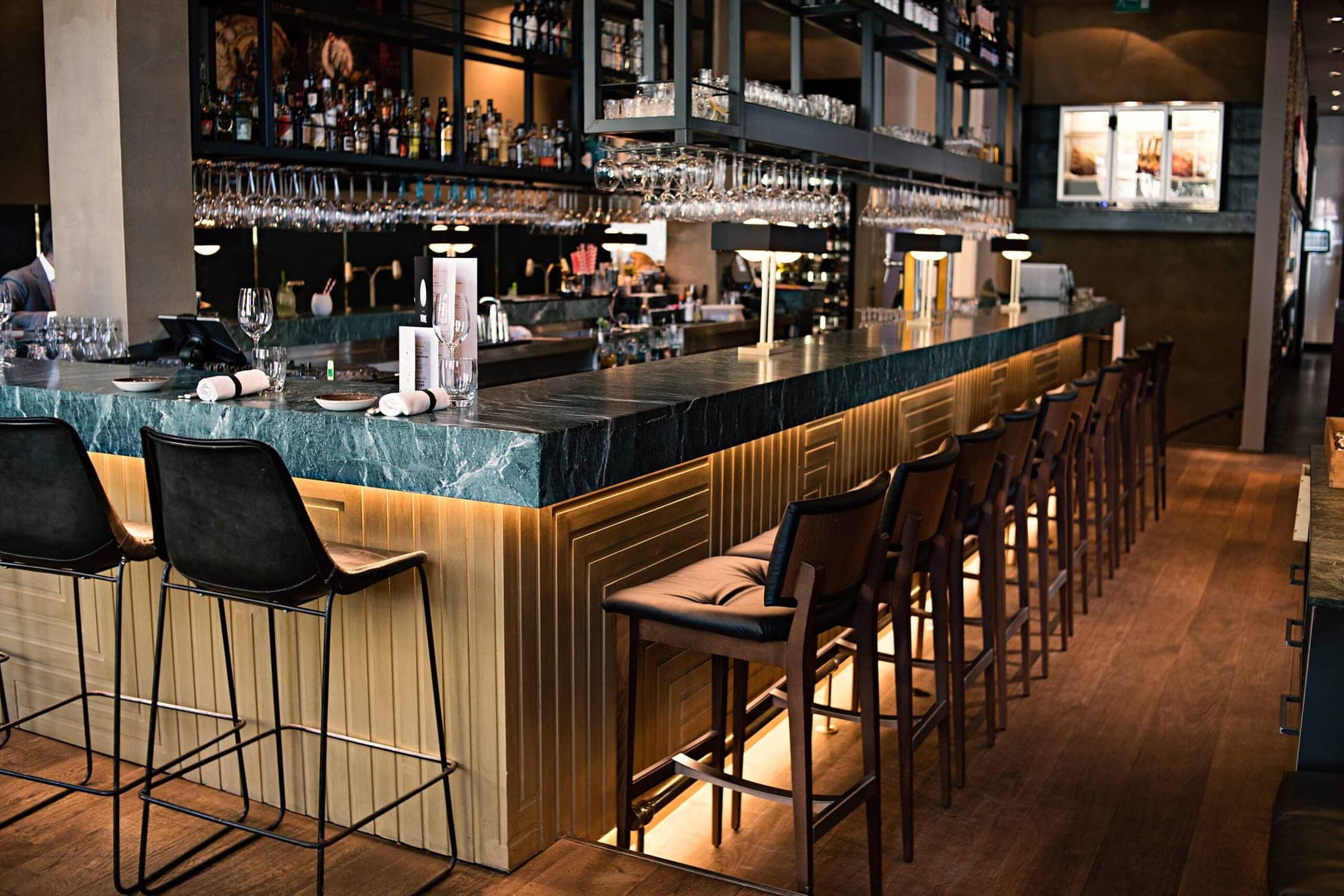
Photo: Ron Gastrobar
№ 05Willemspark · Dutch-French · €€€8.2
Ron Blaauw traded two Michelin stars for this, and won the trade.
In 2013 Ron Blaauw did something Dutch chefs still talk about: he handed back two Michelin stars, ripped the white tablecloths out of his grand pavilion on Sophialaan, and started serving sharp, star-level plates at democratic prices. A decade on, the gamble reads as prophecy, half of Amsterdam's dining scene now imitates the format, and the original still executes it best. The room is a handsome glassed-in pavilion in leafy Willemspark, all buzz and clinking glasses, with a terrace that fills the moment the sun makes any effort whatsoever. The menu runs from an immaculate steak tartare through slow-cooked meats and one properly decadent burger, every dish scaled so you order three and argue about a fourth. Locals bring parents, dates, colleagues and children here interchangeably. Geen poespas, as the man himself says: no fuss, all pleasure.
Order · Build your meal around the tartare and the burger, then let the kitchen's daily specials fill the gaps.
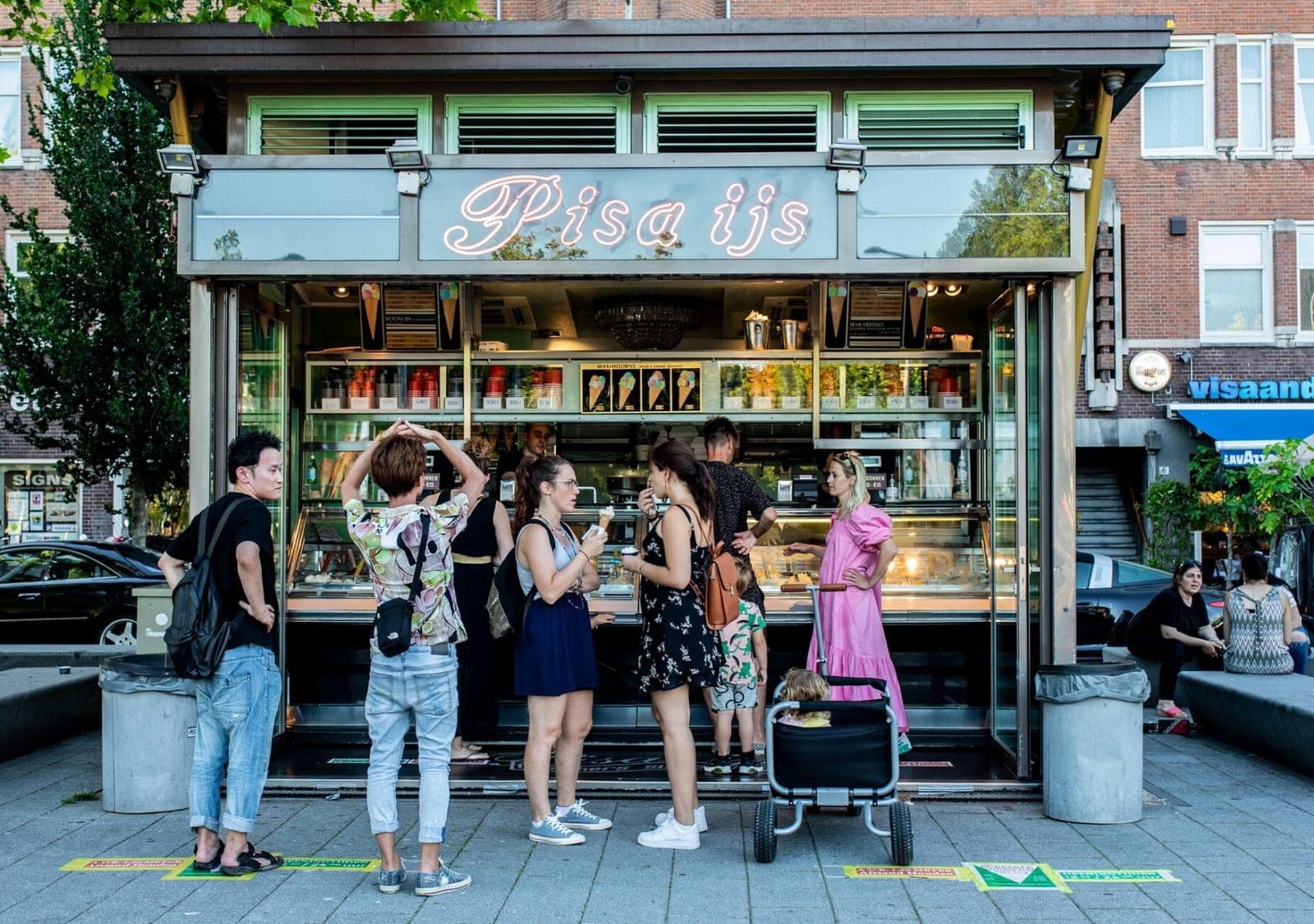
Photo: AmsterdamNow
№ 06Rivierenbuurt · Ice cream · €8.1
A 1935 family kiosk on Scheldeplein that has outlived every food trend and most of the buildings around it.
Enrico Morelli came from Tuscany and started scooping in 1935; his great-grandson Leonardo Frangini runs the kiosk now, which makes Pisa one of the oldest ice cream businesses in the city and possibly the most stubborn. The operation wandered from Oost through De Pijp before parking on Scheldeplein, where the green kiosk opposite the RAI has become the kind of fixture people plan their evening walk around. More than 60 flavours rotate through a season, the queue on warm nights is a Rivierenbuurt social event, and Mano Bouzamour put the place in a bestselling novel. Parool covered the 90th birthday in 2025 along with the ugly question of whether the municipality will put the kiosk permit out to tender. The family's answer, that they are part of the city, is hard to argue with. Counter only, no dinner, open late.
Order · They sell take-home liter boxes for 14 euros, the cheat code for dinner parties in Zuid. The flavour list changes constantly, so ask what was made that morning.

Photo: Hakata Senpachi
№ 07Rivierenbuurt · Japanese izakaya / yakitori · €€8.1
Twenty-plus years of charcoal yakitori and izakaya noise in a side street by the RAI, priced like Fukuoka rather than Amsterdam.
Every Japanese expat in Amsterdam already knows this room behind the RAI, which is why a Tuesday here sounds like a Fukuoka izakaya on Friday night. Hakata Senpachi has spent more than twenty years grilling yakitori over charcoal in the middle of the restaurant, and the smoke is the interior design. You order in waves: chicken thigh with spring onion, pork belly lacquered with sweet miso, tsukune with proper snap, chicken hearts for the committed. Most skewers hover around four euros, so the bill stays civil even when the table loses count, which it will. The sashimi is cut with more care than plenty of sushi-first places manage, and the tonkotsu ramen is a legitimate finisher. Volkskrant and Parool have both paid their respects over the years, but the real endorsement is the clientele, who could eat anywhere in the city and keep choosing the loud little room with the hibachi.
Order · Book the counter seats near the hibachi and order like an izakaya: a first volley of skewers, then decide the rest as they land. Last order is 21:30, so start on time. Unagi and buta miso sell out first.
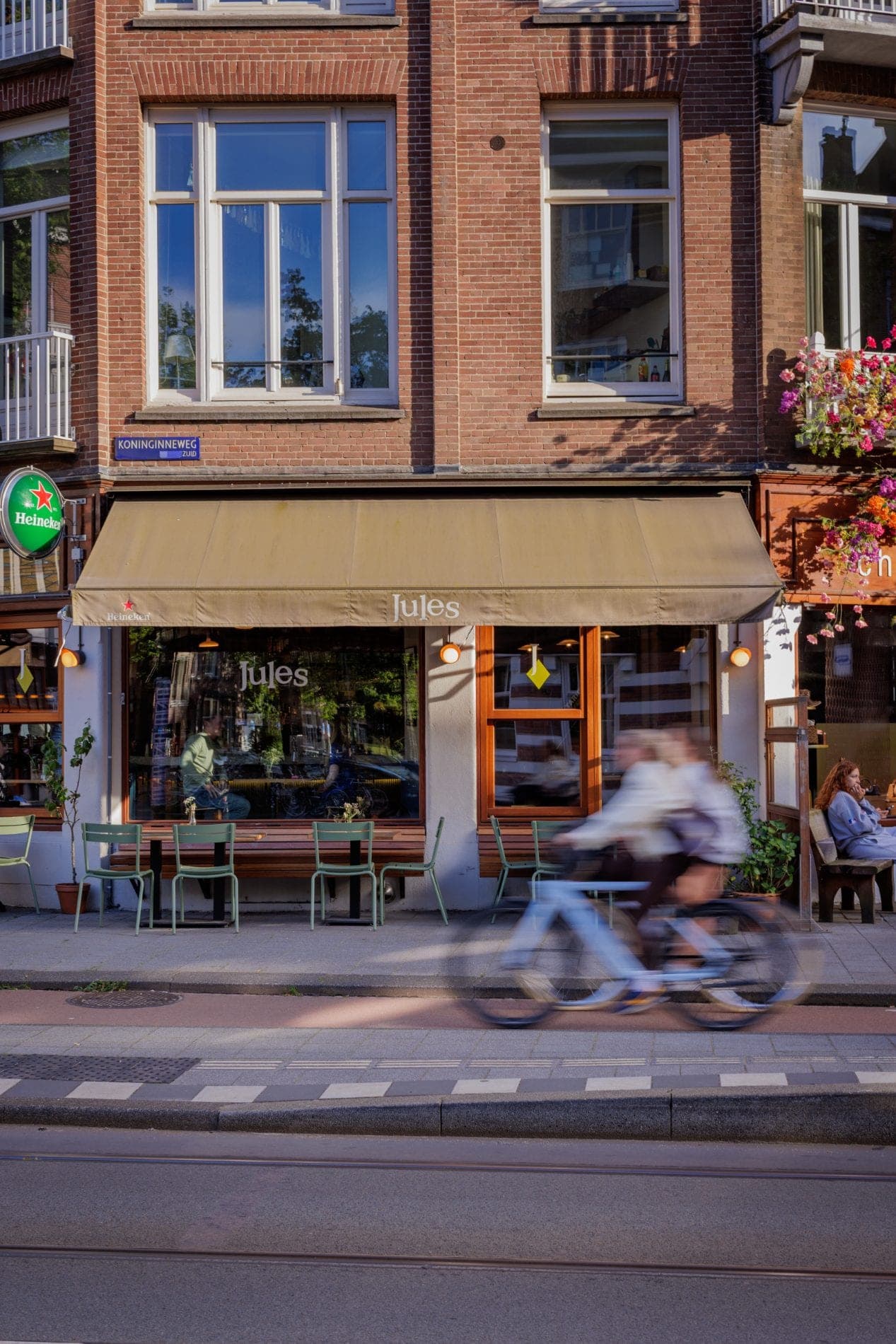
Photo: Jules
№ 08Willemspark · Spanish-Mexican · €€8.0
Valeriusplein's all-day living room: Spanish-Mexican sharing plates, terrazzo bar, walk-ins meant literally.
Valeriusplein is the kind of leafy Oud-Zuid square where nothing ever happens, which is exactly why Jules works. Behind the glass facade: a terrazzo bar with glasses hanging overhead, red velvet seats, and a room that runs from flat-white mums at 9am to negroni neighbours at midnight. Since May 2026 the kitchen belongs to Alvaro Cesar Luengo (ex RIJKS and Wils), who steered it into its Spanish-Mexican groove, croquetas de jamón that shatter the way they should, pulpo a la brasa on pil-pil potatoes, a one-bite gilda for €4.50, and a brisket suadero tostada that photographs better than your dog. Daytime brings huevos rancheros and a crispy Lebanese-spiced beef pita; evenings are sharing plates and a wine list the staff actually knows. Google's 4.3 still reads neighbourhood favourite, but the kitchen is now cooking a level above that number: RIJKS and Wils are two of the best rooms in this chapter, and their training shows on every plate. The 'reserve or just walk in' line on the site is policy, not marketing. Sunday closes at six.
Order · Start with the gilda and the croquetas de jamón ibérico, then let the pulpo a la brasa do the heavy lifting.
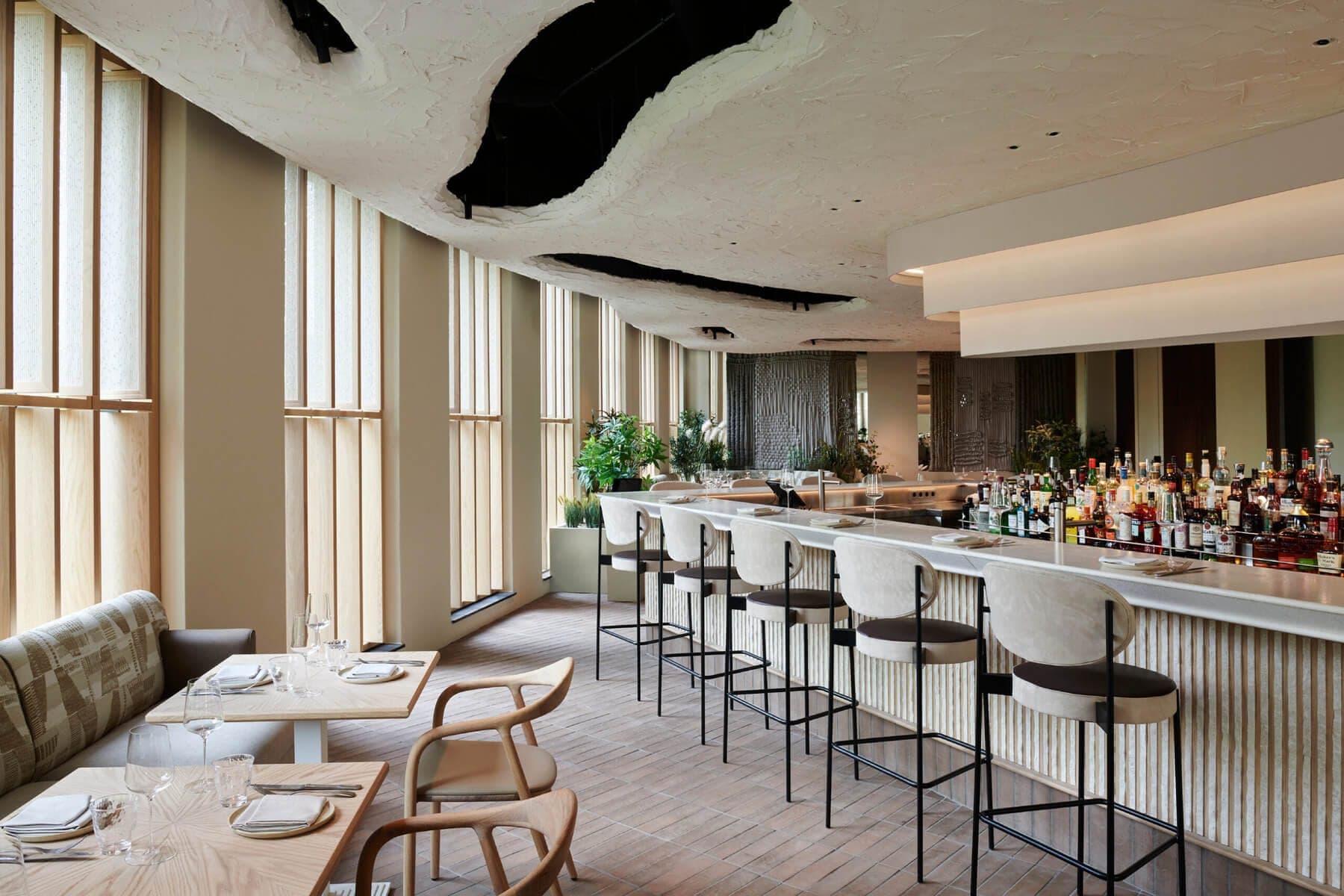
Photo: NELA
№ 09Zuidas · Grill · €€€8.0
Live-fire glamour inside the Valley building; Zuidas finally learned to have fun.
The Zuidas eats a thousand expense-account lunches a day, but NELA is the one address down here that feels like an actual night out. Hari Shetty and Ori Geller run a live-fire kitchen on the second floor of the Valley building, that jagged glass mountain you've squinted at from the A10, sending out shared plates cooked over charcoal and open flame while the room does its low-lit, high-volume thing. The formula worked well enough that London got a NELA too, but Amsterdam is the original. Come with a group, order too many skewers and grilled things, and let the DJ-adjacent soundtrack carry you past midnight. Is it subtle? No. Is the fish charred exactly right while someone orders another magnum two tables over? Yes. Sometimes that's precisely what the doctor ordered.
Order · The Sunday yakitori brunch is the sleeper hit, skewers off the binchotan instead of another eggs benedict.
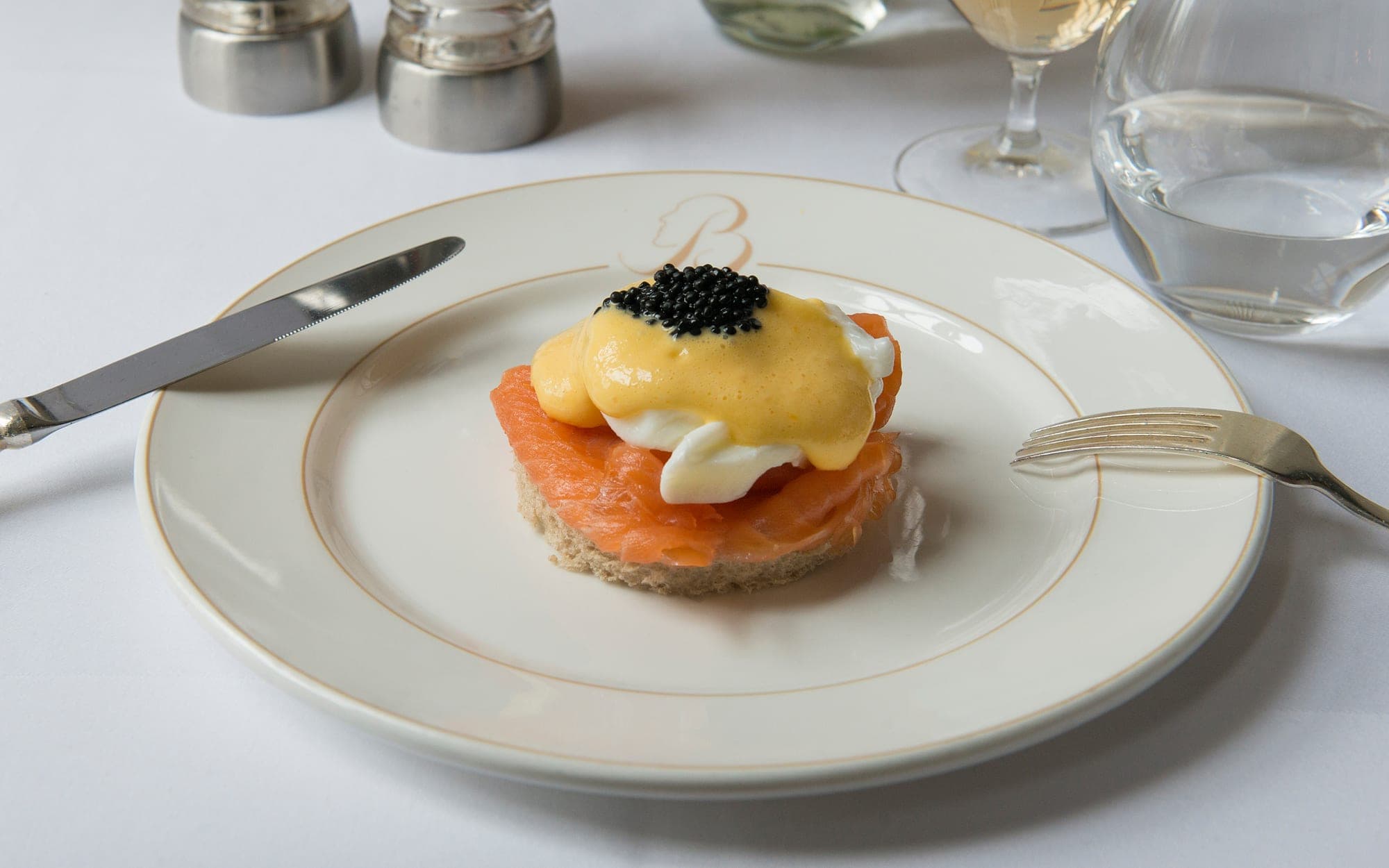
Photo: Brasserie van Baerle
№ 10Museumkwartier · French brasserie · €€€7.9
The Concertgebouw crowd's canteen: oysters, crisp linen, and a secret garden terrace.
Some restaurants chase the moment; Brasserie van Baerle simply outlasts it. This corner of Van Baerlestraat has been feeding the Concertgebouw's musicians, patrons and critics for decades with a French brasserie repertoire that refuses to apologise for being classic: oysters on ice, salmon terrine, entrecôte with proper sauce work, a wine list that leans old-world and knows why. The dining room is warm wood and white linen without stiffness, but the real prize is out back, a hidden garden terrace that ranks among Oud-Zuid's loveliest places to lose an afternoon, all dappled light and clinking Chablis glasses. Service is of the old school: they remember faces, they pace a pre-concert dinner to the minute, and they will not rush your dessert. In a neighbourhood that increasingly mistakes novelty for quality, this is the reliable grown-up in the room.
Order · Start with a half-dozen oysters on the garden terrace, and tell them if you have a concert, they'll pace the entrecôte to your curtain time.
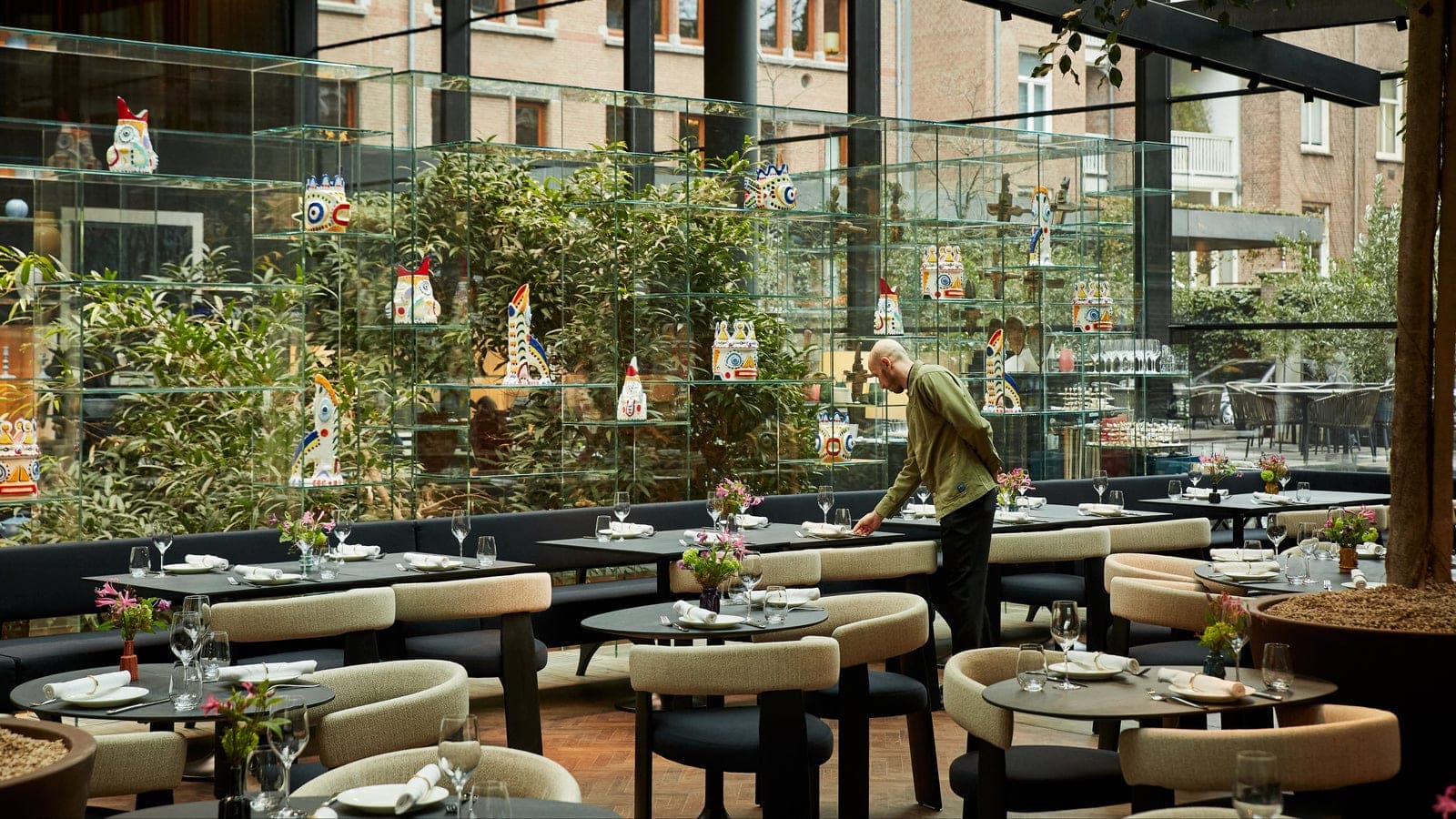
Photo: Ottolenghi
№ 11Museumkwartier · Middle Eastern and Mediterranean, vegetable-forward · €€€7.8
Yotam's homecoming: the full vegetable playbook, grill smoke and all, in the Conservatorium's glass atrium.
Thirty years after a student stint in Amsterdam, Yotam Ottolenghi is back with his first Dutch restaurant: an 85-seat all-day room, plus 30 terrace seats in the courtyard, inside the Conservatorium's glass atrium, ceramic fish and murals included. The kitchen runs the full playbook and runs it well: celeriac smoked and chargrilled into a shawarma, stuffed into pita with bkeila and fermented tomato; burnt leek under yuzu cream and smoked almonds; kimchi and Gouda fritters as the obligatory Dutch handshake. Of twenty-odd dishes only a handful involve meat, and the press has been kind on both sides of the Channel; Barts Boekje files it under great long lunches, Foodies came away smitten, Elite Traveler shrugged that it is exactly the Ottolenghi you already know, which is rather the point. The caveat is early service: long gaps between courses, a room that adjoins a five-star lobby and occasionally runs on hotel time, and at these prices (mains 19 to 41, a Dover sole at 84) that stings. The food is not the problem. Come at lunch, when the atrium does its best light and the booking gods are kinder, and the maths works.
Order · Book lunch, not dinner: same menu, easier table, and the atrium is built for daylight. The celeriac shawarma is the order; the fondant warns of a 15-minute wait and earns it.
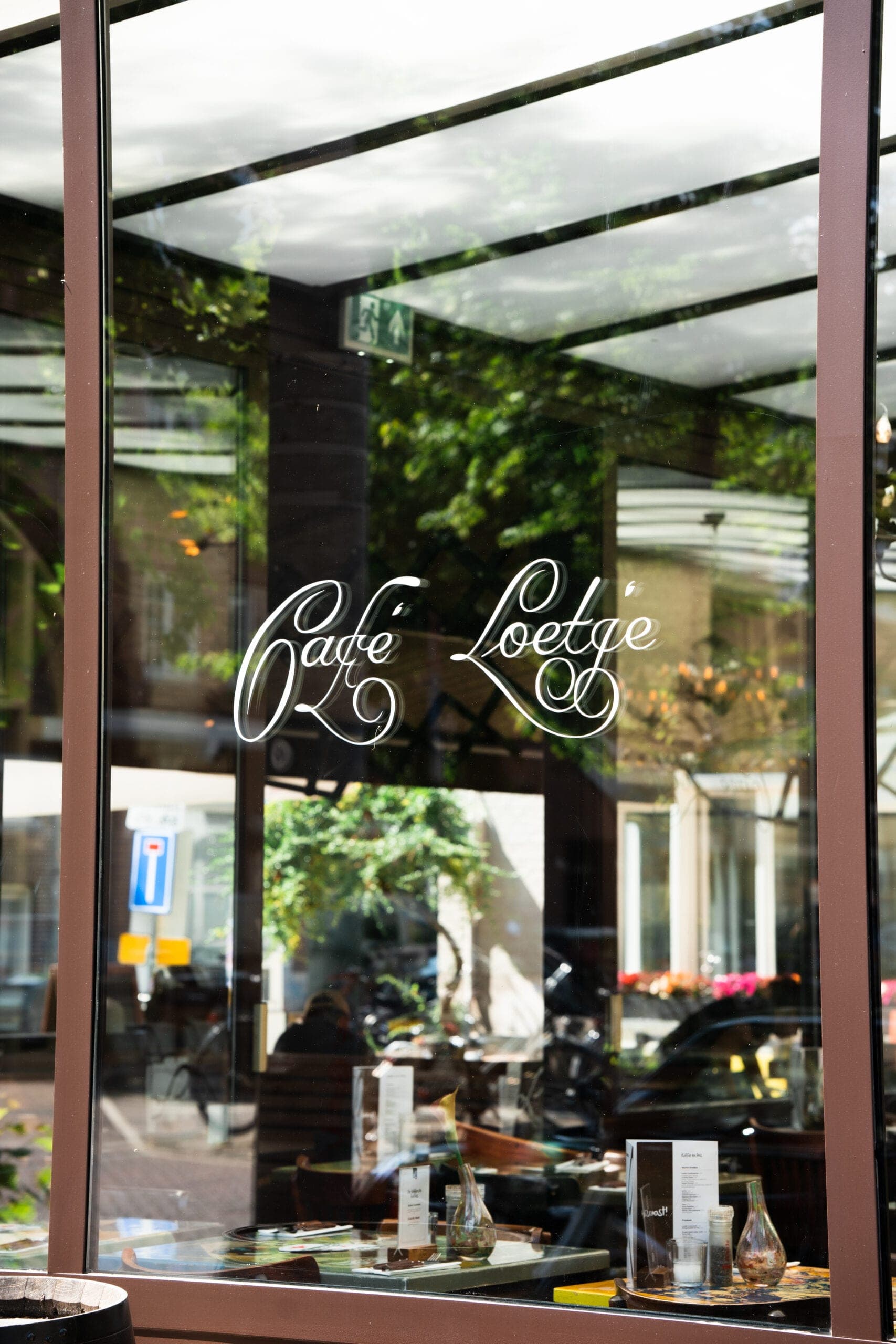
Photo: Café Loetje (Shot By Luba)
№ 12Museumkwartier · Steak · €€7.8
The original Loetje: butter-soft biefstuk, legendary gravy, zero pretension since 1977.
Before Loetje became a national franchise, there was just this: a billiards café on Johannes Vermeerstraat that started grilling steaks in 1977 and accidentally created Amsterdam's most beloved plate of food. The biefstuk ossenhaas arrives swimming in that famous peppery jus, technically a gravy, spiritually a religion, with white bread whose only job is to mop. Order it 'Bali' and they spike the jus with sambal, the definitive power move. Everything else on the menu is fine; nobody comes for everything else. The garden terrace out back is one of the Museumkwartier's great democratic spaces, where students, surgeons and Concertgebouw cellists all wait for the same table because nobody takes reservations for small groups and nobody ever has. Service is brisk, beer is cold, the bill is honest. Some institutions coast on nostalgia. This one still sears.
Order · Biefstuk Bali, extra bread for the jus, accept no substitutes and no medium-well nonsense.
Photo: VINNIES
№ 13Rivierenbuurt (Scheldestraat) · All-day breakfast, specialty coffee · €€7.7
Open at 7:30 on weekdays and laptop-free from lunch onward, which tells you exactly what this room is for.
Vinnies has been on the Scheldestraat since 2012 and it is the most useful weekday breakfast address in the Rivierenbuurt, mainly because it does the boring things properly: doors at 7:30 Monday to Friday, a kitchen that cooks rather than assembles, and a stated policy of being laptop-free during lunch and at weekends. That last line is the tell. This is a room built for people talking to each other, and a 8:00 table here is calm in a way that De Pijp at the same hour is not. The card is all-day breakfast and lunch and it is properly sourced: sandwiches on organic wholewheat sourdough from Mama Bakery, smoked chicken from Lindenhoff farm, a spiced red lentil soup, and the Omega-3 breakfast of scrambled eggs, smoked salmon, smoked mackerel mousse, roasted vine tomatoes and mashed avocado on sourdough at 17.75. The shakshuka at 16.75 comes with mini pitas, and the banana-spelt pancake stack at 15.50 is the sweet order. They also run a private dining room in the evenings, which is worth knowing if the breakfast meeting turns into something longer. Note that the old Vinnies on the Haarlemmerstraat is closed: this is the only one left, and half the internet has not caught up.
Order · Monday to Friday 7:30 to 17:00, Saturday from 9:00, Sunday from 9:30. Book a table through their site. Laptops are fine early but banned from lunch onward, so do not plan to camp.
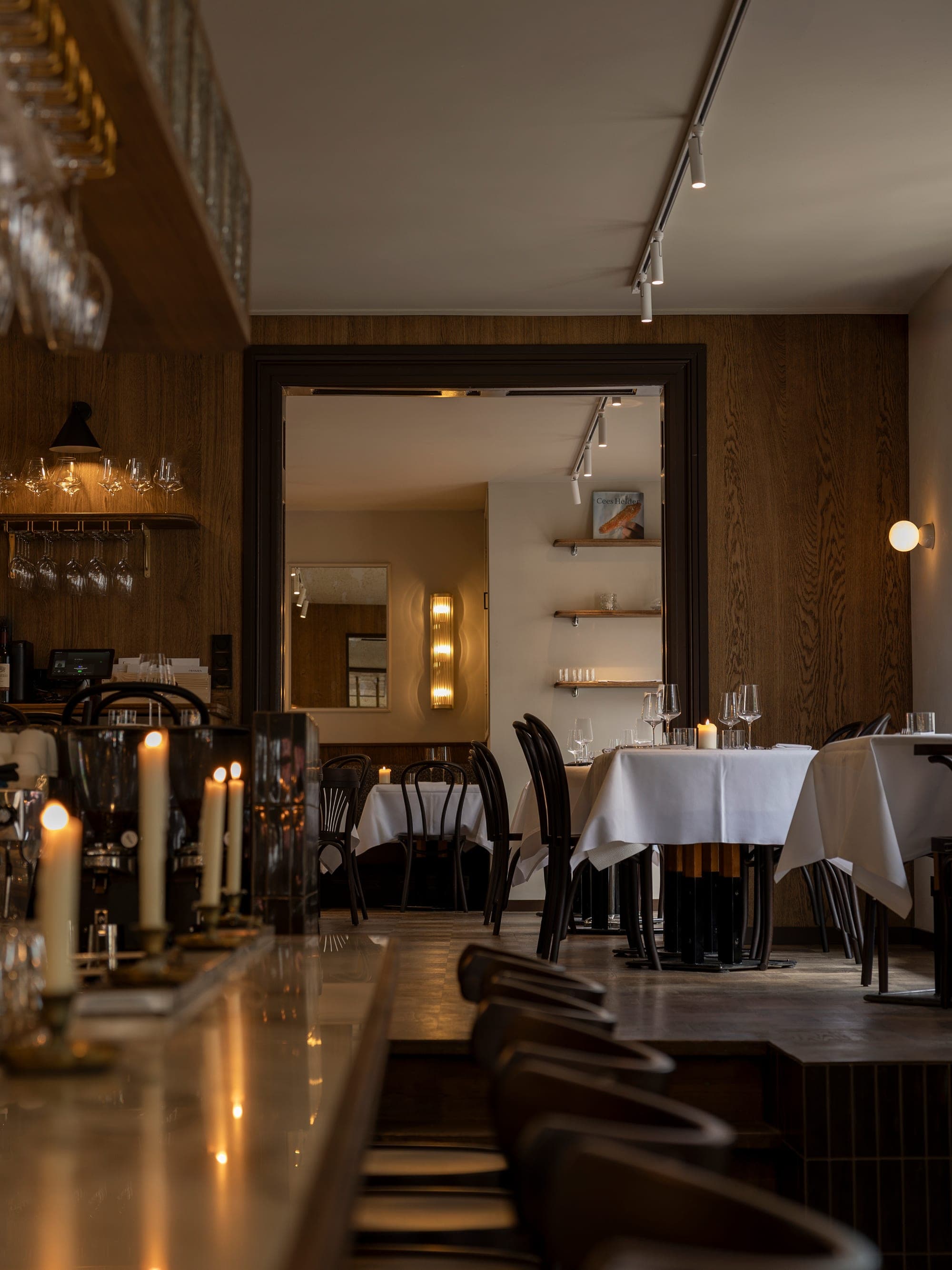
Photo: Restaurant Franzen
№ 14Museumkwartier · French-Mediterranean · €€€€7.7
Jesse Franzen's solo debut in Oud-Zuid, French-Mediterranean cooking, dry-aged beef and a Piemonte-heavy wine list.
Jesse Franzen grew up around a kitchen pass, started cooking at sixteen, and wanted his own address before turning thirty. He got there in August 2025, taking over a corner building on Johannes Verhulststraat with his father's old restaurant name and building something he calls a living room for the neighborhood. The résumé backing him up is real: two-starred Chapeau, then Ron Gastrobar and a stretch at Lars Amsterdam, where he helped the kitchen earn its Michelin star. The food splits into small plates and full courses: raw tuna with dill and horseradish, red mullet a la plancha with octopus escabeche, poulet jaune off the grill with chanterelles, and dry-aged rib cuts carved to order and priced by the hundred grams. The wine list leans hard into Piemonte and rewards a long dinner. Service starts early, bites and aperitifs from four, kitchen from half past five, lunch on Wednesdays through Saturdays. It reads like an old-school French bistro that grew up watching modern Amsterdam kitchens, confident rather than showy, and exactly the kind of solo debut worth watching closely.
Order · Lunch Wed-Sat 12:00-14:30, dinner Tue-Sat from 17:30, bar and bites from 16:00. Closed Sunday and Monday. No online booking, call or email ahead for weekend tables.
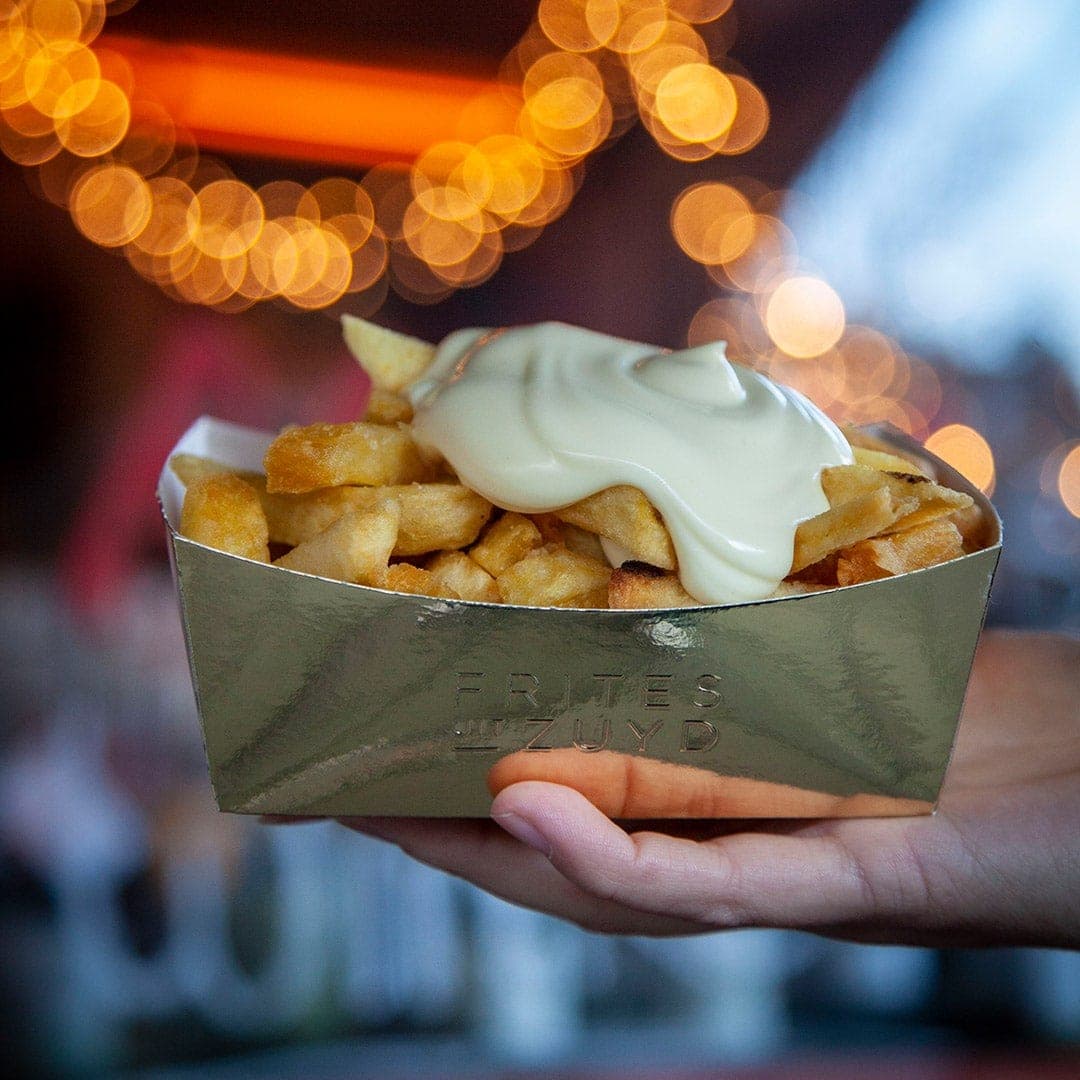
Photo: Frites uit Zuyd via VHC Jongens
№ 15De Pijp · friture · €7.7
One family, twice-fried frites, homemade mayo, gold tray, honest queue.
A proper frietkot, run by one family since 2015, welded onto the side of Café Par Hasard on the Ceintuurbaan. The premise is monastic: fresh potatoes cut daily, fried twice, salted, crowned with mayonnaise they whip themselves, served in a shiny gold tray that has become a small De Pijp status symbol. That is it, and that is why the queue forms, weekend afternoons especially, stretching past the cafe windows while the fryers work in shifts. The snacks are chosen with the same care, garnalenkroketten and Limburg frikandellen instead of freezer filler, and if the line gets absurd you can retreat into Par Hasard and order the same frites with a glass of wine. Cheap, precise, unchanged for a decade. The city needs more places this stubborn.
Order · Frites with the huisgemaakte mayonaise; add a garnalenkroket if the day deserves it.

Photo: Rasoi
№ 16Rivierenbuurt · Indian · €€7.6
The Maasstraat Indian that refuses to tone anything down, with tandoor cooking far above neighbourhood pay grade.
The Rivierenbuurt has never been anyone's idea of a restaurant district, which suits Rasoi fine. The owners opened on the quiet end of Maasstraat in late 2021 with chefs drilled in high-end Indian kitchens and a firm refusal to sand things down for Dutch palates; Parool's review headline noted exactly that. So the kadai chicken actually bites back, the dal makhni has been on the stove as long as it should, and the tandoor section reads like the point of the visit rather than the warm-up. Copper serving bowls, a dark handsome room and cocktails garnished with dried citrus make it feel dressier than the street outside. Mains sit in the low twenties, the breads are taken seriously, and the mushroom galouti kebab converts anyone still suspicious of vegetables. The neighbourhood treats it as its house Indian, and as house Indians go this one is embarrassingly good.
Order · Build the meal from the tandoor section plus dal makhni and roomali roti; rice is the least interesting thing here. Thursday to Sunday they open at noon, and lunch is the quiet way in.
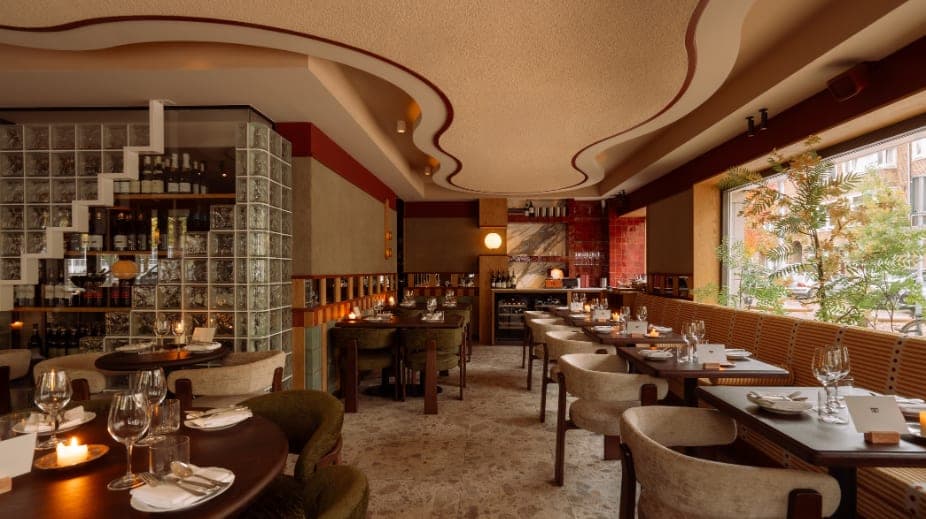
Photo: Chantal Arnts, via Entree Magazine
№ 17Rivierenbuurt · Italian-Mediterranean · €€€7.5
The Troef team's second act on Europaplein, Michelin-listed Italian-Mediterranean cooking across from the RAI.
When the Troef crew decided to do it again, they picked a corner site staring straight at the RAI convention centre and built something looser than their first place. Toet trades Troef's French classicism for Italian-Mediterranean cooking with a vintage, international feel: lobster folded through gnocchi, langoustine carpaccio, grissini stacked with mortadella and anchovy mayo. Chef Raymond Plat runs both kitchens, and it shows in the confidence of the plating even though the room only opened its doors in September 2025. The Michelin Guide added Toet to its 2026 Netherlands selection and Gault&Millau gave it a strong debut score, praising the wine list's range by the glass. It is a warmer, more energetic sibling to Troef rather than a scaled-down copy, and the corner windows facing Europaplein make it a good pick before or after anything at the RAI. Given the same owners and the same kitchen discipline that built Troef's reputation, Toet earned its spot on the Michelin list fast, and the room is already busy enough that walk-ins are a gamble most nights.
Order · Dinner only, Mon-Sun 17:30-22:00. Book ahead, especially before RAI events next door, the room fills with conference crowds as much as neighborhood regulars.
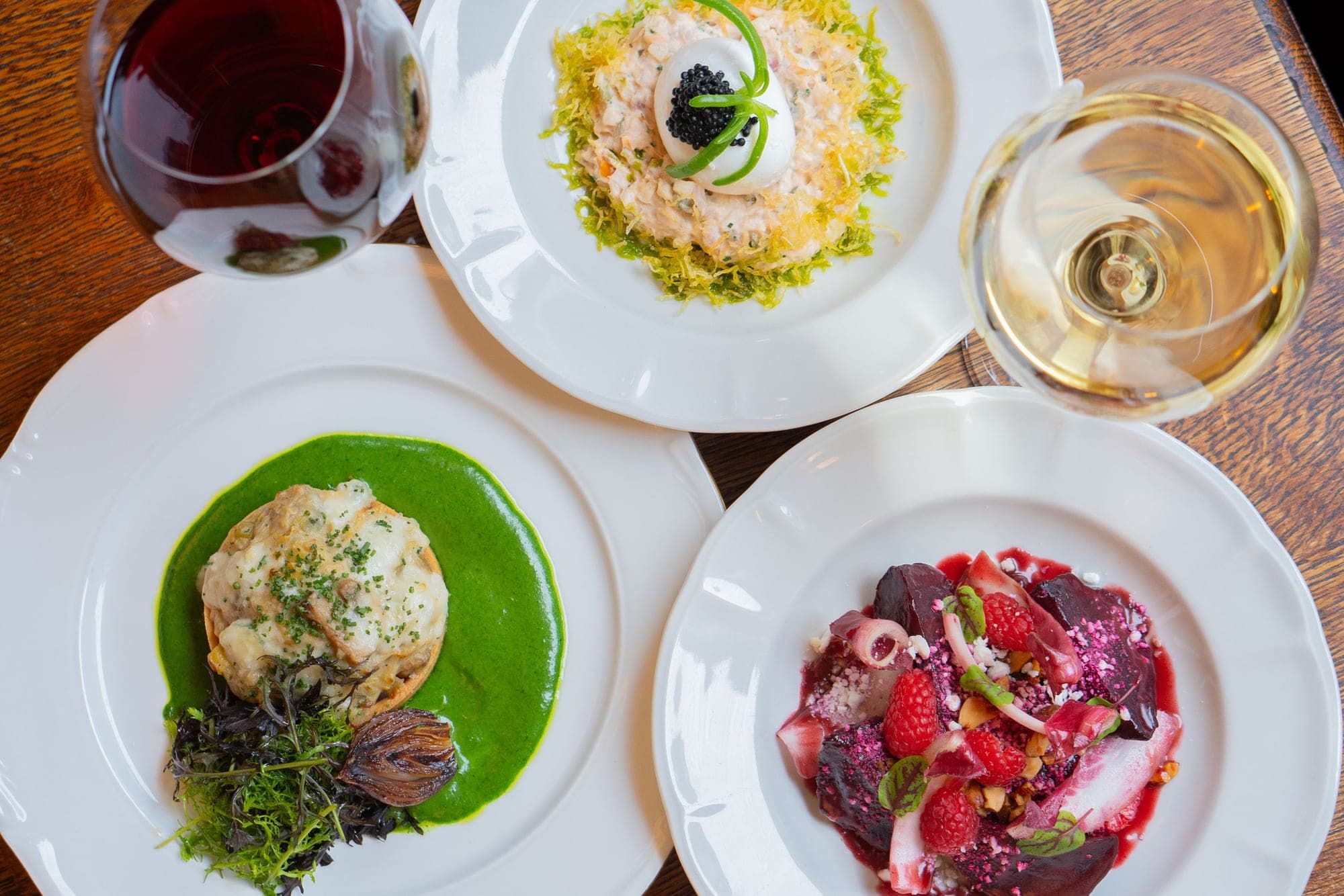
Photo: Schotsheuvel
№ 18Museumkwartier · Modern Dutch-European eetcafé · €€€7.5
Corner eetcafé in Oud-Zuid where the menu flips every six weeks and half the tables stay free for walk-ins.
Maarten and Jordy already ran Wijmpje Beukers in De Pijp, then took over a corner of Banstraat in 2021 and built the kind of eetcafé Oud-Zuid was quietly missing: art deco details, a proper bar, and a room where the age range runs from student to ninety without anyone feeling like a guest in someone else's scene. The menu changes every six weeks and lands consistently above its pay grade, from soy-cured pork belly with kaffir lime to dorade in beurre blanc with crayfish, plus a kogelbiefstuk with hollandaise for the traditionalists at the window table. De Buik and Your Little Black Book both came, approved, and told the neighbourhood what it already knew. Part of the floor stays unreserved on principle, so you can still walk in on a Wednesday like a civilised person. Saturday opens at four for borrel and rolls straight into dinner, which is exactly how the room is meant to be used.
Order · They deliberately keep a share of tables for walk-ins: arrive before 18:30 or after 21:00 and you will sit. Saturday from 16:00 is the move, borrel snacks at the bar first, then dinner when hunger wins.
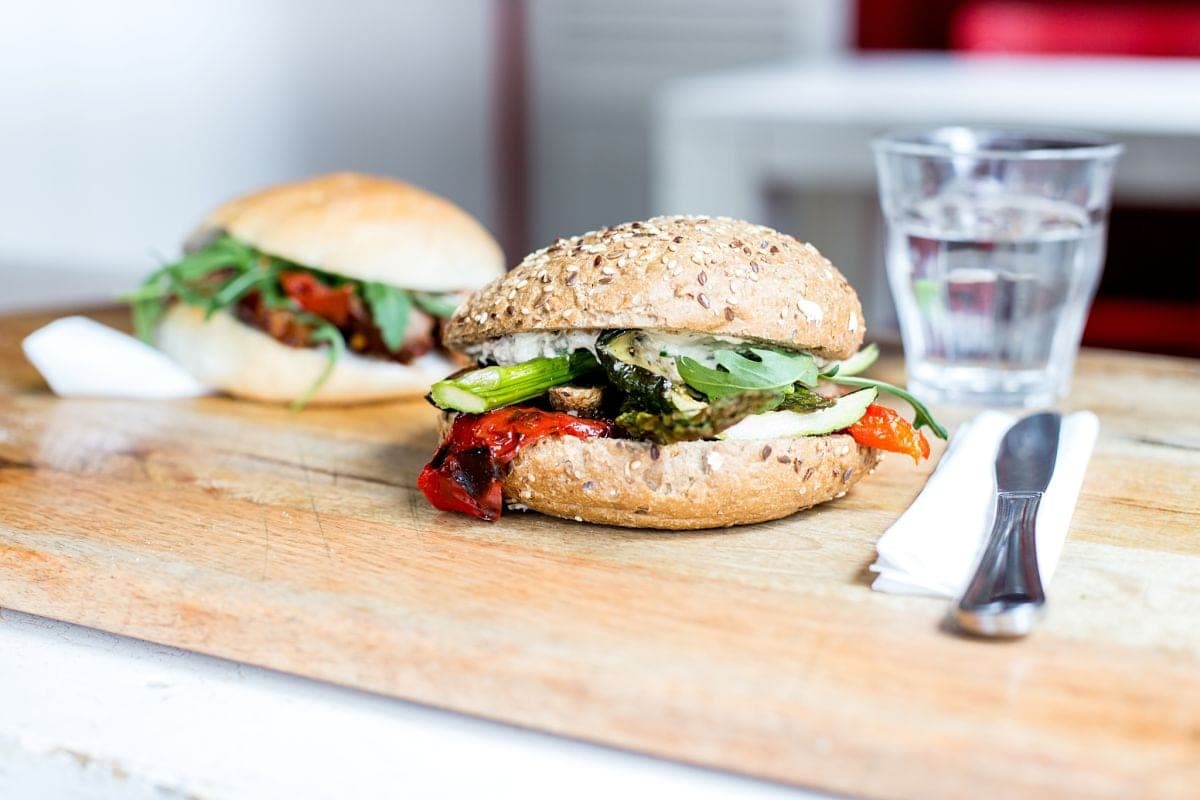
Photo: Renzo's Delicatessen
№ 19Museumkwartier · Italian deli · €7.5
Oud-Zuid's Italian counter: heaped trays, proper sandwiches, and no seats worth fighting over.
Every posh neighbourhood needs one honest counter, and Renzo's has been Oud-Zuid's since 1986. It's a delicatessen first, cheeses, cold cuts, wines, a pastry case that sabotages diets, but the reason there's a queue of gallery owners and dog-walkers out the door at one o'clock is the food made in-house daily: trays of lasagne and melanzane, roast meats, salads that actually taste of something, and sandwiches built with deli-case generosity rather than café stinginess. You eat perched at the handful of stools or on a bench with the Van Baerlestraat traffic for company, spending a tenner where every neighbouring establishment would charge thirty. Open until nine at night, seven days a week, which makes it the local secret weapon for shameless-but-excellent takeaway dinners. The fanciest streets in Amsterdam, it turns out, are fed by the least fancy kitchen on the block.
Order · Get the lasagne from the counter, warmed up, plus whatever antipasti tray looks freshest, then a cannolo for the walk home.
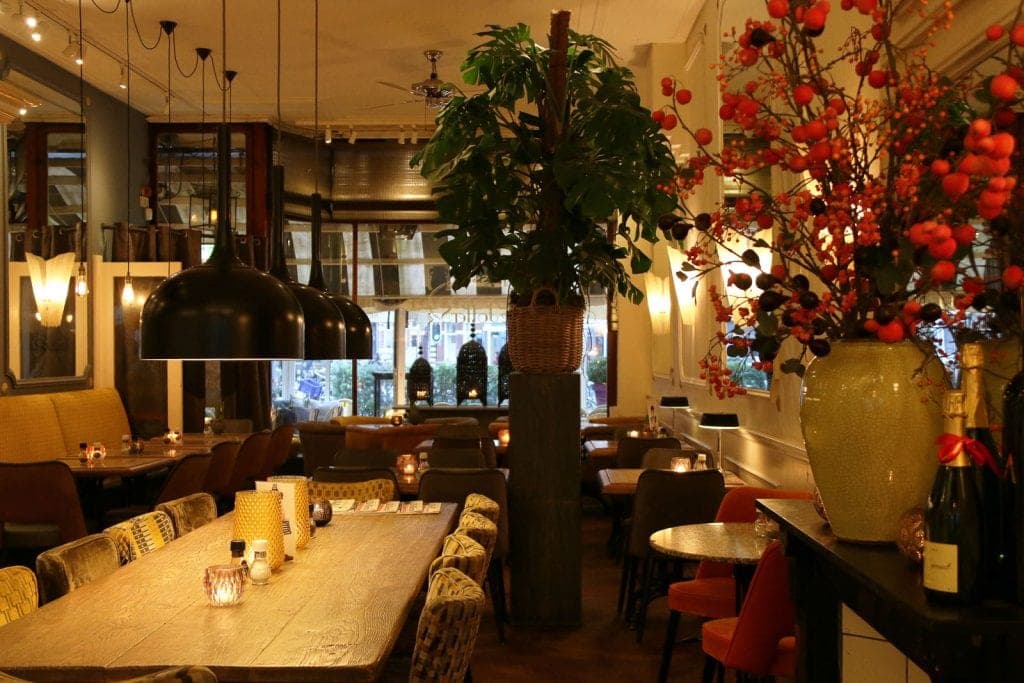
Photo: Brasserie De Joffers
№ 20Cornelis Schuytstraat, Oud-Zuid · Brasserie, breakfast · €€7.4
Oud-Zuid's neighbourhood brasserie opens at 8:00 and runs a printed breakfast card until noon, cake included from Patisserie Holtkamp.
De Joffers sits on the corner where the Willemsparkweg meets the Cornelis Schuytstraat, which is the most self-possessed shopping street in Oud-Zuid, and it behaves accordingly: doors at 8:00 Monday to Saturday, a proper printed breakfast card that runs until 12:00, and a clientele that arrives with a newspaper rather than a camera. It is named for the Amsterdamse Joffers, the circle of women painters who worked in this city a century ago, and the room leans into that: brasserie mirrors, close tables, soft light, nothing shouty. The card is short and competent. The Jofferbol is a filled roll with scrambled eggs and salmon and dill at 14.50, truffle cheese from Lindenhof at 12.50 or bacon at 10.50; the Soho breakfast is two poached eggs, avocado and tomato on rustic bread at 14.50; the Turkish cilbir with garlic yoghurt and paprika-chilli butter is the same price and the better order. Cakes come in from Patisserie Holtkamp, which in this neighbourhood counts as a credential. It is not a destination kitchen and does not pretend to be, but for a client breakfast within walking distance of the museums it is the correct answer.
Order · Monday to Thursday 8:00 to 19:00, Friday and Saturday 8:00 to 20:00, Sunday from 9:00. The breakfast card runs 8:00 to 12:00. Reserve through their site: the corner tables go first and the room is small enough to fill by nine.
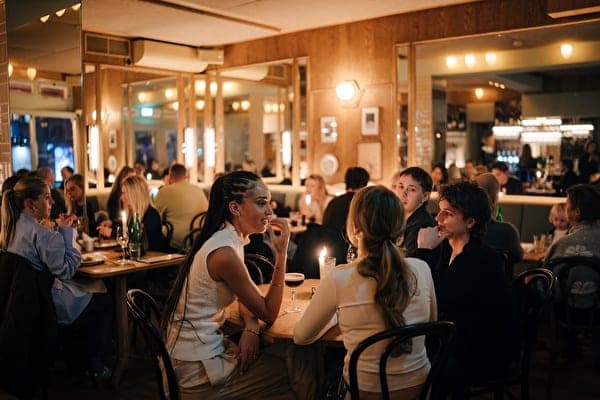
Photo: Bar Bonnie
№ 21Schinkelbuurt · Cafe-bistro, smashburger · €€7.4
A café-bistro on the old Café Bos corner, serving the smashburger Broodjestester named Amsterdam's best in 2024; guests' main complaint is the service.
Café Bos stood on the corner of Amstelveenseweg and Vaartstraat from 1912. The 3WO hospitality group took over the building in 2018, and after a coronavirus delay Bonnie started with takeaway in May 2020. Omar Baggen and Thijs Barelds are co-owners and hosts. Bonnie was the first Fam. Goudvisch place; Arie, Moos and Polly Goudvisch followed. The kitchen opens at 10:00 for breakfast, lunch brings croques and sandwiches, and at dinner there are oysters at €4 each, crab XO tacos, rigatoni with vodka sauce and 'nduja (€22) and Biefstuk Bonnie with jus de veau or pepper sauce (€28). In December 2024 Broodjestester named Bonnie's smashburger the best burger in Amsterdam, with a 9.0. On the current menu it comes with fries and mayonnaise for €21. Guests still praise the burger but often complain about the service: long waits and forgotten orders. Those who call the staff friendly often grumble about the pace in the same review. Several also find it noisy and very busy.
Order · The smashburger is on the lunch and dinner menus, and on the snack menu until 22:00. Bonnie stays open until 03:00 on Fridays and Saturdays.
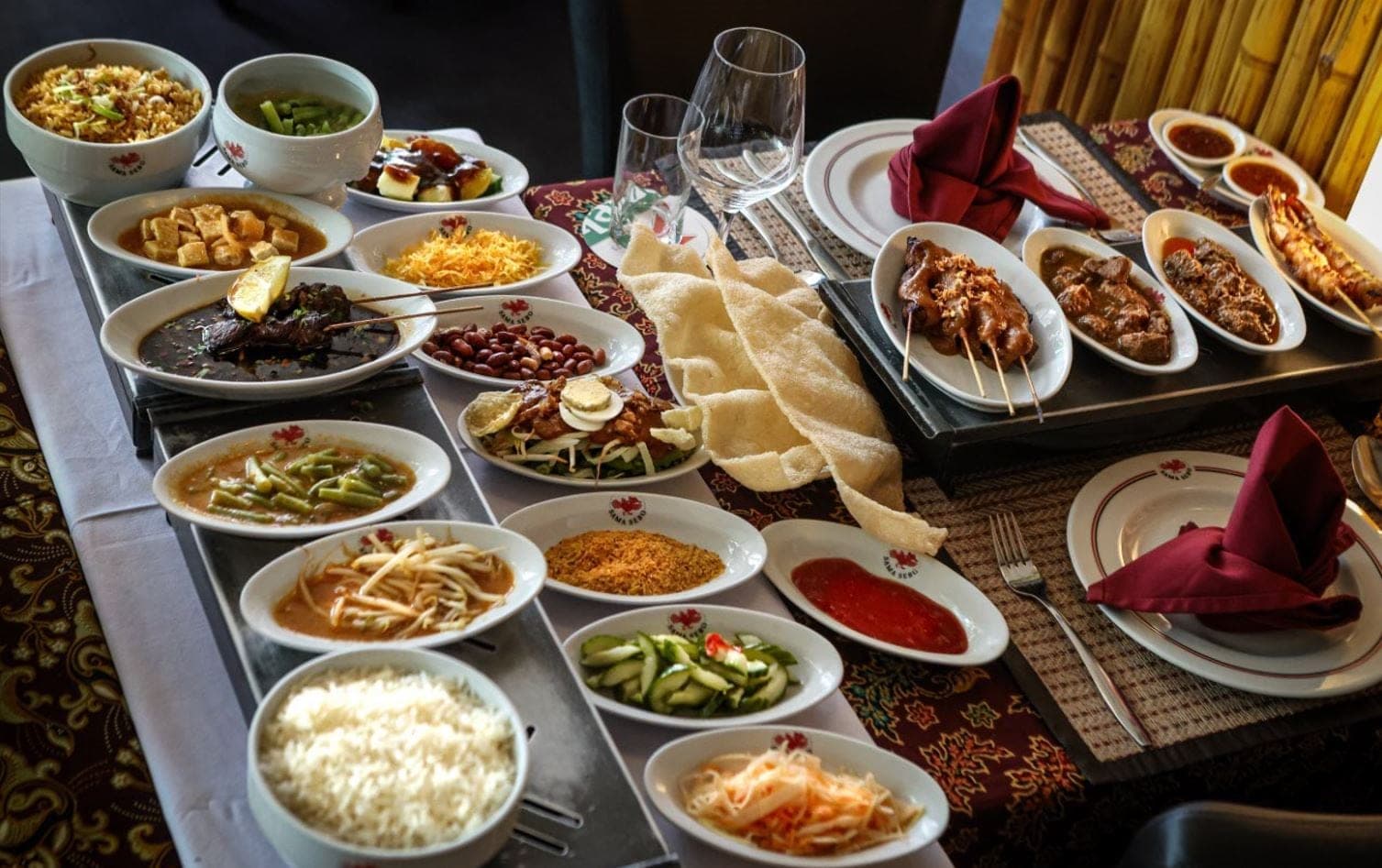
Photo: Sama Sebo
№ 22Museumkwartier · Indonesian · €€€7.4
A 1969 time capsule of rijsttafel culture amid the P.C. Hooftstraat boutiques.
The oldest dedicated Indonesian restaurant in the Netherlands sits, improbably, between the Gucci bags and Chanel windows of the P.C. Hooftstraat, and it has not changed its mind about anything since 1969. Rattan, batik, brown-café warmth, waiters who have seen everything: Sama Sebo is less a restaurant than a standing argument for how Amsterdam used to eat. The full rijsttafel is the famous order and the tourist one; the sharper move is lunch at the bar, where regulars fold themselves over a plate of bami or nasi goreng that hasn't needed updating in five decades. Is it the city's most refined Indonesian kitchen? No, Blauw takes that belt. But refinement isn't the point. The point is eating gado gado in a room where your grandmother could have eaten the same thing, made the same way. Closed Sundays, like all good institutions.
Order · Skip the full rijsttafel and do the bami goreng at the bar, the lunch regulars' order since forever.
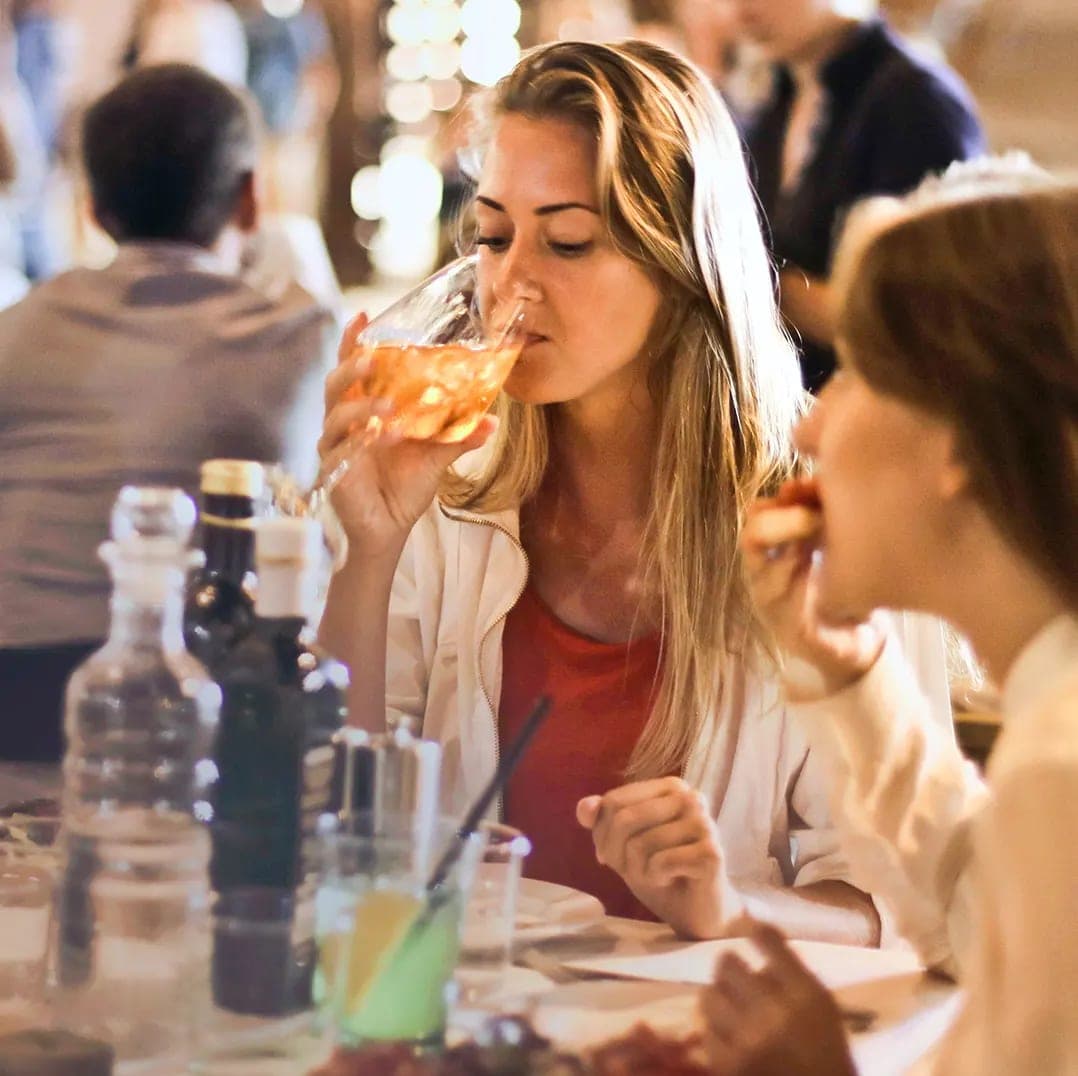
Photo: 't Vliegertje
№ 23Rivierenbuurt · Eetcafé, grill · €€7.3
Thirty-five years of 320 gram ossenhaassaté and spareribs on the Scheldestraat, the Rivierenbuurt's eetcafé of record.
't Vliegertje has been on the Scheldestraat for thirty-five years and does two things the whole neighbourhood knows it for: a saté of beef tenderloin at 320 grams for 25 euro, and spareribs, plain or spicy, at 23. Around them sits the card of a proper old-fashioned eetcafé, carpaccio with pesto or truffle at 11.50, onion soup at 6.50, a 180 gram steak tartare of ossenhaas at 20, a dry-aged burger on brioche at 14.50 and a ladysaté at 200 grams for anyone who thinks 320 is a dare. The room is dark wood and low light, the kind of café that fills with families before eight and the RAI crowd after, and the kitchen runs from 17:15 to 22:00 every day of the week. Your Little Black Book listed it among Amsterdam's best brown cafés in September 2024 specifically for the satay and ribs, and it remains the sort of place that takes a phone booking for eight without fuss. It is not fashionable, the wine list is functional and the pizzas on the card are best ignored, but for a plate of meat in a real café south of the Amstel canal this is the one.
Order · Open daily from 16:00, kitchen 17:15 to 22:00, until midnight Sunday to Thursday and 01:00 Friday and Saturday. Book by phone for groups. Order the saté 't Vliegertje, the ribs to share and the onion soup first.