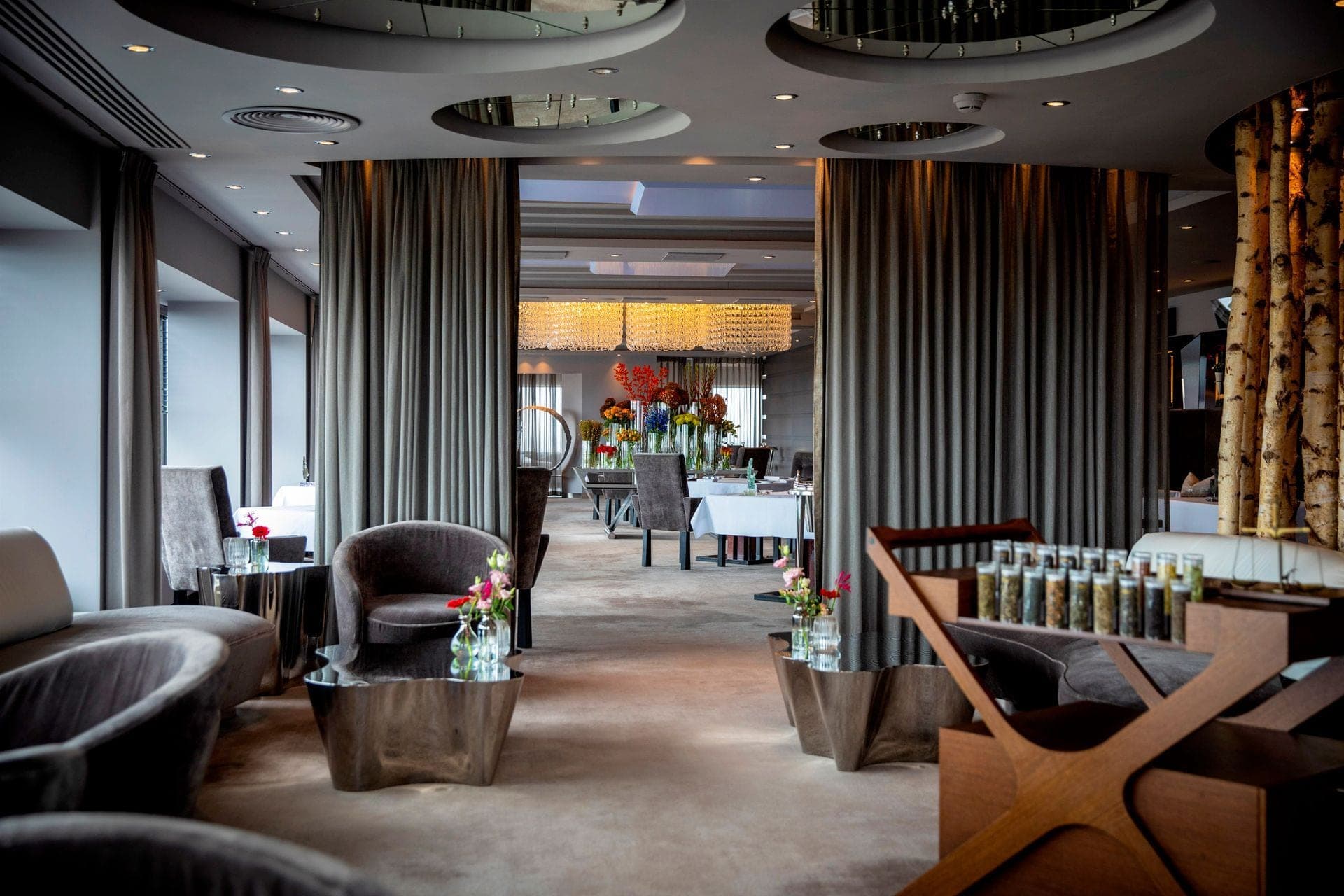
Photo: Ciel Bleu / Hotel Okura Amsterdam
№ 01Ferdinand Bolstraat · French · €€€€9.3
Two Michelin stars, twenty-three floors up, all of Amsterdam below you.
On the 23rd floor of Hotel Okura, Ciel Bleu is where De Pijp stops being about market stalls and starts being about occasions with a capital O. Chef Arjan Speelman kept the two Michelin stars in the 2026 guide, and the cooking earns them: precise, technically dazzling French plates, a spring pigeon course of real swagger, langoustines treated like royalty, sauces that get quietly refilled at the table. The dining room is all soft leather and floor-to-ceiling glass, so you watch trams shrink to toys while the sommelier steers you through a cellar with genuine depth. Yes, it costs what a weekend abroad costs. But as the only two-star table in the neighborhood, perched, pleasingly, above the street where you bought a stroopwafel that morning, it is the chapter's undisputed blowout.
Order · Book a window table at sunset; if the pigeon course is running, take it.
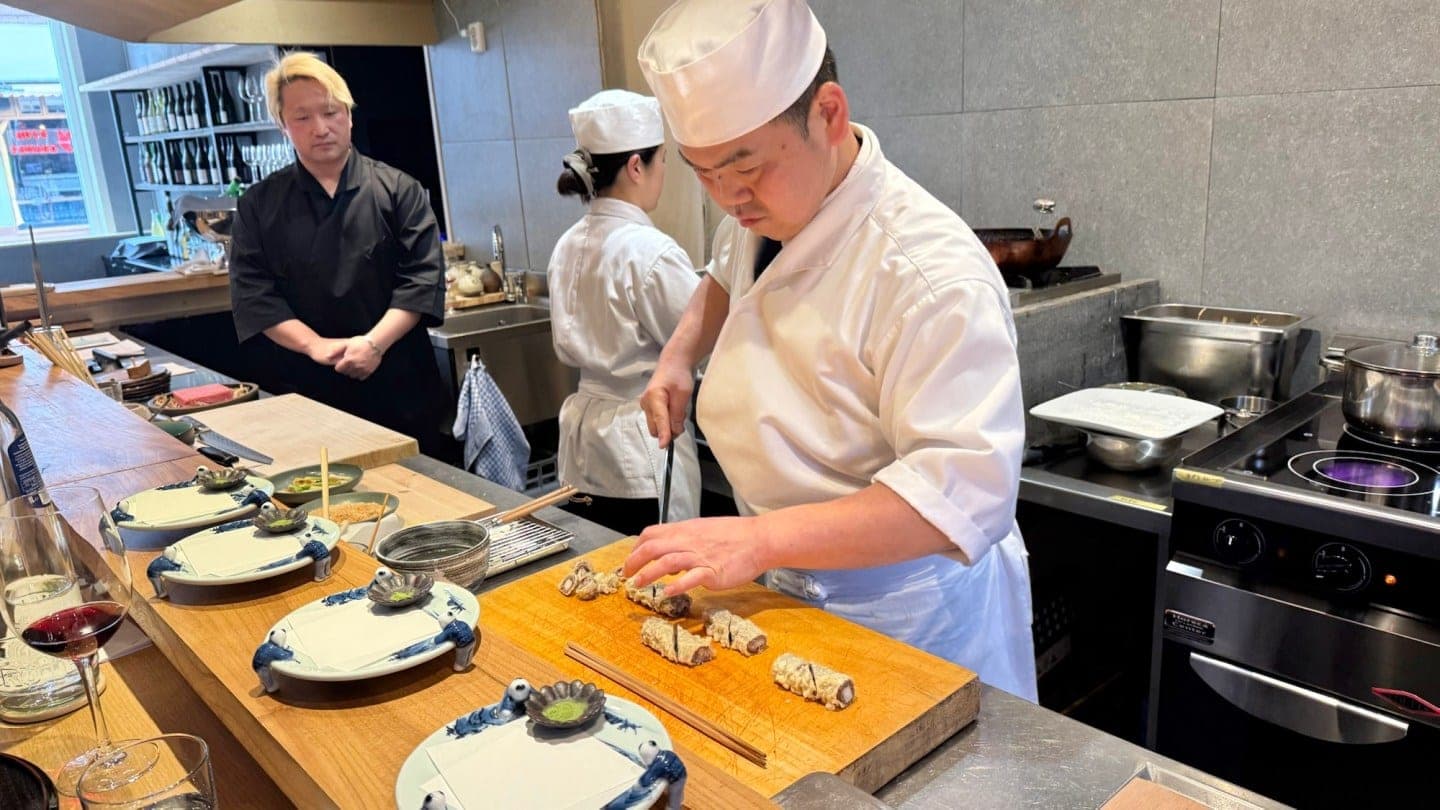
Photo: Stefan's Gourmet Blog / Tsunarié (chefs at the kappo counter)
№ 02Van Woustraat · Japanese kappo · €€€€8.4
Tewatashi's ten-seat kappo sequel, where A5 wagyu gets four encores and every knife stroke happens at arm's length.
Tewatashi could have coasted on its omakase reputation; instead the team walked a few doors up the Van Woustraat and opened Tsunarié, a ten-seat kappo counter that instantly became the hardest reservation in Amsterdam's Japanese scene. Kappo means cooking in front of you, and here that is the whole show: every knife stroke, every flare of burning hay, watched from a bar seat close enough to feel the heat. The monthly-changing menu (three tiers, the middle one at €125) opens with nigiri, toro, flame-grilled hamachi, unagi, then hands the stage to A5 wagyu prepared four ways: shintama tartare on crisp toast with caviar, sirloin shabu-shabu in ponzu, taro wrapped in thin-sliced wagyu and fried as tempura with matcha salt, and a hay-grilled rib-eye with egg sauce and black truffle that early reviewers keep calling the course of the year. Within weeks of the February 2026 opening the press had it ranked among the city's best Japanese tables, and the sake pairings are taken as seriously as the beef. Ten seats, two sittings, closed Mondays and Tuesdays; plan it like a concert ticket, because it sells like one.
Order · The menu resets monthly; book the moment the new month opens, and take the sake pairing, it is built for the wagyu courses.
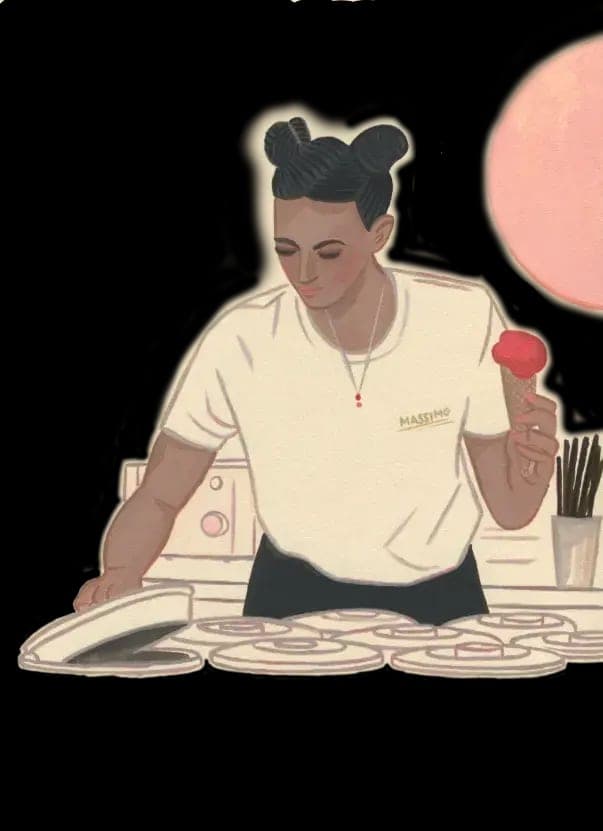
Photo: Massimo Gelato
№ 03Nieuwe Pijp · Gelato · €8.4
The first of Massimo Bertonasco's five gelaterias, open since 2017, where guests call the pistachio the standout.
Massimo Bertonasco was born in Rome in 1965, grew up in Liguria and spent twelve years at ING before he started making gelato at 51. In spring 2017 he opened the first Massimo Gelato here, on the corner of Van Ostadestraat and Tweede Van der Helststraat. Shops in West and Oost followed in 2020 because people complained about the queues in De Pijp; there are now five. The gelato sits in closed, chilled steel tubs called pozzetti instead of a glass display case. The list runs to fourteen gelato flavours, from fior di latte to ricotta and figs, plus nine sorbetti and pastries made with ricotta, hazelnut or pistachio. Eveline Kuyten of Het Parool writes that the ice cream bursts with flavour and never gets boring, partly because new flavours keep appearing. Mokum Magazine tested the West branch in 2024, paid €6 for a large tub, gave it an 8 minus and found the lemon a touch too sour. Besides pistachio, guests often name hazelnut, dark chocolate and chocolate-caramel-salt.
Order · In good weather the queue reaches out the door; guests say it moves quickly, and you can taste a flavour before you choose.

Photo: Graham's Kitchen
№ 04Nieuwe Pijp / Van Woustraat · Modern European · €€€8.3
Fine-dining precision in a side street off the Van Woustraat, minus the starch.
Just off the Van Woustraat, in a street most people only use as a shortcut to the Amstel, British chef Graham Mee runs the most quietly ambitious kitchen in this end of De Pijp. His CV winds through Michelin-starred kitchens, and it shows in the plating, precise, seasonal, occasionally showing off, but the room itself refuses the fine-dining costume drama: no tablecloth theatre, no hushed voices, just very good cooking served by people who seem pleased you came. Menus run from three courses up to a full tasting parade, built around whatever the season is doing, with vegetables treated as headliners rather than garnish. It's where you take someone you want to impress without pretending to be someone you're not. Tuesday to Saturday, evenings only, which tells you everything about how seriously the kitchen takes its prep days.
Order · Go for the longer tasting menu with wine pairings, the mid-course vegetable dishes are where Mee shows off.
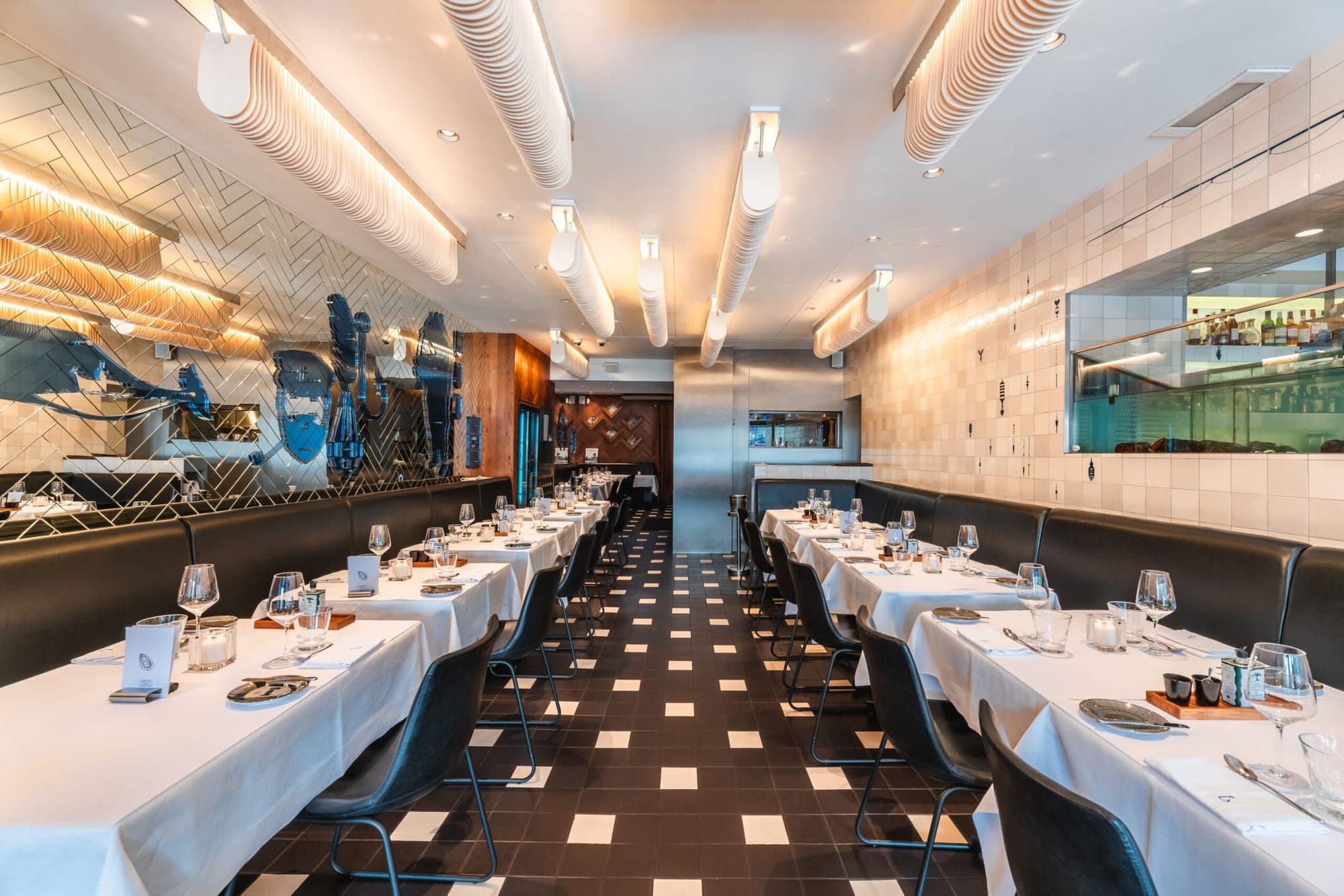
Photo: Visaandeschelde
№ 05Scheldeplein · Seafood · €€€8.3
Rivierenbuurt's grand fish house, plateaus, turbot, and zero trend-chasing since 1999.
Opposite the old RAI end of the Scheldebuurt, Visaandeschelde has been doing one thing since 1999: serious fish, seriously well, for people who consider a fruits de mer plateau a reasonable Tuesday. The room is crisp and grown-up, white linen energy without the stiffness, and the kitchen ranges from Zeeland oysters and caviar through whole turbot, lobster, and sole treated with old-school respect, plus enough global inflection to keep the menu from feeling embalmed. This is where Rivierenbuurt closes deals at weekday lunch and celebrates anniversaries at night, and the Michelin guide keeps it listed for good reason. In summer the terrace spills onto Scheldeplein and the whole operation loosens its collar. Bring parents you need to impress, or anyone who believes, correctly, that a tower of shellfish on ice is the best theatre in dining.
Order · The plateau fruits de mer for two, with a bottle of Chablis doing the heavy lifting.
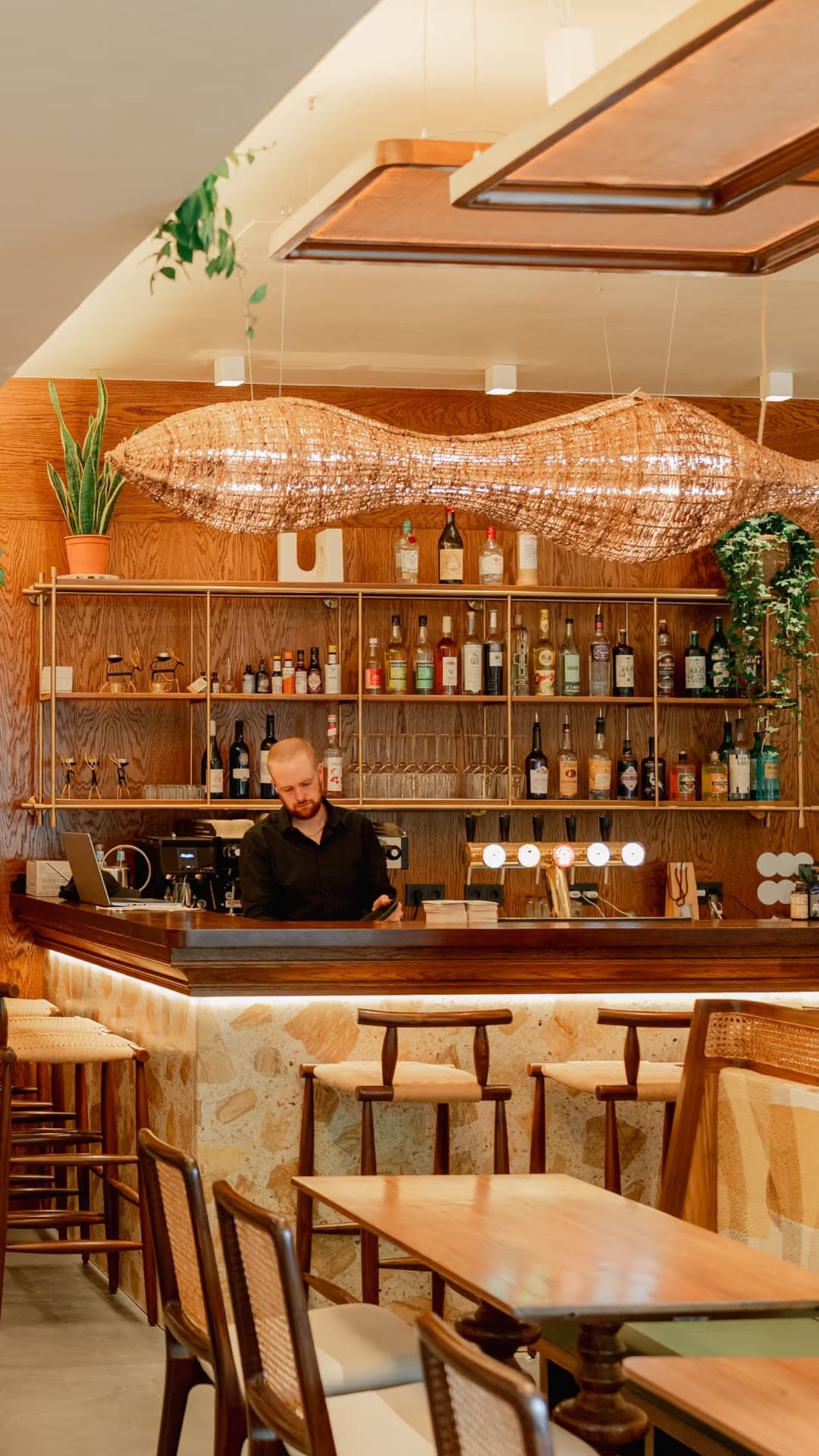
Photo: Miri Mary
№ 06Van der Helstplein · Weekend brunch, regional Indian · €€8.2
Butter Chicken Benny and a Goan omelette floating in coconut sauce, on a brunch card that only exists Friday to Sunday.
Foram, a former criminal lawyer in New Delhi, and Anand, who trades for a living, opened Miri Mary on Van der Helstplein in June 2022 with a simple rule: the cooks come from different parts of India and cook what they actually grew up eating. Mumbai chef Nirvaan, trained at the Culinary Institute of America, built the original kitchen and still flies in once a year to rewrite the menu, which is why the food reads like a point of view rather than a survey. The weekend brunch is a genuinely separate card, not the dinner menu in daylight: Butter Chicken Benny puts chicken tikka and poached eggs under makhani on brioche for 20 euros, the Goan Ros Omelette floats cheese omelette in coconut sauce with poee bread for 18, and Idli and Sambar comes in at 12. Smoked Eggplant Shakshuka and lassi pancakes cover the two ends anyone brings a table to. The room is warm plywood and walnut with a terrazzo bar front, a rattan wave light strung over the spirits shelf and cane chairs, and the terrace takes the plein when the sun is out. It holds 4.7 across more than five thousand Google reviews and Het Parool put it in its Indian roundup in September 2025, which for a De Pijp side square is a serious hit rate. The catch is simply arithmetic: three mornings a week, one small room.
Order · Brunch runs Friday, Saturday and Sunday 10:30 to 15:00 only, and the brunch card does not exist outside those hours. Book, the room is small and the plein terrace goes first. Order the Butter Chicken Benny at 20 euros with the Idli and Sambar at 12 to share.
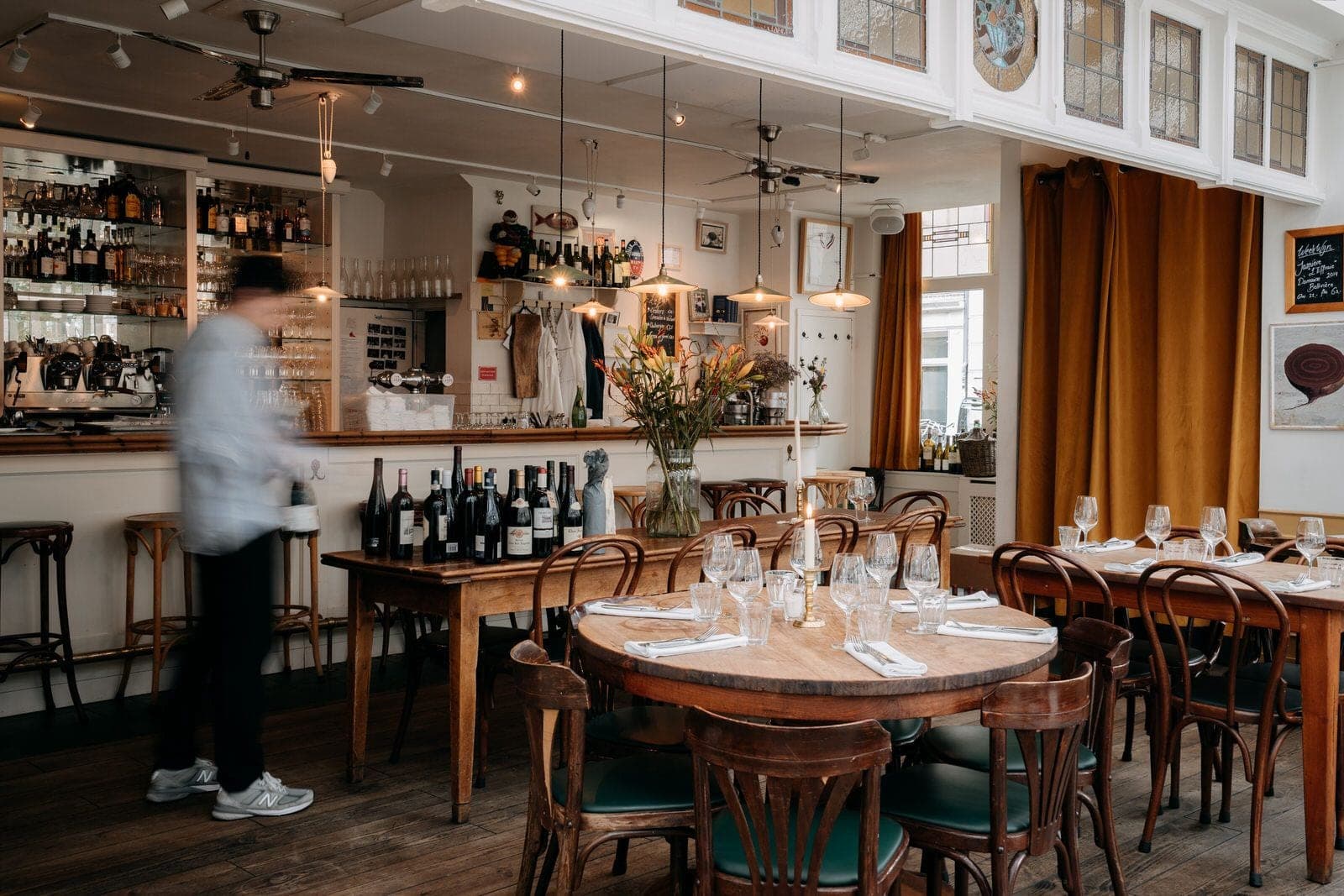
Photo: Café Caron
№ 07Oude Pijp / Frans Halsbuurt · French bistro · €€€8.1
The Caron family's French restaurant in De Pijp: a short seasonal menu, oysters at the bar and three courses for €57.
Brothers Tom and David Caron opened Café Caron in De Pijp in 2016. Their father, Paris-born TV chef Alain Caron, is culinary adviser; the chef is Elmer Polman. The seasonal menu is short, with oysters at the bar from €4, five starters and four mains covering fish, meat and a vegetarian plate. Order à la carte or take three courses for €57. Gault&Millau gives it 14/20 in 2026 and calls the dishes distinctly French. Michelin awarded a Bib Gourmand in 2022 and dropped it in 2024; the restaurant is still in the guide. Guests score it 4.6 out of 5 across 934 reviews and keep naming the poached egg starter. Service splits them: 8 of the 15 latest reviews call it rushed, inexperienced or sloppy, 6 call it warm and attentive. Guests also mention tables turned in shifts, a busy, loud room and pricey wine. The family's Petit Caron is next door.
Order · Card only, no cash. Lunch runs Saturday and Sunday from 12:00 to 14:00: Saturday is a set menu (two courses €42, three €57), Sunday a roast served on big sharing platters.
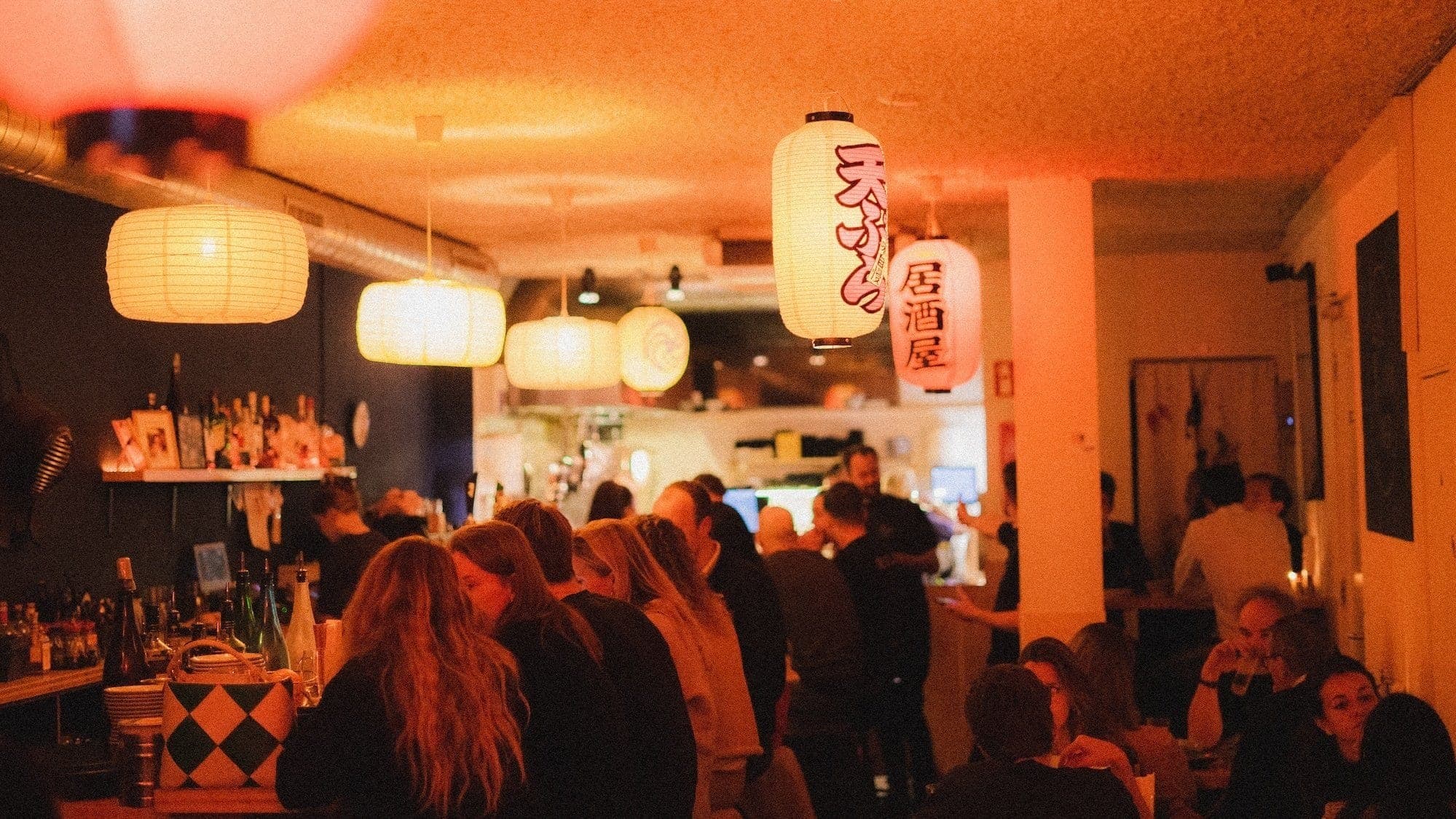
Photo: De Japanner
№ 08Oude Pijp / Albert Cuyp · Japanese · €€8.0
Amsterdam's original izakaya: sake, skewers and noise on the Albert Cuyp.
Ten-plus years in and still the loudest, happiest room on the Albert Cuyp after the market carts roll away. De Japanner was Amsterdam's first proper izakaya, drinking den first, kitchen close second, and the formula hasn't needed fixing: small plates of sushi, charred aubergine with miso, garlicky fried things, all built to be passed around a sticky wooden table while the sake keeps arriving. It's since spawned siblings in West, Zuid and even Strandeiland, but the De Pijp original keeps the essential scruff. Kitchen runs to 23:30 on school nights and past midnight on weekends, which makes it the correct answer to 'where do we eat at 11pm that isn't a shame spiral'. Service is quick, unbothered and knows the menu cold. Come with four people, order double what seems reasonable, argue over the last gyoza.
Order · The miso-charred aubergine and whatever's on the fried-garlic end of the menu, with cold sake.
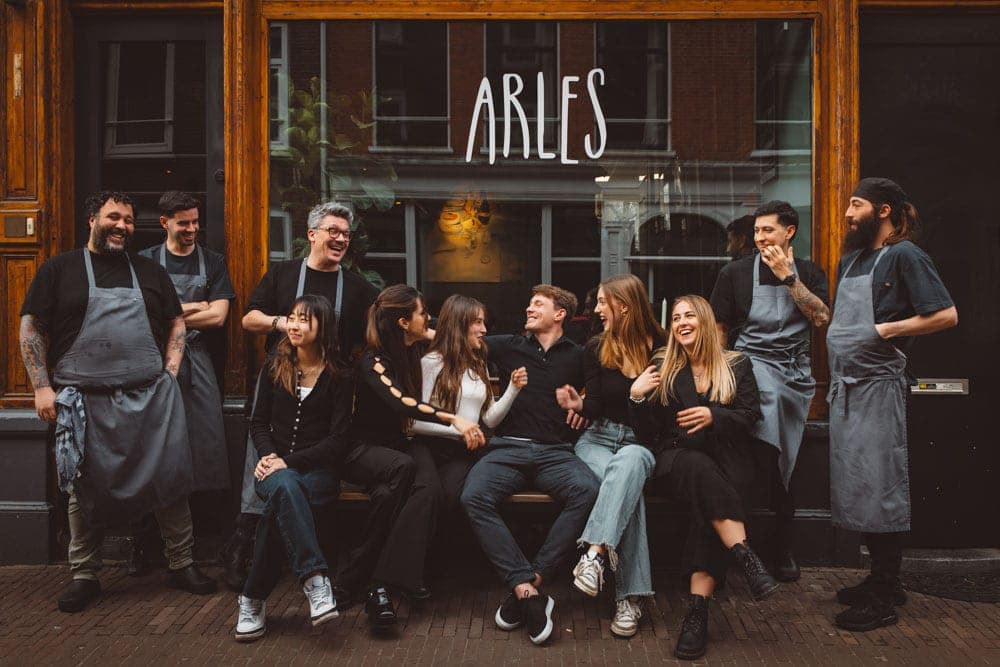
Photo: Restaurant Arles
№ 09Sarphatipark · French bistro · €€€8.0
A De Pijp bistro run on a French chef's menu and an all-French wine list, with service guests praise more than anything else.
Arles opened on 20 September 2016, with Numa Muller, born in Arles, as chef. The chef's menu runs to three, four or five courses at €52, €62 or €72, with a wine pairing from €35. À la carte, mains run from €26 to €31, and a 400-gram entrecôte costs €86. The wine list is entirely French, with plenty of natural wine. Michelin's Bib Gourmand lapsed in the 2024 guide; in 2025 the inspectors still called the monthly-changing set menu unbeatable value for money. The chef's menu has gone up €4 per tier since. Gault&Millau scores it 13.5/20 and praises its very friendly and skilled young staff. Friendly, attentive service is also what guests mention most. They are split on value, with bills of €200 to €250 for two and wine called overpriced, and several find portions small. Four of the five latest reviews, from August and September 2026, call the food ordinary or disappointing. Since March 2026 the owner's sons have run aperitivo bar ilario next door.
Order · Dinner only, Monday to Saturday from 18:00; closed on Sunday. Guests find the space small and tight; Michelin recommends the front room if you want quiet.
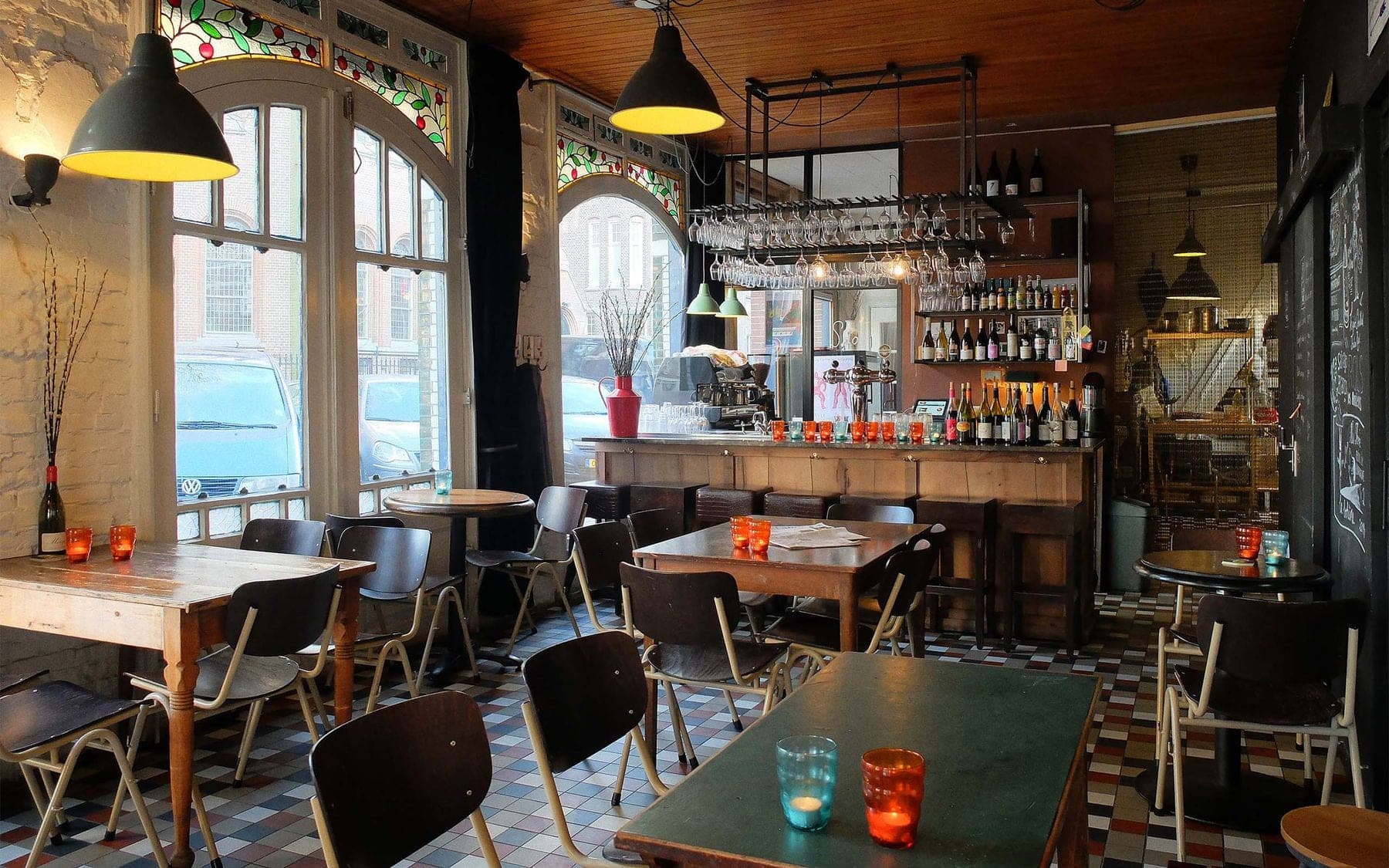
Photo: NwA architecten (interior design of Bar Glouglou)
№ 10Sarphatipark · Wine bar · €€8.0
The corner bar that started Amsterdam's natural wine obsession in 2015.
Before every third Amsterdam bar list read like a zine about sulphur, there was Glou Glou, pouring cloudy, alive, occasionally feral French wine on a corner near the Sarphatipark since April 2015. The name is the French term for wine that goes down dangerously easily, and that remains the house policy: a chalkboard of pét-nats, gamays and zero-zero oddities by the glass, staff who will hand you a taste before you commit, and prices that let you keep exploring past the point of prudence. Food stays in a supporting role, proper French cheese, saucisson, things that love acidity, because the wine is the show. No reservations, ever; you squeeze in at a scuffed table or loiter on the pavement benches with the rest of the converted. Every natural wine bar in this city owes it rent.
Order · Ask what's weird and open by the glass, then anchor it with the cheese-and-saucisson planche.
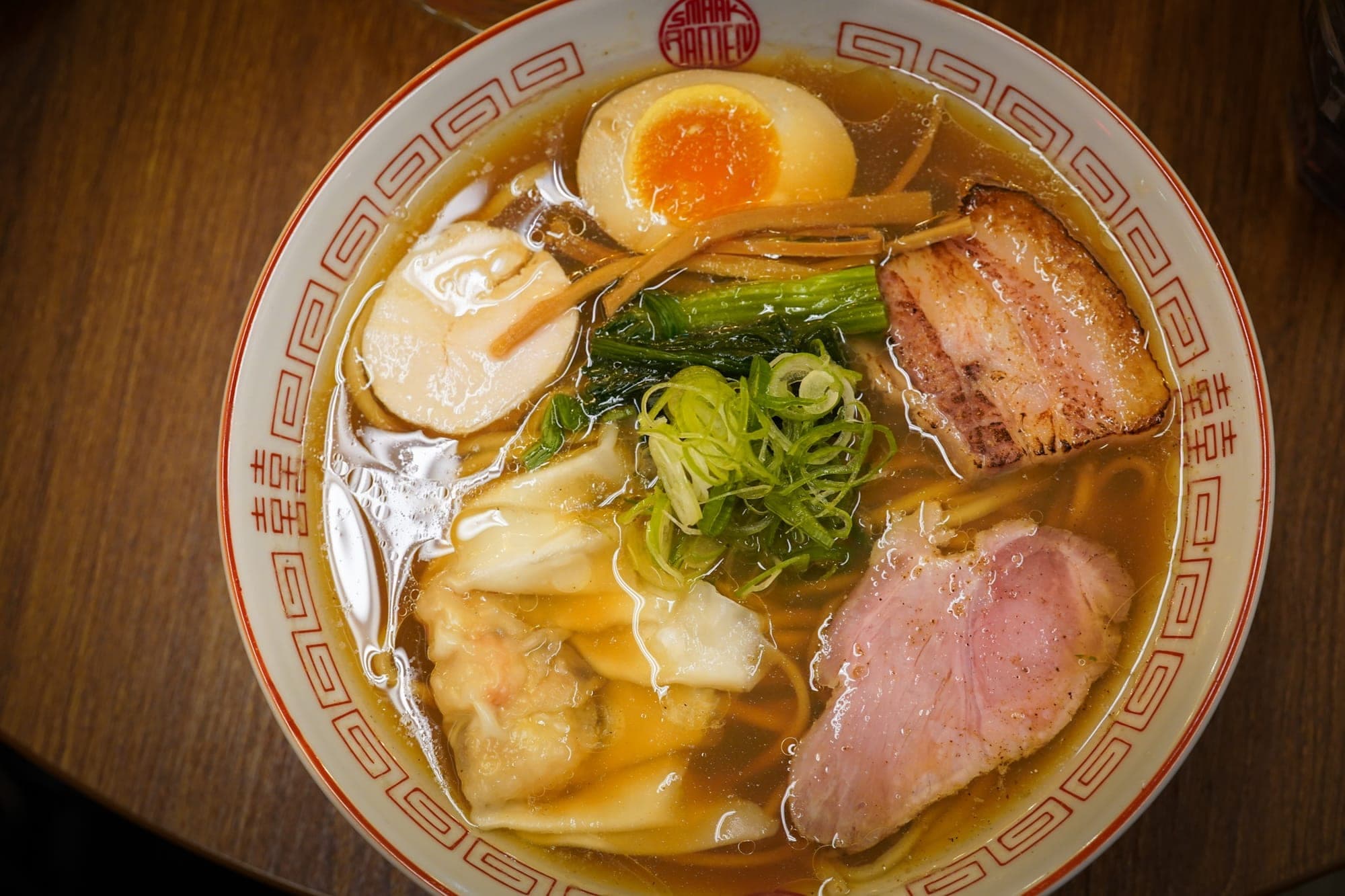
Photo: Komareats
№ 11Oude Pijp / Ruysdaelkade · Ramen, dashi-forward · €€8.0
Chef Shige's pop-up gone permanent on the Ruysdaelkade, and the only ramen in town that lets dashi do the talking.
Chef Shigeyuki Awazu, Shige to everyone at the counter, cooked through Utage Sake Bar, Bar Theo and KU Kitchen Bar while running ramen pop-ups on his days off. In August 2025 the pop-up became a permanent shop on the Ruysdaelkade, and Amsterdam got its only truly dashi-led ramen since Fujitora closed. The broth is the whole argument: clams, niboshi, sababushi and kombu layered into something clear, light and quietly intense, finished with shoyu, shio or miso tare and a slick of ginger leek oil. Noodles are made in house, medium thick for shoyu and miso, thin for shio, and the topping set runs from aburi pork belly chashu to a proper shrimp wonton. Ramenko, the Japanese blogger who ranks every bowl in the city, ate here three days in a row the week it opened. A vegan shoyu built on kombu, shiitake and porcini keeps mixed tables happy, and the yuzu panna cotta is the rare ramen-shop dessert worth ordering. The room is small and calm, the kind of place where the loudest sound is slurping.
Order · Wed-Mon 17:00-22:00, closed Tuesday. No website, no booking, just turn up on the early side; the €8 saba tatsuta, deep fried mackerel with curry salt and lemon, is the sleeper side order.
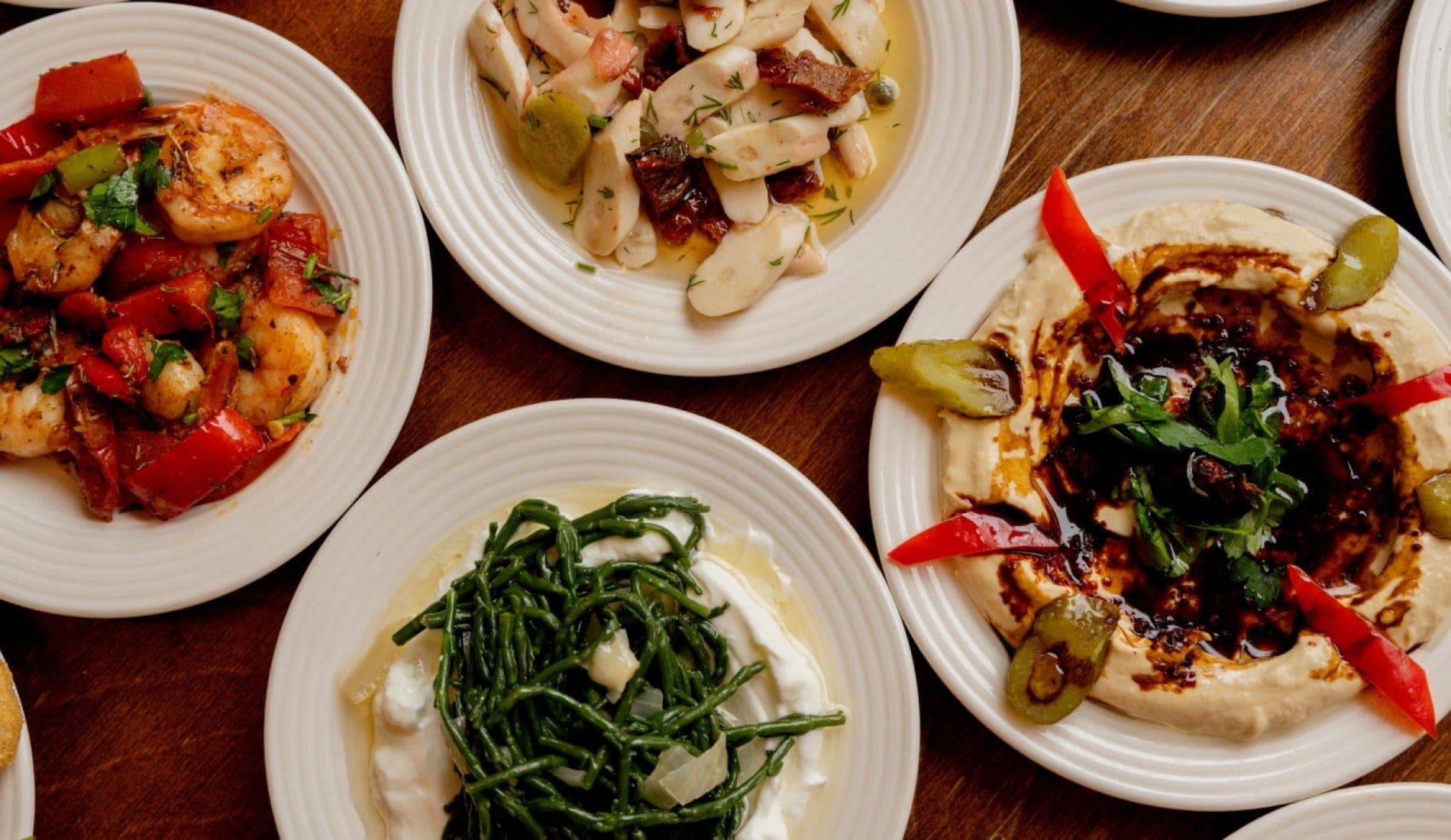
Photo: Restaurant Orontes
№ 12Oude Pijp / Albert Cuyp · Levantine · €€7.9
Twenty years of Antakya charcoal cooking, steps from the market stalls.
When the Albert Cuyp stalls pack up, this is where the street's serious eating actually happens. Orontes has been cooking the food of Hatay, that border region where Turkish and Syrian kitchens blur into one glorious Levantine argument, for over two decades, and it shows in the details: pomegranate molasses and sumac in the mezze, dried Aleppo-style pepper on everything, lamb skewers licked by a proper open charcoal fire. Start with a spread of cold mezze (the smoky aubergine is the move), then commit to the mixed grill; every main lands with bulgur, cacık and salad, so nobody leaves negotiating hunger. The room is warm and unfussy, staffed by people who've clearly done this forever. Bring four friends and order like you mean it, this is group food, built for the middle of the table.
Order · Order the charcoal-grilled lamb skewers with the aubergine mezze, the pomegranate molasses does the rest.
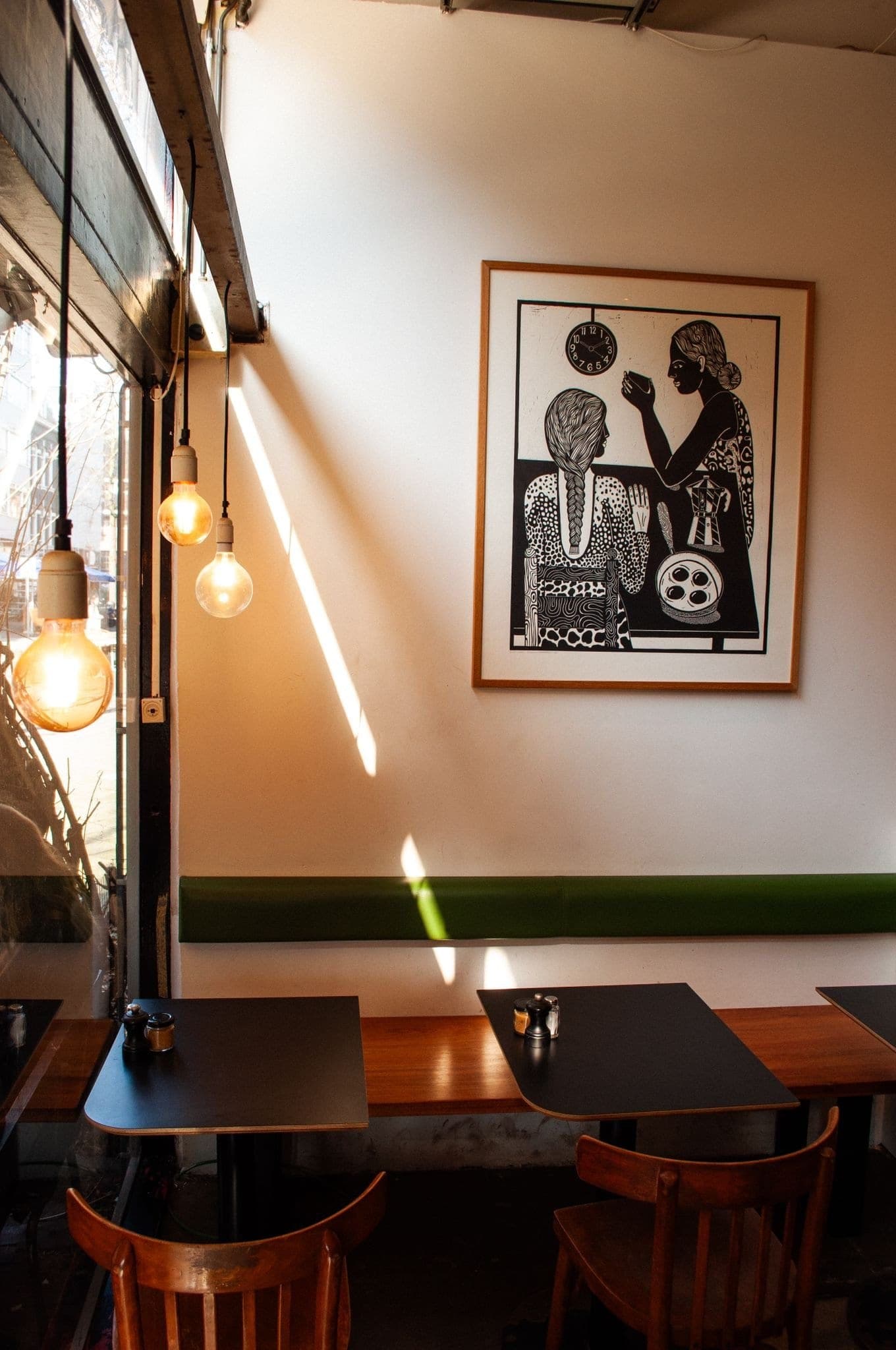
Photo: Little Collins
№ 13Sarphatipark · Australian · €€7.9
Melbourne-grade brunch and daytime drinking on a quiet Pijp side street.
Named for a Melbourne laneway and run with proper Australian brunch discipline, Little Collins has been the reason people set weekend alarms in De Pijp for over a decade. The kitchen treats breakfast as actual cooking rather than toast assembly: smashed avocado with the right chilli-lime jolt, a bacon-egg-and-cheese that outclasses its deli ancestors, cinnamon brioche French toast engineered for table envy, and specials that borrow freely from Asia and the Middle East. The flat whites are correct, the bloody marys arrive without judgment before noon, and the narrow room hums like a good dinner party that started early. No reservations, so the Saturday queue is part of the liturgy, go on a weekday, or arrive at opening and watch the street wake up over a long, boozy, unhurried mid-morning.
Order · The cinnamon brioche French toast, with a bloody mary alongside if the day allows.
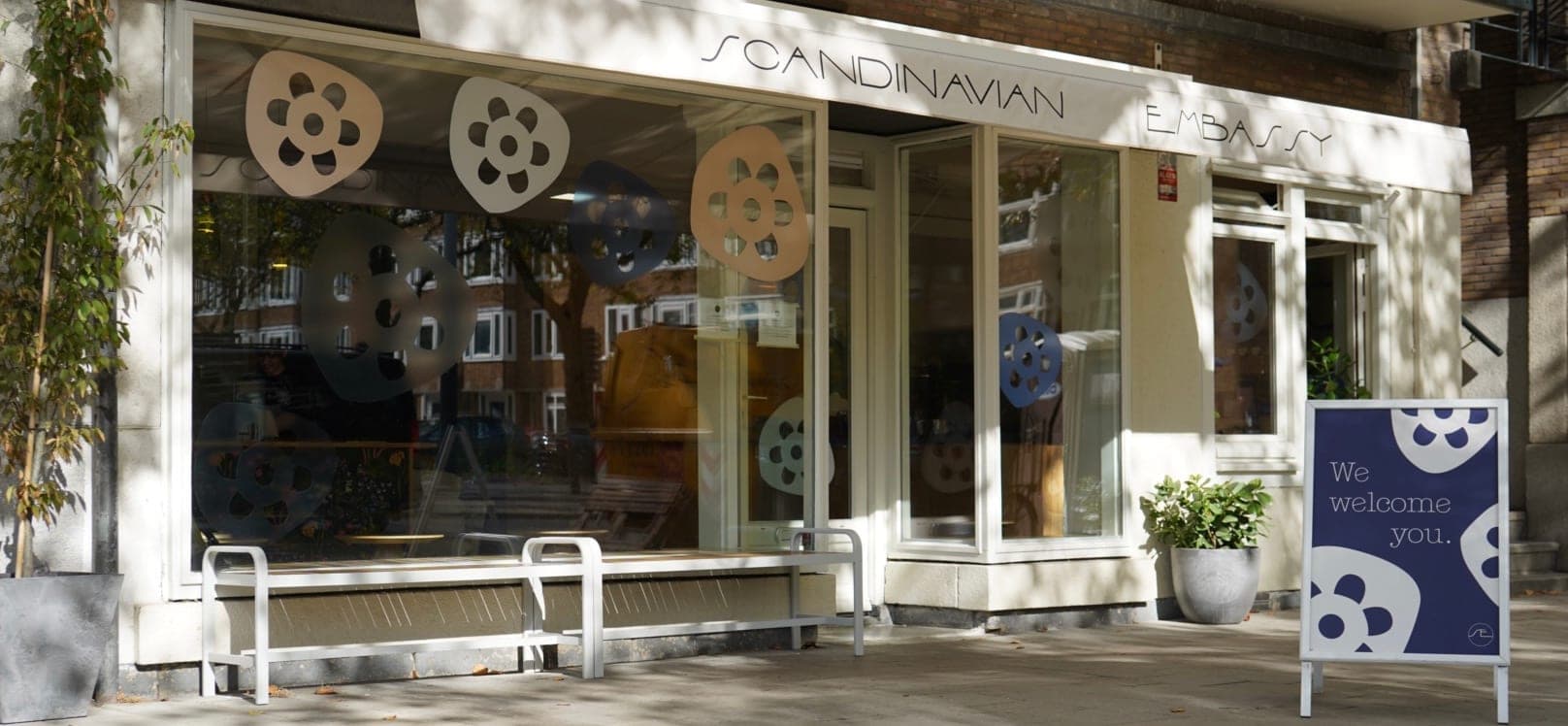
Photo: Scandinavian Embassy
№ 14Sarphatipark · Nordic breakfast, specialty coffee · €€7.9
A pale-wood Nordic room on Sarphatipark that opens at 8:00 on weekdays and pours coffee from Scandinavia's best roasters rather than its own.
Scandinavian Embassy is a multi-roaster bar, which in practice means it buys from the small Nordic roasters it rates rather than defending a house blend, and it changes what is on the brew bar with the season. That single decision is why serious coffee people in this city treat it as a benchmark. The food is the other half: healthy Scandinavian breakfasts and lunches plated with more care than the price suggests, built on salmon, skyr, house bread and small niche suppliers, and deliberately paired with the coffee. The room is small and calm, pale wood and low noise, which is exactly what you want at 8:15 with one other person and something to settle. It is not the place for a table of six, and at weekends the Sarphatipark crowd fills it. They opened a second address in 2022, a bakery and shop at Europaplein 87 with a wider range of buns and a coffee station, but the Sarphatipark cafe is the original and the one to go to. Note that the published hours vary by source: the venue's own site says Monday to Friday 8:00 to 17:00.
Order · Weekdays 8:00 to 17:00, weekends from 9:00. No bookings, and the room seats fewer than thirty, so go before nine if you want a table rather than a stool. Two people is the right size for this room.
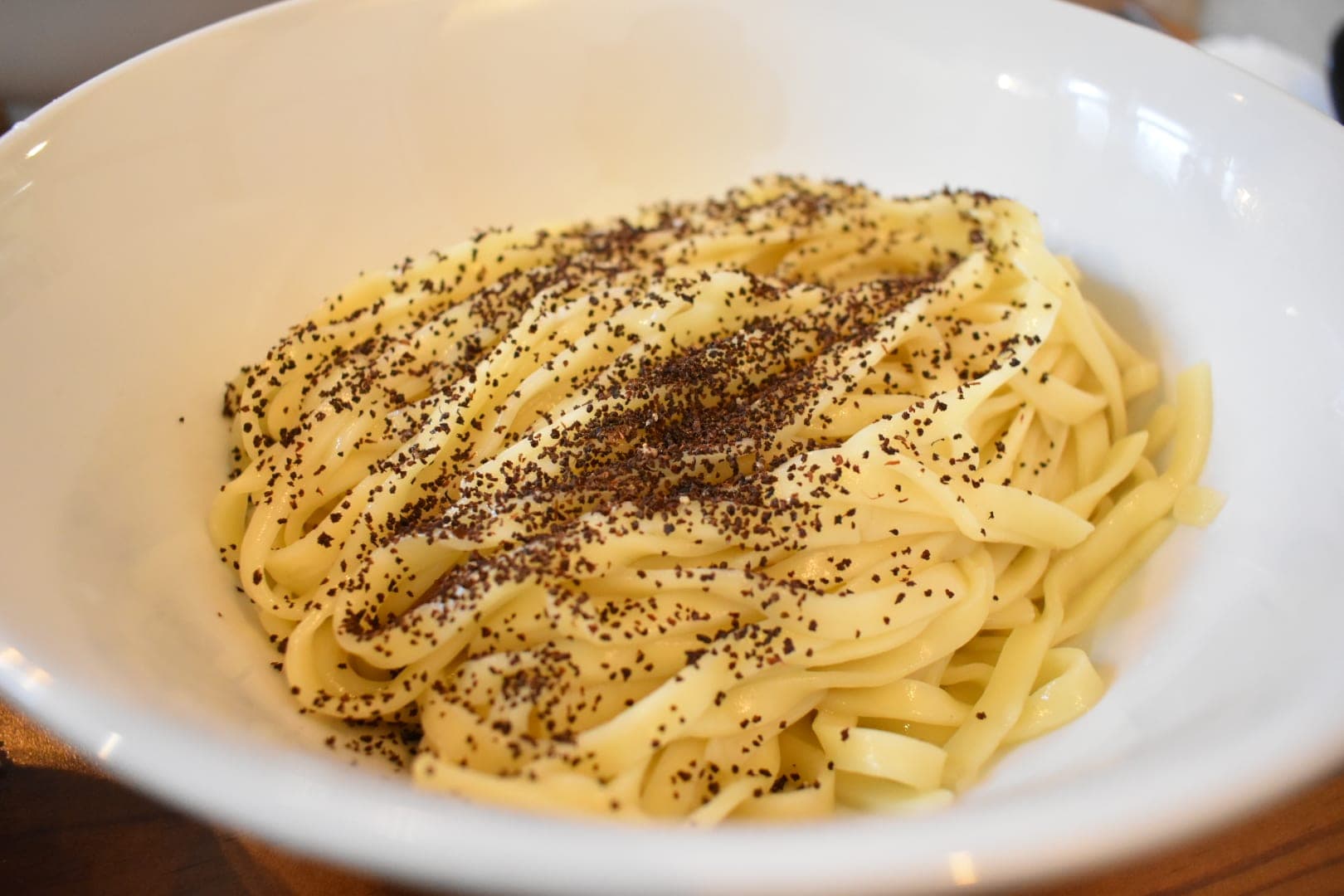
Photo: Ramenko
№ 15Nieuwe Pijp / Van der Helstplein · Vegan ramen · €€7.9
The all-vegan sister of Men Impossible on a quiet Pijp square, home to what Ramenko calls the best tsukemen in Amsterdam.
Atsushi Ishida left a corporate career to make plant-based ramen nobody believed in, and his Men Impossible on the Hazenstraat is already in this guide. Kitchen Impossible, opened in September 2023 on the leafy Van der Helstplein, is the casual sister: same owner, different address, different idea. Where the Jordaan original is a communal-table tasting affair, this is a corner shop where you walk in, order at the counter and watch the square go by. Everything is fully vegan and none of it plays the substitute game: the Tan Tan Men blends sesame, soybeans and aromatic vegetables under house chili oil, the miso bowl carries crispy fried seitan, and the noodles are rolled in house from spelt flour. The Tsuke Men is the order of record; Ramenko, the Japanese blogger who ranks every bowl in town, calls it the best tsukemen in Amsterdam, and the yuzu soup wari they pour at the end to loosen the last of the dipping sauce backs the claim. Google holds it at 4.8, HappyCow at a straight 5.0, and lunch is the quiet bargain.
Order · Open Wed-Mon, lunch 12:00-14:00 (weekends to 15:00) and dinner 17:00-21:30, closed Tuesday. Walk-in only, and the €10 lunch set of onigiri, miso soup, cauliflower tempura and kimchi is one of the best cheap Japanese lunches in De Pijp.
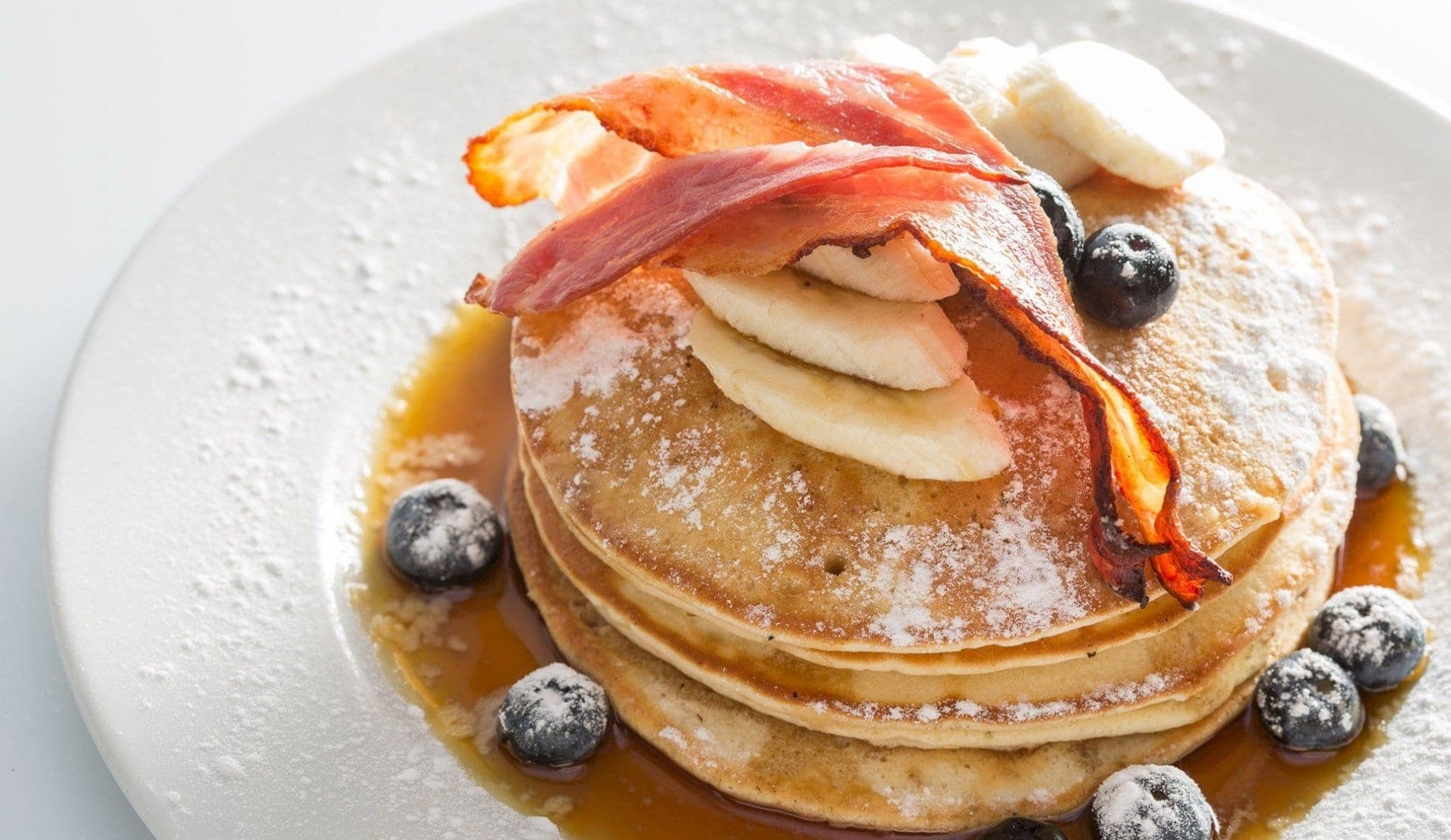
Photo: Bakers & Roasters
№ 16Eerste Jacob van Campenstraat · Weekend brunch, New Zealand and Brazilian · €€7.8
A signed laptop free zone that charges two euros to change a dish, and still has a queue down the street by ten on Sunday.
Julian Kirwan from New Zealand and Sergio Seibert from Brazil met on a night out in West Hollywood and built the kitchen that argument produced: a Kiwi cafe with a heavy Brazilian accent, run out of an open pass on a quiet Pijp corner. The card is unapologetically a brunch card, all day, every day. The Kiwi Brekkie is the full commitment at 25.50 euros, two free range eggs with bacon, sausage, breakfast potatoes, garlicky spinach, creamy mushrooms, tomato relish and buttered toast; Navajo Eggs put pulled BBQ pork, mango salsa and chipotle cream under poached eggs for 22; the Kinda Classic Eggs Benny holds at 17.50 and a short stack of American pancakes at 13.50. There are two Bakers & Roasters and this is the original, which matters because the Kadijksplein branch takes reservations and this one flatly does not. The room is small, signed as a laptop free zone, and turns fast, with a two euro fee if you alter a dish, all of which reads as either refreshing or brusque depending on your morning. Weekends they stay open to 16:00 instead of 15:00, and the queue behaves accordingly: reader reports cluster at 20 to 50 minutes, longer at peak, with the advice to be there by 10:00 on a Sunday. The queue is organic, not manufactured, but it is real, and prices have crept up faster than portions.
Order · Open every day 08:30 to 15:00, Saturday and Sunday 08:30 to 16:00. No bookings at De Pijp: join the WalkUp virtual queue from your phone or arrive by 10:00 on a Sunday. Order the Kiwi Brekkie at 25.50 euros, and note the two euro charge if you change anything on the plate.
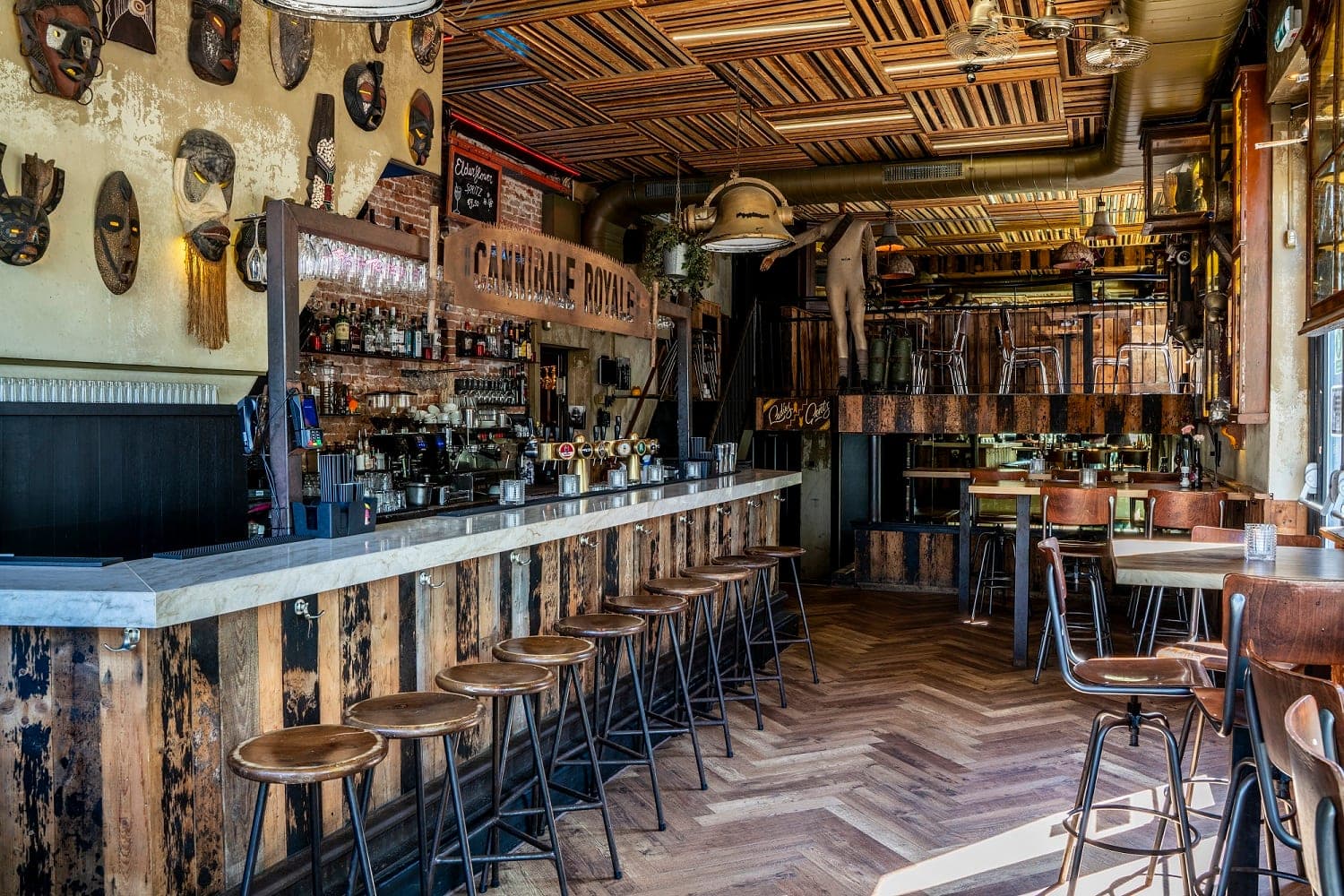
Photo: Cannibale Royale
№ 17Ruysdaelkade · Charcoal-grilled burgers & steaks · €€€7.8
Charcoal-grilled thick-patty burgers and a canal-side terrace, the long-running De Pijp brasserie serious carnivores keep coming back to.
Cannibale Royale has run the charcoal grill for years, starting at Handboogstraat in the centre before spreading to six branches citywide plus Rotterdam. The format hasn't needed fixing: a boisterous brasserie built around burgers, ribs and steaks, with one of the longer craft beer lists in the city. The house burger, Le Cannibale Royale, piles pulled pork, sauerkraut, cheddar and bbq sauce onto a 170-gram grass-fed patty, the version a recent reviewer called the best burger they'd ever eaten. Staff quietly prefer Le Magnifique instead, feta and harissa mayo cutting through the char. Ruysdaelkade isn't the original branch, but it's the one locals actually return to, praised across thousands of reviews on TheFork and Google with almost no complaint beyond the noise on a packed Friday. Six branches means the format is proven rather than precious, and this is the one to pick: canal light through the windows, a terrace that fills fast, and a kitchen running until midnight most nights. Book ahead or take your chances at the bar.
Order · Kitchen runs 17:00-23:00 Monday to Thursday, later Friday and Saturday, and only Saturday and Sunday add a 12:00-17:00 lunch sitting.
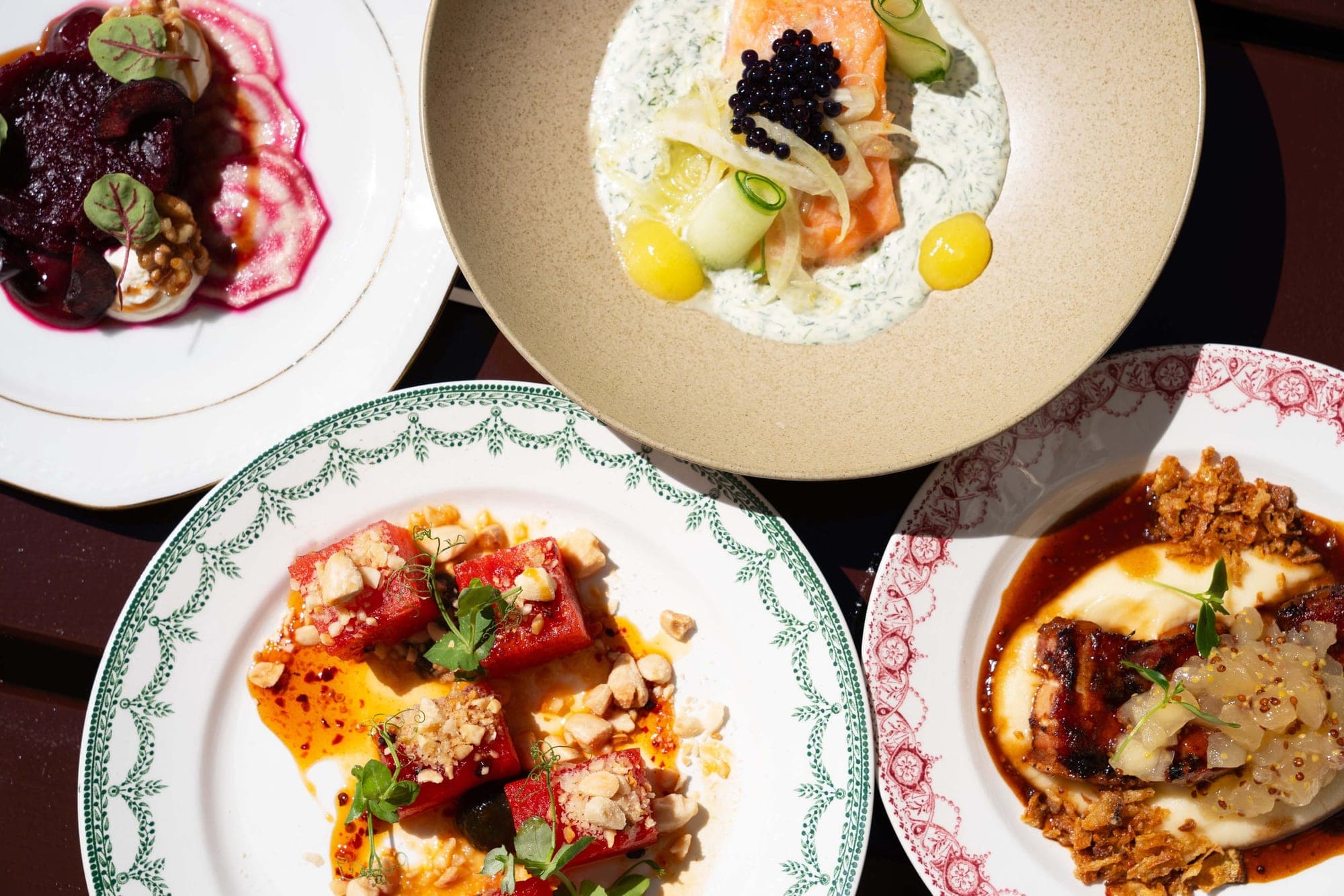
Photo: Wijmpje Beukers
№ 18Diamantbuurt · Eetcafé, modern Dutch · €€7.8
A Gault&Millau toque in a De Pijp eetcafé that swaps its five-and-five menu every six weeks.
Maarten and Jordy named this corner eetcafé after Maarten's mother when they opened it near the Van der Helstplein in 2016, and it has quietly become the best-cooked eetcafé in De Pijp. The format is strict: five starters, five mains, two of them always vegetarian or vegan, the whole card replaced every six weeks with whatever the season sends. Right now that means pork belly with celeriac and mustard at 15.50, lamb neck with peas and broad beans at 26.50, dorade with beurre blanc at 27.50 and a biefstuk with hollandaise and jus de veau at 28.50, plus a house Dame Blanche that has become a small cult. Gault&Millau gives it 12 out of 20 and a toque, which is unusual for a room with black wire chairs and art propped on cardboard. Your Little Black Book put it first in its 2025 list of De Pijp eetcafés and called the summer terrace one of the cosiest in town. Barts Boekje's original review found a couple of dishes oversalted, and the kitchen still seasons with confidence. They deliberately reserve only part of the room and terrace so walk-ins have a chance, which matters on a Friday.
Order · Open Wednesday to Saturday 17:00 to 23:00 only; closed Sunday to Tuesday. Book online for up to seven or walk in early. Order whatever is vegetarian that cycle plus the biefstuk, and finish with the Wijmpje Dame Blanche.
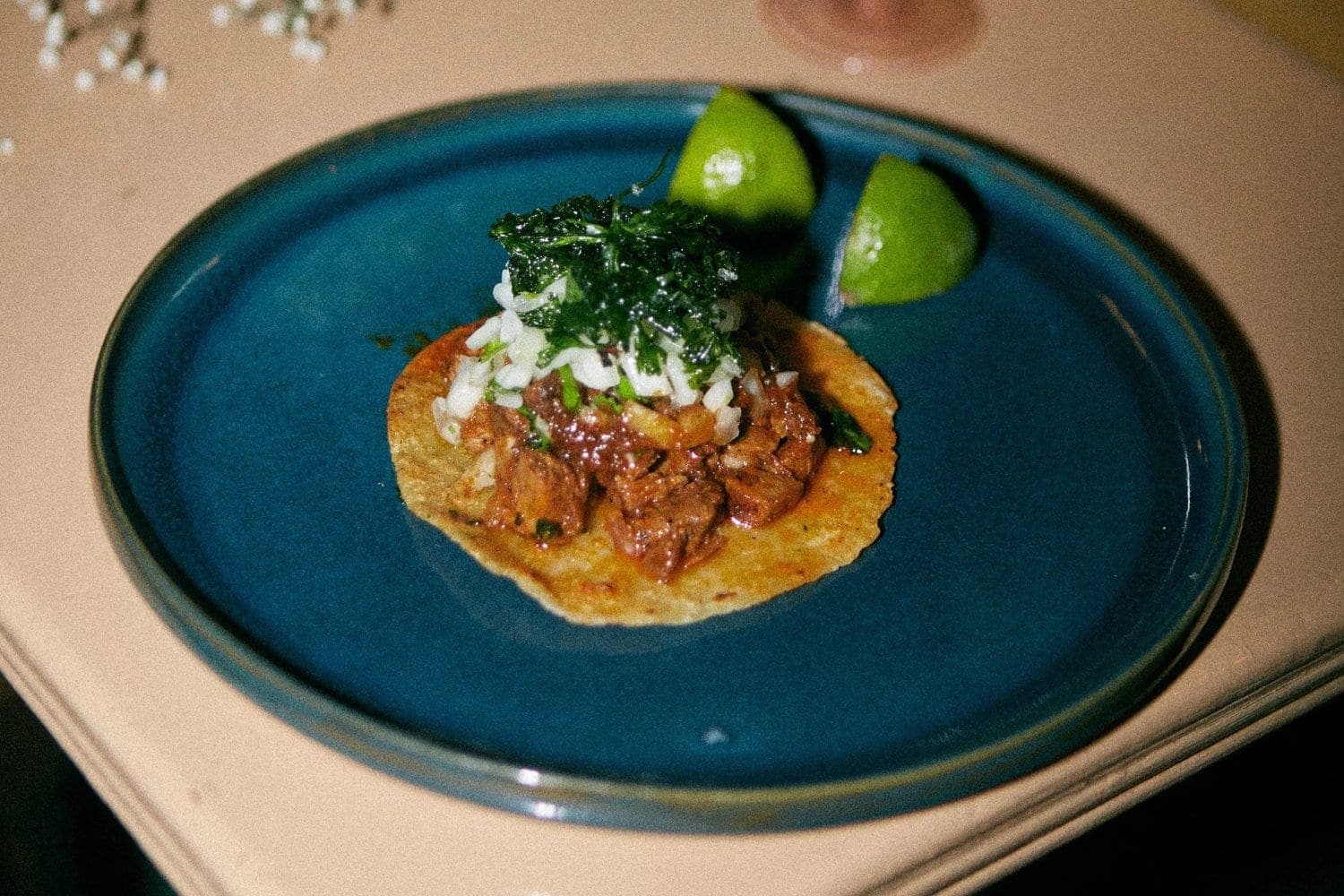
Photo: Cabron
№ 19Oude Pijp / Albert Cuyp · Mexican · €€7.8
Six-plus years of solid tacos and mezcal on the Albert Cuyp market, with its own stall for the walk-up crowd.
Cabron opened on the Albert Cuyp market in 2019 and has been quietly one of the most reliable Mexican kitchens in the city ever since, the kind of place that doesn't need a relaunch or a new chef every eighteen months to stay good. The room is cantina-style, vintage signage, a round communal table for groups, a proper bar for mezcal and cocktails. Tacos are the reason to come: carnitas with sweet potato puree and queso fresco, softshell crab with mango salsa, a battered cauliflower version that converts skeptics, each one built on a blue-corn tortilla and priced to order three or four per person. On busy market days a taco stand sets up right outside the door, selling straight to the street. A five-course taste menu runs certain nights for anyone who wants the kitchen to just decide. Once a month, Radio Cabron turns the whole place into a techno party without dropping the food. Consistency, not reinvention, is the whole pitch, and it works.
Order · Open Tuesday-Friday 18:00-23:00 and weekends 18:00-23:30, closed Monday. The five-course taste menu (€21.50) runs Tuesday, Wednesday and Sunday only.
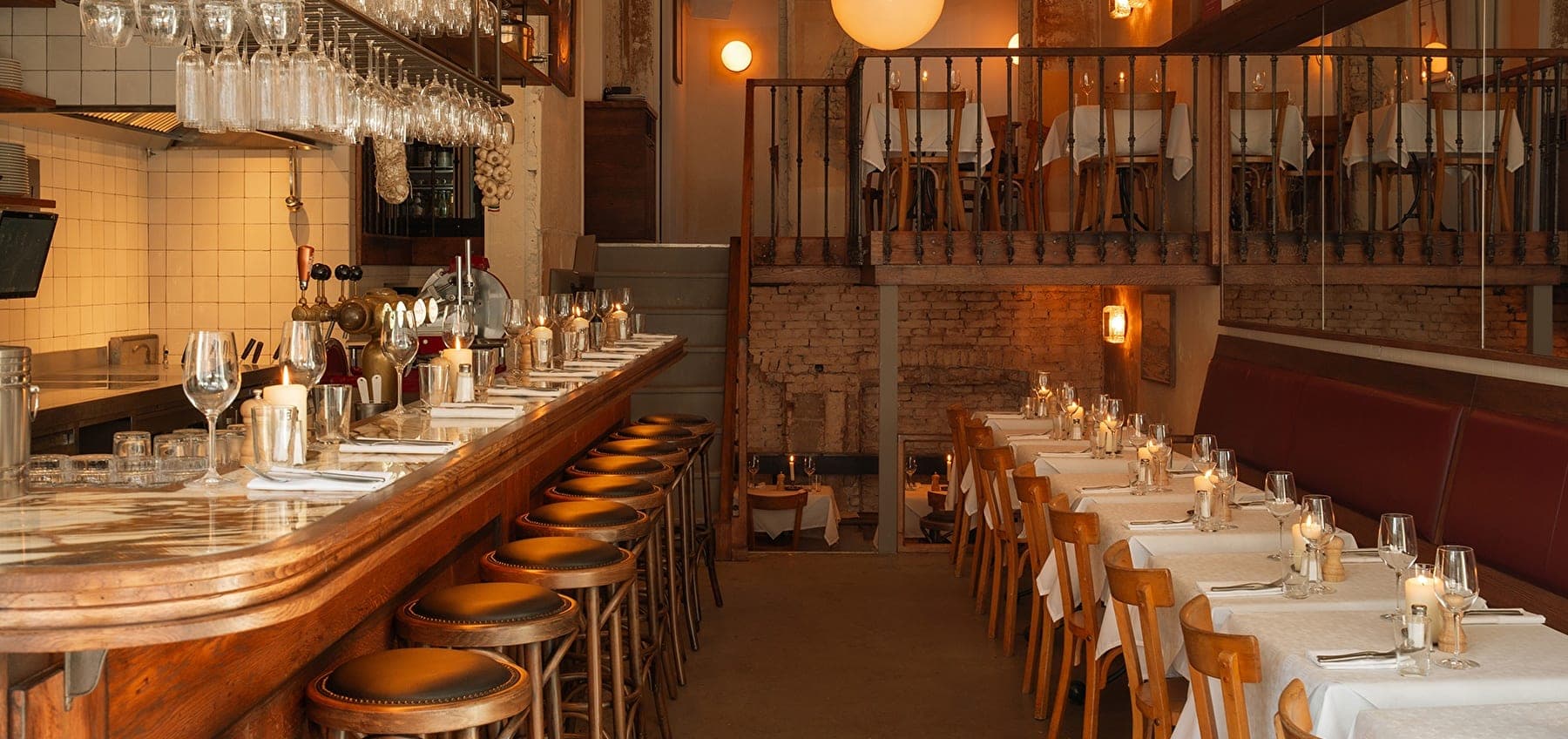
Photo: Leonardo's Ravioli Bar
№ 20Oude Pijp · Italian · €€7.8
Toscanini's chef gone rogue with a marble counter, five ravioli, and a guest-chef special worth asking about.
Leonardo Pacenti spent years making Toscanini the Jordaan's Italian institution, then decided what Amsterdam really needed was a bar that serves almost nothing but ravioli. He was right. Behind the blue facade on the Eerste van der Helststraat you get a marble counter, an open kitchen, and a short list of filled pasta rolled so thin it barely counts as a wrapper. The spinach and ricotta with ragù is the classic, the brasato in butter and sage the comfort order, and the baccalà with lobster bisque the one to show off with. The clever bit is the Specialità, a rotating ravioli developed with another Amsterdam chef, so the city's serious kitchens take turns moonlighting as pasta stuffers in De Pijp. Start with cicchetti and a spritz, finish with the cold zabaglione, and you have a complete evening for less than the first act of a tasting menu.
Order · Ask what the Specialità is before ordering anything else; it is the guest-chef collaboration and it rotates without much warning. The counter seats come with the open kitchen as entertainment.
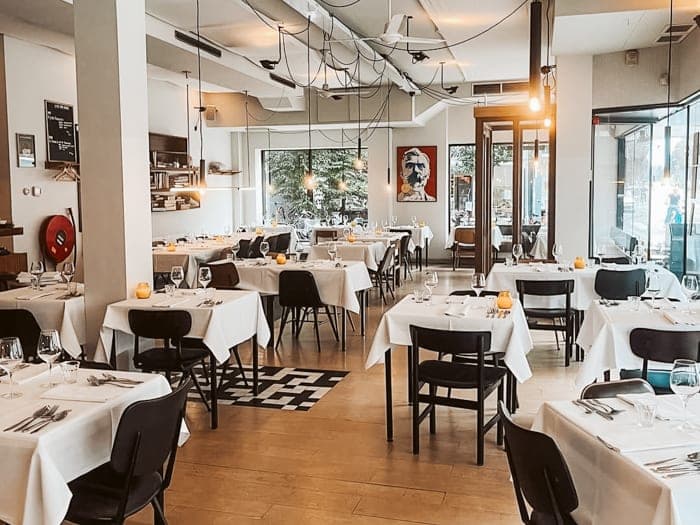
Photo: Your Little Black Book / Fa. Pekelhaaring
№ 21Van Woustraat · Italian · €€7.7
A Bib Gourmand Italian on Van Woustraat with pasta in half or full portions and one menu from noon to ten.
Brothers Matthias and Lennard van der Nagel founded Fa. Pekelhaaring on Van Woustraat, and Matthias is the chef. One menu covers lunch and dinner. The base is Italian, with Spanish snacks like cecina and morcilla and Dutch fish such as fried smelt and a whole plaice with pil pil sauce. Every pasta comes as a half or full portion, at €17.50 or €24.50, and mains run from €22.50 to €29.50. The wine list leans on Italy and France, marks its natural wines and starts at €27 a bottle. Michelin gave the restaurant its first Bib Gourmand in 2021, still lists it with one, and calls it the urban canteen of many Amsterdammers. Gault&Millau scores it 13/20 and says booking is a must, for good reason. Guests agree it is always full. They praise the friendly service and the value, and have been ordering the white chocolate cheesecake for years. Their recurring complaint is noise: busy, loud, not intimate.
Order · Book for dinner. Open Tuesday to Sunday from 12:00 to 22:00 with the same menu all day; closed on Monday.
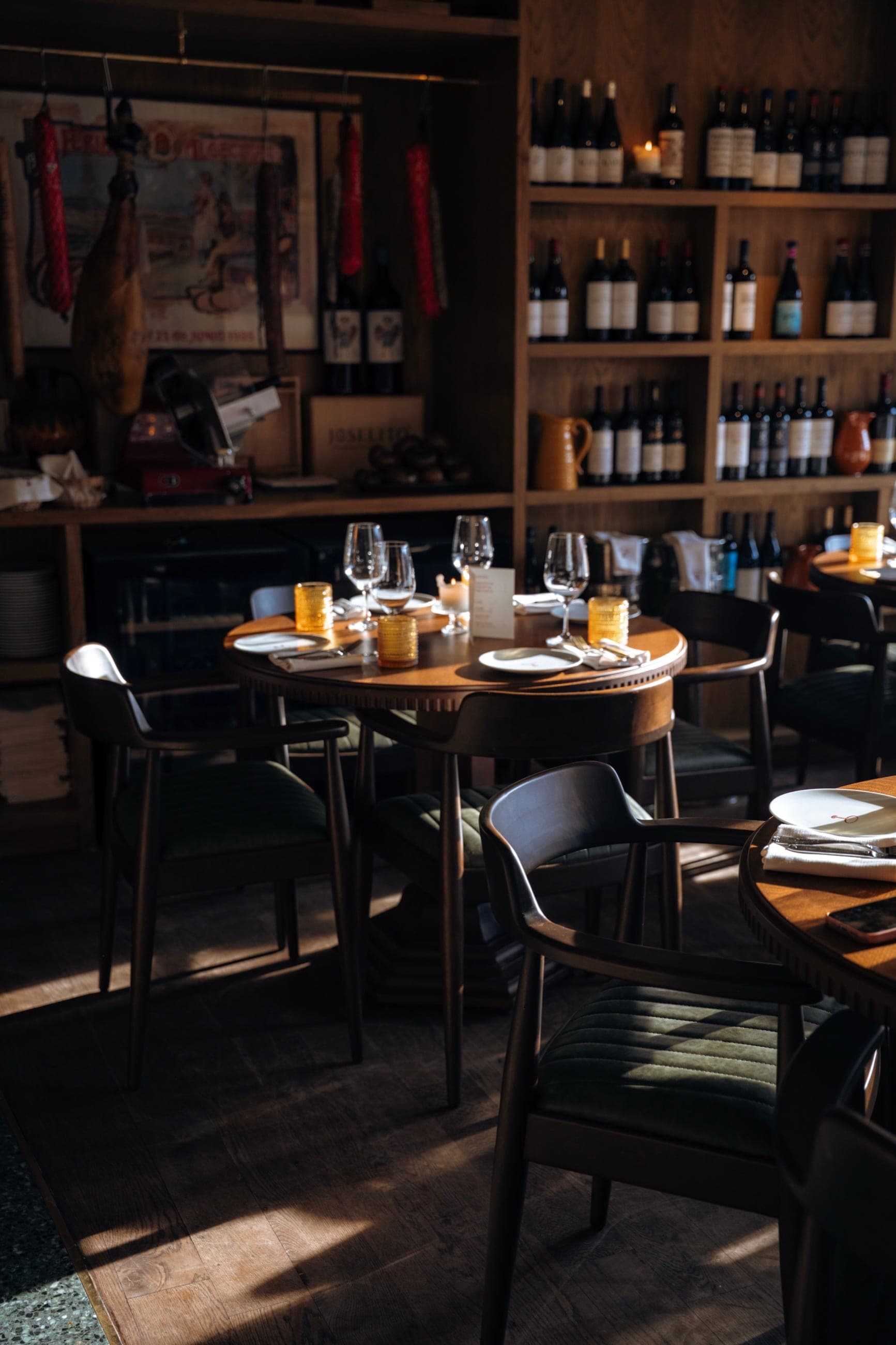
Photo: Mesa Mesa
№ 22Marie Heinekenplein · Spanish · €€7.6
Proper Spanish tapas and vermut, rescuing Marie Heinekenplein from mediocrity.
Marie Heinekenplein has spent years as the square you walk across rather than to, which makes Mesa Mesa's arrival feel almost pointed. Opened in 2025 by people who understand that tapas is a rhythm, not a category, it runs on the classics done straight: hand-carved jamón ibérico, gildas with the right anchovy-to-olive ratio, pan con tomate that's actually about the tomato, and a truffle tortilla that stays just-runny in the middle the way Madrid intended. The open kitchen keeps the plates coming in the correct disorderly sequence while you work through the vermut list, and yes, drinking vermouth at 4pm on a Tuesday is exactly the point. Candlelit later on, loose and chatty at the bar always. Weekends it opens at noon, which is the civilised Spanish position on lunch drifting into dinner.
Order · The truffle tortilla, still wobbly in the centre, with a glass of vermut on ice.
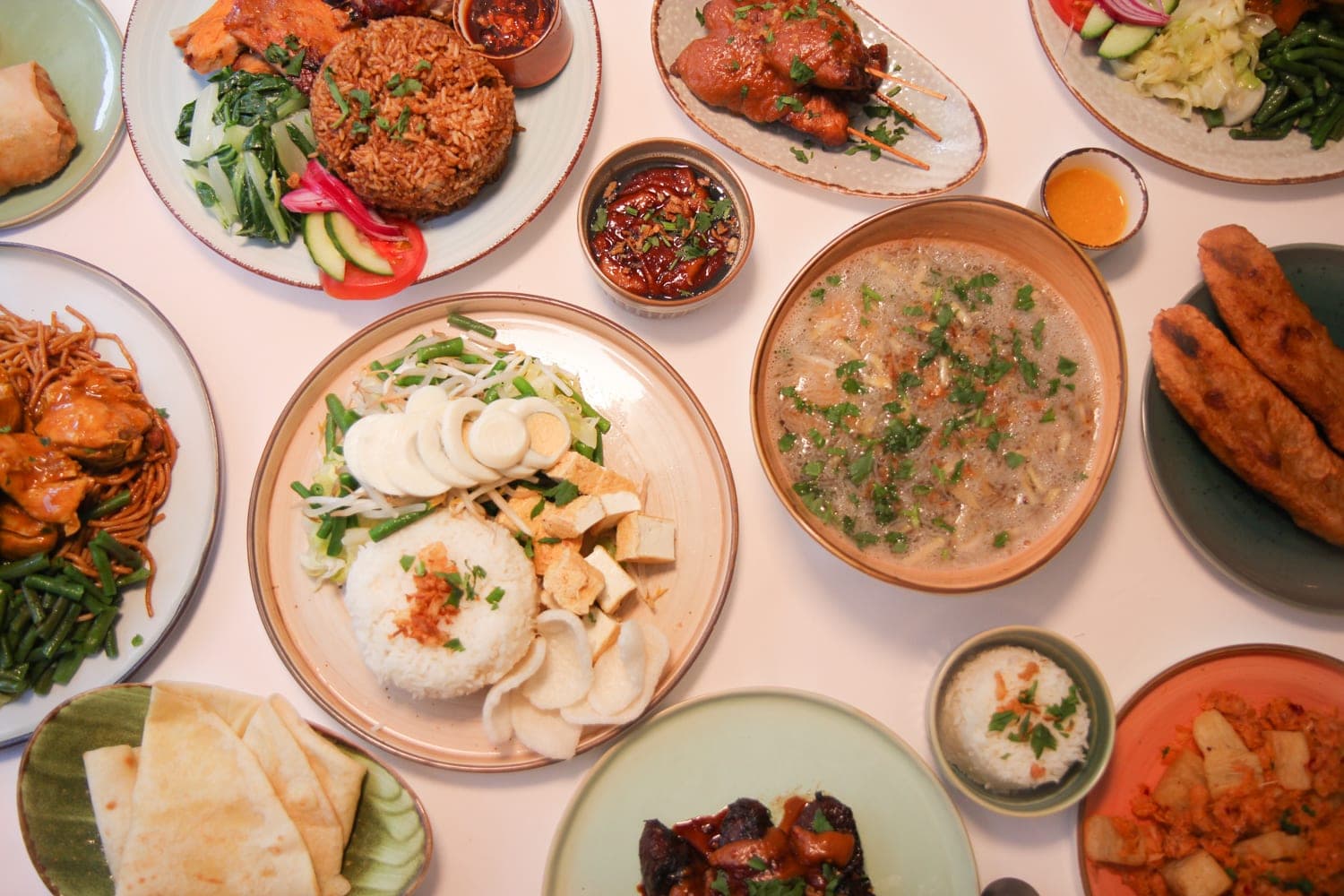
Photo: Warung Spang Makandra
№ 23Gerard Doustraat · Javanese-Surinamese · €7.5
A Surinamese-Javanese warung in De Pijp since 1978, now bigger, with a terrace and beer; guests praise the portions, regulars say it was better before.
Warung Spang Makandra has served Surinamese-Javanese food in De Pijp since 1978; its founder was Toeki. For years it worked out of a narrow space at Gerard Doustraat 39. It now sits a few doors along at number 33, much expanded. There used to be no bookings and no alcohol; now you reserve online and drink draught beer, Parbo, wine or a €9.50 cocktail. The menu runs from saoto soup (€8.50 or €12.50) and teloh with bakkeljauw (€8 or €11) to roti with chicken fillet (€15), the Spang Makandra Special (€18) and nasi rames (€18.50). It is halal. FavorFlav wrote in 2025 that the beef melts on your tongue. In 2026 Amsterdam Foodie called it "one of the city's most beloved Surinamese institutions". Guests praise big portions for little money and keep recommending the Special and the roti. A group of regulars says the cooking has slipped, partly since the move, and complaints mention dry chicken and a peanut sauce that tastes of peanut butter.
Order · Walk-ins are always welcome; online booking covers 1 to 7 people, same day until 17:00, and the terrace cannot be booked online. Open daily until 22:00, from 11:00 (Sunday from 13:00).
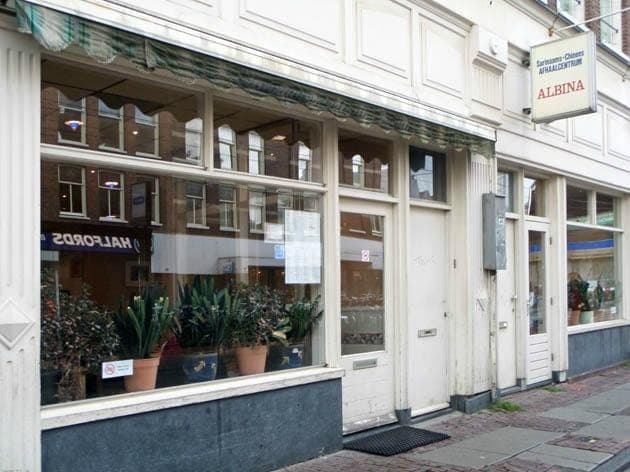
Photo: Tripadvisor user photo / Albina Restaurant
№ 24Albert Cuyp · Surinamese-Chinese · €7.5
No-frills Surinamese-Chinese roti canteen feeding the Albert Cuyp since forever.
Directly across from the Albert Cuyp market stalls, Albina is the kind of strip-lit, formica-tabled canteen that quietly outlives every concept restaurant around it. The menu is the great Surinamese mashup, Chinese, Indian and Javanese lines all crossing, which means bami and nasi heaped into takeaway trays, moksi meti over rice, and the city's most dependable roti kip: curry chicken, potato, long beans and egg with a griddled flatbread you tear and drag through everything. The broodje pom, Suriname's citrusy taro-and-chicken casserole packed into a soft roll, is the correct market-day lunch at a market-day price. Service is fast and unsentimental, portions are enormous, and half the clientele has been coming weekly for decades. When the guide says De Pijp is Amsterdam's belly, this room is a load-bearing organ.
Order · Roti kip, and add a broodje pom for the walk home.
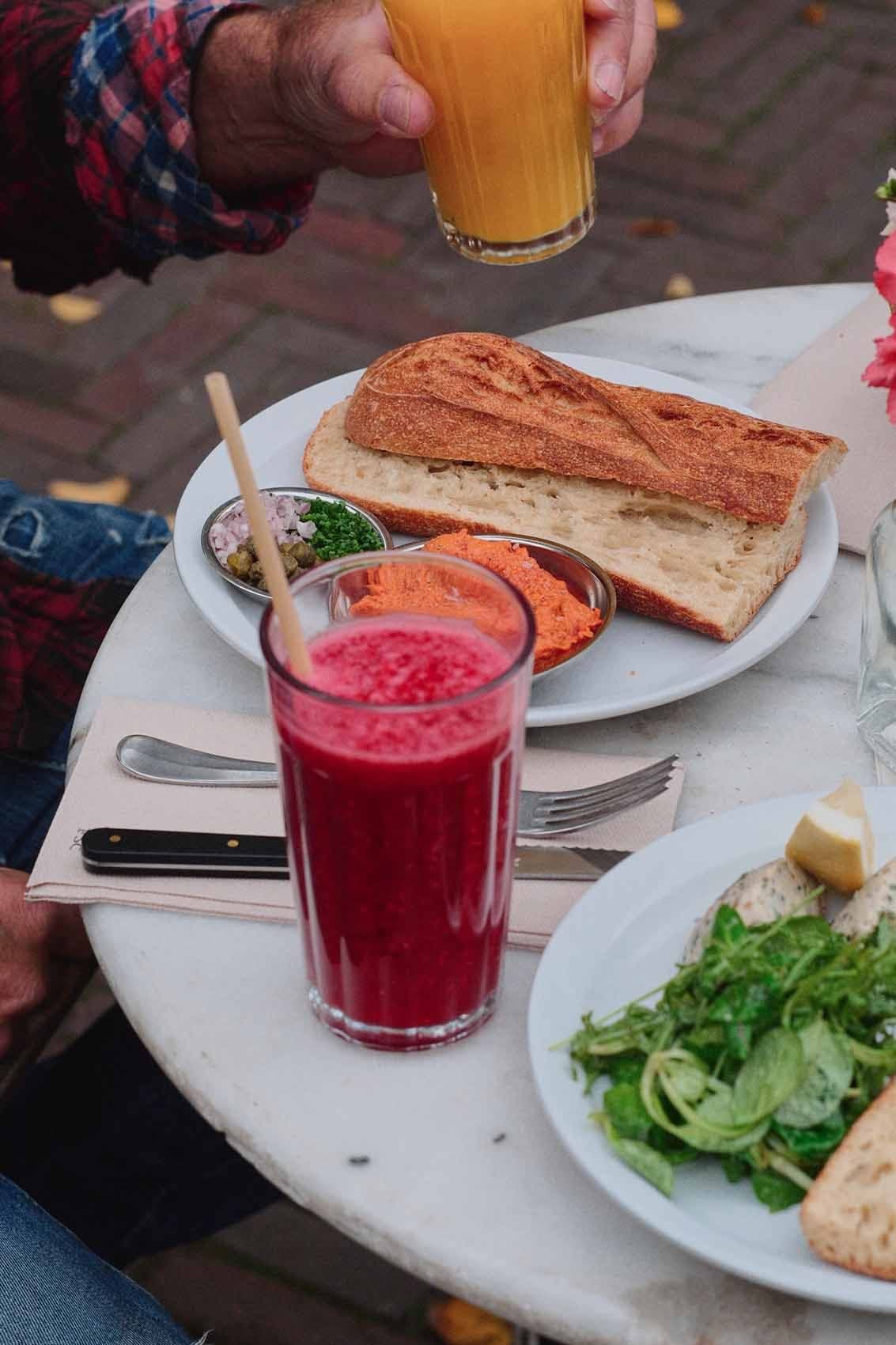
Photo: De Wasserette
№ 25Eerste van der Helststraat · Breakfast, specialty coffee · €€7.5
Open at 7:30 every single day, a block off the Albert Cuyp, which makes it the most reliable early table in De Pijp.
The name means the launderette, and the place has the same unglamorous usefulness: no concept, no queue theatre, just a daytime cafe that unlocks at 7:30 and keeps going until five, seven days a week. That consistency is the whole argument. At eight on a weekday you get a quiet room, a barista who takes the coffee seriously, and a kitchen already turning out egg dishes, homemade pastries and open-faced sandwiches that change with the season and the chef's mood. Eggs benedict, Florentine and Norwegian anchor the card, French toast handles the sweet side, and the chicken avocado sandwich is the one regulars name unprompted. Reservations are not taken and are not necessary: you sit where there is a seat. The caveat is size. It is a small room, it gets tight, and by eleven on a Saturday it is loud and slow, so this is strictly a weekday-morning recommendation. Being one street off the Albert Cuyp market means you are close to the noise without being in it.
Order · Daily 7:30 to 17:00, no reservations. Go on a weekday before nine and the room is yours. Avoid weekends after ten, when the wait for food gets long and the room gets loud.
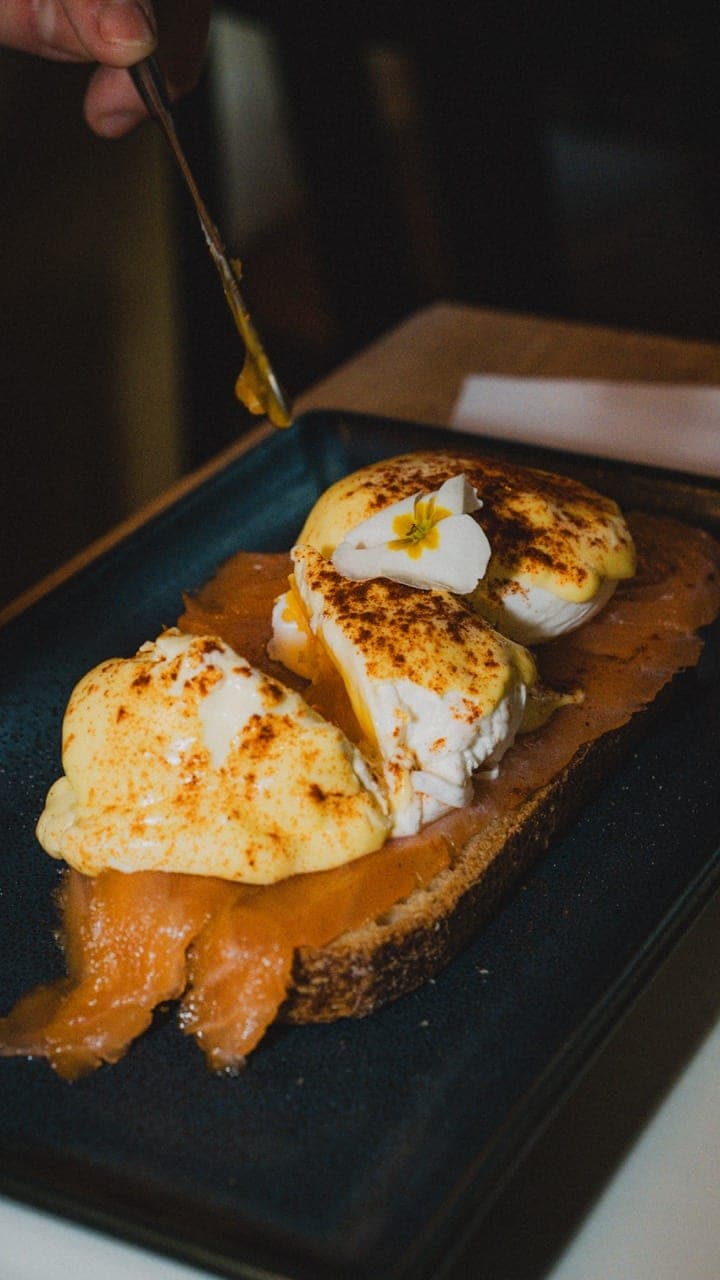
Photo: Loop51
№ 26Dusartstraat · All-day brunch, vinyl bar · €€7.5
A record player that runs from ten in the morning, and live DJs from Friday, which is how eggs benedict turns into an afternoon.
Loop51 opened in November 2024 at the quiet Dusartstraat end of De Pijp with a custom sound system and a proposition that sounds gimmicky and is not: vinyl all day, every day, and live DJs on Friday and both weekend days playing jazz, funk, house and soul. By evening the chairs get pushed aside. The kitchen is not an afterthought propping up the decks. The 51 Benny is smoked butter, bacon, poached eggs and hollandaise on sourdough at 13.95 euros, the Royale swaps in salmon at 14.50, the Sticky Pulled Chicken Benny goes BBQ slow-cooked chicken with sriracha hollandaise at 16.50, and Love me Tenders stacks potato waffles, harissa yoghurt, hand-breaded tenders and hot honey at 15.50. Mimosas are five euros, which is the number that tells you what kind of room this wants to be. Het Parool put it among the 25 best openings of the year and it holds 4.7 across 570 Google reviews, unusual for a place this new. Be clear about one thing: the food card does not change at the weekend, what changes is the programming, and that is genuinely the reason to come on a Saturday rather than a Tuesday. A second, smaller warning: their own website's opening hours are out of date and contradict their own body copy, so treat published times as approximate.
Order · The brunch card is served daily 10:00 to 17:00, but come Saturday or Sunday from around midday when the DJs start and the room fills. Walk-ins, no bookings, and the window tables go first. Order the 51 Benny at 13.95 euros with a five euro mimosa.
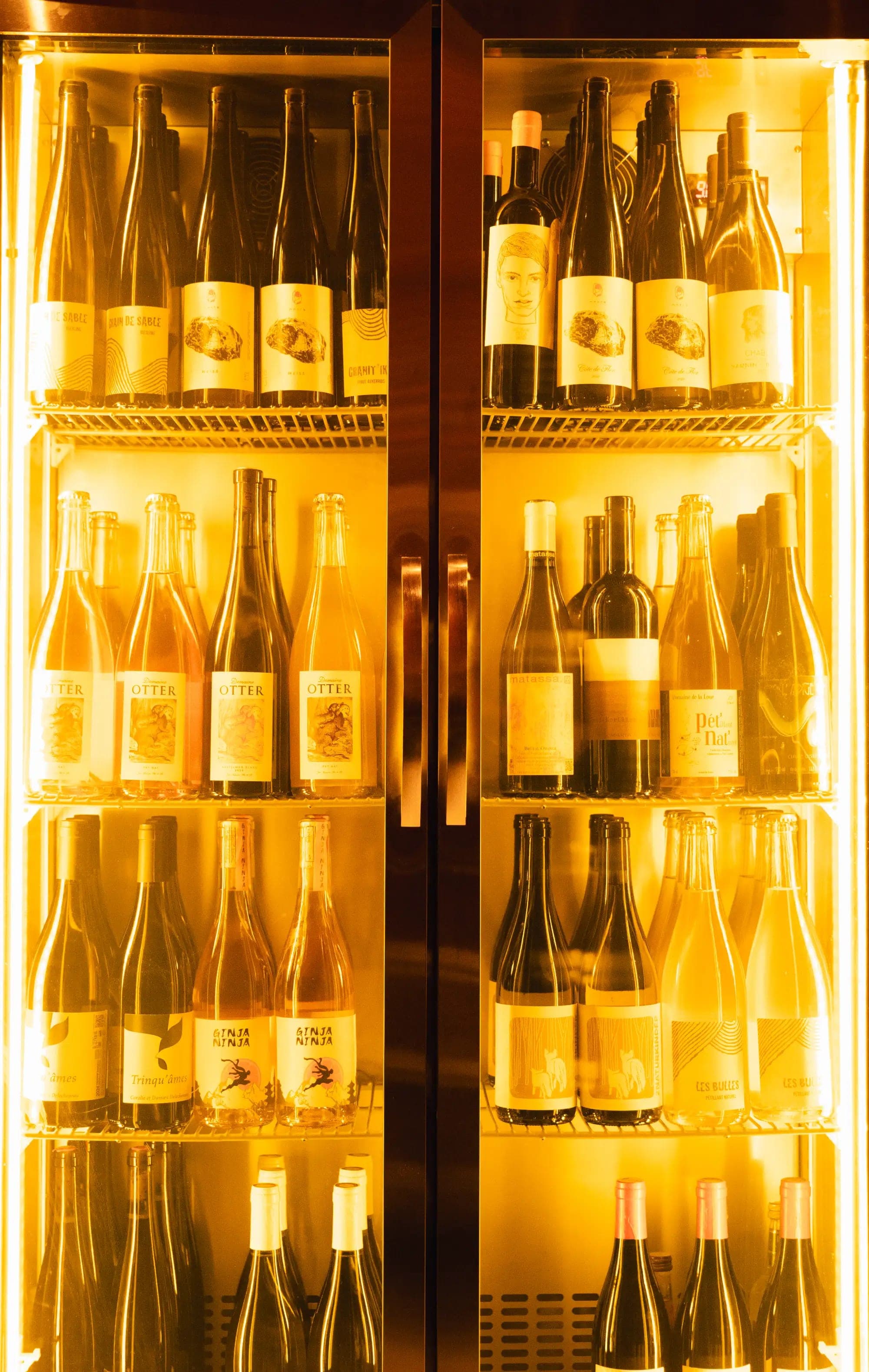
Photo: Dame aan de Kade
№ 27Oude Pijp · Mediterranean-European · €€7.5
A 1970s glass-block bar on the Ruysdaelkade doing unfussy Mediterranean plates and serious natural wine.
Three friends, Quirijn Roozen, Niek Roozen and Dominic Aarts, built this themselves, and it shows in the details: terracotta walls, a disco ball, glass blocks lit from behind, none of it hired out to a design firm. Chef Freek Dekker and sous-chef Stan Burgman keep the menu short and Mediterranean, a grilled chicken supreme built for the table, charred leek with beurre blanc, a steak tartare that doesn't try too hard. The wine list is the real commitment: built with Zuiver Wijnen and Daxivin, chosen by taste rather than label, and it runs the length of the room alongside original cocktails. By day it reads as a neighborhood café on the canal; after dark the lights drop, the music climbs, and it turns into the kind of bar De Pijp didn't quite have. Weekends run past midnight, Friday until three. Barts Boekje called the whole thing cozy lingering without club vibes, which is close enough. Opened January 2026 and already filling on weeknights.
Order · Wednesday and Sunday close at 23:00, Thursday runs to 01:00, Friday and Saturday later still. Closed Monday and Tuesday. Walk-ins welcome at the bar.
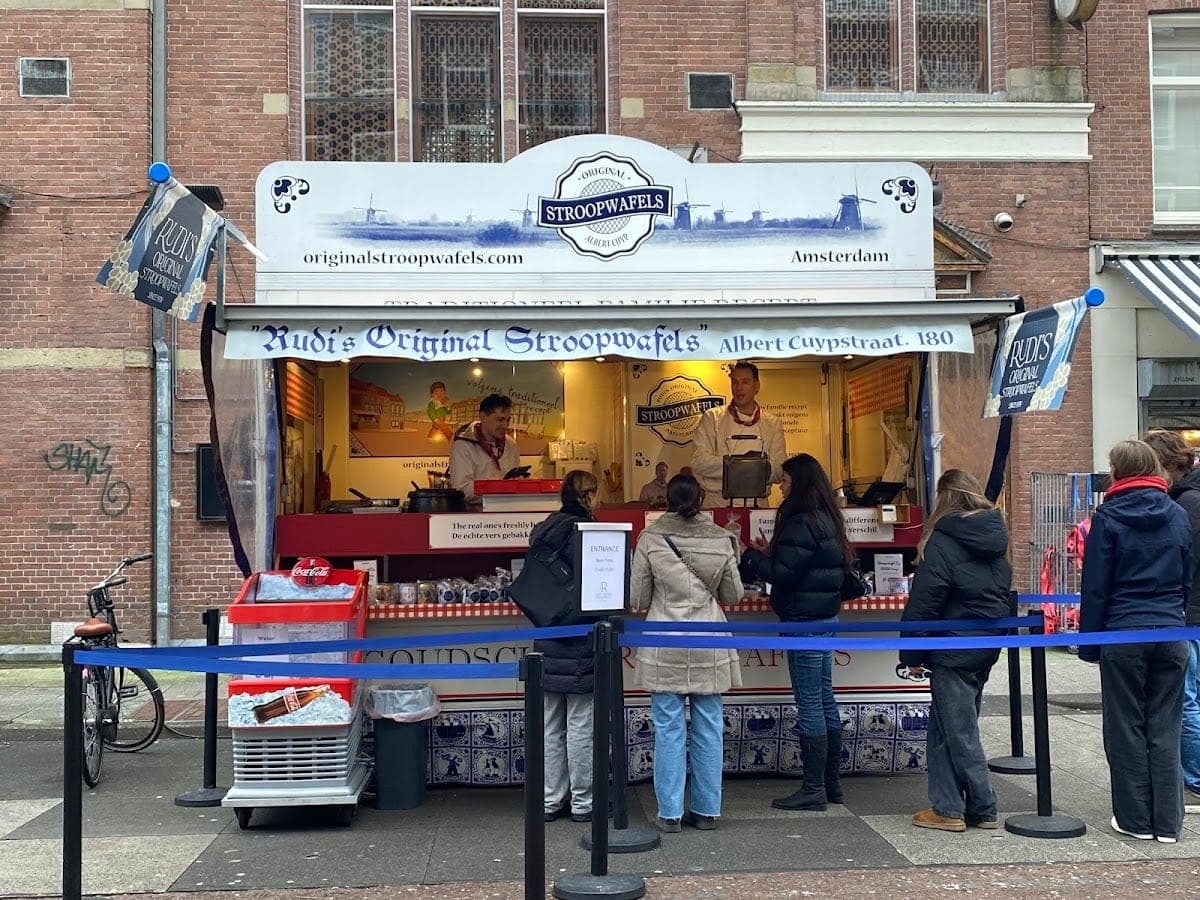
Photo: Placejoys
№ 28Albert Cuypmarkt · Stroopwafel stand · €7.5
Hot stroopwafel off the iron at Albert Cuyp, syrup still running.
The blue and white cart in the middle of the Albert Cuyp market has been pressing stroopwafels since 1978, and the smell alone reorganises the queue every few minutes. Rudi learned the trade in Gouda, which in stroopwafel terms is like training in Naples for pizza, and the family still bakes to that recipe. Order the fresh one. A ball of dough goes into the iron, gets split while hot, filled with warm syrup and handed over soft in the middle, crisp at the rim, nothing like the shrink-wrapped discs at the airport. Two fifty, eaten in the market crush between cheese stalls and fabric sellers, syrup on your fingers where it belongs. The chocolate-dipped version exists for tourists and children, and fine, it is also good. Mind the odd hours: no wafels on Wednesdays, Thursdays or Sundays, because proper family businesses rest.
Order · One fresh stroopwafel straight off the iron; chocolate dip only if you must
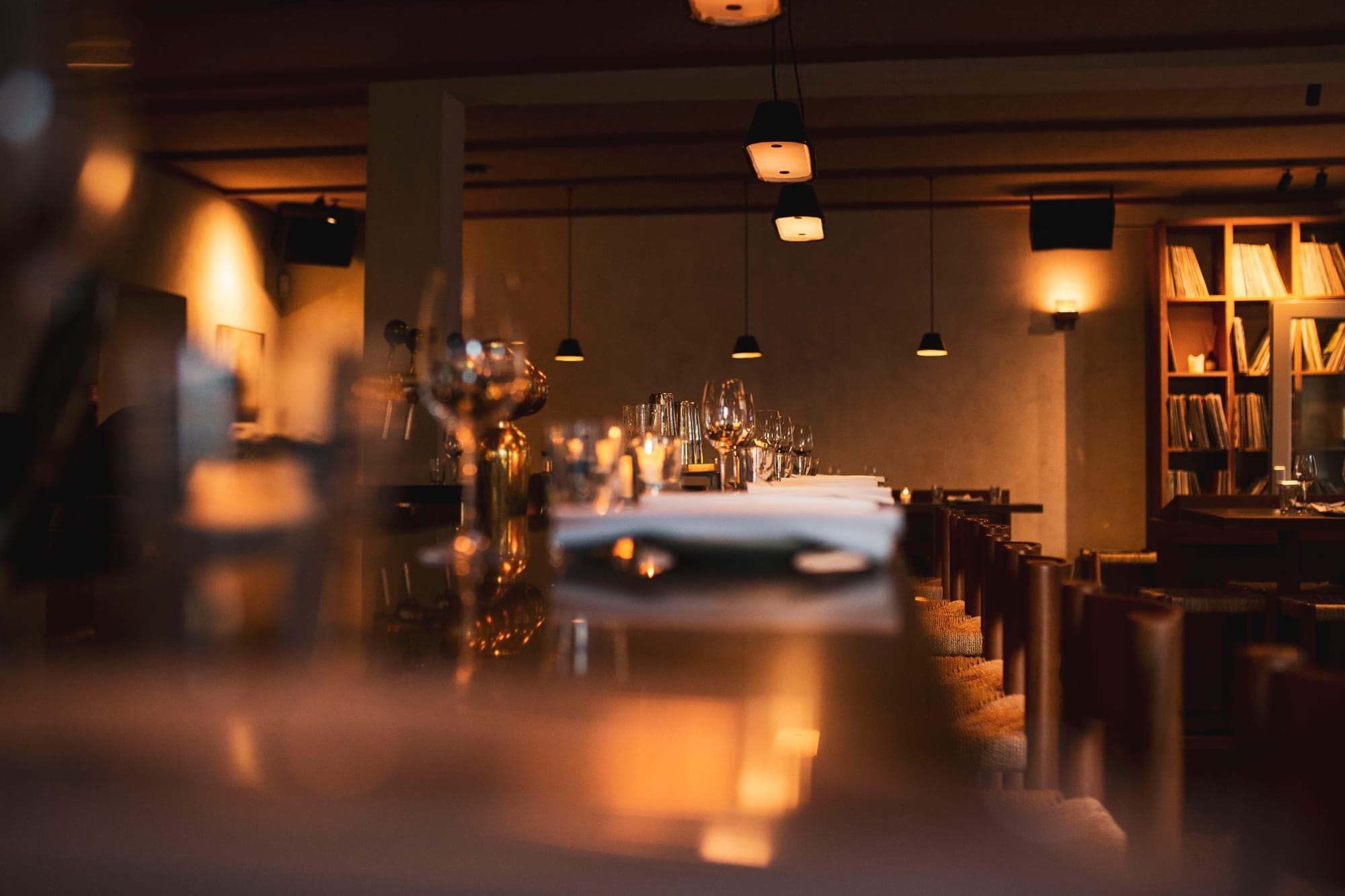
Photo: Juno
№ 29Frans Halsbuurt · Open fire, modern European · €€7.4
Van 't Spit's owners turned a kitchen fire into a vinyl-first, phone-last grill restaurant.
When a kitchen fire ended Van 't Spit's rotisserie era on the Frans Halsstraat, the owners rebuilt the place as Juno and pointed it at a different appetite: Amsterdam's self declared first music restaurant, where everything comes off the open fire and everything else comes off vinyl. There is no wifi, phones are frowned at, influencer deals are refused, and the record shelves get played through a system most clubs would envy. The food is heartier than the concept suggests: langoustines with miso hollandaise, iberico procureur with burnt apple and kombu jus, a 120 day grain fed ribeye with chimichurri to share, proper fries with house mayo. YLBB and De Buik both filed enthusiastic reports, the latter noting that things get hot in De Pijp. Open every evening from half past five, plus Saturday lunch from one. Come as a group, order the shared cuts, and let someone else do the playlist.
Order · Leave the phone in your pocket, that is the whole idea; there is no wifi anyway. Open daily from 17:30, Saturday lunch from 13:00; the shared ribeye needs a hungry table of three or more.
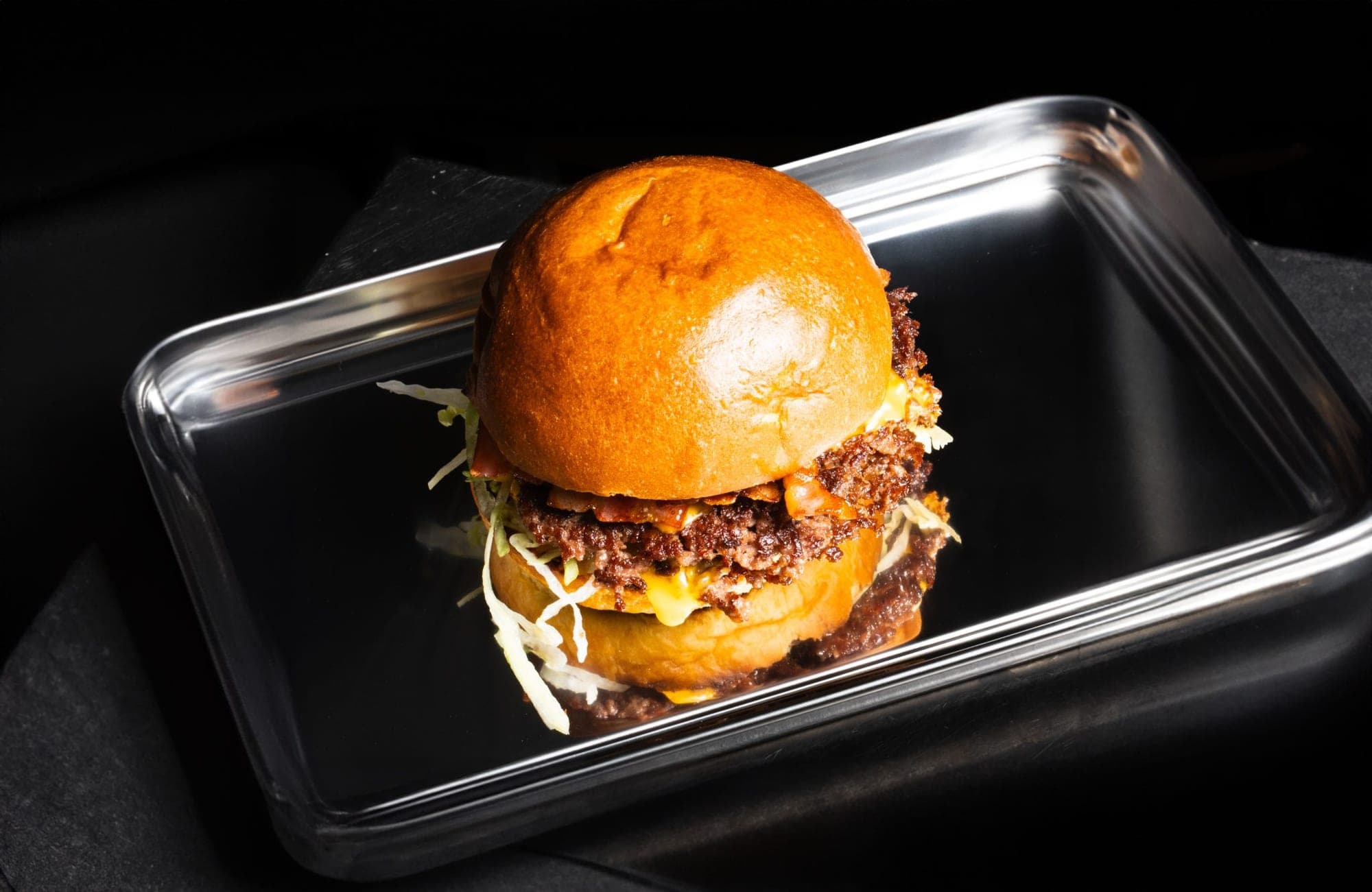
Photo: Le Smash
№ 30Govert Flinckstraat · Halal smash burgers · €€7.3
A 100% halal smashburger counter in De Pijp, real technique under real hype, best eaten off-peak.
Le Smash's founders hired a social media agency before they had much of a track record, and it worked: local press clocked the TikTok reach at four and a half million, and the shop has since grown to eleven locations nationwide. That backstory is worth knowing before you queue. What's underneath it holds up on its own: a fully halal, double-smashed patty with lace-crisp edges and melted cheddar on a soft potato bun, plus a house cheese sauce for the fries that independent reviewers keep singling out as the better half of the meal. The room is tiny, order-by-screen, first-come seating, so treat it as a stand-and-eat stop rather than a sit-down dinner. A minority of reviewers find the flavour flat next to the marketing, a fair complaint on an off night, though most visits land closer to genuinely good than overhyped. The honest move: skip the evening queue entirely and go at 17:30 or on a weekday afternoon, when the burger is exactly as good and the wait is ten minutes instead of forty.
Order · Open daily from noon until they sell out; go at 17:30 or on a weekday to dodge the evening queue. No reservations, order at the screen.

Photo: Le Hollandais
№ 31Nieuwe Pijp (Amsteldijk) · Classic French bistro · €€€7.3
A resurrected Amstel-side French classic where the chef-owner still climbs the stairs to explain your sweetbreads himself.
The original Le Hollandais fed the Amsteldijk classic French cooking from 1996 to 2020, collected Bib Gourmands along the way, then closed. Rebwar Abdulkarim reopened it in 2021 and did the sensible thing: he kept the soul and cooks nearly everything himself, a la minute. Escargots, steak tartare, sweetbreads in morel sauce, crepes Suzette, and a chef's menu that starts at 55 euros for three courses and wanders up to ten if you surrender. Rebwar comes up from the kitchen to talk you through the plates with the enthusiasm of a man who still cannot quite believe he owns the place, and the room, chandelier and neon Restaurant sign included, looks over the Amstel at dusk. De Pijp treats it as its own French dining room, warmer and quieter than anything on the Ferdinand Bolstraat, and on weekends it opens at noon, so a long riverside Sunday lunch is actually possible.
Order · Book a window table on Friday, Saturday or Sunday from 12:00, take the three course chef's menu and insist on crepes Suzette to finish.